Managing Indoor Condensation When the Pennsylvania Cold Snaps Arrive

The Sudden Appearance of Window Sweating During the First Hard Freeze
Late November in Western Pennsylvania brings a distinct chill to the air, and for many homeowners, managing indoor condensation when the Pennsylvania cold snaps arrive becomes an unexpected morning priority. You wake up after the first hard freeze of the season, pull back the curtains, and find water heavily pooling on the sills of your double-pane windows. Panic often sets in immediately. Are the window seals broken? Is water seeping into the drywall? Will mold start growing before the weekend?
Before you assume the worst, this sudden moisture is usually a clear signal to adjust your whole-home humidifier, and comprehensive residential HVAC services can help you strike the perfect balance to prevent these issues from masking deeper furnace repair problems.
Pennsylvania's rapid late-fall temperature drops create the perfect storm for sudden overnight condensation. During the day, the weather might be mild enough that your home's humidity levels feel perfectly comfortable. But as the sun sets and the outdoor temperature plummets below freezing, the physical dynamics of your home change rapidly. The moisture that was perfectly suspended in the warm afternoon air suddenly has nowhere to go when it meets the freezing glass of your windows.
Recognizing this condensation as a symptom of a humidity imbalance—rather than a structural failure—is the critical first step. Many homeowners make the mistake of either ignoring the pooling water or turning their humidifier off entirely, which leads to uncomfortably dry air, static electricity, and irritated sinuses. The goal is not to eliminate indoor humidity, but to manage it proactively as the seasons change.
The Physics Behind Warm Indoor Air and Frigid Window Glass
The problem: You have water dripping down the inside of your windows, seemingly out of nowhere, despite having high-quality, insulated glass.
The cause: To understand why this happens, you have to look at the relationship between temperature and moisture, known as relative humidity. Warm air naturally holds significantly more moisture than cold air. When your furnace heats your home to a cozy 70 degrees, that warm air acts like a sponge, absorbing the moisture introduced by your humidifier, cooking, and daily living.
However, the glass on your windows is heavily influenced by the outdoor temperature. When a cold front moves in rapidly, the surface temperature of the window glass drops sharply. As the warm, humid indoor air circulates and makes contact with this cold glass, the air immediately cools down. Because cold air cannot hold as much moisture, it reaches its dew point—the temperature at which the air must release its water vapor. That vapor turns into liquid droplets on the easiest available surface: your windowpanes.
The solution: In our experience working on HVAC systems in the Jeannette area, particularly across Westmoreland County and eastern Allegheny County, we frequently see this specific physical reaction in highly insulated homes during the region's sharp overnight freezes. A properly sealed, energy-efficient home is excellent at keeping drafts out, but it also traps moisture inside. The solution is to manually reduce the amount of moisture the air is carrying so that the dew point is never reached, even when the glass gets cold.
The Role of Modern Home Insulation
Older, drafty homes rarely experience severe window condensation because they constantly exchange indoor air with dry outdoor air through gaps and cracks. Modern homes are built tight to conserve energy. While this keeps your utility bills manageable, it means your HVAC system and your humidifier are entirely responsible for managing the indoor environment. When the outdoor temperature drops, the system needs your input to adjust the indoor moisture levels accordingly.
Matching Your Whole-Home Humidifier to Dropping Outdoor Temperatures
Whole-home humidifiers are fantastic tools for winter comfort, but they are rarely "set it and forget it" devices. As the weather fluctuates, your system requires seasonal dial adjustments. Popular units, like Aprilaire whole-home humidifiers, are specifically designed to be adjusted by the homeowner to match the shifting climate.
If you leave your humidistat set to a high percentage when a deep freeze hits, the system will continue pumping water vapor into the air, completely ignoring the fact that your cold windows cannot handle that much moisture without sweating. Taking a few minutes to locate and adjust this control can save you from a winter of wiping down wet window sills.
How to Safely Adjust Your Humidistat
1. Locate the control dial: Your humidistat is typically mounted directly on the sheet metal of your return air duct, near your furnace. In some modern setups, this control is integrated into your digital smart thermostat on the wall.
2. Check the current setting: Note where the dial is currently positioned. It will usually display a percentage (like 45%) or a simple 1-10 scale.
3. Turn the dial down slightly: When a cold snap arrives, rotate the dial down by about 5 to 10 percent (or one or two numbers on a basic scale).
4. Wait 24 hours: Humidity takes time to equalize throughout a home. Observe your windows the following morning to see if the condensation has cleared up. If they are still sweating, lower the dial slightly again.
Don't Overlook the Humidifier Pad
Even with the correct dial settings, your system needs routine mechanical upkeep to function properly. Inside the humidifier unit is a water panel, often called a pad. Over time, minerals from your water supply build up on this pad, causing it to become heavily scaled and rigid. A clogged humidifier pad might not distribute moisture evenly into the airstream, which can cause erratic humidity levels in the home and even restrict the airflow your furnace needs to operate safely. Replacing this pad annually is a crucial part of winter preparation.
Recommended Indoor Humidity Targets for Pennsylvania Winters
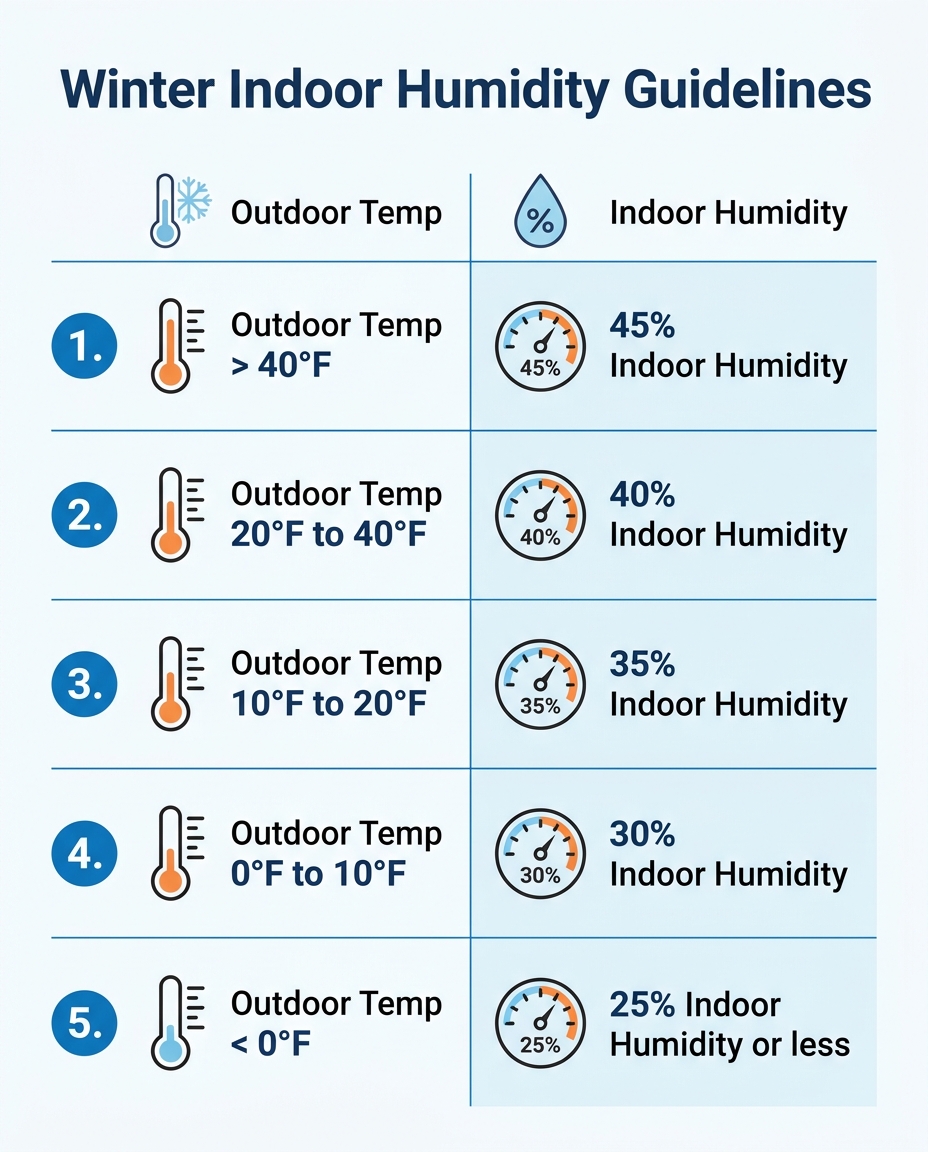
Finding the sweet spot for indoor humidity is a balancing act. You want the air moist enough to prevent dry skin, static shocks, and cracking wood furniture, but dry enough to protect your home's surfaces from condensation. The general rule of thumb is simple: as outdoor temperatures drop, your indoor humidity settings must also drop.
During the typical late-November and December cold snaps experienced in Western PA, outdoor temperatures frequently dip below 20 degrees Fahrenheit. When this happens, your indoor relative humidity should be lowered to 35 percent or less.
Winter Humidity Guidelines by Temperature
• Above 40°F — Recommended Maximum Indoor Humidity: 45% — Why This Setting Matters: Provides maximum comfort during mild late-fall days without risking condensation.
• 20°F to 40°F — Recommended Maximum Indoor Humidity: 40% — Why This Setting Matters: Standard setting for typical winter days; prevents static electricity and dry skin.
• 10°F to 20°F — Recommended Maximum Indoor Humidity: 35% — Why This Setting Matters: Crucial adjustment point during the first hard freeze to stop window sweating.
• 0°F to 10°F — Recommended Maximum Indoor Humidity: 30% — Why This Setting Matters: Protects window sills and exterior walls during severe overnight cold snaps.
• Below 0°F — Recommended Maximum Indoor Humidity: 25% or lower — Why This Setting Matters: Necessary during extreme polar vortex conditions to prevent ice formation on glass.
While some premium digital humidistats feature outdoor temperature sensors that automate these adjustments, standard manual dials require your vigilance. Keep an eye on the weather forecast; if a major freeze is coming, dial the humidity back the night before.
Differentiating Normal Condensation from Impending Window Failure
One of the most common fears we encounter in Westmoreland County and eastern Allegheny County is the assumption that sweating windows mean the glass itself has failed and needs to be replaced. Fortunately, you can usually determine the health of your windows with a simple physical check.
The Wipe Test
Run your finger or a dry cloth across the wet glass. If you can wipe the moisture away, the condensation is on the room-facing side of the glass. This is a normal physical reaction to high indoor moisture and extreme outdoor cold. Your window is doing its job by blocking the cold air; the moisture is simply an HVAC adjustment issue.
However, if the glass feels dry to the touch on the inside, but you still see fog, water droplets, or a milky haze, the condensation is trapped between the panes of glass. This indicates that the airtight seal holding the insulating argon gas between the panes has broken. In this specific scenario, the window unit has failed and will eventually need professional repair or replacement.
The Risks of Ignoring Room-Side Sweating
Even though room-side condensation is a normal reaction, it should never be ignored. If water continuously pools on the sills night after night, it will eventually cause serious damage. Common risks include:
• Damaged wood: Window frames and sills will warp, rot, and soften as they absorb standing water.
• Peeling paint: Moisture breaks down the adhesion of interior paint, causing it to flake off around the window trim.
• Localized mold growth: Dark, damp corners of window frames are prime breeding grounds for black mold and mildew, which can degrade your indoor air quality.
A simple turn of the humidistat dial is usually the cure, saving you from unnecessary window replacement panics and costly drywall repairs.
Protecting Your Home's Indoor Air Quality All Season Long
Managing winter condensation is just one piece of the puzzle when it comes to maintaining a healthy, comfortable home. Proper ventilation and airflow play a critical role in managing indoor moisture alongside your humidifier. If certain rooms in your house have closed vents, blocked return grilles, or poor duct design, the air in those spaces will stagnate. Stagnant air cools down much faster than circulating air, creating cold spots where condensation aggressively forms.
The Importance of System Airflow
Ensuring your heating system is running efficiently helps maintain consistent indoor temperatures across every room. When warm air is evenly distributed, it warms the interior surfaces of your home, making it harder for condensation to form on walls and windows. This is why keeping your furnace filter clean is so important—a dirty filter chokes the airflow, leading to colder peripheral rooms and increased moisture problems.
Proactive Seasonal Care
Before the deepest winter months arrive, it pays to have a professional evaluate your entire setup. Routine preventative HVAC maintenance ensures that all your indoor air quality accessories, including Aprilaire whole-home humidifiers and Energy Recovery Ventilators (ERVs), are calibrated correctly. An ERV, for example, is excellent at exchanging stale, overly humid indoor air with fresh outdoor air without losing your home's heat. A technician can verify that these systems are working in harmony with your furnace, preventing sudden breakdowns or severe moisture imbalances when you need your system the most.
Frequently Asked Questions About Winter Window Sweating
Why are my windows sweating on the inside in winter?
Windows sweat on the inside when warm, moist indoor air comes into contact with the cold surface of the window glass. The cold glass drops the temperature of the adjacent air, forcing it to release its moisture as liquid condensation. This is a common occurrence during the late November first hard freeze if your indoor humidity is set too high.
What should my humidifier be set at in cold weather?
As outdoor temperatures drop, your indoor humidity setting should also be reduced. When temperatures fall between 10 and 20 degrees outside, aim for an indoor humidity level of 35 percent. If temperatures dip closer to zero, you may need to lower the setting to 25 or 30 percent to prevent window condensation.
How do I stop condensation on my windows overnight?
The most effective way to stop overnight condensation is to lower the setting on your whole-home humidistat before you go to bed. Additionally, ensure your home has adequate airflow by keeping interior doors open and confirming that your furnace blower is circulating air effectively across the windows.
Is condensation on windows bad for my home?
While the condensation itself is just water, allowing it to sit on your windows is bad for your home. Continuous pooling water can ruin the finish on wooden sills, cause paint to peel, and create the perfect damp environment for mold and mildew to grow around the window frames.
Can a clogged humidifier pad cause excess window condensation?
Yes, a heavily scaled or clogged humidifier pad can disrupt the proper distribution of moisture and restrict airflow through your HVAC system. This can lead to erratic humidity levels and poor air circulation, both of which contribute to condensation forming in colder areas of the home.
Dial In Your Winter Comfort with Expert Local Guidance
Managing indoor condensation when the Pennsylvania cold snaps arrive is ultimately about finding the right balance between personal comfort and protecting your home's structure. You need enough moisture to keep your family comfortable, but not so much that your windows spend the winter covered in sweat. Reaching that balance starts with a simple adjustment to your humidifier dial as the outdoor temperatures drop across Westmoreland County and eastern Allegheny County.
If you have lowered your humidistat and are still waking up to heavy window condensation, or if your home feels uncomfortably dry despite the humidifier running, it might be time for a professional assessment. Don't let poor indoor air quality or erratic humidity levels compromise your winter comfort. Reach out to schedule a seasonal inspection, and let an expert help you calibrate your system for the cold months ahead.