
Adjusting Your Whole-Home Humidifier Settings as November Temperatures Drop
The Sudden Shift: When November Weather Freezes Your Windows
When the first hard freezes hit, adjusting your whole-home humidifier settings as November temperatures drop becomes an immediate priority for your home. At Cochran Heating & Cooling, we know firsthand how November in Western Pennsylvania brings a sharp, undeniable chill to the air, rapidly transitioning from mild fall afternoons to freezing overnight lows. You wake up, pull back the curtains, and find a thick layer of condensation—or worse, solid ice—coating the inside of your bedroom windows.
Many homeowners immediately assume their windows are failing or their heating system is malfunctioning. Here is a pattern we see often: window condensation during a cold snap is rarely a defect in the glass. Instead, it is a clear sign that your indoor humidity is set too high for the current outdoor temperature. Your house is simply holding onto more moisture than the cold weather allows.
The solution does not require replacing your windows. It requires proactive management of your humidistat. If you are looking to optimize your indoor air products, understanding how to manage this seasonal moisture shift is the very first step. By learning how to monitor the weather and adjust your equipment accordingly, you can protect your window sills from water damage while keeping your living spaces comfortable all winter long.
The Physics of Condensation During a Hard Freeze
To understand why your windows sweat when the weather turns cold, you have to look at the relationship between heat and moisture. Warm air acts like a sponge, holding significantly more moisture than cold air. When your furnace is running, the warm air circulating through your rooms carries the water vapor produced by your humidifier.
However, the rapid late-fall temperature swings typical of Jeannette and Greensburg area homes often catch homeowners off guard—an issue our team responds to year after year. You might go to bed when it is 45°F outside, only to have the temperature plummet into the low 20s by dawn. This sudden drop creates a powerful thermal bridge effect on your window glass. Even highly insulated, double-pane windows will become cold to the touch when the outdoor air is freezing.
The Dew Point and Window Frost
When the warm, humid air inside your home comes into contact with the freezing cold glass of your windows, the air rapidly cools down. As it cools, it loses its ability to hold moisture. The exact temperature at which the air can no longer hold its water vapor is called the dew point.
Once the air hitting your window reaches that dew point, the invisible moisture turns into liquid water droplets. If the outdoor temperature continues to drop well below freezing, that liquid condensation turns directly into frost on the inside of your home.
The risks of ignoring window condensation:
• Wood rot: Melting frost pools on wooden window sills, eventually causing the wood to soften and rot.
• Mold growth: Persistent moisture in window tracks creates the perfect breeding ground for black mold.
• Peeling paint: Water damage quickly ruins the paint and drywall immediately surrounding the window frame.
• System strain: Excess moisture can force your heating services and equipment to work harder to maintain a balanced indoor climate.
Stopping this cycle means lowering the amount of moisture in the air before the cold front arrives.
Target Settings: Mapping Indoor Humidity to Outdoor Temperatures
In our experience as local technicians at Cochran Heating & Cooling servicing systems across Westmoreland County, we see firsthand how generic, national advice falls short. You cannot simply set your humidistat to 40% in October and ignore it until April. Managing indoor air quality requires a dynamic approach based on specific outdoor temperature thresholds.
Organizations like ASHRAE (American Society of Heating, Refrigerating and Air-Conditioning Engineers) and leading manufacturers provide clear baseline recommendations for winter indoor humidity. The colder it gets outside, the lower your indoor humidity must be to prevent condensation.
The Temperature-to-Humidity Framework
We recommend using the following targets to keep your home balanced during November temperature drops:
• At 40°F outside: Maintain indoor humidity around 45%. This is typical for early fall and provides maximum comfort.
• At 30°F outside: Reduce indoor humidity to 40%. You will still feel comfortable, but you are preparing the house for colder nights.
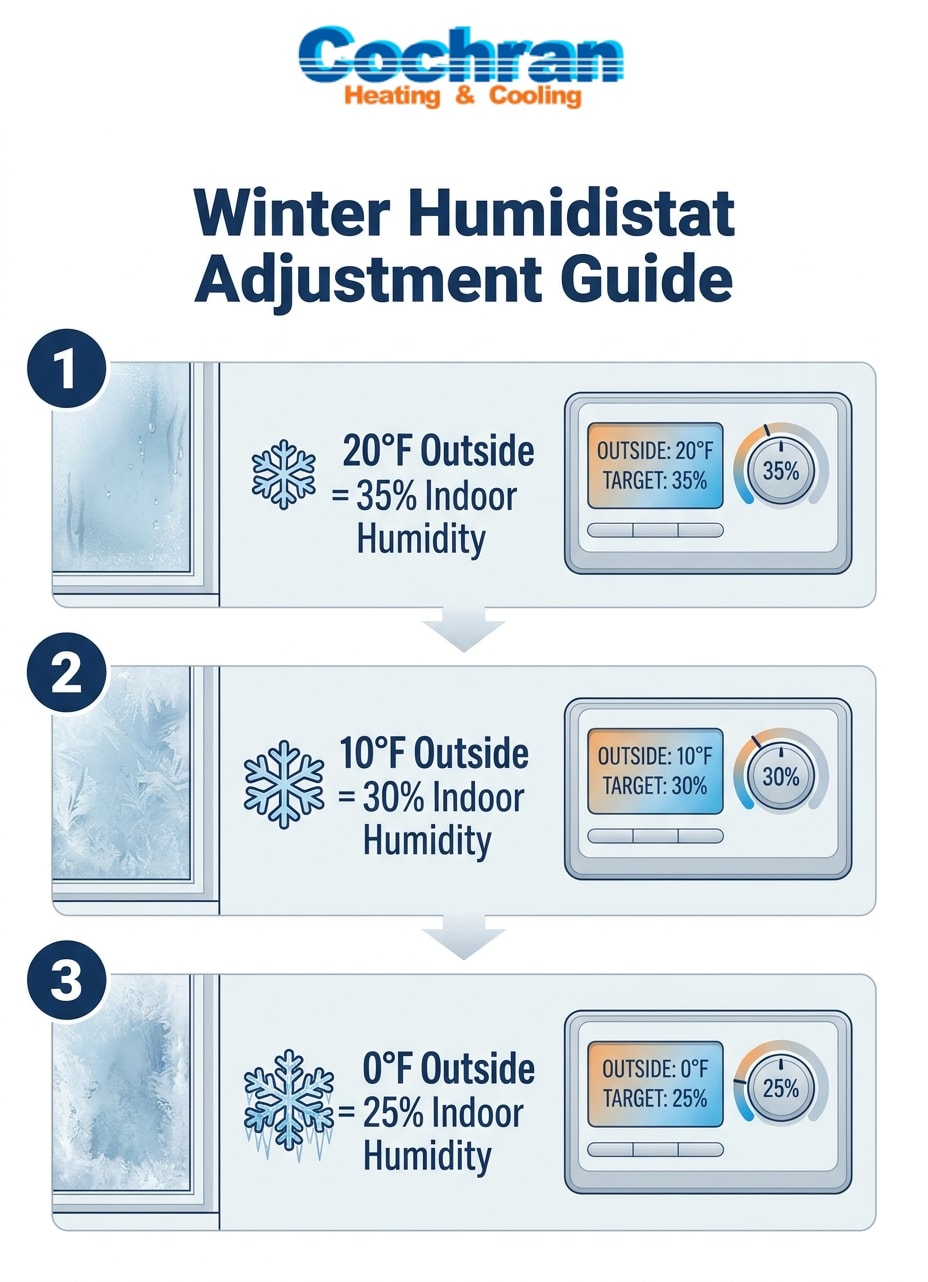
• At 20°F outside: Drop indoor humidity to 35%. This is the critical threshold where most homes begin to show window condensation if settings are left too high.
• At 10°F outside: Indoor humidity should not exceed 30%. The air will feel slightly drier, but this protects your windows.
• At 0°F outside: Drop indoor humidity to 25%. During extreme cold snaps, protecting the home's envelope becomes the primary goal.
These are not set-and-forget numbers. They are dynamic targets. When the weather forecast shows a sudden freeze approaching, you must adjust your settings to match the upcoming conditions.
How to Manually Adjust Your Humidistat Ahead of a Cold Front
If you have an automated humidistat with an outdoor temperature sensor, the system will make these mathematical adjustments for you. However, most homes feature a manual humidistat. Operating a manual unit requires you to act as the sensor, monitoring the weather and making changes ahead of time.
Because humidity takes time to dissipate from your home's air, furniture, and carpets, you cannot wait until the frost appears to make a change. You must act proactively.
Step-by-Step Preparation for Freezing Weather
1. Locate your humidistat: You will typically find the humidistat dial mounted directly on the return air duct near your furnace, though some are installed on the wall next to the main thermostat.
2. Check the overnight forecast: Look at the projected low temperature for the next 24 to 48 hours, not just the daytime high.
3. Dial down gradually: Between 12 and 24 hours before the cold front hits, lower the percentage dial to match the target settings outlined above. Make changes in 5% increments.
4. Monitor your windows: Keep an eye on the bottom corners of your windows over the next day. If condensation persists despite the adjustment, lower the setting by another 5%.
Why the 24-hour lead time matters: Your home absorbs moisture like a sponge. Your drywall, hardwood floors, and fabric furniture all hold water vapor. When you turn the dial down, your system stops adding moisture, but it takes time for the existing humidity to cycle out through natural ventilation. Understanding how a clogged humidifier pad affects your furnace's heating output is also vital, as poor airflow can trap moisture and cause the system to struggle during these transitions.
Balancing Indoor Comfort and Home Protection During Cold Snaps
One of the most common concerns homeowners have is the trade-off between keeping the air moist for personal comfort and keeping it dry enough to protect the home. It is true that dropping your indoor humidity to 25% during a zero-degree cold snap might make the air feel slightly drier than you would prefer. You might notice more static electricity or feel that your skin is a bit dry.
However, this temporary discomfort is necessary to protect your home's envelope. Sudden 20-degree temperature plummets put immense strain on your equipment and indoor air quality balance. Our technicians at Cochran Heating & Cooling see this frequently when extreme pre-winter weather hits the region. For example, during a bitter 20-degree night, our team responded to a local homeowner experiencing a complete heating emergency. We diagnosed the problem and provided space heaters so the family had temporary heat until replacement parts arrived.
When your furnace systems are working overtime to fight off a deep freeze, pushing too much moisture into the air only compounds the stress on your home.
Strategies for Personal Comfort
While the whole-home humidity is dialed back, you can use localized strategies to stay comfortable until the weather breaks:
• Stay hydrated: Drinking more water helps combat the feeling of dry air from the inside out.
• Use localized room humidifiers: If your bedroom feels too dry at night, running a small, portable humidifier with the door closed can provide comfort without risking condensation on every window in the house.
• Adjust immediately after the freeze: As soon as the cold snap breaks and outdoor temperatures rise back into the 30s or 40s, you can safely raise your humidistat back to 35% or 40%.
When to Call a Professional for IAQ and Heating Maintenance
Sometimes, you can follow all the rules, dial the humidistat down perfectly, and still wake up to sweating windows. If you have reduced the setting to 25% but condensation persists, you are likely dealing with a ventilation issue or an equipment malfunction.
A whole-home humidifier is integrated directly into your HVAC system. If one part of that system fails, the moisture control fails with it. Routine check-ups are essential to ensure the humidifier solenoid valve is opening and closing correctly, and that the humidistat sensors are communicating with the furnace accurately.
What Professionals Check During a Visit
If your home struggles to maintain consistent comfort, our technicians will look for several common culprits:
• The water panel (pad): The humidifier pad must be changed annually. A scaled or clogged pad prevents proper evaporation and can restrict furnace airflow.
• The solenoid valve: If this valve gets stuck in the "open" position, water will run continuously, flooding the system with excess moisture regardless of your dial settings.
• The bypass damper: Many systems have a seasonal damper that must be opened in the winter and closed in the summer. If it is in the wrong position, moisture will not distribute properly.
Staying ahead of these mechanical issues requires routine HVAC maintenance. A professional evaluation ensures that your heating and indoor air quality systems work together seamlessly, rather than fighting against each other.
Frequently Asked Questions About Winter Humidifier Settings
What should my humidifier be set at when it's freezing outside?
When temperatures fall below 32°F, you should aim for an indoor humidity setting of 35%. As the outdoor temperature drops to 10°F, lower the setting to 30%. If the weather plummets to 0°F or below, reduce the humidistat to 25% to protect your windows from freezing condensation.
How do I stop condensation on my windows in winter?
The fastest way to stop winter window condensation is to lower your whole-home humidifier setting by 5% to 10%. You must reduce the amount of moisture in the air so it does not reach the dew point when it touches the cold glass. Additionally, ensure your home has proper ventilation by running exhaust fans while cooking or showering.
Why are my windows sweating with the humidifier on?
Your windows sweat because the indoor air contains too much moisture for the current outdoor temperature. When the warm, moist indoor air hits the freezing window glass, it cools rapidly and condenses into liquid water droplets. Lowering the humidistat resolves this imbalance.
Should I turn down my humidifier when it gets colder outside?
Yes, you must turn down your humidifier when the weather gets colder. Cold air holds less moisture, meaning your home's windows and walls will become colder. If you leave the humidity high during a freeze, that moisture will turn into damaging frost on your window sills.
What happens if my humidifier is set too high?
If your humidifier is set too high during the winter, excess moisture will accumulate on cold surfaces throughout your home. This leads to window condensation, peeling paint, damp insulation, and an increased risk of mold growth in hidden areas like window tracks and exterior wall cavities.
How often should I change my whole-home humidifier pad?
You should change your whole-home humidifier pad at least once a year, typically right before the heating season begins in the fall. If you have particularly hard water with high mineral content, you may need to replace the pad twice a season to ensure proper evaporation and prevent airflow blockages.
Prepare Your Home's Air Quality for Winter's Worst
Navigating the sharp temperature drops of late fall does not have to be a guessing game. By understanding the relationship between outdoor weather and indoor moisture, you can make proactive humidistat adjustments that protect your windows from damaging frost. Remember to watch the forecast, dial down your settings in 5% increments ahead of a freeze, and raise them back up once the cold snap passes.
If you find that your windows are still sweating despite making the right adjustments, or if your home feels uncomfortably dry, it is time to ensure your entire heating and indoor air quality system is ready for the season. Schedule your seasonal check-up with Cochran Heating & Cooling before deep winter sets in. A professional evaluation provides a clear, temperature-based framework for your equipment, allowing you to stop the condensation without sacrificing your family's comfort.