Why Your Furnace Blower Motor Trips the Breaker During the First Deep Freeze
The Sudden Chill: When Your Furnace Breaker Trips in Freezing Temperatures
The temperature outside is plummeting, the house is growing colder by the minute, and a quick check of your electrical panel reveals the culprit: a tripped circuit breaker. When it comes to troubleshooting furnace electrical issues, that flipped switch is often the first sign of a much deeper mechanical struggle. Losing heat during an extreme cold snap induces immediate panic, and the temptation to simply flip the breaker back on and hope for the best is incredibly strong. However, treating your electrical panel like a simple reset button can lead to catastrophic system failure.
At Cochran Heating & Cooling, our team typically sees a distinct pattern when responding to winter heating emergencies across the local area. Homeowners often view a tripped breaker as a random electrical nuisance, but these trips are almost always symptoms of severe underlying mechanical strain. Before you reach for that switch again, it is critical to understand the safety mechanisms working behind the scenes to protect your home. For comprehensive residential HVAC services, the first step is recognizing that your furnace is trying to tell you something is wrong.
Understanding the Mechanics of a Tripped Furnace Breaker
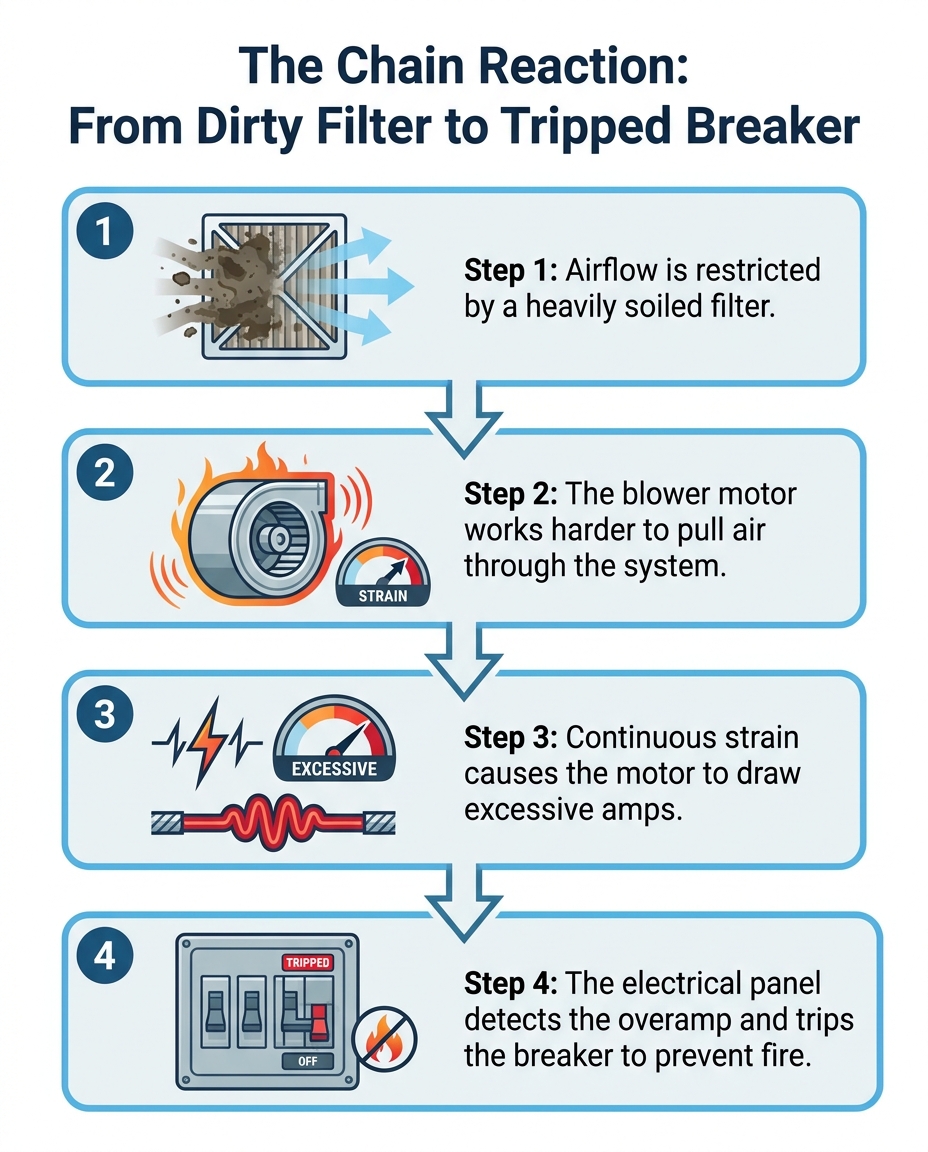
To truly grasp why your heating system is failing, our technicians often help homeowners shift their perspective from viewing the tripped breaker as an annoyance to recognizing it as a vital, life-saving safety feature. Circuit breakers are specifically designed to monitor the flow of electricity to a dedicated circuit. If the components on that circuit begin pulling more electrical current (measured in amps) than the wiring can safely handle, the breaker intentionally interrupts the power flow to prevent the wires from overheating and starting an electrical fire.
When mechanical components inside your furnace begin to fail or struggle, they require more energy to perform their job. This mechanical strain translates directly into an electrical overload at the panel. The furnace control board, the blower motor, and your home's electrical panel are in constant communication. If the motor encounters resistance, it demands more voltage and pulls higher amperage to force the fan to spin. Once that amp draw crosses the safety threshold, the system shuts down. If you want to dive deeper into why your HVAC system trips circuit breakers, it helps to look at the specific components involved in this chain reaction.
• Blower Motor — Normal Operation Role: Circulates heated air smoothly through the ductwork at a steady amp draw. — What Happens During Mechanical Strain: Overworks against resistance, pulling excessive electrical current and overheating.
• Control Board — Normal Operation Role: Routes the correct voltage to the motor and monitors system safety limits. — What Happens During Mechanical Strain: Experiences voltage drops and surges, risking permanent burnout of sensitive relays.
• Circuit Breaker — Normal Operation Role: Allows safe, continuous power flow within the rated amperage limit (often 15 or 20 amps). — What Happens During Mechanical Strain: Detects the motor's unsafe electrical draw and trips to sever power instantly.
Why Extreme Cold Snaps Expose Hidden Mechanical Strain
Heating systems operate very differently during a mild autumn evening compared to a severe winter storm. When sudden Western Pennsylvania temperature drops plunge into the teens or single digits, your furnace is forced into continuous, grueling running cycles just to maintain a baseline indoor temperature. This relentless demand is exactly why underlying mechanical issues suddenly manifest as electrical failures.
During milder weather, a furnace might run for fifteen minutes and then rest for thirty. These cooling-off periods allow the internal components, particularly the blower motor, to shed excess heat. However, during the first winter deep freeze, that same motor might run for hours without a break. Weak or aging blower motors that managed to survive the autumn workload are pushed far past their physical limits when forced to run continuously.
• Elimination of cooling periods: Continuous operation causes internal motor windings to retain heat, increasing electrical resistance.
• Lubrication breakdown: Older motors with failing bearings experience increased friction as they heat up, requiring more electricity to overcome the physical drag.
• Gradual amperage climb: As the motor struggles against the cold weather demands, its electrical draw steadily climbs until it breaches the breaker's safety threshold.
This is why a furnace that seemingly worked perfectly yesterday will suddenly begin tripping the breaker today. The extreme cold didn't necessarily break the system; it simply exposed a weakness that was already developing.
The Only Safe DIY Check: Inspecting Your Air Filter
While the root cause of an electrical overload requires professional diagnostics, our team at Cochran Heating & Cooling always points to one critical, actionable troubleshooting step you can take safely. A heavily soiled, clogged air filter is one of the leading causes of severe blower motor strain. When airflow is restricted by a wall of dust and debris, the physics of the system change dramatically. The blower motor is forced to work exponentially harder to pull air through the blockage, causing it to draw excessive amps in the process.
Inspecting and replacing your filter is the only troubleshooting step a homeowner should perform without a licensed professional. Opening the furnace cabinet to test electrical components carries a severe risk of shock or injury.
1. Turn off the power: Ensure the thermostat is set to "off" and leave the tripped breaker in the off position. Do not restore power yet.
2. Locate the filter compartment: Find the filter slot, typically located where the return air duct meets the main furnace cabinet.
3. Remove and inspect the filter: Pull the filter out and hold it up to a light source. If you cannot see light shining through the media, the filter is completely clogged.
4. Install a fresh filter: Slide a new, clean filter into the slot, ensuring the airflow arrows point directly toward the furnace cabinet.
5. Test the system once: After the new filter is secured, you may flip the breaker back on and set the thermostat to heat. If the breaker trips again, do not reset it a second time.
The Severe Dangers of Repeatedly Resetting a Tripped Breaker
There is a dangerous psychological habit among homeowners to treat the breaker panel like a computer reset button. We often assume that if a device stops working, turning it off and on again will clear the "glitch." However, a tripped furnace breaker is never a glitch. Resetting a breaker does absolutely nothing to fix the underlying mechanical restriction that caused the trip in the first place.
By forcing electricity back into a compromised system, you are actively bypassing the very safety mechanism designed to protect your property. If the blower motor is locked up or struggling, sending a fresh surge of power into it will cause the internal windings to overheat rapidly. Doing this repeatedly guarantees permanent motor burnout, transforming what might have been a minor repair into a major component replacement.
When a Nuisance Becomes a Fire Hazard
The risks escalate far beyond a broken motor. Repeated electrical surges send dangerous voltage spikes backward through the furnace control board. Control board failure: The delicate microprocessors and relays on the board will eventually scorch and fail under the stress of repeated overamping. Melted wiring insulation: Worse still, if you reset the breaker enough times, the breaker itself can weaken and fail to trip the next time. If the breaker fails to interrupt the circuit, the wires feeding your furnace will continue to heat up until the insulation melts, creating a severe risk of an electrical fire hidden within your walls.
Professional Diagnostics: What Happens When a Blower Motor Overamps
When a system repeatedly shuts down, it requires professional intervention to trace the exact source of the electrical fault. A licensed technician approaches the problem systematically, prioritizing safety and accurate diagnostics over guesswork. The primary suspect in these cases is often a blower motor drawing excessive amps, but confirming that requires specialized tools and training.
Our licensed technicians use digital multimeters to measure the exact amp draw of the blower motor while it operates. By comparing the actual electrical draw against the manufacturer's maximum rating stamped on the motor's data plate, we can immediately see how much strain the system is under. But the motor is rarely the only component checked.
• Testing the run capacitor: A weak or failing capacitor will cause the blower motor to pull much higher amperage than normal just to keep spinning.
• Inspecting wiring connections: Loose electrical connections create intense resistance and heat, which can easily trigger a breaker trip.
• Evaluating motor windings: Technicians use a meter to check the internal copper windings for electrical shorts to the motor casing.
Based on these readings, professionals determine if a motor can be saved with minor adjustments or if the internal damage is permanent. Because these diagnostic steps involve testing live, high-voltage circuits, they strictly require a licensed professional to ensure complete safety and code compliance. Securing a reliable heating repair service is the only way to accurately diagnose and resolve these hidden electrical faults.
Our Methodology for Reliable Winter Heating Repairs
We understand that losing heat in the middle of winter is incredibly stressful. That is why our approach to emergency service prioritizes transparent, safety-first diagnostics over quick, temporary band-aids. In our years of experience servicing Westmoreland County communities like Greensburg and North Huntingdon, the team at Cochran Heating & Cooling knows that regional winters demand heating systems that function flawlessly under extreme pressure.
Working with a family-owned, local expert means you receive service grounded in the realities of the local climate. We do not just flip the breaker and walk away. Our methodology focuses on properly identifying the root cause of the mechanical strain—whether it is a failing capacitor, a seized bearing, or severe airflow restriction. We take the time to explain exactly what has failed and why, providing clear options for restoring your heat safely. When local temperatures plummet, you need to trust that the technician in your basement understands the specific demands placed on your equipment. If a system has suffered catastrophic electrical damage from repeated resets, we also provide honest guidance on professional furnace replacement options to keep your home safe and warm.
Common Questions About Furnace Electrical Failures
Why does my furnace keep tripping the circuit breaker?
Your furnace trips the circuit breaker because a component, usually the blower motor, is drawing more electrical current than the circuit can safely handle. This overamping is typically caused by severe mechanical strain, such as a clogged air filter, a failing capacitor, or a seized motor bearing. The breaker trips intentionally to cut power and prevent an electrical fire.
Is it safe to reset my furnace breaker?
It is generally safe to reset a tripped furnace breaker exactly once, but only after you have checked and replaced a dirty air filter. If the breaker trips a second time, it is no longer safe to reset it. Repeatedly forcing power into a struggling system risks permanent motor burnout, control board damage, and severe electrical fire hazards.
Can a dirty filter cause electrical problems in a furnace?
Yes, a dirty filter is one of the most common causes of electrical overloads in a heating system. When the filter is clogged, the blower motor must work significantly harder to pull air through the restriction. This intense mechanical effort causes the motor to pull excessive electrical amps, which ultimately trips the circuit breaker at your panel.
Why did my furnace suddenly lose power during a cold snap?
During a severe cold snap, your furnace is forced to run continuously to combat the freezing temperatures outside. This constant operation eliminates the normal cooling-off periods for the internal motors. Weak or aging components that survive mild weather easily overheat and overamp during these long running cycles, resulting in a sudden loss of power.
How do I fix an electrical problem on my furnace safely?
The only safe DIY fix for a homeowner is inspecting and replacing a heavily soiled air filter to ensure proper airflow. All other electrical repairs, including testing capacitors, measuring amp draws, or inspecting motor windings, require live high-voltage testing. These tasks must be performed by a licensed HVAC professional to prevent serious injury or property damage.
What causes a furnace blower motor to draw too many amps?
A blower motor draws too many amps when it faces excessive physical resistance or electrical degradation. Common causes include severely restricted airflow from dirty filters or blocked vents, failing internal motor bearings creating friction, or a weak run capacitor failing to provide the necessary electrical support to keep the motor spinning efficiently.
Restore Your Home's Warmth Safely and Effectively
A tripped furnace breaker is rarely a simple electrical glitch; it is a clear symptom of a larger mechanical issue, often triggered by the continuous strain of severe winter cold. While checking your air filter is the only safe DIY step you can take, addressing the underlying mechanical failure requires expert attention. Do not risk your family's safety by repeatedly resetting a struggling system. When you need proper troubleshooting furnace electrical issues, prioritize safety and schedule a professional diagnostic. Reach out for furnace repair and troubleshooting to get to the root of the problem and restore reliable heat to your home.