Is a 24-Hour HVAC Repair Necessary for a Squealing Blower Belt?
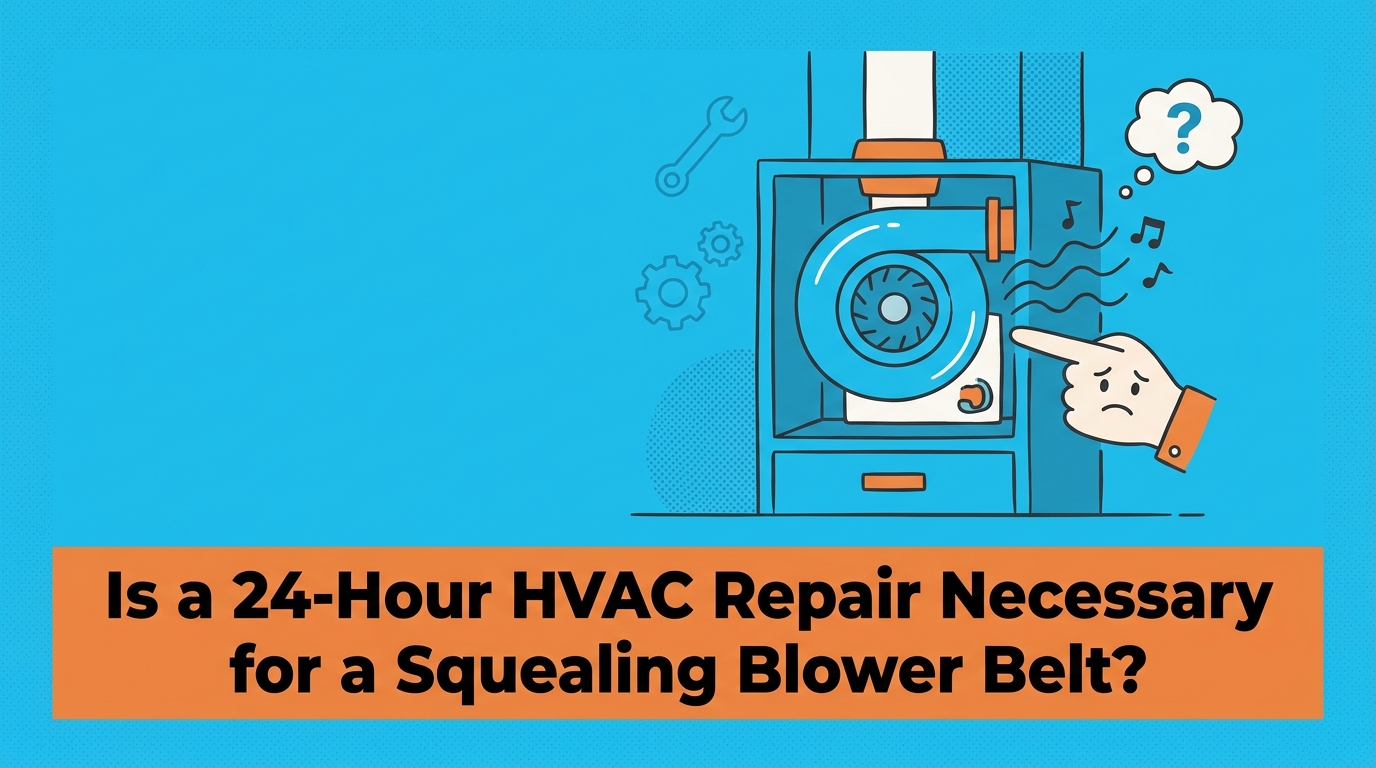
Diagnosing That Late-Night Furnace Squeal: Emergency or Morning Fix?
Is a 24-Hour HVAC Repair Necessary for a Squealing Blower Belt? This is the exact question you ask yourself when you wake up at 2:00 a.m. to a harsh, piercing noise echoing from the basement. A high-pitched metallic squeal from your heating system is impossible to ignore. It sounds alarming, and in the dead of night when the house is otherwise completely silent, it feels like a catastrophic failure is only seconds away.
In our experience diagnosing older heating systems, we know that this specific noise triggers immediate anxiety. You have to decide right now whether to request an immediate midnight emergency dispatch or wait to schedule standard business-hours service. Making the wrong choice means either risking severe damage to your home or paying for an after-hours visit that could have safely waited until dawn.
The short answer is that the true urgency depends less on the noise itself and much more on the outdoor temperatures and the specific risks to your property. We will break down exactly what that high-pitched metallic squeal means, how your system protects itself, and how to make the right call for your home.
Understanding the Source of the Squealing Blower Belt
To make an informed decision, you need to understand exactly what is happening inside your furnace cabinet. Modern furnaces often use direct-drive motors, but many older heating systems rely on belt-driven furnace blowers. These systems use heavy-duty rubber belts to connect the electric motor to the large fan assembly that pushes air through your ductwork.
Over years of heavy use, constant heat, and rapid temperature changes, these rubber belts degrade. The material dries out, glazes over, and eventually begins to crack. When a worn, hardened belt loses its tight grip on the metal pulleys, it begins to slip as the motor turns.
That slipping action is exactly what produces the distinct high-pitched metallic squeal. You are hearing the sound of hardened rubber dragging rapidly across metal pulleys at high speeds. Beyond the highly annoying sound, a slipping belt significantly reduces the airflow moving through your ductwork. The motor spins at full speed, but the fan blade lags behind. This forces your entire heating system to work much harder to push warm air into your living spaces.
While understanding the mechanics helps diagnose the issue, you should never attempt to open the blower compartment or adjust the belt yourself. Accessing this area exposes you to high-voltage components, and setting the proper belt tension requires professional calibration to avoid destroying the motor bearings.
How Reduced Airflow Impacts the Heat Exchanger
If the belt slips too much, the blower simply cannot move enough air over the heat exchanger. The heat exchanger is the critical metal component that actually warms the air before it enters your home.
Without a steady, strong breeze from the blower fan to pull that heat away, the heat exchanger absorbs too much thermal energy. It begins to overheat rapidly. Fortunately, your furnace has a built-in safety device called a high-limit switch. When this switch detects dangerously high temperatures in the heat exchanger, it immediately shuts down the burners to prevent damage, leaving your home without active heating.
Separating Mechanical Warnings from Immediate Safety Hazards
When you hear loud, grinding, or squealing noises from the basement, it is easy to assume the worst. However, you must separate a mechanical warning sign from an immediate safety threat to make a rational decision.
The Problem: In communities across Westmoreland County (North Huntingdon / Greensburg), we frequently see homeowners panic over this exact noise. They understandably worry that the intense friction might start a fire, cause an explosion, or leak dangerous gases into the home while their family sleeps.
The Cause: A squealing belt is typically a mechanical warning sign of imminent failure, not an immediate fire or safety hazard. It simply means a moving part is wearing out and losing its grip. The system is struggling mechanically, but it is not inherently dangerous in that exact moment.
The Solution: Your heating system features multiple built-in safety mechanisms specifically designed to protect your home. As mentioned, the high-limit switch will shut the system down long before a mechanical failure like a slipping belt becomes a dangerous overheating situation. While the heating system definitely needs professional repair to restore proper function, the noise alone does not automatically mandate a midnight dispatch. You are safe in your home while the system is squealing.
The Real Emergency Trigger: Freezing Temperatures and Pipe Risks
If the noise itself is not a safety hazard, what actually determines whether you need a technician right now? The answer lies just on the other side of your windows.
During the Western PA winter heating season, the focus shifts entirely from the furnace noise to the outdoor environment. With average winter overnight lows regularly dropping well below freezing in our region, a failing heating system quickly becomes a structural risk to your property.
If a squealing belt finally snaps during a severe cold snap, the blower stops completely. The high-limit switch shuts down the furnace, and your home will rapidly lose heat. Without that warm air circulating, indoor temperatures can plummet to dangerous levels in a matter of hours.
This creates a severe vulnerability for older housing stock. Many homes in our area feature plumbing routed through poorly insulated exterior walls, crawlspaces, or unheated basements. The true emergency is the risk of frozen and bursting pipes if the heating system remains disabled overnight. Water expands as it freezes, shattering copper and PVC pipes with immense force.
Ignoring this severe climate risk can lead to devastating consequences. Failing to act when temperatures are dangerously low often results in the hidden cost of delaying a 24-hour HVAC repair, which includes massive water damage, ruined drywall, and flooded basements from burst pipes.
How to Safely Manage a Squealing Heating System Until Morning
If you assess the outdoor temperatures and decide you can safely wait for standard business hours, you still need to manage the high-pitched metallic squeal through the night. Taking the right steps will protect your equipment from further damage while keeping your home as comfortable as possible until a professional arrives.
Follow these temporary stopgap measures to safely get through the night:
1. Assess the indoor temperature: If your home is already warm and well-insulated, you may choose to turn the system completely off at the thermostat. This eliminates the noise entirely and prevents the belt from snapping while you sleep.
2. Lower the thermostat slightly: If it is too cold outside to turn the system off entirely, lower your thermostat by three to five degrees. This reduces the frequency of heating cycles, minimizing the strain on the failing belt while maintaining a safe baseline level of warmth.
3. Check your air filter: A clogged air filter restricts airflow, forcing the blower motor to work harder and increasing the strain on an already slipping belt. If your filter is visibly dirty, replace it immediately to relieve some of the mechanical pressure.
4. Keep the cabinet closed: Do not attempt to open the blower compartment to inspect the belt while the system has power. There are high-voltage components and fast-moving parts inside that pose a significant shock and injury risk.
5. Never use household lubricants: Do not attempt to lubricate the belt or pulleys with WD-40, silicone sprays, or other household products. WD-40 is a solvent that will break down the rubber, worsen the slipping, and permanently damage the motor components.
The "Wait for Morning" vs. "Call Now" Triage Checklist
Making the final decision requires a clear, objective look at your specific situation. We believe in providing honest, transparent guidance that helps homeowners avoid unnecessary after-hours emergency fees while keeping their homes perfectly safe.
Our priority is protecting both your heating system and your wallet. If you live in Westmoreland County (North Huntingdon / Greensburg) and are weighing your options tonight, use this transparent assessment to make the right call for your family.
• Mild or moderate outdoor temperatures (above freezing) — Call 24-Hour Emergency: Severe freezing temperatures and high wind chills
• Noise is intermittent or only happens at startup — Call 24-Hour Emergency: Noise is deafening, or the system has already tripped off entirely
• Home is well-insulated and holds heat well — Call 24-Hour Emergency: Home loses heat rapidly or has exposed plumbing in exterior walls
• Household members are healthy adults — Call 24-Hour Emergency: Vulnerable occupants in the home (infants, elderly, or medically fragile)
• Airflow from the vents still feels relatively strong — Call 24-Hour Emergency: Airflow from the vents is extremely weak or non-existent
If your situation aligns with the "Wait Until Morning" column, you can safely lower the thermostat, get some sleep, and call for a standard service appointment at dawn. If you check multiple boxes in the "Call Now" column, it is time to bring in an emergency technician.

Frequently Asked Questions About Squealing Furnace Belts
Can I run my furnace if it's squealing?
Yes, but you must do so with extreme caution. Running a squealing furnace risks the weakened belt snapping completely while the system is operating.
If that belt snaps, the blower fan will stop turning immediately. The furnace burners will continue to fire for a short time, which causes the heat exchanger to overheat rapidly. Your system will likely trip the high-limit switch and shut down entirely to prevent a fire hazard. We recommend running it only if absolutely necessary to prevent your home from freezing, and setting the thermostat lower to reduce the length of the heating cycles.
How long will a squealing furnace belt last?
A high-pitched metallic squeal means the belt is already slipping, degrading, and near the very end of its lifespan. The exact timing of a complete failure is an unpredictable mechanical warning.
The belt could last for several more days of intermittent use, or it could snap during the very next heating cycle. Because the rubber is actively breaking down under high heat and intense friction, you should treat the noise as an indicator of imminent failure. Schedule a professional repair as soon as possible before the system breaks down completely.
Is a squeaky furnace dangerous?
A squeaky or squealing furnace is a mechanical issue, not an immediate fire hazard or safety threat to your family. The noise simply indicates that a moving part is wearing out.
Modern and older furnaces alike are equipped with sensitive safety switches. If the mechanical failure causes the system to overheat due to a lack of airflow, these switches will automatically cut the power to the gas valve. You do not need to evacuate your home over a squealing belt, but you do need to have it serviced promptly.
Will a broken blower belt cause my furnace to overheat?
Yes, a broken blower belt will quickly cause the internal components of your furnace to overheat. Without the blower motor actively moving cold air over the heat exchanger, the thermal energy has nowhere to go.
The heat exchanger will get dangerously hot in a matter of minutes. Fortunately, the high-limit switch will detect this rapid temperature spike and safely shut the burners off before any permanent damage or fire hazards occur. Your system will remain locked out until the belt is replaced and the airflow is restored.
Can I replace a squealing furnace blower belt myself?
No, you should never attempt to replace a furnace blower belt yourself. Replacing this component requires accessing high-voltage internal compartments and setting precise mechanical tension.
If a new belt is installed too tightly, the extreme tension will destroy the blower motor bearings, leading to a much more expensive repair. If it is installed too loosely, it will immediately begin slipping and squealing again. Always call a licensed professional to ensure proper alignment, tension, and safe operation.
Making the Right Call for Your Furnace's Health
Hearing a loud, high-pitched noise from your basement in the middle of the night is stressful, but you now have a clear, professional go/no-go checklist to guide your next steps. You can confidently decide if your squealing blower requires an immediate after-hours call or if it can safely wait for a morning appointment.
Remember that during the Western PA winter heating season, the outdoor temperature is the ultimate deciding factor. A mechanical noise is just a warning, but freezing pipes are a true emergency. By assessing your home's insulation, the outdoor weather, and the severity of the noise, you can protect your property without panicking.
When morning comes, or if you realize you need help right now, reach out to a local heating expert. Scheduling a thorough inspection and professional belt replacement will restore your system's quiet, reliable airflow, ensuring your home stays warm and comfortable for the rest of the season.