Preparing Manufactured Homes in Jeannette for Winter HVAC Loads
The Hidden Winter Heating Challenge for Jeannette Manufactured Homes
Your furnace is running nonstop, but the floors are still freezing and the back bedrooms feel like an icebox. Preparing Manufactured Homes in Jeannette for Winter HVAC Loads requires a completely different approach than standard residential winterization. At Cochran Heating & Cooling, our team has spent years working throughout the local area, and we see a distinct pattern when a Pennsylvania winter hits: homeowners often assume their furnace is broken when, in reality, the home's unique architecture is allowing the heat to escape before it ever reaches the living space.
Manufactured and mobile homes are built with specific architectural vulnerabilities. Because they sit above the ground rather than on a traditional poured foundation, the entire underbelly of the home is exposed to the elements. When sudden, harsh cold snaps roll through the region, this exposure leads to rapid heat loss. This creates a critical decision point for many homeowners: should you upgrade your heating equipment right away, or do you need to prioritize sealing and insulating the home's foundation and ductwork first?
For comprehensive support in addressing these unique challenges, explore our residential HVAC services to see how we help homeowners maintain consistent comfort year-round.
Standard winterization advice—like putting plastic over the windows or adding weatherstripping to the front door—often falls short for manufactured homes. While those steps are helpful, they do not address the massive amount of cold air circulating directly beneath your floorboards. Solving this problem requires a strategic look at how your home's envelope interacts with your heating system.
How Exposed Architecture Impacts Your HVAC Load
To understand why manufactured homes struggle during the colder months, you first have to understand the concept of "HVAC load." Your heating load is the exact amount of thermal energy your furnace must produce to keep the indoor temperature steady. In a site-built home with a basement or concrete slab, the earth provides a natural buffer against freezing winds. Manufactured homes lack this thermal buffer.
The Physics of Heat Loss Under the Floorboards
Because the home is elevated, freezing air constantly moves underneath the structure. If the underbelly is not properly sealed, this moving air rapidly strips heat away from the floor and the ductwork suspended beneath it. This continuous heat loss dramatically increases your HVAC load. Your furnace is no longer just heating the air inside your rooms; it is constantly fighting against the freezing temperatures pulling heat through the floor.
The long-term consequence: This continuous battle forces your heating system to run significantly longer cycles. Instead of turning on for ten minutes to warm the house and then resting, the furnace runs almost nonstop. Over time, this continuous operation causes severe wear-and-tear on internal heating components, leading to premature breakdowns and higher utility bills.
Before assuming that your furnace is simply undersized or failing, it is vital to address the building envelope. Taking the time for sealing ductwork leaks before winter ensures that the warm air your furnace produces actually makes it into your living space. In Jeannette and surrounding Westmoreland County communities, securing this lower boundary is the most effective way to reduce the strain on your heating equipment.
The Vulnerability of Crossover Ducts in Freezing Temperatures
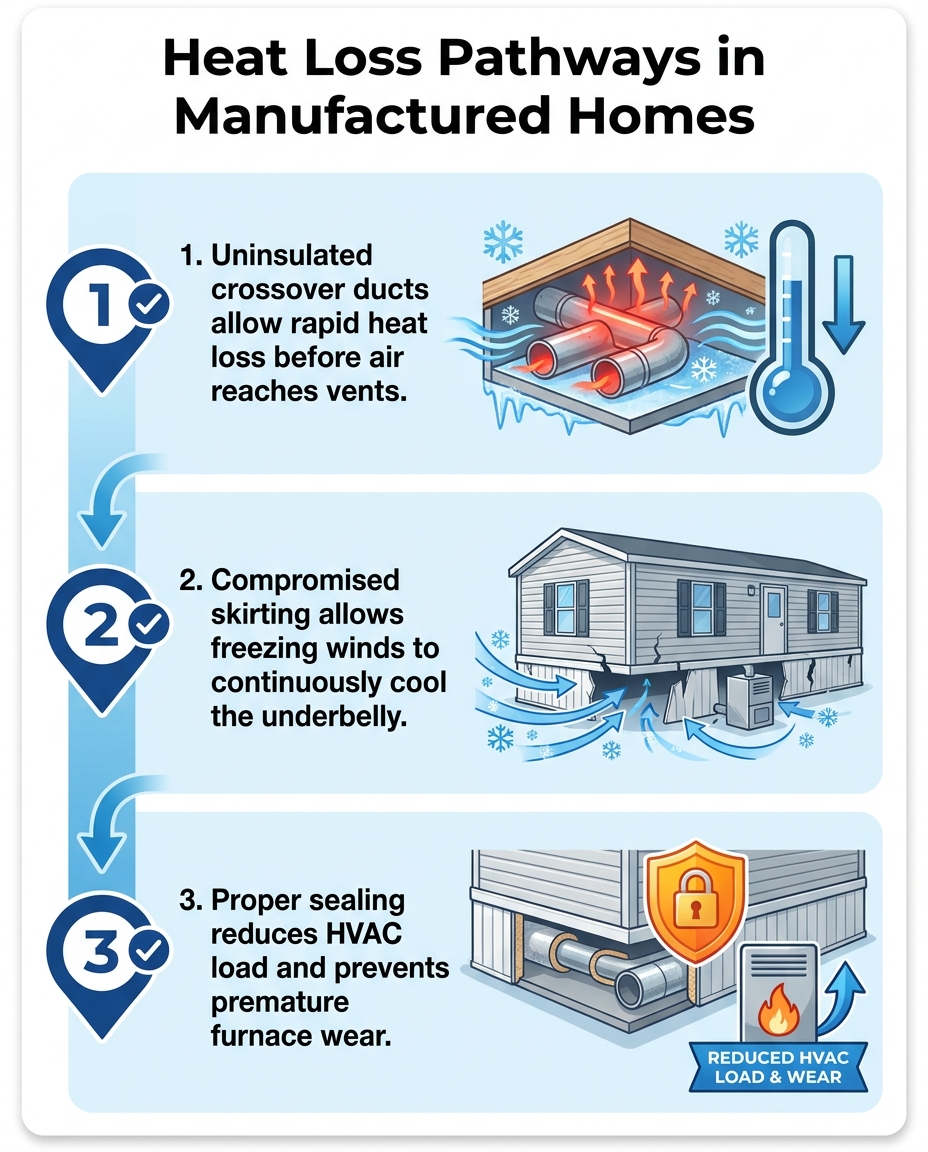
One of the most unique features of a double-wide manufactured home is the crossover duct. Because the home is built and transported in two separate sections, the ductwork must be connected on-site. This connection is made using a large, flexible tube called a crossover duct, which sits directly beneath the floor in the crawlspace.
Why Crossover Ducts Fail
During a harsh Pennsylvania winter, sustained freezing temperatures quickly penetrate thin or degraded insulation beneath the home. If the crossover duct is poorly insulated, torn, or improperly sealed at the connection points, it becomes a massive liability. You are essentially blowing highly heated air through a freezing tunnel. By the time the air reaches the registers on the other side of the home, it has lost a significant amount of thermal energy.
Signs of compromised crossover ducts:
• Uneven heating: One half of the house is comfortably warm while the other half remains freezing.
• Exceptionally cold floors: The floor directly above the ductwork feels like ice, indicating that freezing air is infiltrating the belly wrap.
• Weak airflow: Air barely trickles out of the vents on the far side of the home because it is escaping into the crawlspace.
• Spiking utility bills: The furnace runs constantly but the home never reaches the set temperature on the thermostat.
It is incredibly important to understand that sealing these ducts is a job requiring professional materials and expertise. At Cochran Heating & Cooling, we strongly warn against attempting DIY tape fixes. Standard duct tape dries out, cracks, and peels away quickly in freezing under-home conditions. Professional HVAC technicians use specialized mastics and heavy-duty mechanical fasteners designed specifically to withstand extreme temperature fluctuations without failing.
Why Skirting Integrity is a Prerequisite to Furnace Efficiency
The skirting around the base of your manufactured home is not just for visual appeal; it acts as the very first line of defense against wind and freezing air. When skirting is intact and properly ventilated, it creates a dead-air space under the home that acts as a buffer against the extreme cold.
The Domino Effect of Damaged Skirting
When skirting panels blow away, crack, or sink into the ground, that thermal buffer is destroyed. Freezing winds whip directly under the home. This not only leads to frozen pipes, but it also strips heat away from the ductwork at an alarming rate. If you have compromised skirting, investing in a brand-new, high-efficiency heating system will not yield the energy savings you expect. The new system will simply pump expensive heat into the freezing crawlspace, just like the old one did.
As an Authorized Trane & Comfortmaker Dealer, we often have to explain to homeowners that even top-tier, premium heating equipment cannot overcome a severely compromised building envelope. The home must be able to hold the heat the furnace generates. Transitioning to proper skirting insulation reduces the need for constant, emergency furnace repair and troubleshooting because the equipment no longer has to work double-time to compensate for structural heat loss.
Professional Load Management vs. Generic DIY Fixes
There is a vast difference between standard weekend winterization projects and professional HVAC load management. While DIY fixes are great for minor drafts, they do not address the complex airflow and static pressure needs of a manufactured home's heating system.
Comparing Winterization Approaches
• Generic DIY Fixes — Scope of Work: Applying weatherstripping, plastic window film, and basic heat tape on pipes. — Impact on HVAC Load: Minimal. Reduces minor drafts but does not stop major heat loss from under the floor.
• DIY Duct Modifications — Scope of Work: Using standard hardware store tape to patch underbelly ducts or closing off too many vents. — Impact on HVAC Load: Negative. Tape fails in the cold, and closing vents restricts airflow, potentially damaging the blower motor.
• Professional Load Analysis — Scope of Work: Calculating the exact heat loss of the structure and testing static pressure in the ductwork. — Impact on HVAC Load: High. Ensures the furnace is pushing the right amount of air without overworking the system.
• Professional Duct Sealing — Scope of Work: Using specialized mastics and mechanical fasteners to permanently seal crossover ducts. — Impact on HVAC Load: Maximum. Forces 100% of generated heat into the living space, drastically reducing furnace run times.
Our specific local experience at Cochran Heating & Cooling working on manufactured homes in Jeannette and surrounding Westmoreland County communities distinguishes our thorough approach from generic handyman fixes. A professional HVAC load analysis entails measuring how much air the blower motor is pushing and verifying that the ductwork can handle it without leaking. This is why scheduling preventative HVAC maintenance is so critical—it allows a technician to identify hidden ductwork and airflow issues before the first snow flies.
Evaluating Your Heating Equipment for the Season Ahead
Once the structural envelope of your manufactured home is secured and the ductwork is sealed, the final step is evaluating the actual heating equipment. A furnace that has spent years fighting against a drafty underbelly likely has accelerated wear on its internal components.
During a pre-winter heating service, professionals perform several critical checks:
1. Heat Exchanger Inspection: We inspect the heat exchanger for any cracks or signs of metal fatigue caused by continuous overheating and short-cycling.
2. Blower Motor Testing: The technician tests the amperage draw of the blower motor to ensure it is not struggling to push air through the newly sealed ductwork.
3. Limit Switch Verification: We verify that all safety limit switches are operating correctly, preventing the furnace from running if it gets too hot.
4. Equipment Sizing Verification: We confirm that your current furnace or heat pump is correctly sized for the home's actual, improved heat load. A system that was appropriately sized for a leaky home might actually be oversized once the home is tightly sealed.
If your system is aging and you decide it is time for a replacement, remember that generic energy rebates or federal tax credits may apply to qualifying high-efficiency upgrades. We always advise readers to verify current programs with their utility provider or a tax professional to maximize their investment.
Ultimately, routine heating repair service is vastly more effective when the home's unique structural challenges have been addressed first. As an Authorized Trane & Comfortmaker Dealer, we ensure your equipment is calibrated to match your home's newly secured thermal boundary.
Frequently Asked Questions About Manufactured Home Heating
Why is my mobile home so cold in the winter?
The primary reason is the lack of a traditional foundation, which allows freezing air to circulate directly underneath the floorboards. Furthermore, heat often escapes through poorly insulated crossover ducts before it ever reaches your vents. During a harsh Pennsylvania winter, this rapid heat loss makes it incredibly difficult for standard furnaces to keep up with the dropping temperatures.
Should I insulate the skirting on my mobile home?
Yes, insulating your skirting helps create a vital thermal buffer against freezing winds. A solid, insulated perimeter protects your plumbing from freezing and significantly reduces the strain on your HVAC system. By stopping the wind from whipping under the home, you prevent convective heat loss from stripping warmth away from your floor and ductwork.
How do you keep a manufactured home warm in the winter?
Start by sealing crossover ducts and ensuring your exterior skirting is completely intact without any missing panels. Once the structural envelope is secure, schedule professional maintenance to ensure your furnace is operating at peak capacity. Combining a sealed underbelly with a well-maintained heating system is the most effective way to maintain consistent indoor temperatures.
How do you insulate crossover ducts on a mobile home?
Insulating crossover ducts requires specialized materials designed specifically to withstand harsh under-home conditions, such as high-grade mastics and heavy-duty vapor barriers. It is strongly recommended to have a professional HVAC technician perform this work to ensure proper airflow and a permanent seal. Standard DIY tapes will quickly dry out and fail when exposed to freezing crawlspace temperatures.
Does a new high-efficiency furnace fix cold spots in a manufactured home?
Not if the underlying ductwork is compromised. Upgrading your heating equipment without fixing duct leaks will result in the new system wasting thermal energy just like the old one did. To eliminate cold spots, you must ensure the warm air has a sealed, insulated pathway from the furnace blower directly to the registers in every room.
Why is professional HVAC load analysis important for Jeannette mobile homes?
A professional load analysis ensures the heating system is correctly sized for the unique heat loss characteristics of your specific home. This precise calculation prevents the furnace from short-cycling and avoids premature equipment failure. It takes the guesswork out of winter preparation, ensuring your system provides maximum comfort with minimum strain.
Secure Your Home's Heating System Before the Cold Snaps
Achieving true winter comfort in a manufactured home requires a holistic approach that addresses both the HVAC equipment and the home's exposed underbelly. Simply turning up the thermostat will not solve the root problem if your ductwork and skirting are allowing thermal energy to escape into the freezing air.
Taking proactive steps to seal crossover ducts and verify your furnace's performance provides immense reassurance when the temperatures drop. In our years of experience at Cochran Heating & Cooling serving Jeannette and surrounding Westmoreland County communities, homeowners who prioritize the integrity of their home's envelope experience fewer breakdowns and more consistent warmth. We encourage you to schedule a professional assessment of your heating system and ductwork before the harshest winter weather arrives.