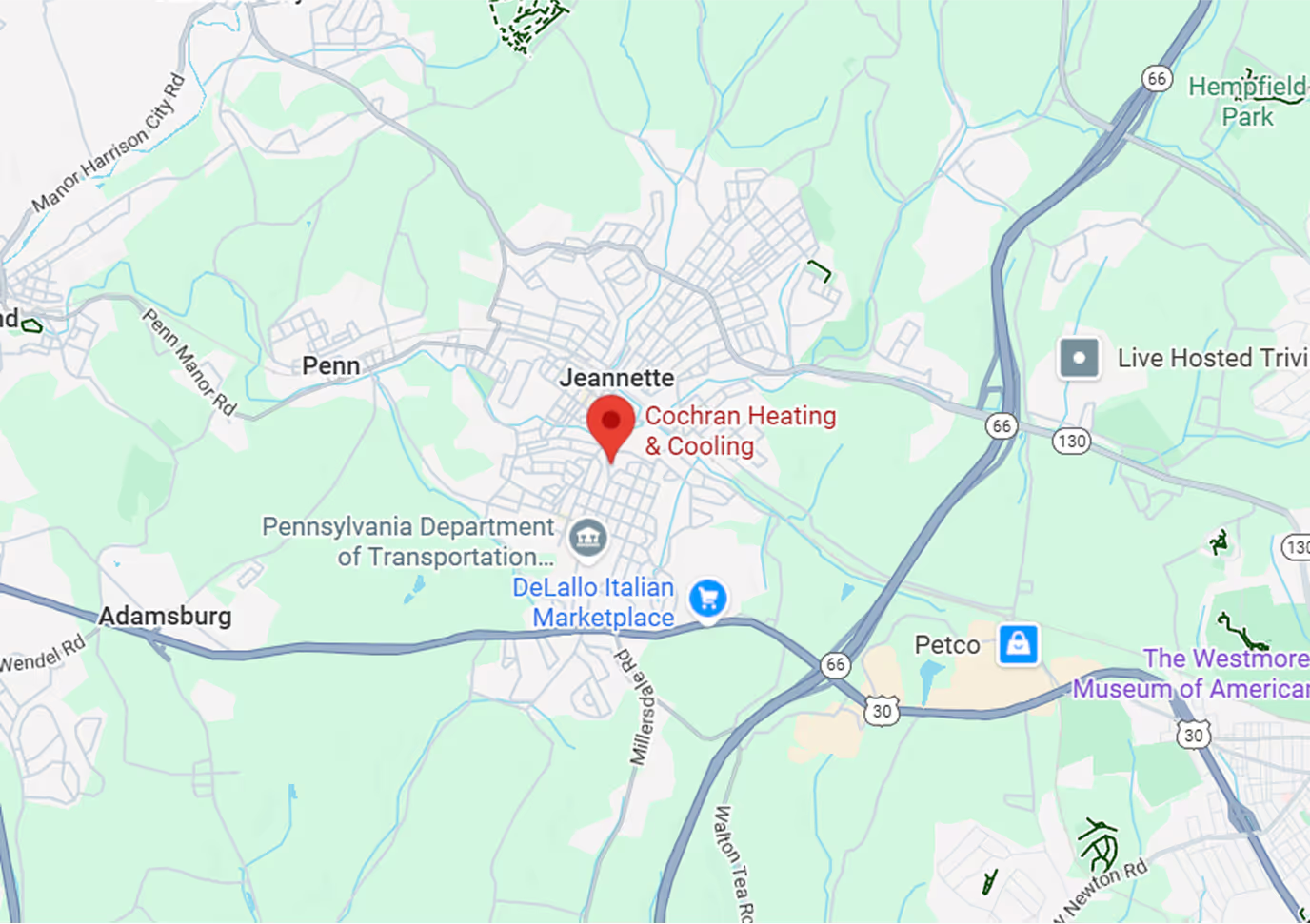
Heat Pump Replacement in Mt. Pleasant, PA
Replacing a heat pump is a smart move for Mt. Pleasant, PA homeowners looking to enhance comfort, lower energy bills, and ensure reliable year-round performance. Cochran Heating & Cooling offers professional heat pump replacement services that include a complete system evaluation, expert advice on selecting and sizing a new high-efficiency model, and safe removal and disposal of your old unit. Our code-compliant installations ensure optimal performance and safety. With Cochran Heating & Cooling, you can expect transparent cost estimates, flexible financing options, robust warranty coverage, and a hassle-free process from the initial consultation to final commissioning, providing dependable heating and cooling for every season.
-min%2520(4).jpeg)
Heat Pump Replacement in Mt. Pleasant, PA
Replacing a heat pump is a major decision for Mt. Pleasant, PA homeowners who need reliable heating through cold winters and efficient cooling in summer. This page explains when replacement is recommended versus repair, how a professional evaluation is conducted, what to consider when choosing a new, energy-efficient model and properly sizing the system, removal and disposal requirements, typical cost ranges and financing options, warranty considerations, expected energy savings and return on investment, and the overall project timeline from quote to commissioning.
Why consider heat pump replacement in Mt. Pleasant, PA
Mt. Pleasant experiences cold winters with occasional extended below-freezing periods and moderate, humid summers. Older or undersized heat pumps often struggle to maintain comfort, run longer, and use more electricity in these conditions. A modern, correctly sized heat pump—ideally a cold-climate model if you rely primarily on heat pump heating—improves comfort, reduces energy use, and avoids frequent repairs that disrupt living conditions during winter.
Common signs replacement is preferable to repair
- Unit age greater than 10-15 years, especially if original manufacturer specifications or refrigerant type are outdated
- Repeated repairs over the last 2-3 years or a single major failure like compressor burnout
- Sharp decline in heating performance during cold snaps or increased runtime without reaching setpoint
- Refrigerant leaks or use of phased-out refrigerants that make repairs costly or impractical
- Rising utility bills despite regular maintenance
- Noise, frequent cycling, or visible corrosion/damage to the outdoor unit or heat exchanger
- System capacity no longer matches home needs after renovations or added living space
Evaluation process: how professionals decide between repair and replacement
A thorough evaluation looks beyond a quick checklist and typically includes:
- Age and maintenance history of the existing heat pump
- Performance metrics: measured heating and cooling output, refrigerant pressures, and airflow
- Energy efficiency ratings (SEER, HSPF, or COP) versus modern equivalents
- Repair history and estimated cost of required fixes compared to replacement cost
- Capacity analysis and an updated load calculation (Manual J) to confirm sizing needs for the home’s current insulation, windows, and layout
- Ductwork condition and leaks, electrical service capacity, and thermostat or control compatibility
- Local climate considerations for backup heat requirements in Mt. Pleasant winters
If the predicted remaining life and efficiency after repairs still leave the system prone to future failures or high energy costs, replacement is usually recommended.
Choosing an energy-efficient model and correct sizing
- Prioritize heat pumps with high HSPF (heating) and SEER (cooling) ratings, and look for models designed for low-temperature performance if you depend on them for most heating. Cold-climate models retain capacity at lower outdoor temperatures.
- Consider variable-speed compressors and multi-stage systems for improved comfort, quieter operation, and better humidity control.
- Right-sizing is critical: oversized units short-cycle and undersized units run continuously. A Manual J load calculation determines the correct tonnage based on Mt. Pleasant home construction, insulation, and orientation.
- Evaluate ducted vs ductless options. Ductless mini-splits can be more efficient in homes with poor ductwork or additions.
- Confirm electrical requirements and whether a dual-fuel setup (heat pump plus gas or propane backup) is appropriate for very cold stretches.
Removal and disposal of old equipment
Removal follows safety and environmental rules:
- Refrigerant recovery to meet EPA requirements—no venting to atmosphere
- Proper recycling or disposal of metal, plastics, and electrical components per Pennsylvania regulations
- Documentation of refrigerant recovery and disposal is standard practice for compliance and future audits
Expected cost ranges and financing options
- Typical replacement costs vary widely by system type and home complexity. For most Mt. Pleasant homes, full replacement of a ducted heat pump system commonly falls in a broad range depending on equipment efficiency, tonnage, and complexity of ductwork or electrical upgrades.
- Financing options often include manufacturer financing programs, HVAC contractor financing plans, local utility rebates, and federal tax credits for qualifying high-efficiency systems or heat pump installations. Energy-efficiency incentives from Pennsylvania utilities or state programs may apply; always confirm current programs before budgeting.
Warranties and service coverage
- Standard warranties commonly include separate coverage for the compressor (often 5-10 years on higher-end models) and parts (typically 1-10 years). Extended parts and labor warranties are available on many units.
- Understand what voids a warranty: improper installation, lack of regular maintenance, and unauthorized refrigerant work are common issues.
- Ask for written warranty details for both components and labor, including transferability if you sell the home.
Estimated energy savings and ROI
- Replacing an older heat pump with a modern high-efficiency model typically yields measurable savings. Savings depend on climate, electricity rates, and system sizing but homeowners frequently see reductions in heating and cooling energy use of 20 to 40 percent versus units that are 10-15 years old.
- For homes with very old electric-resistance heating or inefficient air-source units, ROI periods commonly range from 5 to 12 years when factoring incentives and lower operating costs. Cold-climate heat pumps that reduce backup fuel use can shorten payback in Mt. Pleasant’s winter conditions.
Typical project timeline: quote to commissioning
- Initial inquiry and information gathering (1-3 days)
- On-site evaluation and Manual J load calculation (1 visit; 1-2 days to produce formal quote)
- Final equipment selection and order (lead times vary; commonly 1-3 weeks depending on model and season)
- Permitting and scheduling (1-2 weeks depending on local inspection schedules)
- Removal of old equipment and installation of new system (1-3 days for typical single-family homes)
- System commissioning, controls setup, and homeowner orientation (same day as install or next day)
- Final inspection and permit sign-off (timing varies by jurisdiction)
Total elapsed time from quote to fully commissioned system commonly ranges from 2 to 6 weeks, influenced by equipment availability and permitting.
Maintenance and long-term considerations
- Regular preventive maintenance extends system life and preserves efficiency: biannual or annual inspections, filter changes, refrigerant charge checks, and duct sealing as needed.
- Monitor system performance in the first heating season; adjustments to controls and outdoor unit placement can improve performance in Mt. Pleasant’s variable winter conditions.
- Keep documentation of installation, warranties, and maintenance to support future service or resale value.
FAQs
Q: How do I know if my heat pump can be repaired or must be replaced?
A: A professional evaluation that assesses age, repair history, efficiency, refrigerant status, and predicted future costs versus replacement will determine the best option. Repeated major failures, antiquated refrigerant, or low efficiency usually point to replacement.
Q: Are cold-climate heat pumps necessary for Mt. Pleasant winters?
A: Cold-climate models are recommended when a homeowner relies on the heat pump for most heating because they retain capacity at lower temperatures and reduce reliance on backup heat during cold snaps.
Q: What energy savings can I realistically expect after replacement?
A: Savings vary by baseline system and usage, but many homeowners see 20 to 40 percent lower energy use for heating and cooling after upgrading to a modern, high-efficiency heat pump.
Q: Will my existing ducts work with a new heat pump?
A: Existing ducts may be adequate, but a professional will test for leaks, airflow, and sizing. Duct repairs or modifications are common and important for maximizing performance.
Q: What financing and incentives are available in Pennsylvania?
A: Options include manufacturer financing, contractor financing plans, local utility rebates, and potential federal tax credits for qualifying systems. Check current programs and eligibility before finalizing plans.
Q: How long does the replacement project usually take from quote to finished system?
A: Typical timelines range from 2 to 6 weeks from initial quote to commissioning, depending on equipment availability and local permitting. Installation itself commonly takes 1 to 3 days for a standard single-family home.