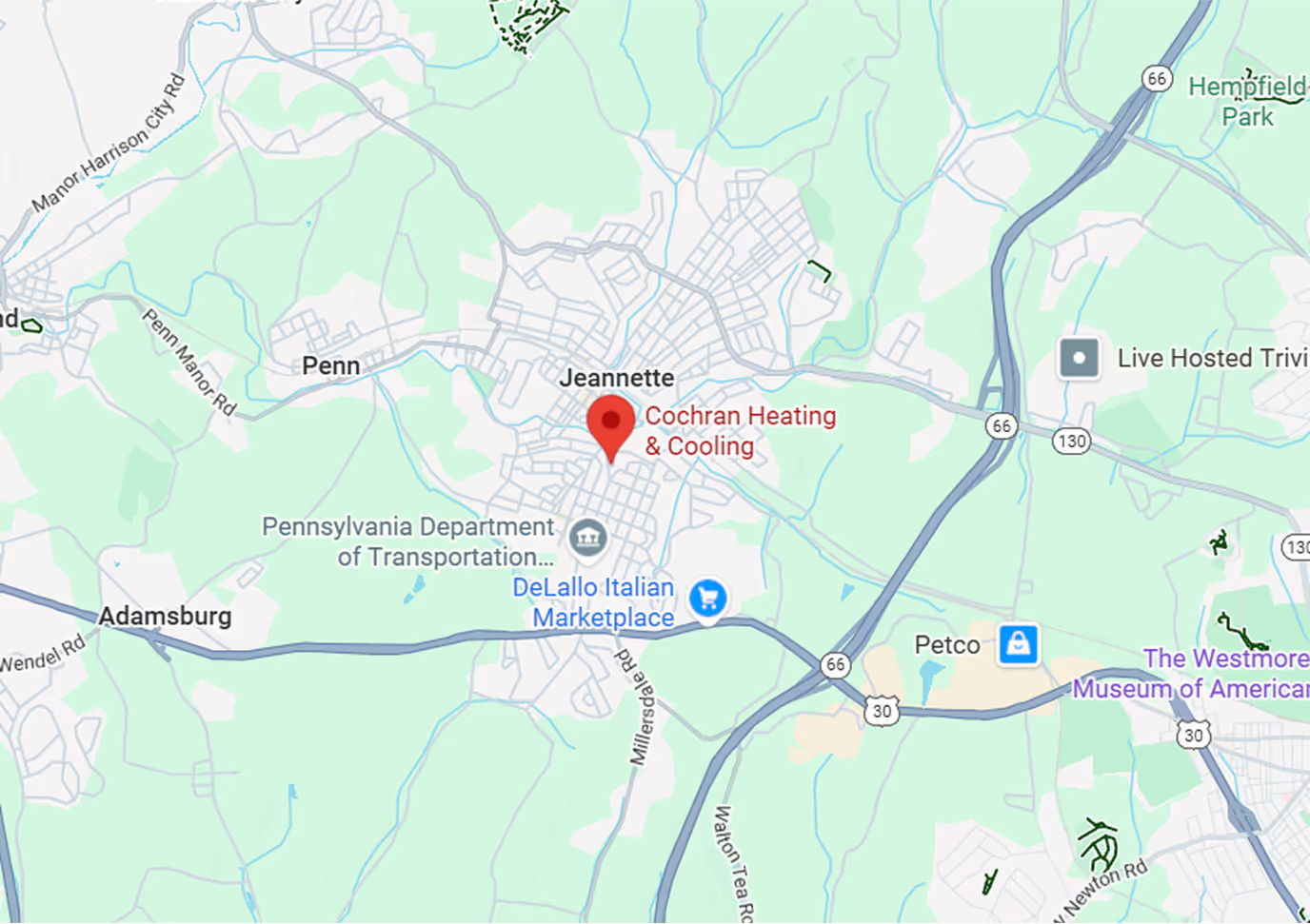
Boiler Installation in Jeannette, PA
For homeowners in Jeannette, PA, investing in a new boiler is a smart move for long-term comfort, safety, and energy savings. Here at Cochran Heating & Cooling, we know how crucial a reliable heating system is during our long, cold winters. That's why we believe a properly sized and professionally installed boiler is essential for consistent warmth, fewer repairs, and lower energy bills. Our boiler installation service in Jeannette includes a thorough assessment of your home, precise system selection, and expert setup tailored to our local climate. We'll guide you through every step, from evaluation to installation, and provide insights into commissioning, maintenance, and performance checks to ensure your family enjoys both efficiency and long-term reliability.
%2520(3).jpeg)
Boiler Installation in Jeannette, PA
A new boiler is one of the most important long-term investments you can make for comfort, safety, and energy efficiency in your Jeannette, PA home. Winters here can be cold and prolonged; an undersized or poorly installed boiler means uneven heat, frequent repairs, and higher fuel bills. This page explains the professional process for new boiler installation in Jeannette, PA, what to expect during assessment and installation, common local considerations, and how proper commissioning and maintenance protect your investment.
Why a professional boiler installation matters in Jeannette, PA
Jeannette homes range from older brick and frame houses to newer construction. Many properties have specific venting paths, older chimneys, or mixed fuel histories (natural gas, propane, or oil). Professional installation ensures your new boiler matches your house heat load, integrates with existing distribution (radiators, baseboard, in-floor hydronic), meets regional code requirements, and delivers reliable heat through the cold months.
Common reasons homeowners choose a new boiler
- Aging or failing boiler with frequent breakdowns
- Desire for higher efficiency to reduce winter fuel bills
- Converting from oil or electric to natural gas or high-efficiency propane
- Replacing a non-condensing boiler with a condensing model for better AFUE
- Adding hot water priority or integrating domestic hot water with a combi boiler
- Upgrading controls, zoning, or thermostats for comfort and efficiency
On-site assessment and accurate system sizing
A correct installation starts with a thorough on-site assessment:
- Heat loss calculation tailored to your Jeannette home (room-by-room) to determine required BTU output
- Review of existing distribution: radiators, baseboard, piping, and pump locations
- Inspection of venting, chimney condition, combustion air availability, and possible condensate routing
- Fuel type confirmation and gas line or oil tank evaluation
- Electrical service review for boiler controls and pump power
Accurate sizing prevents short cycling, improves efficiency, and matches boiler capacity to actual demand rather than estimating by square footage alone.
Model selection and controls
Selecting the right boiler means balancing efficiency, durability, and operating cost:
- Condensing vs non-condensing: High-efficiency condensing boilers recover heat from exhaust and are well suited for Jeannette’s cold climate when paired with proper return water temperatures
- Modulating burners and on-demand firing reduce cycling and lower fuel use
- Cast iron vs stainless or aluminum heat exchangers depending on water quality and longevity expectations
- Combi boilers for combined space heating and domestic hot water in smaller homes
- Smart controls, outdoor reset, zoning, and programmable thermostats for precise comfort and seasonal savings
Professional installation procedures
A professional installation addresses piping, venting, and safety details that affect performance and code compliance:
- Venting and combustion air: sizing and routing vent pipes or lining chimneys as required by code
- Piping and hydronic connections: proper materials, slope, isolation valves, and air elimination
- Condensate management: neutralizer and drainage when installing condensing boilers to protect drains and comply with local ordinances
- Expansion tank placement and pressure relief valve installation for system safety
- Circulator pump selection and pump piping to avoid noise and ensure proper flow
- Water treatment and filtration options for systems with hard water or corrosion concerns
- Secure mechanical room layout, accessible service points, and labeling of valves
Safety, code compliance, and testing
Installations follow applicable state and local codes and include safety checks:
- Gas line sizing and leak testing, relief valve verification, and combustion safety checks
- Combustion analysis to verify efficiency and safe exhaust composition
- Verification of vent terminations and clearances, chimney inspections if used, and combustion air adequacy
- Local permit coordination and inspection readiness to meet Jeannette and Westmoreland County requirements
Start-up, commissioning, and homeowner orientation
Start-up is more than turning on the switch. Commissioning typically includes:
- System purge to remove air, pressure checks, and thermostat calibration
- Leak inspection, boiler firing, and monitoring of operating pressures and temperatures
- Commissioning report documenting settings, efficiency readings, and installed components
- Homeowner orientation covering control operation, recommended pressure range, how to bleed radiators or check zones, emergency shutoffs, and basic troubleshooting
Warranty registration is completed at this stage to ensure manufacturer coverage begins properly.
Recommended maintenance schedule
Regular maintenance preserves efficiency and extends equipment life:
- Annual tune-up and combustion check every heating season
- Mid-season visual check for leaks, pressure, and unusual noises
- Annual inspection of venting, condensate trap, and expansion tank
- Water treatment monitoring and occasional chemical cleaning for closed hydronic systems
- Periodic pump lubrication if applicable and valve exercising on zoning systems
Following a proactive schedule reduces emergency calls during Jeannette’s coldest months.
Financing and long-term value
Financing options can ease upfront costs for high-efficiency equipment and necessary system upgrades like new venting or zoning. Investing in a properly sized, high-efficiency boiler typically yields lower operating costs, improved comfort, and reduced repair frequency—advantages that matter through consecutive cold seasons in Jeannette.
Benefits specific to Jeannette homes
- More reliable warmth during prolonged southwestern Pennsylvania winters
- Potential savings on natural gas or propane with high-efficiency condensing boilers
- Improved indoor comfort in older homes with uneven heating or slow warm-up times
- Reduced risk of emergency failures when proper sizing, venting, and commissioning are completed
Q: How do you determine the right boiler size for my Jeannette home?
A: A professional heat loss calculation is performed on-site, accounting for insulation, window sizes, orientation, and distribution type to determine the exact BTU capacity required.
Q: Should I choose a condensing boiler for Jeannette winters?
A: Condensing boilers are typically recommended because their higher efficiency delivers fuel savings in cold climates, provided the system is configured to allow lower return water temperatures for heat recovery.
Q: What venting options are available for replacing an old boiler?
A: Options include direct venting with PVC for high-efficiency boilers, lined chimney for certain installs, or power venting; the best approach depends on the boiler type, chimney condition, and local code.
Q: How long does a professional boiler installation take?
A: Typical installations vary by complexity; simple like-for-like replacements can be completed in a day or two, while conversions, new venting, or system upgrades may take several days.
Q: What maintenance should I plan for after installation?
A: Annual tune-ups with combustion checks, seasonal visual inspections, and periodic water treatment for hydronic systems are recommended to maintain efficiency and warranty coverage.
Q: Will a new boiler reduce my heating bills in Jeannette?
A: A correctly sized high-efficiency boiler, combined with proper controls and commissioning, usually lowers fuel consumption compared to older, less efficient units, especially in a cold climate like Jeannette.