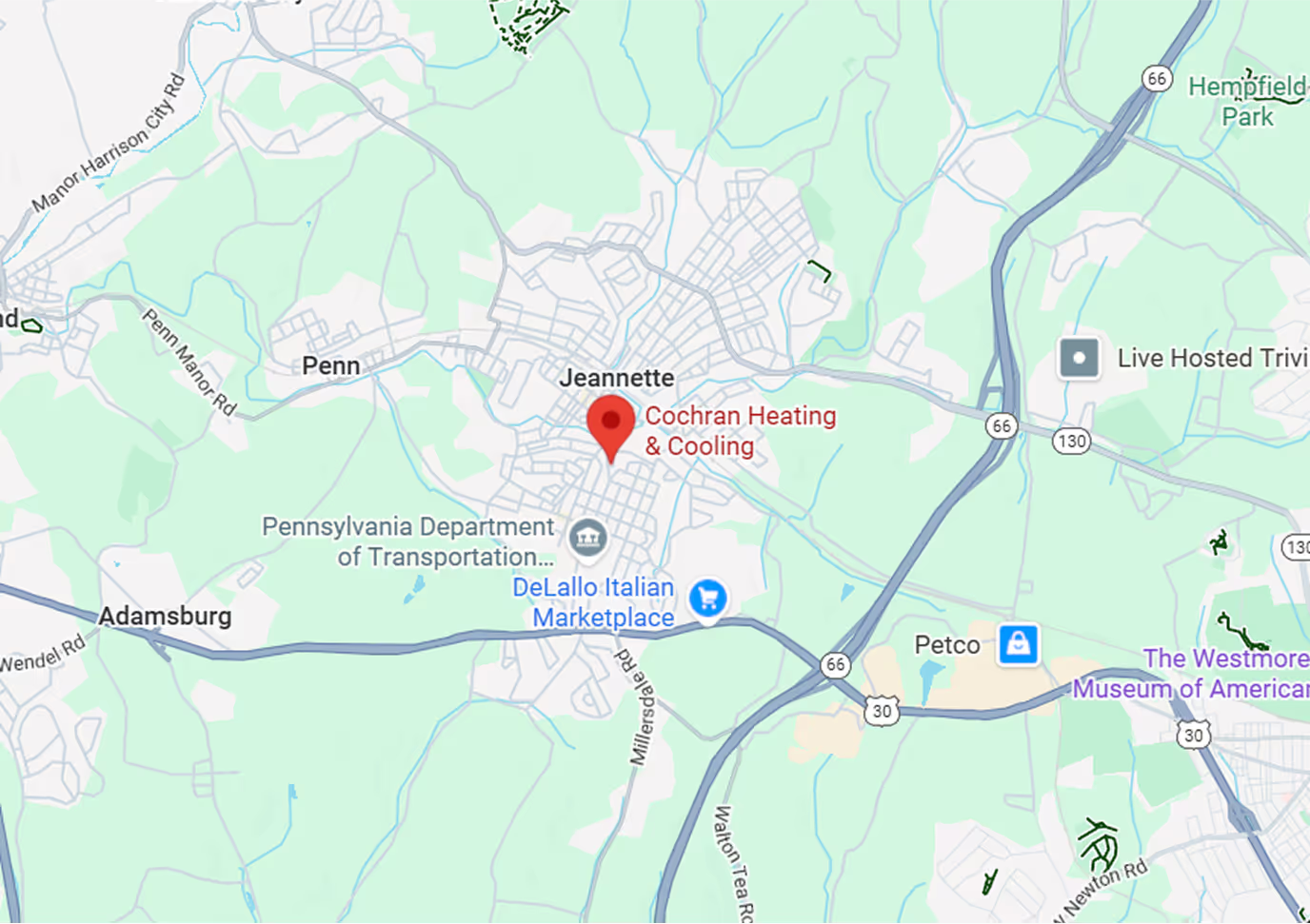
Boiler Replacement in Jeannette, PA
A boiler replacement in Jeannette, PA, is a significant investment in your home's comfort, efficiency, and peace of mind. At Cochran Heating & Cooling, we understand that Westmoreland County's long, cold winters can make outdated or inefficient boilers a real problem, leading to uneven heating, rising fuel costs, and unexpected breakdowns when you need them the most. Our professional replacement services at Cochran Heating & Cooling include a thorough system evaluation, precise sizing, and expert installation of high-efficiency condensing boilers tailored to the specific needs of Jeannette homes. We provide clear guidance on permits, timelines, warranties, and available rebates, along with detailed projections of energy savings, helping homeowners make a confident, long-term decision that improves comfort and reduces operating costs. Let Cochran Heating & Cooling help you stay warm this winter.
.jpeg)
Boiler Replacement in Jeannette, PA
Replacing a boiler in Jeannette, PA is a major home comfort decision. Winters in Westmoreland County are long and cold, and an aging or inefficient boiler can mean higher fuel bills, uneven heat, and increased risk of breakdowns when you need heat most. This page explains a complete boiler replacement process tailored to Jeannette homes: how systems are evaluated, how a correctly sized high-efficiency condensing boiler is chosen and installed, what permits and timelines to expect, and how to compare warranties, rebates, and projected energy savings so you can make an informed, long-term decision.
Why replace now
- Older boilers lose efficiency and develop reliability issues that escalate during cold spells common in the Jeannette area.
- Non-condensing boilers waste heat up the flue; upgrading to a high-efficiency condensing model can reduce fuel use substantially.
- Replacing failing equipment prevents emergency repairs and improves indoor comfort and safety.
Common boiler problems that lead to replacement
- Frequent breakdowns or costly repairs on a unit near or past its expected life.
- Low efficiency (AFUE under 80%) and rising fuel bills.
- Uneven heating or areas that never reach setpoint.
- Rusted boiler tanks, cracked heat exchangers, or flue corrosion.
- Old oil-fired systems in neighborhoods where natural gas conversion is now available and more economical.
- Incompatible controls or lack of modulating burners for modern load-matching.
Service types covered
- Full system evaluation and heating load calculation.
- Replacement with high-efficiency condensing boilers, modulating burners, or combi-boilers where space and domestic hot water needs align.
- Fuel conversion options: natural gas, propane, or modern oil solutions.
- Removal and safe disposal of old equipment and associated waste.
- Permit handling and code-compliant installation.
- Post-install commissioning and system balancing.
How we evaluate your home and select a replacement
- Initial on-site inspection of boiler, distribution piping, radiators/baseboards, venting, and domestic hot water arrangement.
- Heating load calculation using room-by-room methods and established industry procedures to determine the correct capacity. Right-sizing prevents short cycling from oversizing and comfort shortages from undersizing.
- Water and combustion analysis to check heat exchanger condition and to determine whether a condensing boiler is compatible with your existing system piping and return temperatures.
- Recommendation of fuel and equipment options based on utility availability in Jeannette, long-term fuel cost trends, and installation constraints.
Why high-efficiency condensing boilers are recommended
- Condensing boilers recover latent heat from flue gases, producing AFUE ratings often above 90%.
- On Jeannette winters, condensing boilers deliver measurable fuel savings versus older non-condensing units, often in the range of 15% to 35% depending on the aged system and usage patterns.
- Modern boilers offer modulation, which matches output to demand and improves comfort while reducing cycling and wear.
Removal and disposal of old equipment
- Safe disconnect of fuel and electrical services and removal of asbestos-containing materials if present, handled per local codes.
- Proper disposal or recycling of boilers, oil tanks, piping, and waste fluids.
- Coordination with the local building department for documented removal where required by Jeannette or Westmoreland County rules.
Installation steps and permit process
- Pre-install planning: confirming venting path, condensate drainage, and any required gas service changes.
- Obtaining required permits from the local building department and arranging inspections for fuel connections and final commissioning. Permits are typically required for boiler replacements and fuel conversions in Jeannette.
- Mechanical installation: mounting, piping, flue or direct-vent work, condensate and drainage, controls and thermostat integration, and system water treatment.
- Commissioning: pressure testing, combustion tuning, control setup, and a walk-through of operation and maintenance basics.
- Typical project timeline: straightforward direct replacement often takes 1 to 3 days. More complex jobs involving fuel conversion, chimney lining, structural work, or system re-piping can take several days to a week.
Warranty coverage and manufacturer options
- Manufacturer warranties commonly cover parts for 5 to 10 years; premium options and extended warranties may include heat exchanger coverage for longer terms.
- Labor warranties vary; some manufacturers require certified installers for extended coverage. Confirm what is included in parts and labor and what maintenance is required to keep warranties valid.
- Keep documentation for any transferable warranties if you sell your home.
Financing, rebates, and incentives in Pennsylvania
- Federal, state, and utility rebates or tax incentives are often available for high-efficiency heating equipment and fuel conversions. Jeannette homeowners should consider available program eligibility, which may change year to year.
- Many financing options exist to spread the cost of a replacement across manageable payments. Compare terms and warranty requirements before selecting financing.
Energy-savings projections and payback expectations
- Replacing a 60% AFUE boiler with a 92% AFUE condensing model can reduce fuel consumption by approximately 20% to 35% depending on usage and outside temperatures.
- Modulating condensing boilers improve seasonal efficiency by reducing cycling losses.
- Actual savings depend on current fuel prices, system sizing, insulation, and thermostat behavior. An accurate load calculation and retrofit plan give the best projection.
Choosing the right replacement for comfort and budget
- Prioritize correct sizing and system compatibility over the largest nameplate capacity.
- Consider fuel availability and long-term costs: gas service availability in Jeannette neighborhoods, propane accessibility, and oil service reliability.
- Evaluate system controls: outdoor reset, modulating burners, and smart thermostats significantly improve comfort and efficiency.
- Balance upfront cost, expected fuel savings, warranty coverage, and projected equipment lifespan, typically 15 to 25 years for modern boilers with proper maintenance.
Maintenance to protect your investment
- Annual tune-ups including combustion analysis, water treatment check, and system flushing as needed.
- Regular pressure checks, expansion tank inspection, and air bleeding of radiators or zones.
- Keep combustion air and vents clear during winter and schedule inspections before cold weather.
FAQs
Q: How long does a typical boiler replacement take?
A: A straight swap with matching piping and venting often takes 1 to 3 days. Projects involving fuel conversions, chimney work, or major re-piping can take several days to a week.
Q: Will I need permits for a boiler replacement in Jeannette?
A: Yes. Boiler replacements and fuel conversions generally require permits from the local building department and inspections for fuel and venting work.
Q: How much can I expect to save by switching to a condensing boiler?
A: Typical savings compared to an old non-condensing boiler range from about 15% to 35% in fuel use, depending on your current boiler efficiency, fuel prices, and heating patterns.
Q: Is it worth converting an oil boiler to natural gas?
A: Conversion can be worthwhile where gas service is available and long-term fuel costs favor gas. Consider conversion costs, required venting changes, and potential rebates when evaluating.
Q: What warranty should I look for?
A: Look for manufacturer parts and heat exchanger warranties of at least 5 years, with options for extended coverage. Verify any labor warranty and maintenance requirements to keep warranties valid.
Q: Will a new boiler require changes to my radiators or baseboard units?
A: Often no. Condensing boilers can work with existing distribution systems, but return water temperatures and controls may need adjustments. In some cases, system upgrades improve efficiency.
Q: Are there rebates or incentives for high-efficiency boilers in Pennsylvania?
A: Many federal, state, and utility programs offer rebates or tax incentives for high-efficiency equipment. Eligibility and amounts vary, so review current programs when planning a replacement.