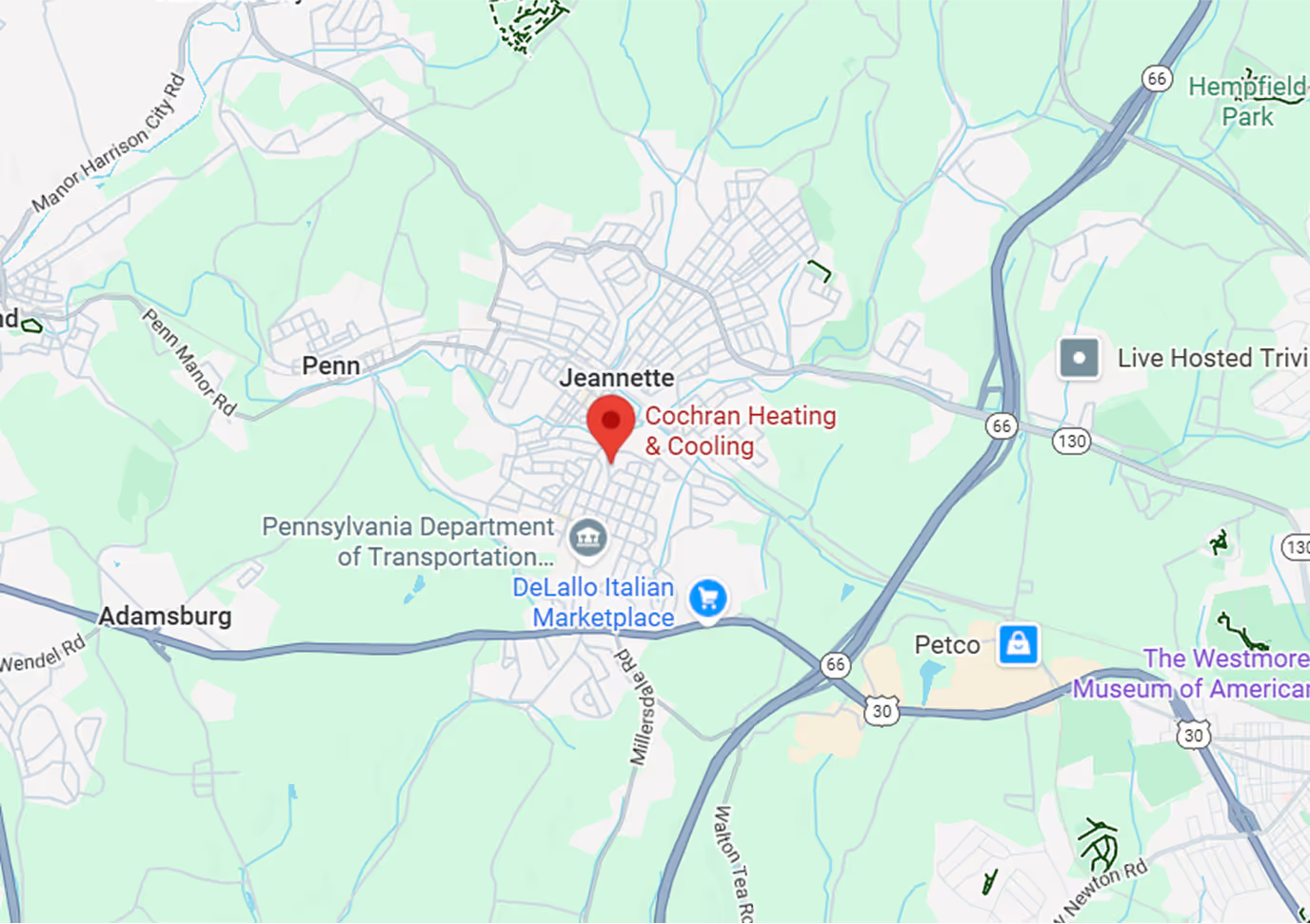
Geothermal Installation in Murrysville, PA
Geothermal installation in Murrysville, PA, is a solid, energy-efficient choice for homeowners who deal with cold winters and humid summers. A properly installed ground-source heat pump from Cochran Heating & Cooling can really bring down your energy bills, keep your home comfortable all year round, and even increase your property value. We'll walk you through what to expect from a full geothermal installation in Murrysville – from checking out your site and picking the right ground loop to permits, setup, incentives, and long-term maintenance – so you can make a well-informed decision.
.jpeg)
Geothermal Installation in Murrysville, PA
Geothermal installation in Murrysville, PA provides a durable, energy-efficient alternative to conventional heating and cooling for homeowners facing cold winters and humid summers. A properly designed and installed ground-source heat pump can reduce energy bills, stabilize indoor comfort year-round, and increase property value. This page explains what to expect from a full geothermal installation in Murrysville — from site evaluation and ground loop selection to permitting, commissioning, incentives, and long-term maintenance — so you can make an informed, bottom-of-funnel decision.
Why geothermal makes sense for Murrysville homes
- Murrysville’s heating-dominated climate benefits most from the high efficiency of geothermal systems, especially during long, cold winters.
- Many lots in Westmoreland County have space for horizontal loops or enough depth for vertical bores, but hilly terrain and soil conditions affect the best approach.
- Geothermal provides stable comfort and efficient cooling during humid summer months, often reducing the need for oversized conventional AC.
Common geothermal system types and issues in Murrysville
Choose the right loop type based on lot size, soil, and water availability:
- Closed-loop horizontal: Trenched coils placed shallowly; cost-effective when yard space is available. Common issue: disruption of landscaping during installation.
- Closed-loop vertical: Deep boreholes for smaller lots or sloped properties; ideal when surface space is limited. Common issue: longer drilling time and higher upfront cost.
- Open-loop (well): Uses groundwater directly when a reliable, permitted well exists; highest efficiency but requires water quality and permitting checks. Common issue: well capacity, mineral content, and local well regulations.
Local considerations: rocky or clay-rich soils in parts of Murrysville may favor vertical bores; high water table areas or accessible bedrock change loop design and cost.
Site evaluation and ground loop selection
A thorough site evaluation includes:
- Lot survey and utility locate to avoid buried lines.
- Soil and geotechnical review to determine thermal conductivity and drilling difficulty.
- Groundwater assessment and well testing if considering an open-loop system.
- Landscape and access review (driveway, trees, proximity to structures) to plan trenching or drilling logistics.
The outcome: a recommendation for closed-loop vs open-loop and horizontal vs vertical, sized to your property and local conditions.
System sizing and load calculations
Accurate sizing prevents short cycling, comfort problems, and inefficiency:
- Perform Manual J heating and cooling load calculations specific to your Murrysville home, accounting for insulation, window orientation, and airtightness.
- Select a heat pump based on calculated loads (Manual S guidance) and expected performance in PA winter temperatures.
- Determine loop length and configuration from thermal load and local ground properties to ensure adequate heat exchange.
Installation steps for loops and indoor equipment
Typical installation sequence:
- Finalize design and obtain permits.
- Prepare site; protect landscaping and establish access.
- Install loops:
- Horizontal: trenching and laying U-tube loops, backfilling with thermal grout where required.
- Vertical: drilling boreholes, inserting loop piping, and grouting for thermal transfer.
- Open-loop: connect to well and install intake/discharge piping per code.
- Install indoor equipment: ground-source heat pump, buffer tanks or desuperheater for domestic hot water if included, hydronic distribution or forced-air air handler, and circulation pumps.
- Connect controls, thermostats, and any smart monitoring devices.
Common homeowner impacts during installation: temporary yard disruption, noise from drilling or trenching, and brief utility shutdowns for tie-ins. Most disruptive work is limited to the loop installation phase.
Permitting and local code compliance
Geothermal installations in Murrysville require adherence to:
- Borough and Westmoreland County building permits and plumbing/mechanical codes.
- Pennsylvania state regulations on wells and groundwater if using open-loop systems.
- Utility notification and right-of-way considerations for any work near public easements.
Permits typically cover drilling, well use, electrical connections, and final inspections. Proper permitting avoids delays and ensures long-term compliance.
Typical timeline and homeowner expectations
- Site evaluation and design: 1 to 2 weeks.
- Permitting: 1 to 4 weeks depending on local review cycles.
- Loop installation: 1 to 5 days for horizontal; 2 to 7 days for vertical bores (weather and subsurface conditions affect timing).
- Indoor equipment installation and tie-in: 2 to 5 days.
- Commissioning and testing: 1 to 2 days.
Overall projects commonly span 3 to 8 weeks from initial design to fully operational system.
Incentives, rebates, and financing options
Many Murrysville homeowners can reduce upfront cost through incentives:
- Federal tax credits for qualified geothermal systems (current residential clean energy credit provisions to check for eligibility and percentage at time of installation).
- Local utility or state-level rebates and programs applicable to Westmoreland County or Pennsylvania residents.
- Financing alternatives including energy-efficient home improvement loans, manufacturer financing, and property-assessed financing where available.
Confirm program availability and eligibility early in the planning phase to integrate incentives into project financing.
Commissioning and performance testing
Proper commissioning ensures the system meets design performance:
- Verify loop flow rates, pressure, and temperature differential (delta T) under operating conditions.
- Check refrigerant charge, electrical connections, and pump settings.
- Confirm thermostat calibration, control sequences, and emergency modes.
- Perform initial performance reporting and explain system operation to the homeowner, including expected seasonal COP (coefficient of performance) and how to monitor monthly energy use.
Long-term benefits and maintenance
Geothermal delivers long-term value through:
- Lower operating costs and predictable energy use compared with fuel-based heating.
- Reduced equipment wear due to steady operating cycles.
- Quiet, compact indoor equipment and improved indoor air comfort.
Routine maintenance tips:
- Change or clean air filters and strainers as recommended.
- Annual HVAC inspection including circulation pump check, control verification, and loop pressure testing.
- Monitor energy bills and system behavior for signs of performance drift.
- Keep loop field access and equipment pads clear and ensure landscaping is re-established after installation.
Q: How disruptive is the loop installation to my yard?
A: Loop installation can disturb landscaping during trenching or drilling but reputable installations limit the work area, use non-invasive access when possible, and restore lawns and planting beds after completion.
Q: Will my existing ductwork work with a geothermal heat pump?
A: Many homes can reuse existing ductwork, but proper evaluation is needed. Duct sizing, condition, and airflow are checked during the load calculation; modifications are made if necessary for optimal performance.
Q: How long do geothermal systems last in Murrysville?
A: Ground loops commonly last 50+ years, while indoor heat pump units typically last 20–25 years with proper maintenance and periodic component service.
Q: Do I need a well for a geothermal system?
A: No. Closed-loop systems use buried pipe in the ground and do not require a well. Open-loop systems use groundwater and need a reliable well and additional permitting and water quality checks.