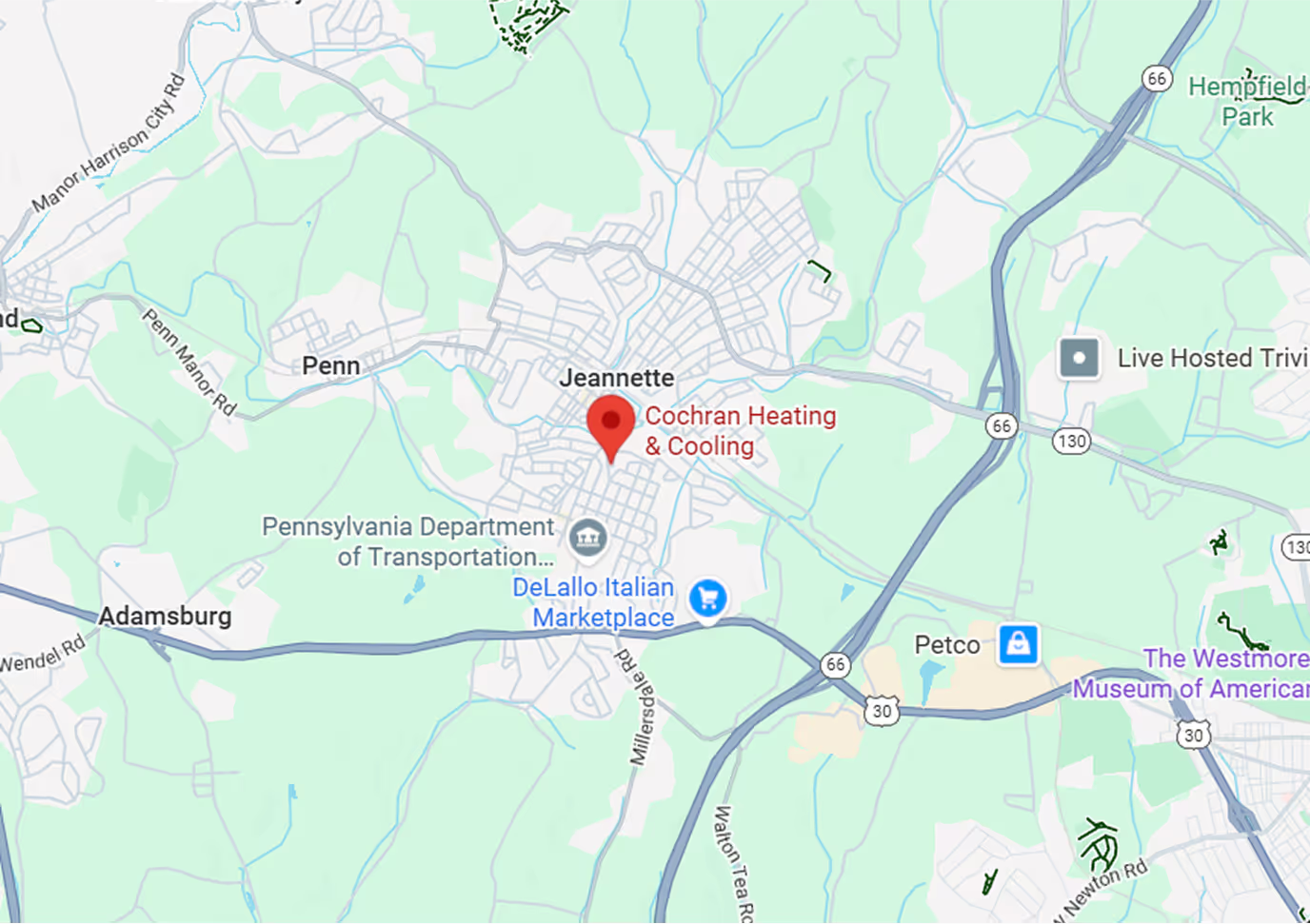
Geothermal Replacement in North Huntington, PA
Replacing a geothermal system in North Huntington, PA, is a major decision that affects comfort, energy bills, and home value. In this region, where cold winters and humid summers place heavy seasonal demands on heating and cooling systems, Cochran Heating & Cooling knows that a properly designed replacement can restore performance, reduce operating costs, and extend the useful life of your ground loop and heat pump. We help you evaluate repair versus replacement, assess your home, consider the types of equipment and loop designs, understand what to expect during removal and install, typical timelines, warranty and financing considerations, and realistic efficiency gains after replacement.
.jpeg)
Geothermal Replacement in North Huntington, PA
Replacing a geothermal system in North Huntington, PA is a major decision that affects comfort, energy bills, and home value. In this region, where cold winters and humid summers place heavy seasonal demands on heating and cooling systems, a properly designed replacement can restore performance, reduce operating costs, and extend the useful life of your ground loop and heat pump. This page explains how to evaluate repair versus replacement, how professionals assess your home, the types of equipment and loop designs to consider, what to expect during removal and install, typical timelines, warranty and financing considerations, and realistic efficiency gains after replacement.
When to Replace vs Repair
Deciding between repair and replacement depends on age, frequency of breakdowns, efficiency decline, and the nature of the failure.
- Age: Heat pumps older than 15 to 20 years often use outdated technology and may be prime candidates for replacement. Ground loops last longer, but the heat pump itself typically drives replacement decisions.
- Repair frequency: If you are repairing the heat pump yearly or facing major component failures like compressor burnout, replacement usually offers better long term value.
- Efficiency drop: Rising energy bills despite maintenance can indicate deteriorating system efficiency. Modern geothermal heat pumps deliver substantially higher efficiency than older models.
- Cost of repair vs remaining life: When repair costs approach a large fraction of a new system and the unit has limited remaining life, replacement is recommended.
- System mismatch or undersizing: If the current system was improperly sized, replacing the heat pump and re-evaluating the loop may be necessary.
How a Professional Assessment Works
A thorough pre-replacement assessment prevents guesswork and ensures the new system meets your North Huntington home needs.
- Home load calculation: Professionals perform a Manual J style heating and cooling load calculation to establish accurate capacity needs based on your home size, insulation, windows, and occupancy.
- Loop evaluation: Technicians inspect existing ground loop performance, pipe condition, and loop pressure tests. Soil and bedrock considerations in Westmoreland County influence loop design and drilling strategy.
- Ground thermal testing: Where needed, thermal conductivity testing or thermal response tests determine how the ground will accept heat and guide loop length and configuration.
- Ductwork and distribution check: Replacement is also a chance to evaluate and correct duct leakage or distribution inefficiencies in your home.
Choosing Heat Pump Models and Ground Loop Designs
Selecting the right combination of heat pump and ground loop is essential for lasting efficiency and reliability.
- Heat pump options: High efficiency variable-speed and modulating geothermal heat pumps provide better comfort, dehumidification, and lower operating costs compared with older fixed-capacity models. Consider models with advanced controls and smart thermostats compatibility.
- Loop types:
- Closed-loop horizontal: Suitable for larger lots with enough yard space. Less expensive to install but requires trenching.
- Closed-loop vertical: Common in smaller lots or where space is limited. Drilling boreholes delivers consistent ground temperature access.
- Pond/lake loop: Cost effective if a suitable water body exists on the property.
- Open-loop: Uses groundwater, only an option when water quality and availability permit.
- Matching: The chosen loop length and configuration must match the heat pump capacity and local soil conditions for optimal performance.
Removal of Old Equipment and Site Work
A planned, professional removal minimizes disruption and protects your property.
- Decommissioning: Technicians isolate and safely remove refrigerant and electrical connections, drain and cap the loop as required, and follow local code for disposal.
- Excavation and drilling: Loop removal or abandonment is handled per local regulations. For new loops, drilling or trenching is staged to limit impact on landscaping.
- Restoration: After installation, yards are backfilled, soil is graded, and disturbed surfaces are restored. Proper scheduling and protection reduces the visible footprint post project.
Typical Timeline for Geothermal Replacement
Replacement timelines vary by system complexity, permitting, and weather.
- Assessment and design: 1 to 2 weeks for inspections, load calculations, and design.
- Permits and scheduling: 1 to 4 weeks depending on local permitting processes in North Huntington.
- Loop installation: 2 to 7 days for horizontal loops, several days per borehole for vertical loops; total time depends on property size and drilling logistics.
- Heat pump install and commissioning: 1 to 3 days after loops are complete.
- Total typical project: Small, straightforward replacements can finish in 2 to 4 weeks from start to finish; larger or vertical-loop projects including permitting and drilling commonly take 6 to 12 weeks.
Costs, Financing, and Rebates
While exact costs depend on system size, loop type, and site conditions, replacement costs reflect several components.
- Cost components: equipment (heat pump), ground loop installation (trenching or drilling), removal/disposal of old equipment, ductwork or distribution updates, permitting, and testing/commissioning.
- Financing options: Many homeowners use energy-efficient financing programs, home improvement loans, or HVAC-specific financing to spread payments over time.
- Rebates and incentives: Geothermal replacements often qualify for local utility incentives, state programs, and sometimes federal tax incentives. Availability varies seasonally and by jurisdiction, so homeowners in North Huntington should check current local and state programs when budgeting.
- Warranty considerations: Manufacturer warranties on new heat pumps commonly cover 5 to 10 years for parts, with extended component coverage available. Ground loops typically have long service life and often carry 20 to 25 year warranties from loop contractors or manufacturers. Installer workmanship warranties vary and should be clarified before replacement.
Expected Efficiency Gains and Operating Benefits
Replacing an older geothermal heat pump with a modern unit and properly sized loop delivers measurable improvements.
- Efficiency gains: Homeowners can typically expect a 30 percent to 50 percent improvement in system efficiency compared with older geothermal systems and larger gains versus conventional fossil fuel systems, depending on the age and condition of the previous equipment.
- Comfort and control: Variable-speed compressors and improved controls reduce temperature swings and improve humidity control during humid Pennsylvania summers.
- Lower maintenance and longer life: New equipment reduces repair frequency and benefits from modern diagnostics. Properly installed loops often last several decades with minimal service needs.
- Environmental impact: Increased efficiency reduces fossil fuel use indirectly and lowers your home carbon footprint.
Maintenance and Long Term Considerations
After replacement, a proactive maintenance plan preserves performance and warranty coverage.
- Annual inspections: Have the heat pump and distribution system inspected at least once a year to check refrigerant charge, airflow, electrical connections, and controls.
- Loop monitoring: Periodic loop pressure checks and fluid quality tests help identify potential issues early in the closed-loop system.
- Duct and distribution maintenance: Seal and insulate ducts to preserve system efficiency and reduce operating costs.
- Records: Keep documentation of load calculations, loop design, commissioning reports, and warranties for future reference or resale value.
Frequently Asked Questions
Q: How will I know if my geothermal system needs full replacement rather than repairs?
A: Frequent major component failures, very high repair costs relative to replacement, age over 15 to 20 years for the heat pump, persistent efficiency losses, or an incorrect system size are common indicators that replacement is the more cost effective option.
Q: Can the existing ground loop be reused when replacing the heat pump?
A: Often yes. If the loop tests well pressure and thermal performance and has no physical damage, technicians will reuse it. If the loop is undersized, contaminated, or damaged, a new loop or loop augmentation may be required.
Q: What is the most common loop type for North Huntington properties?
A: Vertical closed-loop systems are common where lot size is limited, while horizontal closed-loop systems are used on larger lots. Local soil and bedrock conditions influence the best choice.
Q: How disruptive is a geothermal replacement project to my yard and home?
A: Properly managed projects limit disruption. Trenching or drilling is localized and crews restore landscaping. Inside the home, installation and commissioning typically take one to three days.
Q: What warranties should I expect?
A: Expect manufacturer warranties for heat pump components commonly between 5 and 10 years, long term warranties for loops often 20 to 25 years, and separate installer workmanship warranties. Confirm details in writing before proceeding.
Q: How much will my utility bills drop after replacement?
A: While results vary, many homeowners experience 30 percent to 50 percent improved efficiency versus older geothermal units, with corresponding reductions in heating and cooling costs. Actual savings depend on your previous system, fuel mix, and usage patterns.
Q: Are there financing or rebate options for geothermal replacement in North Huntington?
A: Financing and incentive programs exist and change over time. Homeowners typically evaluate energy loan programs, utility rebates, and state incentives to offset upfront costs. Check current local program availability during planning.
Q: How long will the new system last?
A: A properly installed geothermal heat pump typically lasts 20 years or more, and ground loops often last several decades, making them a long term investment when installed to current standards.