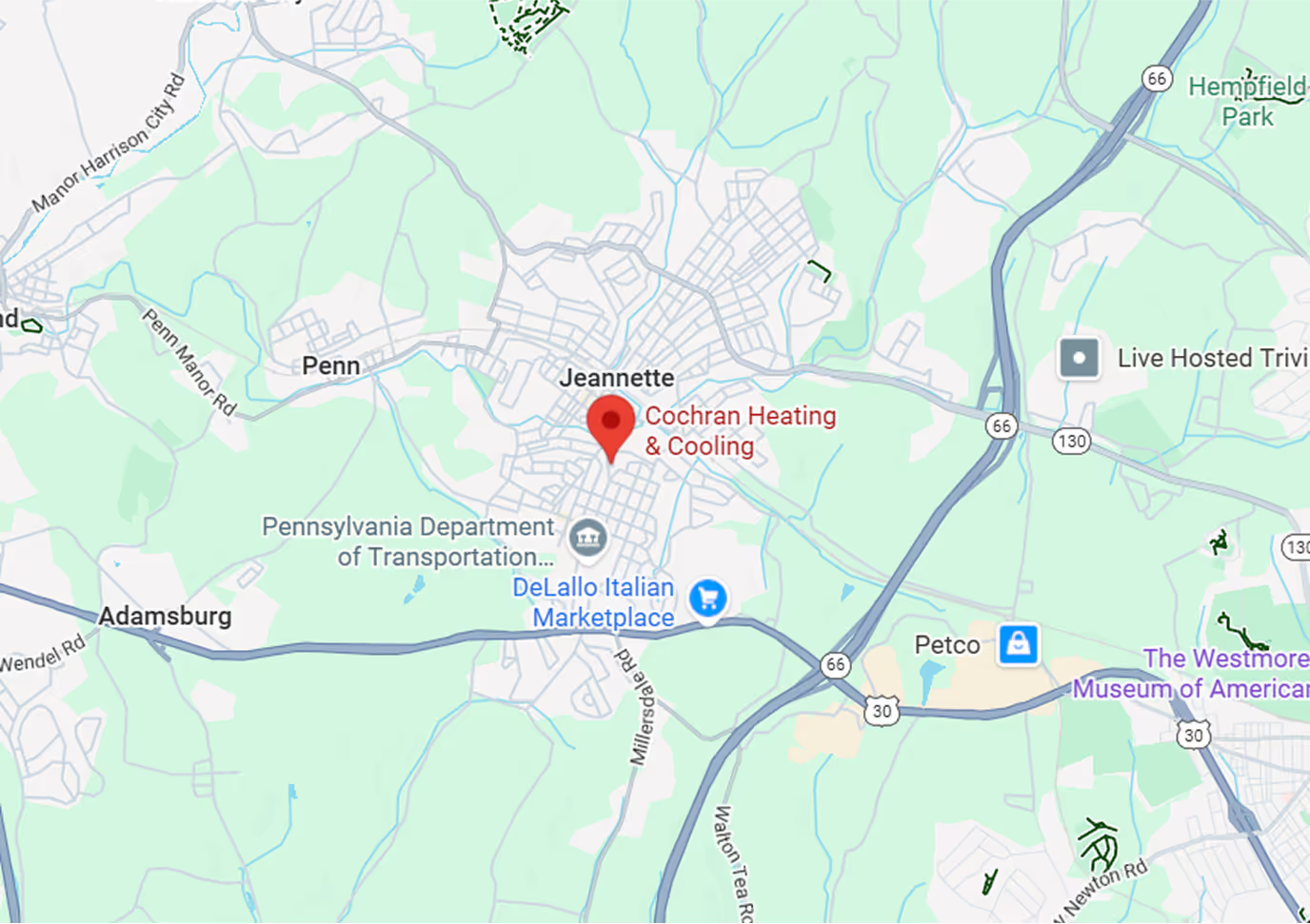
HVAC Replacement in Murrysville, PA
Replacing an HVAC system is one of the most impactful investments you can make in your home. In Murrysville, PA, where winters are cold and summers can be humid, a properly sized, modern HVAC system improves year round comfort, lowers energy use, and reduces the risk of unexpected system failures. Cochran Heating & Cooling explains how to determine when replacement is necessary, what replacement options make sense for local homes, how the replacement process works, and what to expect from high-efficiency upgrades, rebates, and financing options tailored to the Murrysville community.
.jpeg)
HVAC Replacement in Murrysville, PA
Replacing an HVAC system is one of the most impactful investments you can make in your home. In Murrysville, PA, where winters are cold and summers can be humid, a properly sized, modern HVAC system improves year round comfort, lowers energy use, and reduces the risk of unexpected system failures. Cochran Heating & Cooling explains how to determine when replacement is necessary, what replacement options make sense for local homes, how the replacement process works, and what to expect from high-efficiency upgrades, rebates, and financing options tailored to the Murrysville community.
Why replacement matters in Murrysville homes
Murrysville experiences wide seasonal swings: cold temperatures and frequent snow in winter, and warm, humid summers. Older furnaces and air conditioners were not designed for current efficiency standards or the tighter building envelopes common in many recently renovated local homes. A failing system in winter can mean frozen pipes and compromised comfort. In summer, inadequate air conditioning can leave living spaces too humid and uncomfortable. Investing in a modern HVAC replacement delivers more consistent indoor temperatures, improved humidity control, and quieter operation suited to local conditions.
Upgrading also helps with indoor air quality. Many Murrysville homes have basements and crawlspaces where dust, allergens, and mold can accumulate. New systems paired with improved filtration, ventilation, and duct sealing reduce airborne contaminants and provide healthier indoor air.
Common signs it is time to replace HVAC equipment
Homeowners often delay replacement until a breakdown forces action. Key signs replacement is the better option than repair include:
- Frequent repairs or recurring breakdowns that interrupt comfort or cause costly emergency calls.
- System age beyond typical service life. Older models lose efficiency and reliability even with routine maintenance.
- Rising energy use without a related change in occupancy or thermostat settings.
- Uneven heating or cooling across rooms, indicating mismatch between system capacity and home load or duct issues.
- Difficulty maintaining comfort on the coldest or hottest days, suggesting inadequate capacity or degraded components.
- Refrigerant leaks or compressor failure in AC units, where repair may be costly and temporary.
- Safety-related issues such as persistent carbon monoxide concerns, cracked heat exchangers, or other furnace defects.
When multiple signs appear, replacement typically provides better long-term value, enhanced safety, and predictable comfort.
How Cochran Heating & Cooling evaluates whether replacement is needed
A thorough evaluation precedes any recommendation for replacement. Typical diagnostic steps include:
- Visual inspection of all major components: furnace, heat exchanger, outdoor condensing unit, coils, electrical connections, and controls.
- Performance checks during operation: temperature split across coils, airflow, and combustion analysis for gas-fired equipment where applicable.
- Assessing system age, manufacturer service history, and repair frequency to determine reliability.
- Indoor comfort assessment across multiple rooms to document hot and cold spots, humidity issues, and airflow distribution.
- Ductwork inspection for leaks, insulation levels, and layout concerns that affect efficiency and comfort.
- Load calculation (Manual J) to determine accurate heating and cooling requirements based on home size, insulation, windows, orientation, and local climate.
- Duct design review (Manual D) when replacement includes changes to deliver proper airflow and balance.
This structured assessment ensures that replacement recommendations are tailored to the actual needs of the home in Murrysville and avoid oversizing or undersizing equipment.
Replacement options and how they compare
Replacing your HVAC gives an opportunity to evaluate multiple modern choices. Each option has pros and cons depending on home layout, fuel availability, and comfort goals.
Furnaces
- Fuel options include natural gas, propane, and electric. Natural gas is common and often cost-effective in the region.
- High-efficiency condensing gas furnaces deliver improved heat extraction and quieter operation. Look for features like multi-stage or modulating burners for better temperature control.
- Best for homes with existing gas lines and centralized ducted systems.
Heat pumps
- Modern cold-climate heat pumps operate efficiently even in colder temperatures and can both heat and cool, reducing the need for a separate furnace.
- They offer excellent efficiency and can pair with supplementary heat strips or a gas furnace in very cold scenarios.
- Ideal for homeowners seeking high efficiency and simplified systems; particularly attractive where electrification goals are present.
Air conditioners
- Replacing an AC often pairs with a furnace or heat pump upgrade. New condensers with higher SEER ratings deliver better cooling performance and humidity control.
- Variable-speed compressors improve comfort and efficiency by adjusting output over a wider range of conditions.
High-efficiency and smart system features
- Variable-speed blowers and compressors, modulating heat output, and multi-stage systems provide tighter temperature control and quieter operation.
- Zoned controls and smart thermostats enable different temperatures in different parts of the house, improving comfort and lowering energy use.
- Ductless mini-splits are an option for additions, finished basements, or homes without existing ductwork.
In Murrysville, choosing between these options hinges on winter heating demand, existing fuel infrastructure, and homeowner priorities for efficiency and electrification.
Ductwork and distribution considerations
Replacing the furnace or air conditioner often reveals distribution limitations. Common ductwork issues in local homes include leaks, undersized runs, and inadequate insulation in unconditioned basements. A complete replacement plan may include:
- Duct sealing and insulation to preserve conditioned air and reduce energy loss.
- Redesigning supply and return runs to correct airflow imbalances identified during load and duct design calculations.
- Adding zoning dampers or motorized vents to balance temperature differences between floors or rooms.
- Installing new plenums or registers to improve airflow and minimize noise.Addressing ductwork at the time of equipment replacement maximizes the benefits of a new system.
Rebate, incentive, and financing landscape
While specific programs change over time, homeowners in Murrysville commonly consider several paths to offset replacement costs:
- Utility incentives and rebates for qualifying high-efficiency equipment and weatherization measures. Local utilities and regional energy programs often provide rebates for SEER, AFUE, HSPF, and Energy Star qualified systems.
- Federal tax credits or state-level programs that reward energy-efficient replacements or electrification measures, subject to eligibility and program rules.
- Manufacturer promotions that accompany the purchase of select models during specific seasons.
- Financing options ranging from promotional financing offered by equipment providers to homeowner financing through banks, credit unions, or energy-efficiency loan programs.Applying for incentives usually requires documentation such as model numbers, install reports, and proof of professional installation. Cochran Heating & Cooling assists customers in navigating eligibility requirements and submitting the necessary paperwork, helping to ensure rebates and credits are claimed correctly when available.
What influences replacement cost (factors, not prices)
Several factors drive the overall investment required for a complete HVAC replacement:
- Equipment type and efficiency level. Higher-efficiency models and advanced technologies generally increase upfront cost while reducing operating expenses.
- System capacity sizing and complexity. Larger homes or multi-zone installs require more substantial equipment and materials.
- Ductwork condition. Extensive duct repairs, redesigns, or installation of new ducts add to the scope of work.
- Fuel source changes. Converting from one fuel type to another, such as transitioning from gas to an all-electric heat pump system, may require additional infrastructure work.
- Home access and installation complexity. Tight crawlspaces, steep roofs, or multi-level access can increase installation time and labor.
- Permitting and inspection requirements in Murrysville and Westmoreland County, which vary by project scope.
Understanding these factors helps homeowners evaluate options and prioritize upgrades that provide the best balance of comfort, efficiency, and value over time.
Replacement workflow and what to expect during installation
A professional replacement follows a clear, methodical workflow designed to minimize disruption and ensure a safe, code-compliant installation. Typical stages include:
- Pre-installation assessment
- Finalize load calculations and system design.
- Confirm equipment selections and accessory needs such as thermostats, zoning, or filtration.
- Secure required permits and schedule inspections with local authorities.
- Preparation
- Arrange safe access to work areas and protect flooring and furnishings.
- Disconnect and prepare the old equipment for removal, documenting existing configurations where necessary.
- Removal and disposal
- Safely recover refrigerant from air conditioning systems following EPA regulations.
- Disconnect and remove the old furnace, AC condensing units, coils, or heat pump components.
- Properly recycle metals and components, and dispose of materials at authorized facilities. Refrigerant handling and metal recycling adhere to environmental regulations.
- Installation of new system
- Set and secure new indoor and outdoor equipment, making necessary structural, electrical, and gas connections per local code.
- Install new or upgraded ducting, insulation, and airflow components if included in the scope.
- Integrate controls such as smart thermostats, zoning panels, and sensors.
- Commissioning and testing
- Start up the system and perform thorough testing: airflow measurements, temperature differentials, refrigerant charge verification, combustion analysis for gas equipment, and electrical checks.
- Adjust settings for optimal comfort and efficiency, and verify proper sequencing and communication between components.
- Final documentation
- Provide equipment manuals, warranty registration details, and a written summary of work performed.
- Explain basic operation and maintenance expectations in plain language so homeowners can maintain comfort and system health.
This workflow ensures safety, compliance, and reliable performance from day one. In Murrysville, inspection scheduling and weather windows may influence timing during peak seasons.
Disposal and environmental considerations
Responsible removal and disposal are part of a professional replacement. Key practices include:
- Recovering and reclaiming refrigerant using certified recovery equipment and licensed technicians in compliance with federal and state regulations.
- Recycling metals and components at licensed facilities to reduce landfill waste.
- Proper disposal of hazardous materials such as oil or contaminated components.
- Offering options for recycling or repurposing older equipment where feasible.
These measures reduce environmental impact and ensure the replacement process aligns with evolving regulations and local expectations.
Expected efficiency, comfort, and operational improvements
Replacing aging HVAC equipment with modern systems provides measurable improvements:
- Better temperature consistency: multi-stage and variable-speed equipment modulates output to maintain stable indoor temperatures and reduce hot and cold spots.
- Improved humidity control: modern cooling systems and matched heat pump configurations manage indoor humidity more effectively during humid Pennsylvania summers.
- Quieter operation: contemporary compressors, fans, and insulation reduce operational noise compared to older units.
- Enhanced indoor air quality: upgraded filtration, UV options, and improved ventilation reduce allergens, dust, and mold risks common in basement and crawlspace areas.
- Predictable reliability: new components and warranties reduce the likelihood of emergency breakdowns, especially during extreme weather.
- Lower operating costs: improved efficiency reduces energy usage per unit of heating or cooling delivered, an important benefit with fluctuating energy prices.
While specific performance outcomes depend on equipment selection and home characteristics, homeowners in Murrysville typically experience more consistent comfort, quieter operation, and improved indoor air quality following a complete replacement and ductwork optimization.
Long-term maintenance and protecting your investment
A replacement is an investment that lasts longer with routine care. Recommended practices include:
- Annual scheduled maintenance for heating and cooling systems to maintain warranty compliance and peak performance.
- Regular filter changes according to manufacturer guidance to protect components and maintain airflow.
- Periodic duct inspections and sealing to prevent efficiency losses.
- Thermostat calibration and, where applicable, software updates for smart thermostats or system controllers.
- Monitoring for unusual noises, odors, or changes in performance and addressing issues early.
These steps extend equipment life, maintain efficiency, and keep comfort consistent throughout Murrysville seasons.
Making the decision: system selection checklist
To help evaluate options, consider this checklist when reviewing replacement proposals:
- Has a professional load calculation been performed for accuracy?
- Are proposed equipment capacities matched to the home rather than oversized?
- Does the proposal include duct assessment and necessary modifications?
- What efficiency ratings and technologies are included (AFUE, SEER, HSPF, variable-speed, inverter-driven)?
- Are warranties clearly documented for parts and labor?
- What environmental handling and disposal practices are included for the old equipment?
- Which rebates, incentives, or tax credits could apply, and what documentation will be provided?
- Does the plan address humidity control and indoor air quality for local climate conditions?
Using these points ensures replacement aligns with comfort goals and long-term value.
Q: How do I know whether to repair or replace my HVAC system?A: If your system is older, has frequent repairs, cannot maintain comfort, or presents safety concerns, replacement is often the more cost-effective and reliable long-term solution. A professional evaluation that includes load calculations and a review of repair history helps determine the best choice.
Q: Are heat pumps a good choice for Murrysville winters?A: Modern cold-climate heat pumps perform well in cold temperatures and can be a very efficient option in Murrysville. In some cases, a hybrid approach pairing a heat pump with a backup gas furnace offers both efficiency and additional heating capacity on the coldest days.
Q: What efficiency ratings should I look for in a new system?A: Look for high AFUE ratings for furnaces, high SEER and HSPF for cooling and heat pumps, and ENERGY STAR qualifications where available. These ratings indicate how effectively equipment converts energy into heating or cooling, which impacts operating costs and comfort.
Q: Will replacing my HVAC improve indoor air quality?A: Yes. New systems with higher-quality filtration, ventilation options, and properly sealed ducts reduce dust, pollen, and other contaminants. Adding HEPA-compatible filters or UV air treatment can further improve indoor air quality.
Q: What happens to my old equipment during replacement?A: Old systems are safely disconnected, refrigerant is recovered according to environmental regulations, and recyclable materials are processed at licensed facilities. Hazardous components are disposed of in compliance with federal and state requirements.
Q: Can I get rebates or financing for a high-efficiency replacement?A: Many homeowners qualify for utility rebates, manufacturer incentives, and financing options for energy-efficient equipment. Eligibility depends on the specific program rules, equipment selected, and documentation, so reviewing current programs during the planning phase is important.
Q: How long does an HVAC replacement typically take?A: Replacement timelines vary based on project complexity, ductwork needs, and permit scheduling. A straightforward equipment swap may take a day, while a full system replacement that includes duct redesign and zoning can require multiple days.
Q: Should I replace ductwork at the same time as the equipment?A: If ducts are leaky, undersized, poorly insulated, or improperly configured, replacing or repairing them during equipment installation maximizes efficiency and comfort. Addressing duct issues concurrently is usually the most effective approach.
Q: What warranty and documentation should I expect after replacement?A: Expect manufacturer warranties for parts and documented labor warranties where applicable. You should receive equipment manuals, warranty registration information, and a written summary of the installation and tests performed.
Q: How can I maintain a new system to ensure long life and efficiency?A: Schedule annual maintenance, change filters regularly, keep outdoor units clear of debris, and monitor system performance. Prompt attention to unusual noises or performance changes preserves efficiency and prevents premature failures.
Cochran Heating & Cooling provides thorough evaluations and detailed replacement planning tailored to Murrysville homes, accounting for local weather patterns, building types, and comfort priorities. With careful system selection, proper ductwork, and attention to environmental handling and incentives, HVAC replacement can significantly enhance comfort, efficiency, and indoor air quality for years to come.