Geothermal Installation in Greensburg, PA
Geothermal installation in Greensburg, PA is a fantastic long-term investment that cuts heating bills, reduces emissions, and provides consistent comfort year-round, even through our cold Pennsylvania winters. For homeowners in Greensburg and Westmoreland County, geothermal systems are valuable because they tap into stable ground temperatures. This means efficient heating during those long, cold seasons and balanced cooling in summer. Cochran Heating & Cooling can explain the installation process, system options, permitting, efficiency gains, warranties, and how to prepare your home, so you can make this decision confidently.
Geothermal Installation in Greensburg, PA
Geothermal installation in Greensburg, PA is a long-term investment that cuts heating bills, reduces carbon emissions, and provides consistent year-round comfort in homes facing cold Pennsylvania winters. For homeowners in Greensburg and Westmoreland County, geothermal systems are especially valuable because they draw on stable ground temperatures to deliver efficient heating during long, cold seasons and balanced cooling in summer. This page explains the full installation process, system options, permitting, expected efficiency gains, warranties, and how to prepare your home so you can decide with confidence.
Common geothermal system types and site considerations
Choosing the right system begins with understanding the two primary loop options and common loop configurations:
- Closed-loop systems: Pipe loop buried in the ground and filled with antifreeze solution. Common in neighborhoods and most residential lots.
- Open-loop systems: Use groundwater or surface water as the heat exchange fluid. Viable where suitable water supply and local regulations permit.
- Ground loop installation methods:
- Horizontal trenches - best for larger yards with shallow suitable soil.
- Vertical boreholes - used for smaller lots or when bedrock requires deep drilling.
- Pond/lake loops - cost-effective when a suitable pond is on the property.
Local factors in Greensburg such as lot size, soil composition, seasonal freeze-thaw, and proximity to groundwater influence whether a horizontal or vertical loop is recommended. Geotechnical or soil information from Westmoreland County can affect drilling depth and installation method.
Initial site evaluation, heat-load calculations, and system sizing
A thorough pre-install assessment ensures the system matches your home’s needs:
- On-site inspection of yard access, subsurface constraints, and utility locations.
- Review of existing insulation, window efficiency, ductwork, and distribution systems.
- Precise heat-load calculation (Manual J or equivalent) to determine heating and cooling demand.
- System sizing based on load calculation, ground characteristics, and desired indoor temperatures.
Correct sizing prevents short-cycling, maximizes efficiency, and extends equipment life. For Greensburg homes with high winter heating loads, accurate heat-load calculations are essential.
Ground loop installation methods and what to expect
Ground loop installation is the most visible part of the project. Typical steps:
- Mark and protect landscaping and utilities.
- Excavate trenches or drill vertical bores for the loop field.
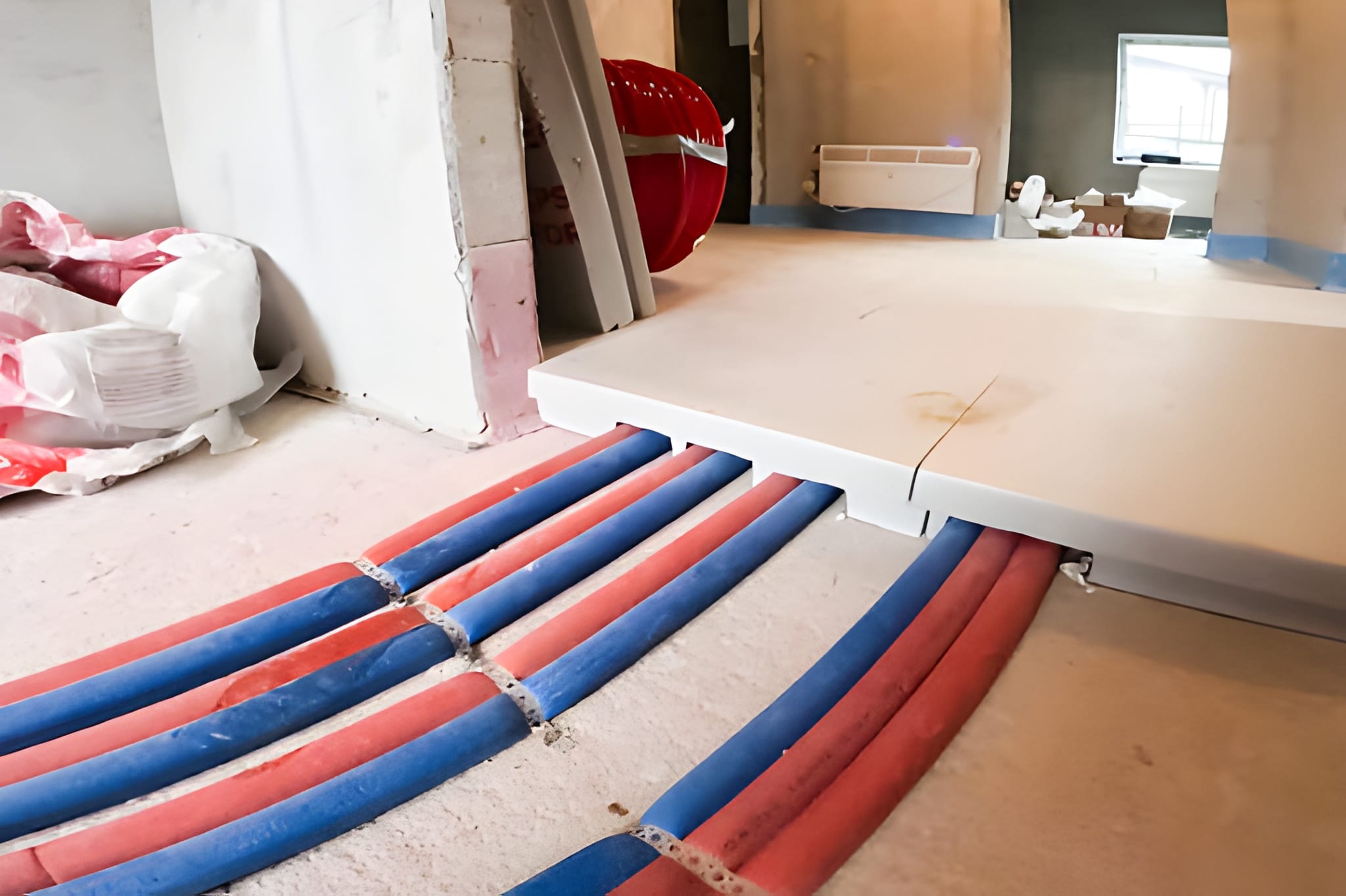
- Install high-density polyethylene piping and backfill.
- Pressure-test the loop and connect to heat pump.
Installation impact varies by method: horizontal trenching can disturb more lawn area for shorter periods, while vertical bores require drilling rig access but smaller surface footprint. Yard restoration is standard practice and sites are typically reseeded or repaved after backfill.
Equipment selection: heat pumps, controllers, and distribution
Selecting the right components ensures system performance and reliability:
- Heat pumps: Variable-speed or multi-stage units improve comfort and efficiency. Look for high coefficient of performance (COP) and seasonal energy efficiency ratios.
- Controllers: Modern controls optimize ground loop circulation, staging, and integrate with smart thermostats for consistent operation.
- Distribution options: Ducted systems, high-efficiency ducts, or hydronic radiant distribution depending on existing equipment and homeowner preference.
- Backup heat: Depending on heating needs and electricity availability, a supplemental electric or gas backup may be incorporated.
Component selection is tailored to the calculated load, budget priorities, and home layout.
Permits, inspections, and regulatory considerations in Greensburg, PA
Geothermal projects require proper permitting and inspections:
- Building and mechanical permits from the City of Greensburg or Westmoreland County as applicable.
- Electrical permits for equipment connections and potential panel upgrades.
- Additional permits or approvals may be required for open-loop systems due to groundwater use or discharge rules under Pennsylvania environmental regulations.
- Final municipal inspections confirm code compliance and safe operation.
Allow time in the project schedule for permit review and municipal inspections; these steps protect long-term system performance and property compliance.
Expected efficiency gains and cost-savings
Geothermal heat pumps use ground heat and can achieve high efficiencies:
- Typical COPs commonly range from about 3.0 to 5.0, meaning 300 to 500 percent efficient for heating compared to electrical resistance.
- Many homeowners see substantial reductions in heating and cooling costs compared with oil, propane, or standard electric systems; reductions often vary by fuel replaced and local utility rates.
- Efficient operation and durable ground loops produce predictable energy savings over decades.
Actual savings depend on your current heating fuel, system sizing, and electricity costs. Federal and state incentives can improve payback economics in many cases.
Warranty coverage and maintenance expectations
Geothermal systems are durable but require specific warranties and routine care:
- Ground loop warranties are typically long-term due to minimal moving parts and buried pipe longevity.
- Heat pump equipment commonly carries manufacturer warranties on major components; warranty lengths vary by model.
- Recommended maintenance includes annual equipment checks, filter changes, circulation fluid monitoring if applicable, and periodic controller/software updates.
Regular service preserves efficiency and helps validate warranty coverage.
Preparing your Greensburg home for installation
Preparing your property reduces delays and makes installation smoother:
- Clear access paths for drilling rigs or trenching equipment.
- Move or protect landscaping, irrigation lines, and outdoor structures in work areas.
- Confirm basement, mechanical room, or utility area access for heat pump placement and piping.
- Check electrical service capacity; some homes may need an electrical panel upgrade.
Communicate known underground utilities and well or septic locations before work begins.
Project timeline and what to expect
Typical timeline elements for a residential geothermal installation:
- Site evaluation and design: 1 to 2 weeks.
- Permitting and approvals: 2 to 6 weeks depending on local review times.
- Drilling/trenching and loop installation: 1 to 7 days depending on method and site complexity.
- Equipment installation, connection, and commissioning: 1 to 3 days.
- Final inspection and system start-up: 1 week after installation in most cases.
Complex sites, weather delays, or permit processing can extend the schedule. Seasonal demand may also affect contractor availability.
Why geothermal makes sense for Greensburg homes
For homeowners in Greensburg, geothermal systems offer steady indoor temperatures through cold winters, reduced reliance on fossil fuels, and long-term operating savings. When properly designed and installed, geothermal delivers quiet, reliable comfort with minimal visible impact to the property and durable warranties for the ground loop. With careful site evaluation, accurate heat-load calculations, and adherence to local permitting, geothermal is a practical, efficient choice for many Greensburg homes.
Q: How long does a typical geothermal installation take from start to finish?
A: From initial site evaluation to final inspection most residential projects take 4 to 12 weeks depending on permit timelines, site complexity, and contractor scheduling.
Q: Will installing a geothermal system destroy my yard?
A: Some disturbance is expected during loop installation, but yards are typically restored. Horizontal loops require more surface area but are reseeded; vertical installations minimize surface impact.
Q: What is the difference between closed-loop and open-loop systems?
A: Closed-loop systems circulate an antifreeze solution through buried piping and are suited for most properties. Open-loop systems use groundwater directly and require suitable well water and additional regulatory approvals.
Q: How much can I expect to save on heating and cooling?
A: Savings vary by the system replaced and energy prices, but geothermal systems often reduce heating bills substantially, with efficiency gains that translate to significant long-term savings.
Q: What permits are required for geothermal installation in Greensburg?
A: Standard building, mechanical, and electrical permits are typically required. Open-loop systems may need additional environmental or water-use approvals under state regulations.