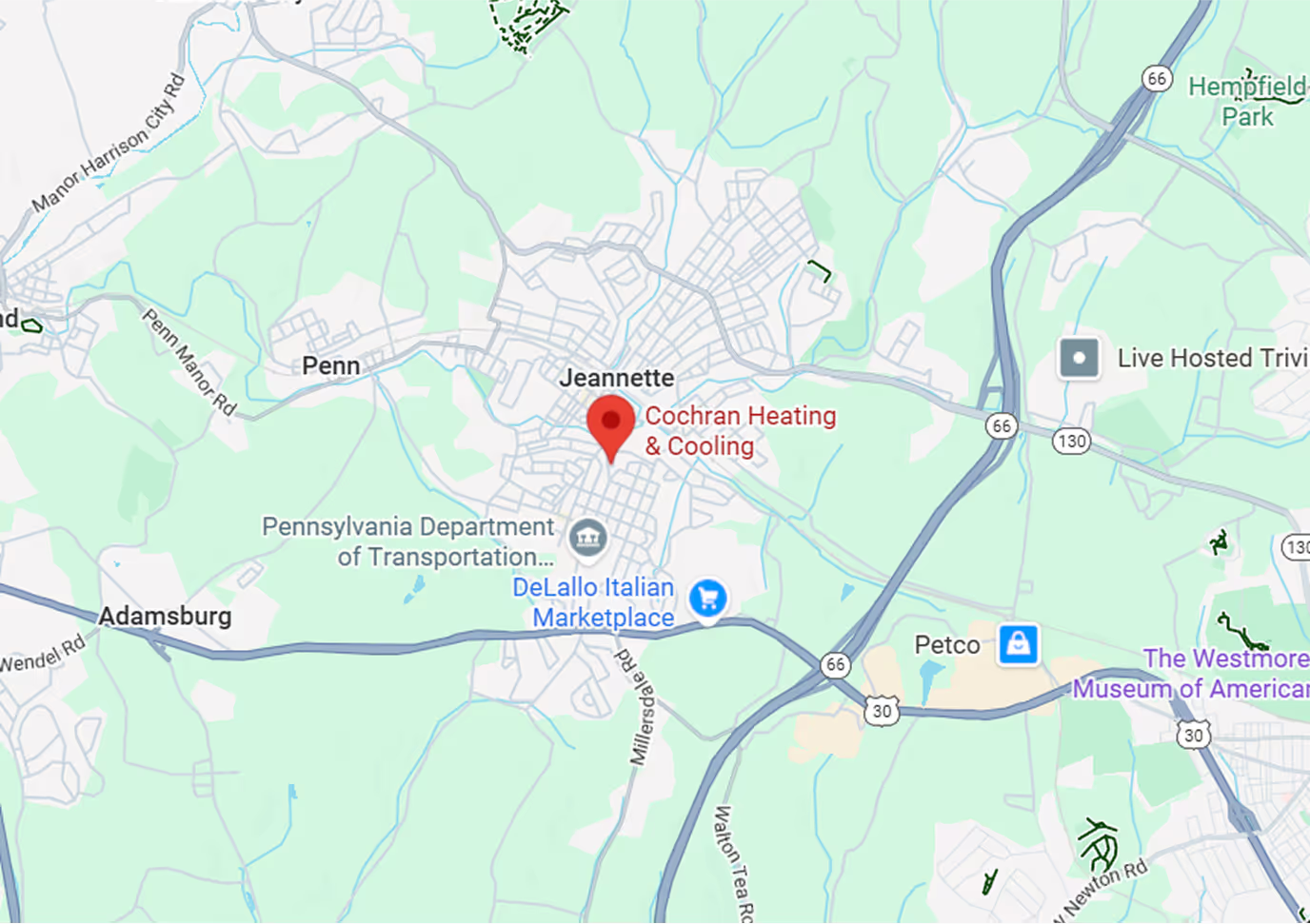
Geothermal Replacement in Derry, PA
Upgrading an aging geothermal system in Derry, PA, is a decision that impacts your comfort, energy bills, and the long-term value of your home. Homeowners here face cold, snowy winters and moderately humid summers, which means your ground-source system is constantly working. At Cochran Heating & Cooling, we can help you understand when a full geothermal replacement is the right choice. We'll assess your existing ground loop and equipment, discuss modern replacement options, outline timelines and costs, explore financing and rebates, and clarify warranty details, so you can make a confident and informed decision.
.jpeg)
Geothermal Replacement in Derry, PA in Derry, PA
Upgrading an aging geothermal system in Derry, PA is a decision that affects comfort, energy bills, and long-term home value. Homeowners in this region face cold, snowy winters and a moderately humid summer — conditions that put sustained demand on ground-source systems. This page explains when full geothermal replacement is recommended, how technicians assess an existing ground loop and equipment, modern replacement options, expected timelines and cost ranges, financing and rebate possibilities, and warranty realities so you can make an informed, bottom-of-funnel decision.
When full geothermal replacement is recommended
Full replacement is often the right choice when problems are chronic or the cost to repair approaches replacement value. Common indicators include:
- System age: original units older than 15–25 years with declining efficiency.
- Repeated compressor or heat-exchanger failures and rising repair frequency.
- Persistent loss of capacity, uneven room temperatures, or inability to meet design heating loads.
- Evidence of loop problems: loss of flow, antifreeze leaks, or well-water quality issues in open-loop systems.
- Obsolete refrigerant or parts that are no longer manufactured.If you’re experiencing repeated breakdowns or utility bills rising despite servicing, replacement frequently delivers faster payback via improved efficiency and reduced maintenance.
Assessing the existing ground loop and equipment
A careful, professional assessment identifies what can be reused and what must be replaced. Key steps include:
- Visual inspection of the indoor unit, manifold, pumps, and controls.
- Flow and pressure testing of closed-loop systems to detect loss of flow or internal leaks.
- Water quality and flow-rate testing for open-loop wells to evaluate well health.
- Thermal performance checks to compare current output against expected capacity.
- Review of site conditions: soil thermal properties, frost depth, and accessibility for additional drilling or trenching.Many Derry-area homes have closed-loop vertical bores or horizontal trenches; geological factors in Westmoreland County (variable soil and bedrock) can affect whether loops are reusable or require augmentation.
Replacement options and modern heat pump technology
Modern geothermal heat pumps are significantly more efficient, quieter, and offer better control than older models. Replacement options include:
- Replacing only the indoor/outdoor heat pump while reusing a healthy loop.
- Replacing both heat pump and loop: adding vertical boreholes or horizontal trenches to increase capacity.
- Upgrading to variable-speed or inverter-driven compressors for improved part-load efficiency and comfort.
- Hybrid approaches: pairing geothermal with supplemental electric or gas backup for peak loads.
- Integrating domestic hot water preheat or smart zoning controls to maximize savings.Right-sizing is critical: proper Manual J and loop thermal calculations ensure the new system is efficient and reliable.
Removal, disposal, and permitting
Safe removal and disposal follow environmental and local code requirements:
- Refrigerant recovery and certified disposal of the old heat pump per EPA standards.
- Removal of indoor components, pumps, and controls with proper recycling of metals.
- Closed-loop piping is often left buried if undamaged, but damaged or contaminated loops may be removed or replaced.
- Open-loop wells may require decommissioning or reconditioning under local regulations.
- Permits for drilling or major trenching are typically required; local inspections ensure compliance with Westmoreland County rules.
Estimated project timelines and cost considerations
Timelines vary with scope and site conditions:
- Heat pump replacement using an existing loop: typically several days to one week for equipment swap, testing, and commissioning.
- Partial loop augmentation (adding trenches or bores): one to three weeks depending on drilling access and weather.
- Full system replacement including new loop field: two to six weeks, accounting for permitting and drilling schedules.Cost ranges depend on system size, loop type, soil/drilling conditions, and accessory upgrades. Typical replacement projects can range widely; major factors include vertical drilling vs horizontal trenching, accessibility, and efficiency level of the new unit. Accurate, site-specific estimates require an on-site evaluation and load calculation.
Financing, rebates, and incentives
Several financing and incentive pathways commonly reduce out-of-pocket cost:
- Federal tax incentives for qualifying geothermal installations and energy-efficient equipment may be available.
- State-level programs, utility rebates, or local energy-efficiency incentives can offset part of the purchase or installation.
- Manufacturer financing, home-equity products, and energy loan programs help spread costs over time.Availability of incentives changes periodically; documentation from the installer and your tax advisor will clarify eligibility.
Warranty coverage and long-term protection
Replacement systems come with layered warranty protections:
- Manufacturer warranties typically cover the compressor and major components for specified years; extended warranties may be available.
- Ground loop warranties for piping and borefield components often provide long-term coverage (many years or decades).
- Workmanship warranties cover installation-related issues for a specified period.Keep copies of equipment serial numbers, installation documents, and warranty certificates. Regular documented maintenance preserves warranty eligibility and system performance.
Benefits of timely replacement and recommended maintenance
Upgrading a failing geothermal system restores reliable heating and cooling, reduces electricity use, improves comfort, and can increase property value. In Derry, PA, replacing an inefficient system before a major cold season avoids emergency failures and high interim heating costs. Recommended ongoing maintenance after replacement includes annual tune-ups, periodic antifreeze checks for closed loops, pump servicing, and thermostat calibration.
FAQs
Q: How do I know if my ground loop can be reused?
A: A professional flow and pressure test plus thermal performance assessment will determine loop integrity. If the loop holds pressure, has adequate flow, and delivers expected thermal performance, it is often reusable. Soil conditions and loop age factor into the decision.
Q: What is the typical lifespan of a geothermal heat pump and loop?
A: Heat pump units typically last 15–25 years depending on maintenance and usage; ground loops often last 50 years or more when properly installed.
Q: Will replacing the heat pump reduce my energy bills immediately?
A: A high-efficiency replacement typically reduces operating costs right away, especially if the existing unit was inefficient or undersized. Actual savings depend on usage patterns, utility rates, and whether the loop is optimized.
Q: Are there incentives that help pay for geothermal replacement?
A: Federal tax credits and various state or utility incentives often apply to geothermal systems. Availability and amounts vary by program and time, so a current eligibility check is important.
Q: How long does a full replacement with new boreholes usually take?
A: Full replacement including drilling new vertical bores typically takes two to six weeks, allowing for permitting, drilling, piping, and commissioning; site access and weather can extend timelines.
Q: Should I upgrade controls or zoning when replacing my geothermal system?
A: Yes. Upgrading to zoning, smart thermostats, and variable-speed controls improves comfort and maximizes the efficiency gains of a new geothermal heat pump.