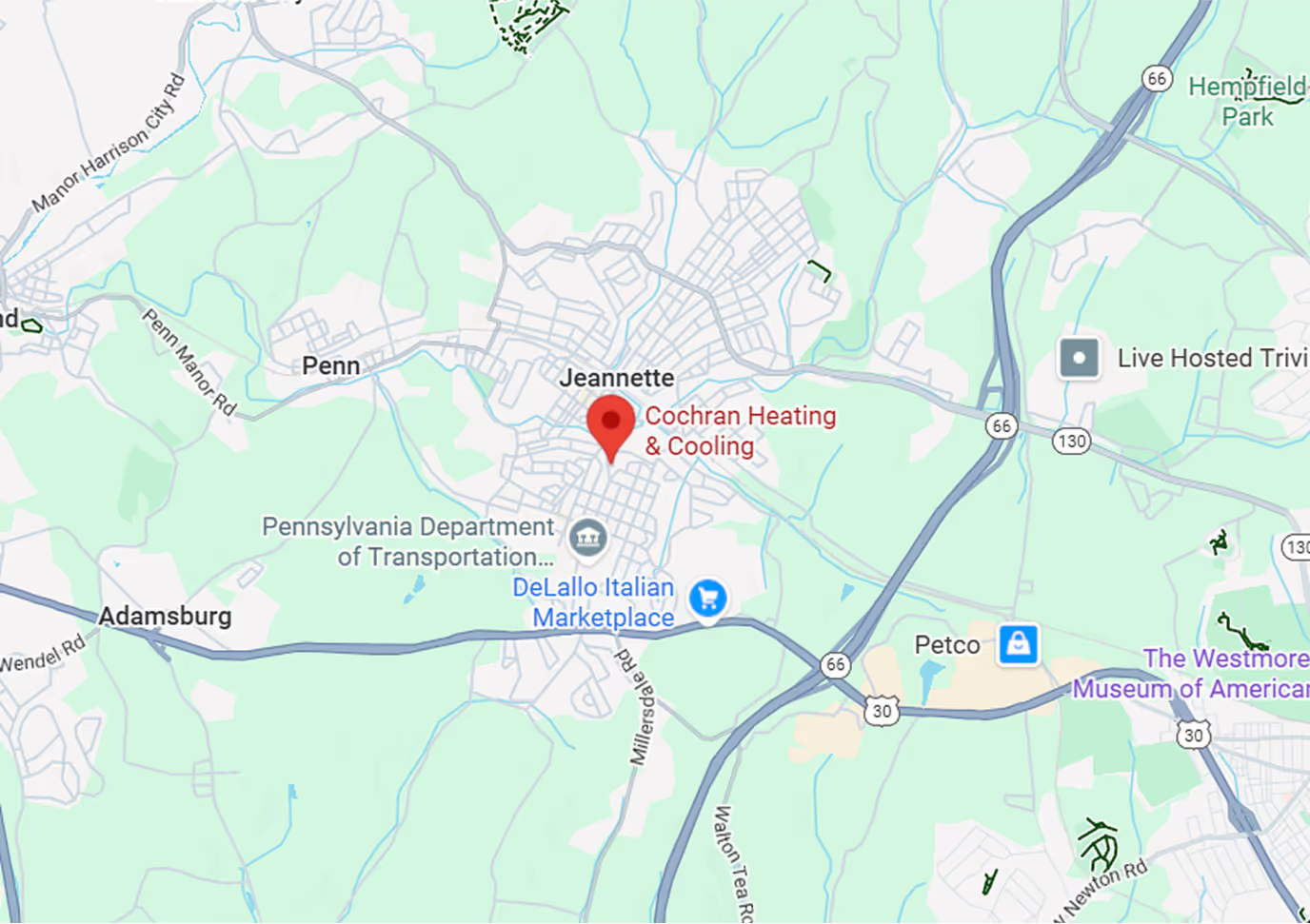
HVAC Repair in Greensburg, PA
When your heating or cooling system fails, you need fast, accurate repairs from a trusted provider. Cochran Heating & Cooling offers professional HVAC repair in Greensburg, PA, for both homes and businesses, combining rapid emergency response with thorough diagnostics and long-term repair solutions. Winters in Greensburg are cold and extended, and humid summers can make air conditioning essential. That seasonal range makes dependable HVAC repair not just a convenience, but a safety and comfort necessity for local residents and commercial properties.
-min.jpeg)
HVAC Repair in Greensburg, PA
When your heating or cooling system fails, you need fast, accurate repairs from a trusted provider. Cochran Heating & Cooling offers professional HVAC repair in Greensburg, PA, for both homes and businesses, combining rapid emergency response with thorough diagnostics and long-term repair solutions. Winters in Greensburg are cold and extended, and humid summers can make air conditioning essential. That seasonal range makes dependable HVAC repair not just a convenience but a safety and comfort necessity for local residents and commercial properties.
Why timely HVAC repair matters in Greensburg, PA
- Cold winter nights increase the risk of frozen pipes and health hazards when heating systems fail.
- High humidity and summer heat create discomfort and can exacerbate indoor air quality problems.
- Older housing stock in Greensburg and surrounding Westmoreland County often contains aging furnaces, boilers, and ductwork that require specialized attention.
- Untreated issues can lead to higher energy bills, premature equipment failure, and safety risks such as carbon monoxide exposure or refrigerant leaks.
Cochran Heating & Cooling focuses on resolving the root cause of HVAC failures, restoring safe operation, and extending equipment life while prioritizing safety and code compliance.
Common HVAC problems seen in Greensburg homes and businesses
- Furnace won’t ignite or cycles frequently — caused by faulty igniters, burners, or control boards.
- No cooling or weak cooling — often due to refrigerant leaks, failed compressors, or clogged coils.
- Uneven heating or cooling — caused by airflow restriction, unbalanced ductwork, or failing zone controls.
- Blower motor failures — symptoms include reduced airflow, unusual noise, or motors that fail to start.
- Short cycling — frequent on and off operation that stresses components and increases energy use.
- Thermostat malfunctions — incorrect readings or wiring failures that prevent proper system control.
- Boiler problems — low water pressure, loss of heat, kettling noises, or leaks in older systems.
- Shortages or contamination of refrigerant — requires certified leak detection and repair.
- Electrical issues — tripped breakers, burned contacts, or failed control boards.
These issues are influenced by Greensburg’s climate and the age of many local systems. Prompt diagnosis avoids more costly breakdowns during peak winter or summer demand.
Typical diagnostic procedure for HVAC repair
Cochran Heating & Cooling’s diagnostic approach follows a systematic, safety-first methodology tailored to the equipment type. Diagnostics commonly include:
- Arrival and visual safety inspection: verify safe access, check for obvious signs of damage, and confirm there is no immediate carbon monoxide concern or gas smell.
- System startup and symptom reproduction: run the system to observe failures under load and record error codes or control board diagnostics.
- Thermostat and controls check: ensure correct setpoints, wiring integrity, batteries, and communication with system components.
- Electrical testing: measure voltage, amperage, and continuity at motors, compressors, contactors, and fuses to identify electrical faults.
- Airflow assessment: inspect return and supply registers, filter condition, ductwork, and blower performance for restricted or imbalanced flow.
- Refrigerant system evaluation: measure pressure, superheat and subcooling, inspect for oil stains or visible leaks, and perform electronic leak detection if needed.
- Combustion and venting tests for gas systems: test ignition sequences, flame quality, heat exchanger condition, and flue draft to ensure safe combustion and venting.
- Boiler-specific checks: assess water pressure, relief valves, expansion tanks, circulator pumps, and controls.
- Core component inspection: examine motors, starters, capacitors, belts, compressors, and reversing valves for wear or failure.
Each diagnostic step is documented and communicated as options for repair, replacement, or deferred maintenance, with estimated time and parts needed.
Common repairs and what they involve
- Blower motor replacement or repair: includes testing motor windings, checking blower wheel balance, replacing capacitors, verifying bearings, and ensuring proper airflow and electrical connections.
- Refrigerant leak repair and recharge: locate leak source using dye or electronic detection, repair or replace damaged components, evacuate and vacuum the system, and recharge to manufacturer specifications while providing refrigerant documentation.
- Compressor replacement and repairs: evaluate whether compressor, contactor, or capacitor is the failure point; replacement typically involves recovering refrigerant, replacing the compressor and related components, and testing system performance.
- Ignition and control repairs: replace faulty igniters, flame sensors, and control boards; calibrate safeties and perform combustion analysis to verify safe operation.
- Heat exchanger inspections and solutions: inspect for cracks or corrosion; recommend repair or replacement if the heat exchanger is compromised due to safety risk.
- Thermostat replacement and calibration: install compatible thermostats, reprogram settings, and test system response for accurate temperature control.
- Boiler repairs: replace valves, circulator pumps, pressure controls, and sensors; flush and treat system water when needed to prevent corrosion and scale.
- Condenser and evaporator coil cleaning or replacement: remove debris, clean coils to restore heat exchange efficiency, and replace coils if severely damaged or corroded.
- Ductwork repairs: seal leaks, re-balance airflow, and insulate ducts when necessary to improve efficiency and comfort.
Technicians provide clear explanations of repair needs, options, and the expected outcome before beginning any work.
Emergency response and expected response times in Greensburg, PA
Cochran Heating & Cooling provides around-the-clock emergency response for life-safety and mission-critical failures. Response times depend on severity, time of day, and local conditions, but typical windows are:
- Life-safety emergencies (no heating in subfreezing conditions, gas leaks, carbon monoxide incidents): immediate dispatch with priority response, often within 1 to 3 hours depending on location and road conditions.
- Urgent failures affecting business operations or critical systems: next-available dispatch, commonly within 3 to 6 hours.
- Non-emergency repairs (scheduled diagnostics and repairs): typically scheduled within 24 to 48 hours on weekdays, with weekend options for high-demand periods.
Response times in Greensburg may be affected by severe winter storms or regional events; technicians prioritize safety and triage based on risk.
Pricing structure and service-call policies
Cochran Heating & Cooling follows a transparent service-call and estimate process to minimize surprises:
- Service-call (diagnostic) fee: a standard diagnostic fee covers the technician’s time on site, basic testing, and a written repair estimate. This fee is disclosed up front and applied to the final invoice if repairs are completed during the same visit, when applicable.
- Flat-rate and time-and-materials options: some repairs are quoted as flat rates for typical replacement parts and labor; others—especially complex commercial systems—are billed as time and materials with a clear labor rate and parts markup disclosed.
- Written estimates: after diagnosis, customers receive a written estimate that details parts, labor, warranties, expected timeline, and any alternatives such as repair versus replacement.
- Emergency and after-hours pricing: emergency dispatches and after-hours work may incur different rates due to immediate availability and overtime. Any such rates are disclosed before work commences when feasible.
- Payment and financing: multiple payment methods are accepted and financing solutions or payment plans may be available for larger projects. Payment terms are stated on estimates and invoices.
Estimates include the projected timeframe for completion and any follow-up work that might be required as additional issues are discovered.
Technician qualifications and safety practices
Cochran Heating & Cooling technicians are trained, certified, and held to strict safety and professional standards appropriate for Greensburg homeowners and businesses:
- Certifications and training: technicians hold relevant certifications such as EPA certification for refrigerant handling, NATE or equivalent HVAC certifications, and ongoing manufacturer training for specialized equipment like heat pumps and high-efficiency condensing boilers.
- Background checks and professional conduct: technicians undergo background screening and are trained in customer privacy, respectful property handling, and clear communication.
- Onsite safety protocols: technicians use personal protective equipment (PPE), ground-fault testing, lockout-tagout procedures on electrical systems, and proper gas shutoff practices when working on combustion appliances.
- Combustion safety and carbon monoxide testing: for any gas-fired equipment service, technicians perform combustion analysis, flue inspections, and carbon monoxide testing to ensure safe operation.
- Environmental compliance: refrigerant recovery and disposal follow EPA regulations, and technicians document refrigerant amounts and leak repairs.
- Clean work practices: use of drop cloths, shoe covers, and thorough clean-up procedures to protect homes and businesses during repairs.
These standards protect occupants, equipment, and the work environment while ensuring repairs meet local codes and best practices.
Warranties, documentation, and follow-up
After completing repairs, Cochran Heating & Cooling provides clear documentation and warranty information so customers in Greensburg know what to expect:
- Written warranties: repairs come with a written warranty that typically covers workmanship for a specified period and may include parts warranties that align with manufacturer terms. Specific warranty duration depends on the type of repair and parts installed; written details are provided on the repair order.
- Service records: technicians record diagnostics, parts replaced, refrigerant quantities recovered and recharged, and any code-related work for customer records.
- Follow-up checks: for major repairs, a follow-up inspection may be scheduled to verify system operation and customer satisfaction.
- Manufacturer warranties: when new parts or equipment are installed, manufacturers’ warranties may apply and are explained as part of the documentation.
Keeping these records helps with future maintenance, potential warranty claims, and real estate disclosures for local Greensburg properties.
Troubleshooting checklist you can try before a service visit
Before scheduling repair, try these safe, simple checks. If any safety red flags appear, discontinue attempts and request professional service.
- Check power and thermostat
- Ensure the thermostat is set correctly and has fresh batteries if applicable.
- Verify circuit breakers and disconnect switches for the HVAC system are in the ON position.
- Inspect air filters
- Replace or clean clogged filters. Restricted airflow can mimic many failure symptoms.
- Look for tripped safety switches
- Condensate overflow or drain pan float switches can shut down air conditioning systems; inspect drain lines and clear clogs.
- External unit checks
- For outdoor condensers: ensure unit is free of debris, leaves, and snow. Clear 2 to 3 feet around the unit to ensure airflow.
- Pilot light or ignition
- For older furnaces with pilot lights, confirm the pilot is lit. Modern systems with electronic ignition require professional diagnosis.
- Brief reset
- Try a safe reset: turn off the system at the thermostat and breaker, wait 60 seconds, and restart. If the system trips repeatedly, stop and request a technician.
- Check vents and returns
- Ensure supply registers are open and return vents are unobstructed. Closed registers can reduce airflow and cause short cycling.
- Note sounds, smells, and patterns
- Record when issues occur (time of day, temperature settings). Strange odors (burning or gas smell) or loud mechanical noises should prompt immediate professional attention.
If these steps do not restore normal operation, a professional diagnostic will pinpoint electrical, refrigerant, combustion, or control failures safely and efficiently.
Preventive maintenance and local considerations for Greensburg, PA
Regular preventive maintenance is especially valuable in Greensburg because of seasonal extremes and older equipment prevalence:
- Seasonal tuning: perform heating checks in fall and cooling checks in spring to avoid mid-season breakdowns.
- Energy efficiency: clean coils, calibrate controls, and adjust airflow to maintain efficiency and reduce energy bills—important in climates with long heating or cooling seasons.
- Boiler water treatment: for older boilers common in local homes, water quality management prevents scale and corrosion that shorten service life.
- Duct sealing in older homes: sealing and insulating ductwork reduces heat loss in winter and prevents moisture and mold in humid summer months.
- Carbon monoxide awareness: annual inspections of combustion appliances reduce the risk of CO exposure during Greensburg winters when houses are tightly closed.
Planned maintenance reduces emergency calls and extends equipment life, protecting household comfort and local businesses’ operations.
How to schedule HVAC repair service in Greensburg
Scheduling options accommodate urgent and routine needs while respecting local conditions and business hours:
- Emergency dispatch for life-safety or critical system failures is available 24 hours per day, 7 days per week.
- Routine repair visits are scheduled during business hours with options for evening or weekend appointments when feasible.
- When an appointment is requested, expect a confirmation of the arrival window, an outline of the diagnostic fee policy, and instructions for any required access or safety steps on site.
- Technicians arrive in marked vehicles, with identification, and are prepared with common diagnostic equipment and parts for rapid repairs.
Scheduling is structured to prioritize safety, transparency, and efficient resolution of your HVAC issue.
Benefits of choosing professional HVAC repair from Cochran Heating & Cooling
- Local expertise: technicians understand Greensburg climate impacts and building types, delivering targeted solutions.
- Safety-first approach: combustion analysis, CO testing, and electrical safety practices protect occupants and property.
- Transparent estimates and documentation: written diagnostics, repair options, and warranties help you make informed decisions.
- Long-term value: proper repairs and maintenance improve comfort, lower energy bills, and extend equipment life.
Cochran Heating & Cooling combines technical skill with local knowledge to resolve failures quickly while aligning repairs with code requirements and manufacturer guidance.
Frequently asked questions
Q: How quickly can you respond to an HVAC emergency in Greensburg, PA?A: For life-safety emergencies such as no heat during subfreezing weather, suspected gas leaks, or carbon monoxide incidents, priority dispatch is available and response times are typically within 1 to 3 hours depending on location and road conditions. Non-life-safety urgent issues are usually handled within 3 to 6 hours; routine repairs are commonly scheduled within 24 to 48 hours.
Q: What should I expect during the diagnostic visit?A: A technician will perform a safety inspection, run the system to reproduce symptoms, test electrical circuits, evaluate airflow, check refrigerant pressures or combustion performance, and inspect core components. You will receive a written estimate outlining recommended repairs, parts, labor, warranty details, and estimated completion time.
Q: Do you service boilers and heat pumps as well as furnaces and air conditioners?A: Yes. Cochran Heating & Cooling technicians are trained to diagnose and repair furnaces, boilers, heat pumps, air conditioners, and related controls for both residential and commercial systems.
Q: What is your pricing structure for service calls and repairs?A: The service-call fee covers on-site diagnostics and is disclosed up front. Depending on the repair, work may be quoted as a flat-rate or time-and-materials. Emergency or after-hours work can have different rates. Written estimates detail parts, labor, and warranty information before any repair is started.
Q: What certifications and safety measures do your technicians have?A: Technicians hold relevant certifications such as EPA refrigerant handling credentials and industry certifications. They undergo ongoing manufacturer training, use PPE, follow lockout-tagout and gas safety procedures, and perform carbon monoxide and combustion testing on gas appliances.
Q: What warranty covers HVAC repairs?A: Repairs come with a written warranty covering workmanship for a specified period, and parts are covered by manufacturer warranties as applicable. Specific warranty terms are provided in the written repair order.
Q: What can I check myself to try to fix an HVAC problem before calling for service?A: Safe checks include verifying thermostat settings and batteries, checking circuit breakers and disconnects, replacing dirty filters, clearing debris from outdoor units, inspecting condensate drains for clogs, and ensuring vents are open. If you detect gas odors, CO alarms, or persistent electrical tripping, discontinue attempts and request professional service.
Q: Are your repair practices compliant with environmental regulations for refrigerants?A: Yes. Refrigerant recovery, handling, and documentation follow EPA regulations. Technicians perform leak detection and repair, recover refrigerant properly, and record system refrigerant charges.
Q: Will you provide documentation of the work performed?A: Yes. After repairs, you receive documentation of diagnostics, parts installed, refrigerant amounts recovered or recharged, safety checks performed, and warranty details for your records.
Q: How does Greensburg weather affect my HVAC system?A: Greensburg’s cold winters put extra stress on heating systems and combustion appliances, increasing the risk of safety-related failures. Humid, warm summers increase cooling demand and potential moisture issues in ductwork. Regular seasonal maintenance and attention to older systems common in the area help prevent breakdowns and improve energy efficiency.
This page provides the detailed, location-specific information you need to understand how HVAC repair works in Greensburg, PA, and what to expect when a system needs service from Cochran Heating & Cooling. Proper diagnosis, safety practices, and transparent estimates ensure repairs restore comfort and protect your property.