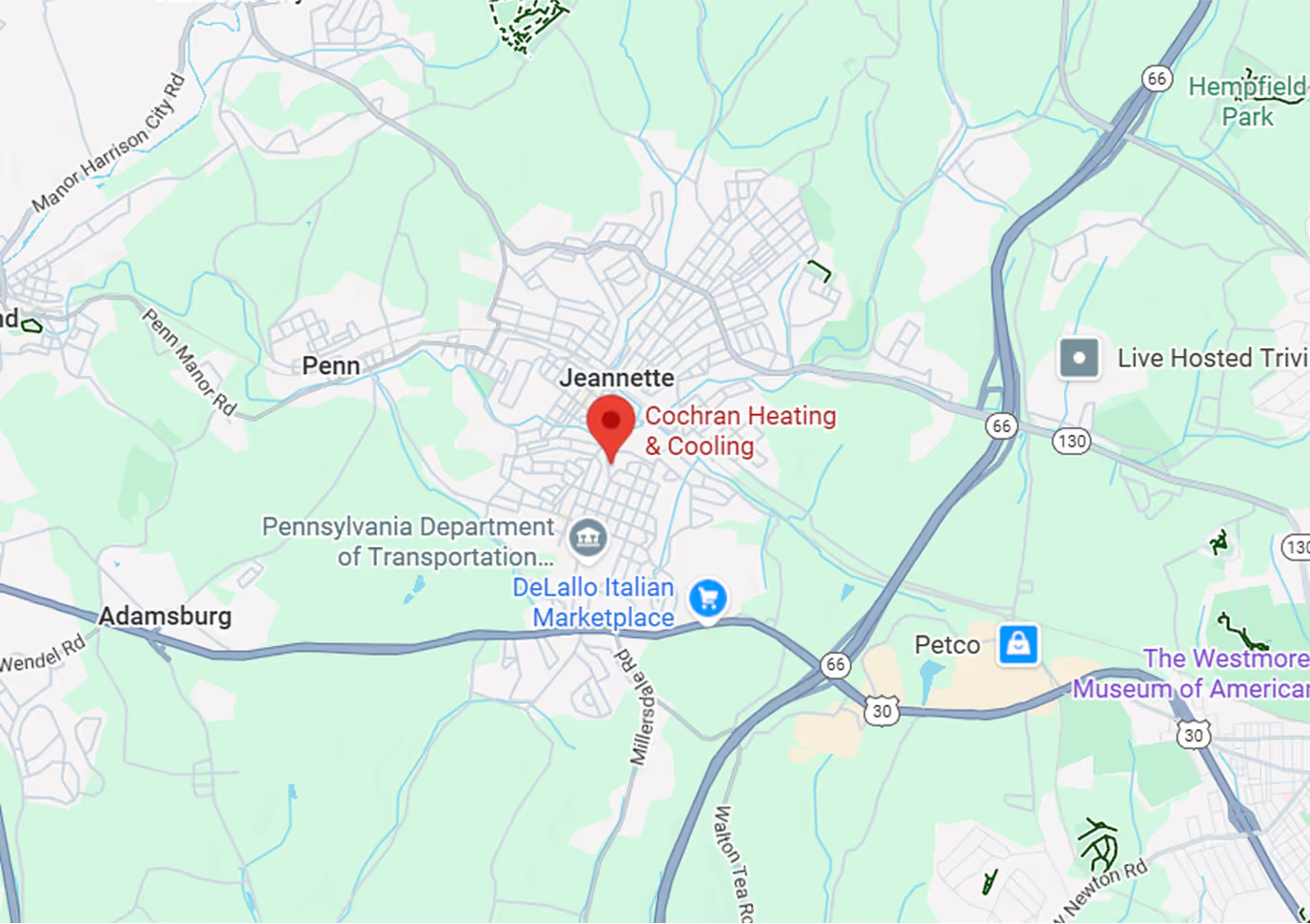
HVAC Repair in Latrobe, PA
When your heating or cooling system fails in Latrobe, PA, you need a fast, reliable repair that restores comfort and protects your home. Cochran Heating & Cooling delivers professional HVAC repair in Latrobe, PA with clear diagnostics, experienced technicians, transparent pricing practices, and options for emergency response 24 hours a day. We'll explain common system failures in our region, how we diagnose and repair them, what repair timelines and warranties to expect, and practical steps to reduce the chance of future breakdowns.
.jpeg)
HVAC Repair in Latrobe, PA
When your heating or cooling system fails in Latrobe, PA, you need a fast, reliable repair that restores comfort and protects your home. Cochran Heating & Cooling delivers professional HVAC repair in Latrobe, PA with clear diagnostics, experienced technicians, transparent pricing practices, and options for emergency response 24 hours a day. This page explains common system failures in our region, how we diagnose and repair them, what repair timelines and warranties to expect, and practical steps to reduce the chance of future breakdowns.
Why timely HVAC repair matters in Latrobe, PA
Latrobe experiences humid summers and cold, snowy winters. That seasonal range puts different stresses on HVAC systems: air conditioners work hard to remove humidity during July and August, while furnaces and heat pumps face deep cold and freeze-thaw cycles in January and February. Delaying repairs can lead to:
- Increased energy bills from inefficient operation
- Greater risk of complete system failure during peak weather
- Safety concerns such as carbon monoxide risks from combustion equipment
- Higher long-term repair costs if minor issues become major
Cochran Heating & Cooling focuses on restoring safe, efficient operation quickly while giving Latrobe homeowners the information they need to make informed decisions about repair versus replacement.
Common HVAC problems we see in Latrobe homes
Local weather, older housing stock, and seasonal debris contribute to recurring issues. Common repairs our technicians perform include:
- Furnace problems
- Failure to ignite or intermittent ignition
- Uneven heating, short cycling, or noisy operation
- Blower motor or belt failures
- Cracked heat exchangers and combustion issues
- Heat pump issues
- Loss of heating or cooling capacity
- Icing on outdoor unit and defrost cycle failures
- Reversing valve or compressor malfunctions
- Low refrigerant charge or leaks
- Air conditioning and refrigeration components
- Compressor failures, locked rotor, or reduced capacity
- Refrigerant leaks and low charge
- Faulty capacitors, contactors, and motors
- Clogged condensate lines causing water damage
- Controls and electrical
- Thermostat miscalibration or communication failures
- Control board failures or fuse issues
- Zone damper or sensor faults
- Wiring corrosion or loose connections
- Duct and airflow problems
- Blocked vents, dirty coils, or restricted return airflow
- Duct leaks leading to reduced efficiency
- Inadequate insulation causing short cycling
Rapid diagnostic procedures used on every visit
A precise diagnosis prevents unnecessary parts replacement and shortens repair time. Cochran Heating & Cooling technicians use a consistent, step-by-step diagnostic process:
- Intake and symptom assessment
- Review homeowner concerns and recent system behavior
- Note any error codes, unusual noises, odors, or performance changes
- Visual and safety inspection
- Check for gas leaks, electrical hazards, and blocked vents
- Inspect filters, condensate drains, thermostat settings, and visible components
- Instrumented testing
- Measure temperatures across supply and return to calculate temperature split
- Use multimeter for voltage and continuity checks
- Check refrigerant pressures with gauge set and evaluate superheat and subcooling
- Conduct combustion analysis for gas appliances when needed
- Perform airflow and static pressure testing, and use infrared imaging for hidden hot spots
- Diagnosis and options
- Summarize findings, identify root cause, and present repair options
- Separate safety fixes from performance upgrades so homeowners can prioritize
This method keeps repairs focused, reduces guesswork, and usually yields a reliable estimate the same day.
Typical repairs by system and what each involves
Below are common repairs with simple explanations of causes and typical fixes.
- Furnace repairs
- Ignition or pilot failure: Clean or replace ignition module or pilot assembly, inspect gas valve and pressure.
- Blower motor or relay failure: Replace motor, capacitor, or blower relay; rebalance if needed.
- Cracked heat exchanger: When detected, the safe course is replacement of the heat exchanger or the furnace, depending on age and condition, due to safety risks.
- Flame sensor and limit switch replacements: Clean or replace sensors that cause short cycling or shutdowns.
- Heat pump repairs
- Refrigerant leak or low charge: Locate leak, repair lines or components, evacuate and recharge system to correct charge, test for proper operation.
- Compressor or reversing valve failure: Assess compressor viability; replace compressor or reversing valve when necessary, understanding lead times for parts.
- Defrost cycle or control issues: Repair control board, sensors, or heater elements so outdoor unit defrosts properly and avoids icing.
- Air conditioning repairs
- Compressor and capacitor failures: Test and replace faulty run capacitors or start capacitors; evaluate compressor for electrical or mechanical failure.
- Condenser fan motor replacement: Replace fan motor, fan blade, or capacitor; remove debris and straighten fins.
- Evaporator coil issues: Clean coils, repair minor leaks, or replace coils when corrosion or damage is extensive.
- Controls and thermostat repairs
- Thermostat replacement or recalibration: Replace failing thermostats or install smart thermostats with proper wiring and configuration.
- Control board or relay replacement: Replace failed boards, relays, or sensors with OEM or equivalent parts.
- Drain and ductwork repairs
- Condensate drain cleaning and trap replacement: Remove clogs to prevent water damage and microbial growth.
- Duct sealing and insulation: Seal obvious leaks and recommend further ductwork service when needed.
24/7 emergency response and safety-first service
Emergencies happen outside normal business hours during Latrobe weather extremes. Cochran Heating & Cooling provides emergency response options that emphasize safety and stabilization, including:
- Priority dispatching for hazardous conditions such as gas leaks, loss of heating on subfreezing nights, or electrical risks
- On-site safety triage to shut off gas or electricity when necessary
- Temporary measures to restore safe indoor temperatures, such as temporary heaters, heat strips, or short-term bypass repairs
- Clear explanation of what fixes are temporary versus permanent and what parts may be required to complete repairs
Typical emergency response times vary by call volume and location, but the priority is to secure your home and minimize risk until a full repair can be completed.
Technician qualifications and standards
Cochran Heating & Cooling technicians work to industry standards and local codes. Qualifications include:
- Certification and licensing
- NATE certification or equivalent technician credentials
- EPA Section 608 certification for refrigerant handling
- State or local trade licenses where required
- Ongoing training
- Regular manufacturer training on new equipment and control systems
- Safety and diagnostics workshops to stay current with technology
- Professional practices
- Background checks and vehicle identification
- Use of personal protective equipment and safe handling of fuel and refrigerants
- Clear documentation of diagnostics and repair steps for homeowner records
Technicians combine experience with these standards to diagnose efficiently and complete repairs to code.
Expected repair timelines and what affects them
Repair timelines vary by complexity and parts availability. Typical ranges:
- Same-visit repairs (1 to 3 hours)
- Thermostat replacements, capacitor or contactor swaps, condensate line clearing, filter and minor motor repairs
- Standard repairs requiring parts (same day to 2 days)
- Fan motors, zone controls, moderate electrical parts or control board replacements when parts are in stock
- Complex repairs or major components (1 to 7 days)
- Compressor replacement, heat exchanger replacement, or major coil/cabinet work that may require special ordering, permits, or multi-step procedures
Factors that influence timelines:
- Parts availability: OEM parts for older equipment may have longer lead times
- Local supply chain: Seasonal demand can extend wait times in peak seasons
- Severity of damage: Unsafe components require careful handling and may delay completion until safety is assured
- Permits and inspections: Certain gas or mechanical repairs may require municipal inspections
Technicians will provide an estimated timeline during diagnosis and update you if anything changes.
Pricing transparency and estimate practices
Cochran Heating & Cooling emphasizes clear, itemized estimates so homeowners in Latrobe can compare options. Pricing transparency includes:
- Diagnostic fee structure: Clearly stated diagnostic or service call fee and whether it will be applied to repair cost
- Itemized estimates: Labor, parts, and any permit or disposal fees listed separately
- Labor pricing explained: Hourly rates versus flat-rate repairs explained up front
- Parts options: New OEM parts, manufacturer-recommended aftermarket alternatives, and the expected lifespan of each choice
- Reasoning for replacement versus repair: When a repair may be a temporary fix versus a cost-effective long-term solution
This approach allows homeowners to decide with confidence and budget for repairs based on clear information.
Warranties and parts information
Understanding warranties protects consumers and clarifies responsibilities. Typical aspects covered:
- Parts warranties
- Manufacturer part warranties vary by component and brand; some components have multi-year warranties, others are one year
- Aftermarket parts may have different warranty terms; these will be disclosed at the time of estimate
- Labor warranties
- Short-term labor warranties cover the workmanship of the repair for a specified period; the length will be stated on the estimate or invoice
- Warranty claims handling
- When a manufacturer part fails, Cochran Heating & Cooling documents failure and assists with warranty claims when applicable
- For labor warranty items, technicians will return to re-evaluate and correct any workmanship issues within the warranty period
Homeowners should retain service documentation and invoices to support warranty claims.
Preventive tips to avoid future breakdowns
Small routine practices dramatically reduce the chance of emergency repairs in Latrobe conditions.
- Schedule seasonal maintenance
- Annual furnace tune-up before winter and A/C tune-up before summer improves efficiency and reliability
- Replace filters regularly
- Monthly changes for high-efficiency filters during heavy use months; at minimum every 90 days
- Keep outdoor units clear
- Maintain a 2 to 3 foot clearance around condensers and heat pump units; trim grass and remove leaves and snow buildup
- Check condensate drains
- Run a small amount of water through the drain pan periodically or have it flushed during maintenance to prevent clogs
- Monitor thermostat behavior
- Replace batteries and recalibrate programmable thermostats if the system displays unusual cycling
- Protect outdoor equipment during winter
- Shield outdoor units from road salt spray and heavy snow accumulations; avoid using deicing chemicals directly on units
- Carbon monoxide and smoke safety
- Install and test carbon monoxide detectors if you have combustion heating; include them in your home safety routine
These practices reduce wear and uncover small issues early, preserving system life and saving money over time.
What to expect during a repair visit
Understanding the repair visit process reduces anxiety and ensures an efficient outcome.
- Arrival and identification
- Technician arrives with proper ID, tools, and safety equipment; initial explanation of steps and estimated time
- Evaluation and confirmation
- Technician reviews symptoms, performs diagnostic inspections, and explains findings in plain language
- Written estimate
- An itemized estimate is provided for approval before work begins, separating safety items from optional improvements
- Repair work
- Technician performs agreed-upon repairs, documents parts used, and follows safety and code standards
- Testing and cleanup
- System is tested for proper operation and safety; technician cleans the work area and explains any maintenance to prevent recurrence
- Documentation
- Service report outlines work completed, parts replaced, warranties, and recommended next steps for maintenance
This predictable process helps homeowners understand scope, cost, and outcomes.
Why local expertise in Latrobe matters
Local conditions shape the most effective repair strategies. In Latrobe:
- Humidity management is crucial: AC systems must handle latent load to control moisture in humid months
- Freeze-thaw cycles affect outdoor coils and refrigerant lines, so proper insulation and winterization are essential
- Older home construction may mean mixed duct materials, variable insulation, and unique control configurations that require tailored solutions
Cochran Heating & Cooling leverages local knowledge to recommend fixes that work long term in Latrobe homes and to anticipate seasonal service needs.
Q: How soon can a technician arrive for an emergency HVAC repair in Latrobe, PA?A: Emergency response times vary with demand and location, but priority dispatch focuses on restoring safety and basic heating or cooling as quickly as possible. Technicians will provide an estimated arrival window when you report the emergency.
Q: Will the diagnostic fee be applied to the total repair cost?A: Diagnostic fee policies differ depending on the service provider; detailed estimates will state whether the diagnostic fee is credited toward repair work and under what conditions.
Q: How do you decide whether to repair or replace a failing furnace or heat pump?A: The decision depends on age, efficiency, repair cost relative to replacement, safety concerns such as a cracked heat exchanger, and projected future repairs. Technicians provide a comparison of repair costs, expected remaining life, and potential energy savings from a replacement.
Q: What qualifications do Cochran Heating & Cooling technicians have for refrigerant handling?A: Technicians are EPA Section 608 certified for refrigerant handling, and receive ongoing training for modern refrigerants and equipment. They follow legal requirements for refrigerant recovery and disposal.
Q: How long do typical labor and parts warranties last for common repairs?A: Warranties vary by part and manufacturer; parts warranties can range from one year to several years for major components. Labor warranties on workmanship are typically limited term and will be provided in writing with the service invoice.
Q: Can you perform temporary fixes to restore heat immediately during winter?A: Yes, when safe and appropriate, technicians can implement temporary measures such as bypasses, temporary heating elements, or securing a failing component to restore heat. Temporary fixes are documented and followed by a recommendation for permanent repair or replacement.
Q: What routine maintenance should I schedule to prevent breakdowns in Latrobe, PA?A: Schedule an annual heating tune-up before winter and an AC tune-up before summer. Change filters regularly, keep outdoor units clear of debris, flush condensate drains, and test safety devices like CO detectors.
Q: Are aftermarket parts OK or should I insist on OEM parts?A: Both OEM and quality aftermarket parts can be acceptable depending on availability, warranty, and long-term reliability. The estimate will explain the options, differences in warranty coverage, and the advantages of each choice.
Q: How do you handle indoor air quality concerns related to HVAC repairs?A: Technicians can evaluate filters, recommend filtration upgrades, check for mold in condensate pans or ducts, and suggest humidity control strategies. Any repair that affects airflow or filtration includes consideration of indoor air quality impacts.
Q: What documentation will I receive after the repair?A: You will receive a service report detailing diagnostics, parts used, labor performed, warranty information, and recommended follow-up. This documentation is useful for future service and warranty claims.