Water Heaters Repair in Murrysville, PA
A failing water heater disrupts daily life quickly – no hot showers, laundry delays, and the risk of water damage from leaks. For homeowners in Murrysville, PA, timely, professional water heater repair restores comfort and prevents costly secondary problems. Cochran HVAC offers expert services, addressing common failure symptoms, providing qualified technicians to diagnose and repair units safely, replacing parts as needed, offering emergency response availability, explaining cost expectations, ensuring technician qualifications, and providing clear guidance on when repair is the right choice versus replacement.
Water Heaters Repair in Murrysville, PA
A failing water heater disrupts daily life quickly — no hot showers, laundry delays, and the risk of water damage from leaks. For homeowners in Murrysville, PA, timely, professional water heater repair restores comfort and prevents costly secondary problems. This page explains the common failure symptoms you’ll see in local homes, how qualified technicians diagnose and repair units safely, what parts are typically replaced, emergency response availability, what to expect on cost, technician qualifications, and clear guidance on when repair is the right choice versus replacement.
Why timely water heater repair matters in Murrysville
Murrysville experiences cold winters, which makes reliable hot water essential for comfort and freeze protection. Local water conditions and household usage patterns can accelerate wear on water heaters. Addressing symptoms promptly reduces the chance of sudden failure, flooding, or higher utility bills from inefficient operation. Professional repairs also ensure gas appliances operate safely and electric heaters meet electrical code requirements.
Common water heater problems in Murrysville homes
- No hot water or insufficient hot water: Could be a failed thermostat, heating element (electric), or gas control/thermocouple (gas).
- Intermittent hot water: Often caused by failing elements, sediment build-up, or a faulty thermostat.
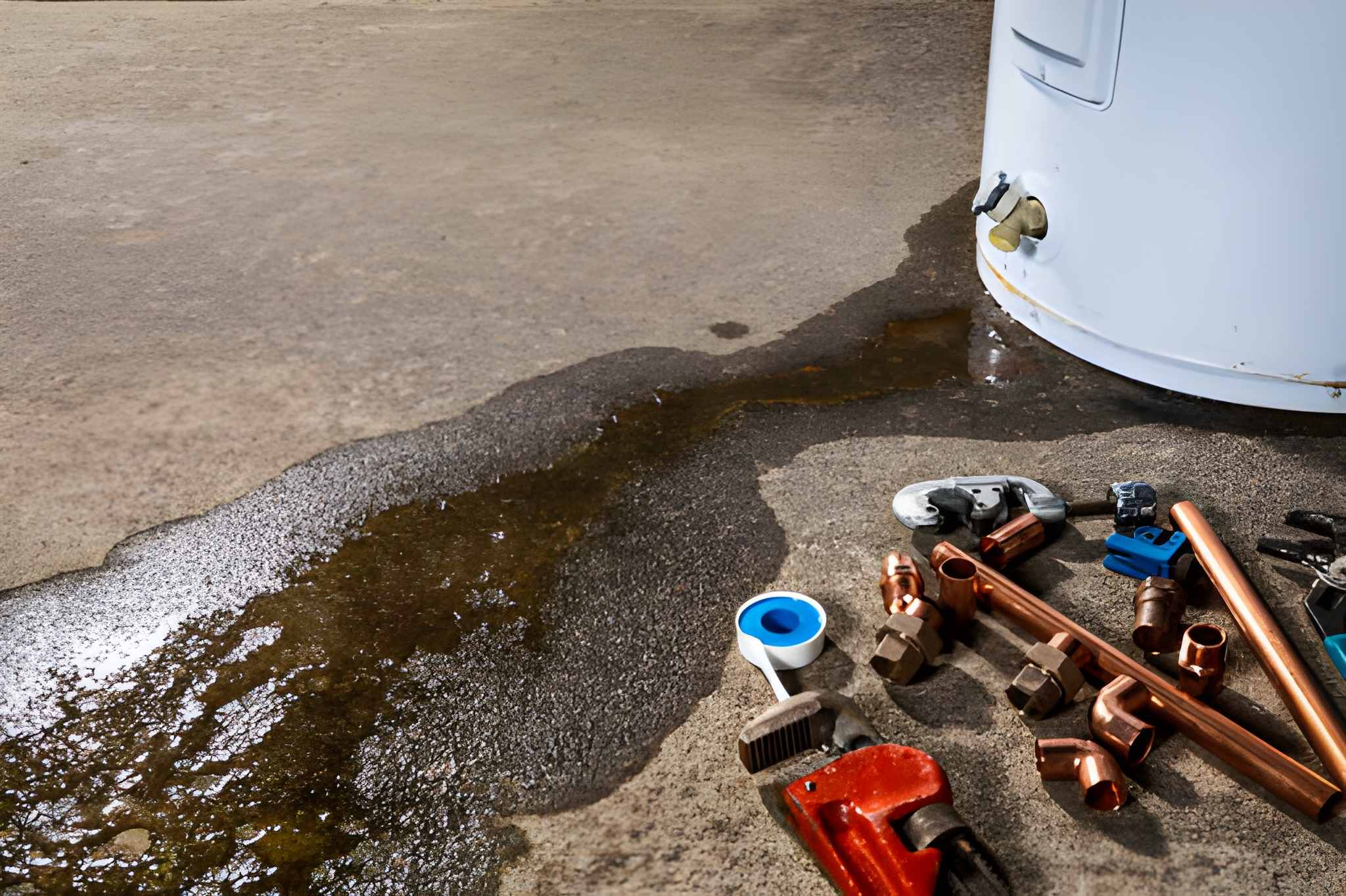
- Leaking tank or connections: Corroded tank, loose fittings, or failing pressure relief valve can cause visible leaks and water damage.
- Pilot light or ignition problems (gas units): Failed thermocouple, gas valve, or ignition system prevents successful burner operation.
- Strange noises: Popping, rumbling, or banging frequently indicate heavy sediment accumulation against the bottom of the tank.
- Discolored or metallic-tasting water: Suggests corrosion inside the tank or deteriorating anode rod.
- Water temperature fluctuations: Can be caused by thermostat issues, cross-connections, or a failing mixing valve.
Diagnostic process — what a professional will do
Skilled technicians follow a systematic diagnostic routine to find the root cause rather than just treating symptoms:
- Safety and visual inspection: Check for active leaks, corrosion, and signs of combustion issues on gas units. Verify the unit is properly vented and free of nearby combustibles.
- Check power and fuel supply: Confirm electrical breakers, fuses, or gas supply to the unit are intact.
- Measure temperature and pressure: Test outlet temperature and inspect the temperature and pressure (T&P) relief valve for proper operation.
- Test thermostats, elements, and controls: Use meters to verify element continuity, thermostat function, and gas control operation.
- Combustion analysis (gas heaters): Inspect burner, pilot, flame characteristics, and venting for safe combustion.
- Tank condition assessment: Evaluate anode rod life, sediment levels, and extent of corrosion to determine whether repair or replacement is advisable.
Typical repair solutions and parts replacement
- Thermostats and heating elements (electric models): Common and cost-effective repairs that often restore full function.
- Thermocouples, pilot assemblies, igniters, and gas control valves (gas models): Fix ignition and burner issues; ensure safe operation.
- Pressure relief valve replacement: Necessary if leaking or not functioning properly.
- Anode rod replacement: Extends tank life by reducing internal corrosion.
- Dip tube replacement: Restores proper cold-water inlet operation when hot water is delivered prematurely.
- Tank patching: Small leaks may be temporarily patched, but patching is usually a short-term fix; corrosion often indicates impending replacement.
- Flushing and descaling: Removes sediment that causes noise, reduces efficiency, and shortens component life. Especially valuable in areas with mineral-rich water.
- Electrical repairs and wiring corrections: Restore safe, code-compliant operation for electric units.
Emergency response and 24/7 availability
Some failures require immediate attention to prevent property damage or safety hazards. Leaking tanks, major flooding, gas odor, or complete loss of heat during winter are prioritized. Professional services typically offer emergency response or after-hours support to address these urgent conditions, isolate hazards (shut-off gas or water), and perform temporary measures until a permanent repair can be scheduled.
Pricing expectations (what affects cost)
Rather than specific numbers, expect estimates to reflect these factors:
- Age and condition of the unit
- Whether the problem is a simple part replacement or requires labor-intensive work
- Parts needed (OEM vs aftermarket)
- Accessibility of the heater (basement, attic, tight closet)
- Whether code upgrades, venting repairs, or permit work are requiredProfessionals provide transparent, itemized estimates so you can weigh repair costs against replacement when appropriate.
Technician qualifications and safety practices
Qualified technicians servicing water heaters in Murrysville should be:
- Licensed and insured for plumbing and gas work under Pennsylvania requirements
- Trained on both gas and electric water heater systems, including tankless and hybrid models
- Experienced with local code and permit processes and combustion safety testing
- Following manufacturer procedures to preserve warranties and ensure safe operationExpect safe work practices: gas leak checks, combustion analysis, pressure testing, and proper disposal of replaced tanks.
When repair is preferable to replacement — a homeowner’s checklist
Repair is often the right choice when:
- The unit is relatively new and otherwise in good condition
- Problems are limited to replaceable components (elements, thermostats, valves)
- The cost of repair is low relative to the unit’s remaining expected life
- You need a short-term fix while planning a future replacement
Replacement should be considered when:
- The tank is leaking from corrosion or multiple repairs have been required
- The unit is near or past expected service life (tank-type water heaters commonly exceed 8–12 years depending on use and water quality)
- Efficiency gains, fuel changes, or size upgrades would yield meaningful long-term savings
- Frequent breakdowns are increasing disruption and repair costs
Maintenance tips to extend water heater life in Murrysville
- Flush the tank annually to reduce sediment buildup (more often if water hardness is high)
- Inspect and replace the anode rod every 3–5 years as needed
- Test the T&P valve yearly
- Keep clearances around the unit and ensure proper venting for gas heaters
- Set temperature to 120°F for safety and efficiency
- Consider a whole-house water softener if mineral buildup is a recurring issue