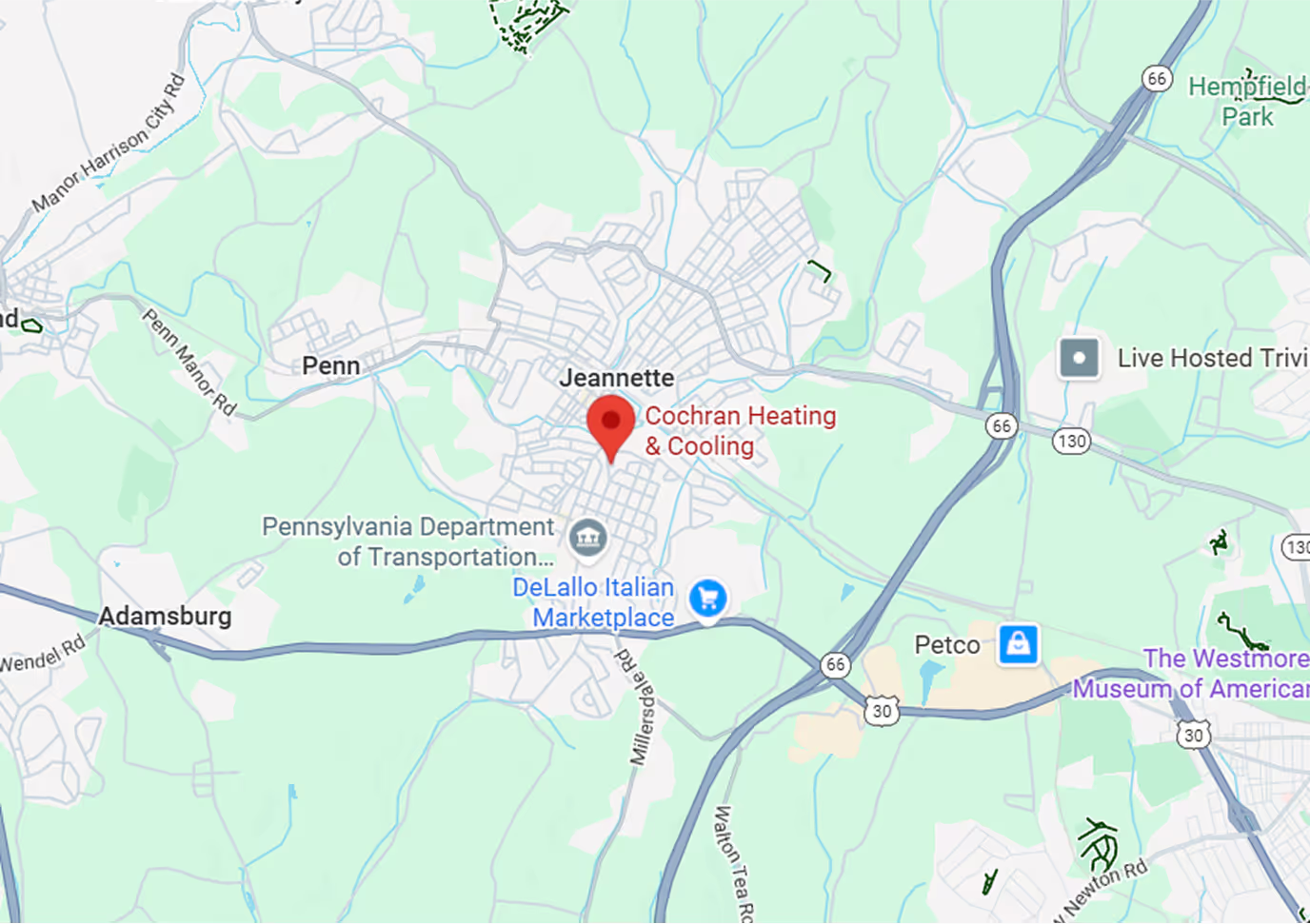
Boiler Repair in New Alexandria, PA
In New Alexandria, PA, a dependable boiler is more than a convenience – it's a necessity for comfort and safety, especially with our cold winters and many older homes. At Cochran Heating & Cooling, we understand this, which is why our boiler repair services focus on providing fast, accurate diagnostics and lasting solutions. Whether it's ignition problems, faulty controls and sensors, circulation pump issues, or leaks, our team is equipped to handle it all. We believe in transparency, so we'll explain the common causes of boiler failure, walk you through our diagnostic and repair process, perform on-site cleaning and minor repairs, source and replace parts efficiently, and provide clear pricing and warranty information. Our technicians are highly qualified, and we're committed to providing the Cochran Heating & Cooling difference – quality service tailored to our local conditions.
%2520(3).jpeg)
Boiler Repair in New Alexandria, PA
Keeping your boiler running reliably is critical for comfort and safety in New Alexandria homes, where cold winters and older housing stock increase boiler demand and wear. Professional boiler repair in New Alexandria, PA focuses on fast, accurate diagnostics and long-lasting fixes for ignition problems, controls and sensors, circulation pumps, and leaks. This page explains common failure modes, the diagnostic and repair process, on-site cleaning and minor repairs, parts sourcing and replacement practices, transparent pricing and warranty expectations, technician qualifications with example repairs, scheduling steps, and preventative troubleshooting tailored to local conditions.
Common boiler failure modes in New Alexandria homes
- Ignition and electrode issues: Failed electrodes, fouled igniters, and weak ignition control are common causes of no-heat calls, especially on older gas-fired boilers that see heavy seasonal use.
- Controls, sensors, and control boards: Faulty thermostats, failing flame sensors, or damaged control boards cause intermittent operation or complete shutdowns.
- Circulation pump failures: Worn bearings, airlocks, or electrical faults lead to poor heat distribution and cold radiators.
- Leaks and pressure losses: Corroded connections, pressure relief valve problems, and failed seals cause water loss and pressure drops.
- Scale and combustion deposits: Hard water and infrequent maintenance lead to mineral build up that reduces heat transfer and efficiency.
Step-by-step diagnostic procedure
A systematic approach ensures accurate diagnosis and limits unnecessary parts replacement.
- Safety check: Verify combustion safety, carbon monoxide monitoring, and isolation of fuel and electrical supplies.
- System history and inspection: Review homeowner observations, service records, and visually inspect the unit and nearby piping for signs of corrosion, soot, or leakage.
- Combustion and ignition tests: Check electrode gap and condition, flame sensor operation, gas pressure and combustion quality where applicable.
- Electrical and control testing: Measure voltages to pumps and controls, test thermostat signals, and run diagnostics on control boards and sensors.
- Hydronic checks: Assess pump operation, flow rate, air in the system, and boiler pressure. Inspect expansion tank condition.
- Targeted component verification: Based on findings, perform focused tests on suspected parts such as circulation pumps, valves, or the pressure relief assembly.
- Documented findings and options: Provide a clear diagnosis, repair options, parts needed, and expected timelines before proceeding.
On-site cleaning and minor repairs
Many issues can be resolved without major replacement when performed promptly.
- Electrode and sight cleaning: Carefully remove soot and deposits from electrodes and sight paths to restore reliable ignition.
- Flame sensor cleaning: Lightly polishing flame sensors often resolves false shutdowns.
- Pump lubrication and purge: Bleeding air from the system and verifying pump bearings can restore circulation.
- Tightening and sealing: Replacing gaskets, resealing fittings, and tightening fasteners stops small leaks and prevents escalation.These on-site interventions reduce downtime and delay larger capital expenses when appropriate.
Parts sourcing and replacement
Reliable repairs depend on correct, compatible parts and quality replacements.
- OEM and equivalent parts: For critical components such as control boards, valves, and pumps, expect matching OEM or high-grade equivalent parts to maintain safety and performance.
- Local availability: In New Alexandria, fast access to parts reduces replacement lead time during peak winter months; reputable repair approaches include pre-verifying parts availability before scheduling larger jobs.
- Documentation: Parts replaced should be recorded on the service report with model numbers and warranty details.
Transparent pricing and warranty expectations
Homeowners should receive clear, itemized information before work begins.
- Itemized estimates: Estimates typically separate diagnostics, labor, and parts so you can see exactly what you are paying for.
- Diagnostic fees and application: Diagnostic charges are often listed separately and may be applied toward the repair if approved.
- Parts and labor warranties: Expect manufacturer warranties on parts (commonly 1 year or as specified by the manufacturer) and limited labor warranties from the service provider (commonly 30 to 90 days). Warranty details should be provided in writing.
- Upfront authorization: Reputable service practice includes getting approval for any non-emergency work before ordering parts or performing replacements.
Technician qualifications and examples of recent local repairs
Qualified technicians bring certification, experience, and local knowledge.
- Typical qualifications: Natural gas and oil combustion safety training, HVAC or plumbing licenses where required, factory-certified training on major boiler brands, and experience with hydronic systems.
- Examples of recent repairs in the area:
- Replaced a failed ignition electrode and cleaned combustion chamber on a cast-iron boiler serving a multi-zone home, restoring stable operation.
- Repaired a leaking pressure relief valve and replaced a corroded adapter fitting to stop chronic pressure loss.
- Rebuilt a failing circulation pump and purged the system to eliminate cold-radiator zones after a winter freeze cycle.
- Replaced a failing control board and recalibrated sensors to correct erratic cycling and improve efficiency.
How scheduling and emergency response typically work
Scheduling options are designed to match urgency and availability without surprises.
- Emergency response: After-hours diagnostics and response are commonly available for unsafe conditions or complete heating failure, especially during winter peaks.
- Standard appointments: Routine repairs are scheduled with an arrival window, technician identification, and an explanation of diagnostic fees and what to expect on arrival.
- Preparation tips before service: Keep access to the boiler area clear, note recent behavior (no heat, loud noises, leaks), and ensure pets are secured for the technician's safety.
Preventative troubleshooting and seasonal maintenance tips
Proactive care reduces failures and extends boiler life in New Alexandria’s climate.
- Pre-winter check: Have combustion, controls, and circulation checked before seasonal demand increases.
- Monitor system pressure: Look for steady pressure in the normal range; frequent pressure loss indicates leaks or expansion tank failure.
- Bleed radiators and vents: Remove trapped air to maintain even heat and reduce strain on pumps.
- Watch for warning signs: Unusual noises, slow heat-up, frequent cycling, or water on the floor are indicators to schedule a diagnostic.
- Insulate exposed pipes: Protecting supply and return lines reduces freeze risk and improves efficiency.
Q: How long does a typical diagnostic visit take?
A: Most on-site diagnostics take 45 to 90 minutes depending on system complexity and whether combustion testing or hydronic flow measurements are required.
Q: Will a repair always fix the root cause?
A: Repairs that include a full diagnostic and targeted part replacement usually resolve the root cause; if multiple components show wear, a comprehensive replacement plan may be recommended.
Q: What warranties should I expect on parts and labor?
A: Manufacturer parts warranties vary by component and are listed with replacements; labor warranties from service providers commonly range from 30 to 90 days and should be provided in writing.
Q: Are older boilers worth repairing in New Alexandria homes?
A: Repair is often cost-effective for isolated failures, but if the boiler is frequently needing repairs, lacks efficiency, or parts are unavailable, replacement may be the more reliable long-term option.