Water Heaters Repair in Greensburg, PA
When your water heater fails, it immediately impacts comfort, hygiene, and daily routines. In Greensburg, PA, where cold winters and older homes are common, a reliable hot water supply is essential year-round. Cochran HVAC provides professional water heater repair services in Greensburg, PA, focusing on accurate diagnostics, safe repairs, and durable solutions that address both immediate failures and underlying causes. We understand the importance of a functioning water heater and strive to provide prompt and reliable service.
Water Heaters Repair in Greensburg, PA
When your water heater fails, it affects comfort, hygiene, and household routines immediately. In Greensburg, PA, where cold winters and older homes are common, a reliable hot water supply is essential year round. Cochran HVAC provides professional water heaters repair in Greensburg, PA, focused on accurate diagnostics, safe repairs, and durable solutions that address both immediate failures and underlying causes. This page explains common symptoms, what a certified technician will diagnose and repair, typical parts replacements, emergency and same-day response options, estimated repair timelines, and warranty and parts considerations to help you make an informed decision.
Why timely water heater repair matters in Greensburg
- Cold months in Greensburg increase demand for hot water for showers, dishwashing, and laundry, making failures more disruptive and sometimes riskier (frozen pipes, burst tanks).
- Many Greensburg homes have legacy plumbing and older water heaters that are more prone to sediment buildup and corrosion from local water minerals.
- Delaying repairs can turn a small issue into a full tank replacement, cause water damage, or create safety hazards (gas leaks, electrical faults, scalding).
Common water heater failure symptoms in Greensburg, PAUnderstanding symptoms helps prioritize repairs. Cochran HVAC technicians see these issues frequently:
- No hot water or insufficient hot water
- Tank not heating to set temperature, or runs out quickly.
- Common causes: failed heating elements (electric), burner or gas valve problems (gas), thermostat issues, or excessive sediment reducing tank capacity.
- Intermittent hot water or fluctuating temperature
- Water temperature swings between hot and cold.
- Potential causes: failing thermostats, shorted heating elements, cross connections in plumbing, or mixing valve failure.
- Water leaks from tank, fittings, or valves
- Visible pooling around the tank, corrosion on the tank exterior, or dripping from plumbing connections.
- Typical causes: corroded tank shell (end of life), loose fittings, faulty temperature and pressure (T&P) relief valve, or leaking drain valve.
- Strange noises during heating
- Popping, rumbling, or banging noises from the tank.
- Usually caused by sediment buildup under heating elements or on the tank bottom; trapped water pockets rapidly boiling lead to noise and reduced efficiency.
- Pilot light or ignition issues (gas water heaters)
- Pilot will not stay lit, or the electronic ignition fails to light the burner.
- Causes: faulty thermocouple, clogged pilot orifice, gas supply interruptions, control valve failures, or safety lockouts.
- Discolored, rusty, or metallic-tasting hot water
- Brown or rusty water indicates internal corrosion or deteriorated anode rod.
- May signal imminent tank failure if corrosion is advanced.
- Low water pressure or reduced flow from hot taps
- Could be due to mineral buildup in dip tube, inlet screens, or issues elsewhere in home piping amplified by water heater problems.
Diagnostic and troubleshooting steps technicians performCochran HVAC follows a structured diagnostic approach to identify root causes quickly and safely. Typical steps include:
- Visual inspection
- Check for external leaks, rust, corrosion, water pooling, and correct venting and combustion air for gas models.
- Inspect electrical wiring, breaker, and gas piping condition.
- Confirm customer-reported symptoms and usage patterns
- Ask about temperature settings, recent changes, how long the issue has existed, and whether hot water usage has increased.
- Temperature and pressure checks
- Measure outlet water temperature, thermostat setpoints, and tank pressure to verify performance.
- Electrical diagnostics (for electric units)
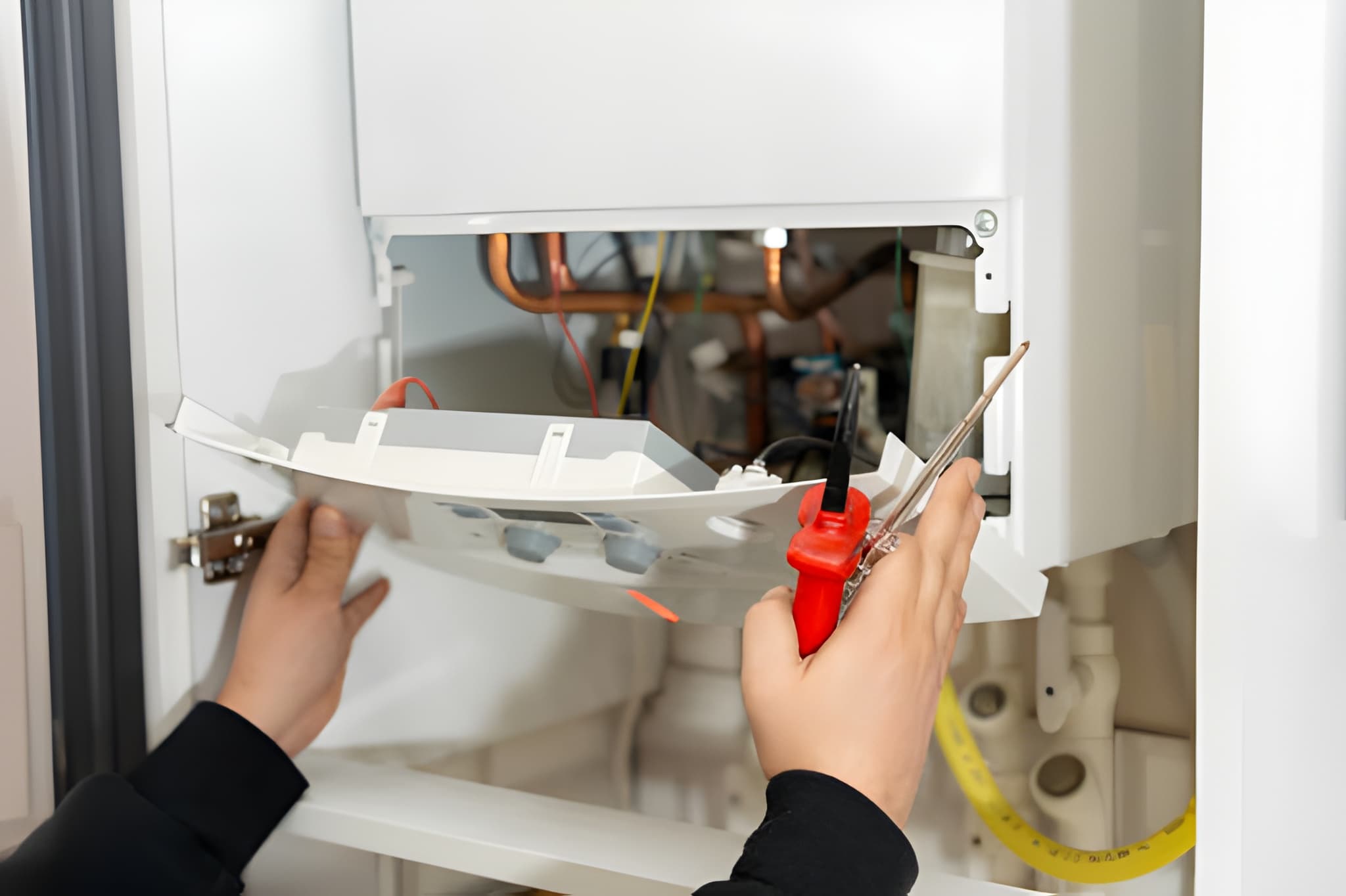
- Use a multimeter to test power at the unit, continuity of heating elements, and functionality of thermostats and control boards.
- Gas system diagnostics (for gas units)
- Evaluate pilot assembly, thermocouple, gas valve operation, burner condition, and perform a combustion safety check when appropriate.
- Drain and sediment assessment
- Check for heavy sediment by draining and evaluating water clarity and debris; sediment indicates need for flush, element replacement, or tank replacement in severe cases.
- Leak source isolation
- Determine whether leaks are from fittings, the T&P valve, drain valve, or the tank shell itself.
- Testing for cross connections
- Identify thermal expansion or mixing valve issues that can cause hot water to behave unpredictably.
Homeowner troubleshooting you can safely try firstBefore calling a technician, checking a few things may save time and clarify the problem:
- Verify power and gas supply
- Check circuit breakers and ensure gas valve is open. If a breaker tripped, reset once; if it trips again, do not continue without professional inspection.
- Check thermostat settings
- Confirm temperature is set appropriately (typically 120 to 125 degrees F for safety and efficiency).
- Inspect visible plumbing and drains
- Look for dripping fittings, place a towel under the unit to determine leak location, confirm water shutoff valve position.
- Relight pilot safely if comfortable
- Only relight pilot on a gas water heater if you understand the manufacturer instructions and there is no smell of gas.
If these steps do not resolve the issue, request professional diagnostics to avoid risk.
Typical parts replaced during water heater repairMany repairs involve replacing specific components rather than the whole unit. Common parts Cochran HVAC replaces include:
- Heating elements and thermostats (electric heaters)
- Thermocouple and pilot assembly (standing pilot gas systems)
- Gas control valves and ignition modules (gas units)
- Temperature and pressure (T&P) relief valves
- Drain valves and inlet or outlet fittings
- Dip tubes and anode rods
- Sacrificial anode rod to slow internal corrosion
- Expansion tanks or check valves to manage thermal expansion
- Control boards or sensors on modern high-efficiency models
- Mixing valves (anti-scald thermostatic mixing valves)
Repair vs replacement: when replacement is recommendedA technician will recommend replacement rather than repair when:
- The tank has significant internal corrosion or leaks from the tank shell.
- Repeated failures occur shortly after repair due to age or deteriorated components.
- Repair costs approach or exceed the expected remaining useful life of the heater.
- The model is obsolete or lacks available replacement parts.
- Homeowner desires higher efficiency or larger capacity for evolving household needs.
Emergency and same-day service options in Greensburg, PAEmergencies involving water heaters can cause water damage, unsafe conditions, or loss of essential services. Cochran HVAC understands the urgency and provides clear triage steps and prioritized response options:
- What qualifies as an emergency
- Active tank leak flooding a basement, strong gas smell near the water heater, signs of electrical arcing or sparking, or no hot water during severe cold snap putting pipes at risk of freezing.
- Immediate safety steps
- For leaks: shut off the water supply to the unit and isolate affected areas to prevent damage.
- For gas smells: do not operate electrical switches or appliances; evacuate and contact the gas company if necessary.
- For electrical faults: turn off the dedicated breaker if safe to do so.
- Same-day service approach
- Cochran HVAC schedules resources to diagnose and stabilize the issue same day when conditions qualify as emergencies. Stabilization often includes isolating leaks, replacing critical safety components (T&P valve, drain valve), or providing temporary hot water solutions when possible.
Certified technician procedures and safety complianceCertified repairs protect households and ensure compliance with local codes. Cochran HVAC technicians follow industry standards and local Greensburg and Westmoreland County regulations:
- Arrival and initial assessment
- Technicians perform a thorough inspection and document symptoms, visual findings, and initial test results.
- Safety and code checks
- Gas-fired units receive combustion analysis and venting inspection. Electric units are checked for proper wire sizing, breaker protection, and grounding.
- Proper combustion air, vent termination, and clearances are verified for code compliance.
- Diagnostics using calibrated tools
- Multimeters, gas pressure gauges, combustion analyzers, infrared thermometers, and leak detection tools are used to produce accurate diagnostics.
- Repair with OEM or approved parts
- Replacement components match manufacturer specifications and safety ratings. If parts are obsolete, technicians recommend approved alternatives or replacement options.
- Post-repair testing and documentation
- After repair, the unit is tested under load, leak-tested, and instructions for safe operation provided. Technicians record parts used, serial numbers, and warranty details where applicable.
- Permit and inspection handling
- When repairs trigger local permit requirements or system modifications, Cochran HVAC follows permitting and inspection procedures required by Greensburg and Westmoreland County building codes.
Estimated repair timelinesTimelines vary by symptom severity, part availability, and whether a replacement is needed. Typical estimates:
- Minor repairs (30 to 90 minutes)
- Examples: thermostat or element replacement, T&P valve swap, drain valve replacement, pilot relight and minor adjustments.
- Moderate repairs (1.5 to 3.5 hours)
- Examples: multiple element replacements, thermocouple and gas control valve replacement, anode rod replacement with tank access, significant flush and sediment removal.
- Major repairs or partial system upgrades (4 to 8 hours)
- Examples: replacing control boards, installing expansion tanks, complex venting work, significant plumbing adaptations.
- Full tank replacement (4 to 8+ hours, sometimes next-day for larger jobs)
- Includes draining and removal of old tank, setting and connecting new unit, pressure testing, venting modifications, and startup. Some installations may require additional plumbing or electrical upgrades and inspections that extend time.
Timing considerations specific to Greensburg
- Older homes with tighter basements, limited access, or narrow stairways can extend installation timelines.
- If local permits are required for gas or new-efficiency models, scheduling inspections can add to total project time.
- Winter weather and road conditions may impact same-day availability during peak cold snaps.
Warranty and parts informationUnderstanding warranties protects your investment and clarifies responsibility for future issues. Key warranty and parts considerations:
- Manufacturer parts warranty
- Most new water heaters have manufacturer warranties on tanks and some components. Terms vary by brand and model; tank warranties are typically prorated after a certain period.
- Replacement parts warranty
- Replacement components installed by technicians often carry a parts warranty from the manufacturer or supplier. Cochran HVAC documents part serial numbers and warranty durations following completion.
- Labor warranty
- Service providers commonly offer a limited labor warranty on repairs. This warranty covers workmanship for a stated period and does not replace manufacturer defects coverage.
- Warranty implications of repairs vs replacement
- Replacing a major component on an older unit may not extend the tank warranty. If a unit has an external tank failure after a component replacement, the tank manufacturer may not cover full replacement if the tank age exceeds warranty terms.
- Recordkeeping for claims
- Save receipts, work orders, and parts documentation for any warranty claims. Cochran HVAC provides documentation of parts installed and diagnostic findings for future reference.
Maintenance and prevention: extend the life of your water heaterRegular maintenance reduces failures and improves efficiency. Recommended maintenance tasks include:
- Annual flush and sediment removal
- Flushing the tank removes mineral buildup that reduces heating efficiency and causes noise. Homes with hard water need this more frequently.
- Anode rod inspection and replacement every 2 to 5 years
- Replacing the sacrificial anode rod prevents premature tank corrosion.
- Inspect T&P valve and drain valve
- Test the T&P valve annually to ensure safe operation; replace if leaking or inoperable.
- Check temperature settings and energy-saving practices
- Set thermostats to 120 to 125 degrees F for a balance of comfort and energy efficiency; consider lower settings if safe for the household.
- Install expansion control and insulation
- An expansion tank reduces strain on plumbing in closed systems. Insulating the first several feet of hot and cold water pipes reduces heat loss and pipe freeze risk in the winter.
- Consider water treatment in hard water areas
- Greensburg’s local water profile can include mineral content that accelerates sediment buildup. Whole-house water softeners or targeted filtration can extend heater life.
Local factors in Greensburg, PA that affect water heater performance
- Cold climate impacts
- Low incoming water temperatures in winter increase run time for water heaters and make recovery slower, increasing wear on heating elements or burners.
- Age of housing stock
- Many Greensburg homes are older and may have water heaters installed in basements or compact spaces, making access and venting a consideration for repairs or replacements.
- Water quality
- Local mineral content contributes to sediment in tanks; homeowners may notice increased maintenance needs, strange noises, or reduced capacity over time.
- Seasonal demand spikes
- During cold spells, demand for hot water increases and same-day service demand rises. Planning maintenance ahead of winter reduces risk of emergency failures.
Why professional repair matters
- Safety first
- Gas leaks, improper venting, and electrical faults present real risks. Certified technicians follow code and safety protocols to protect your home.
- Accurate diagnosis preserves life of the unit
- Replacing a symptom rather than the root cause may lead to repeated failures. A professional diagnosis identifies underlying issues such as sediment, cross connections, or improper installation.
- Proper parts and code compliance
- Using OEM-approved parts and following local codes prevents future service issues and protects warranties.
- Documentation for resale and warranty
- Records of professional repairs and maintenance support warranty claims and provide value to future homeowners.