High-Velocity HVAC Systems vs. Traditional Ducts for Older PA Homes
Is It Possible to Cool an Older PA Home Without Ruining Plaster Walls?
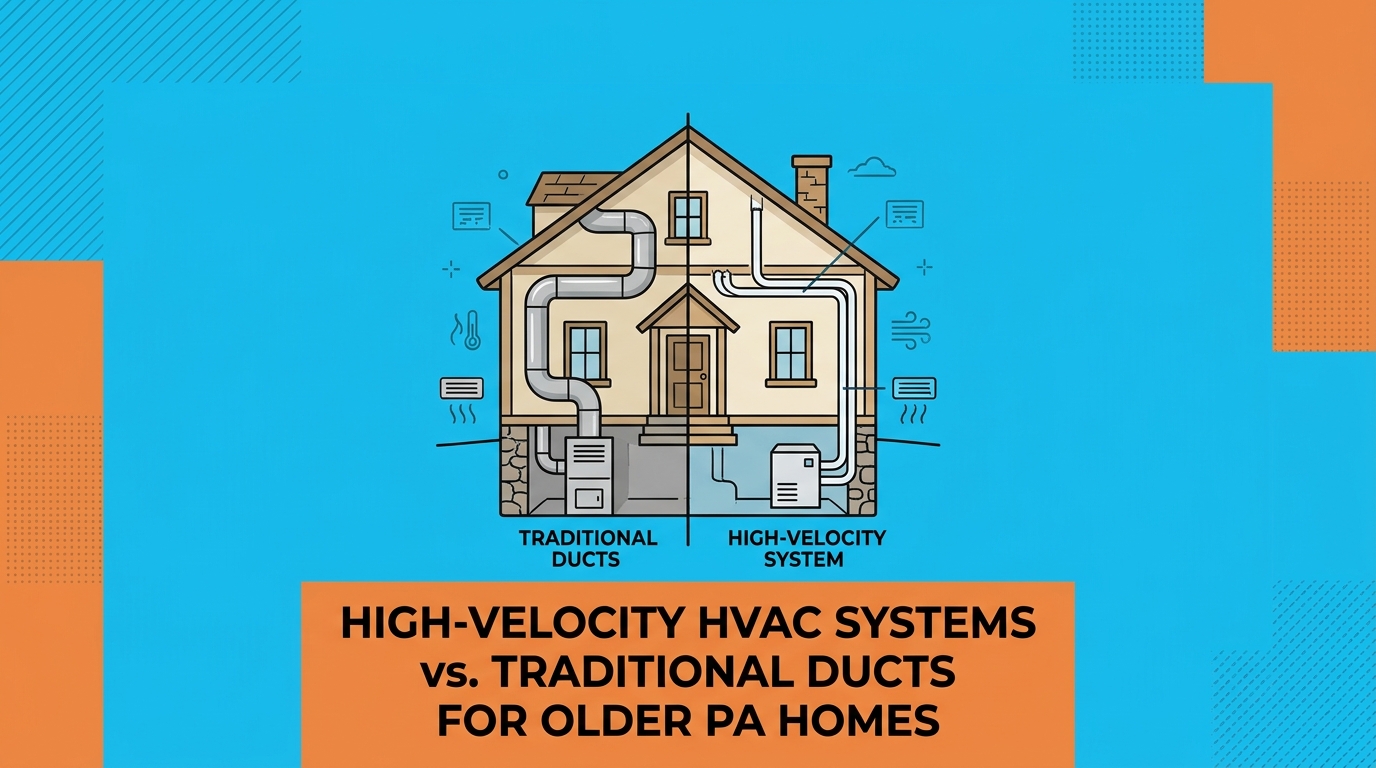
Are you struggling to choose between enduring major demolition for central AC or suffering through another hot summer? When evaluating High-Velocity HVAC Systems vs. Traditional Ducts for Older PA Homes, the decision often comes down to protecting your property's architectural history versus achieving modern, whole-home comfort. Older properties with radiant heat were simply never designed to accommodate central ductwork, leaving homeowners with a difficult structural dilemma.
To help you navigate this transition, we recommend reviewing our residential HVAC services to understand the full scope of what is possible, and exploring our efficient AC installation options for a streamlined upgrade. In our experience guiding local homeowners through this exact retrofit decision, the key is understanding how different ducting methods interact with fragile historic building materials.
The Structural Challenge: Plaster, Lath, and Central Air
Pre-1940s architecture features a level of craftsmanship that is rarely replicated today, but those same building techniques make modern HVAC retrofits uniquely difficult. Many older homes in Greensburg and Latrobe were built with radiant boiler heating, meaning they have zero existing ductwork infrastructure to piggyback on when you decide to add central cooling.
The Anatomy of Plaster and Lath
To understand why retrofitting is so challenging, you have to look behind the paint. Historic walls are constructed using lath—thin strips of wood nailed horizontally across the wall studs. Builders then pushed wet plaster over these strips. The plaster that squeezed through the gaps and dried behind the lath formed what are called "keys." These hardened plaster keys are what hold the entire wall surface in place.
When a contractor uses a reciprocating saw to cut large holes for traditional metal ducts, the heavy vibrations shake the wooden lath. This vibration snaps the fragile plaster keys behind the wall. Once those keys break, the plaster on the front separates, crumbles, and cracks. Once original plaster is destroyed, it is incredibly difficult and expensive to patch or replace seamlessly.
Weighing the Alternatives
Because of this fragility, many property owners hesitate to install central air. While some homeowners consider zoned heating with mini splits in older homes as a viable alternative that avoids ductwork entirely, a fully hidden, centralized system remains the ultimate goal for those wanting to preserve the original, unblemished look of their historical floor plans.
Traditional Sheet Metal Ducts: The Cost of Dropped Ceilings
Conventional central air conditioning systems are highly effective and standard in modern construction. However, forcing them into a century-old floor plan often requires sacrificing closet space, ceiling height, and structural charm.
The Reality of Retrofitting Sheet Metal
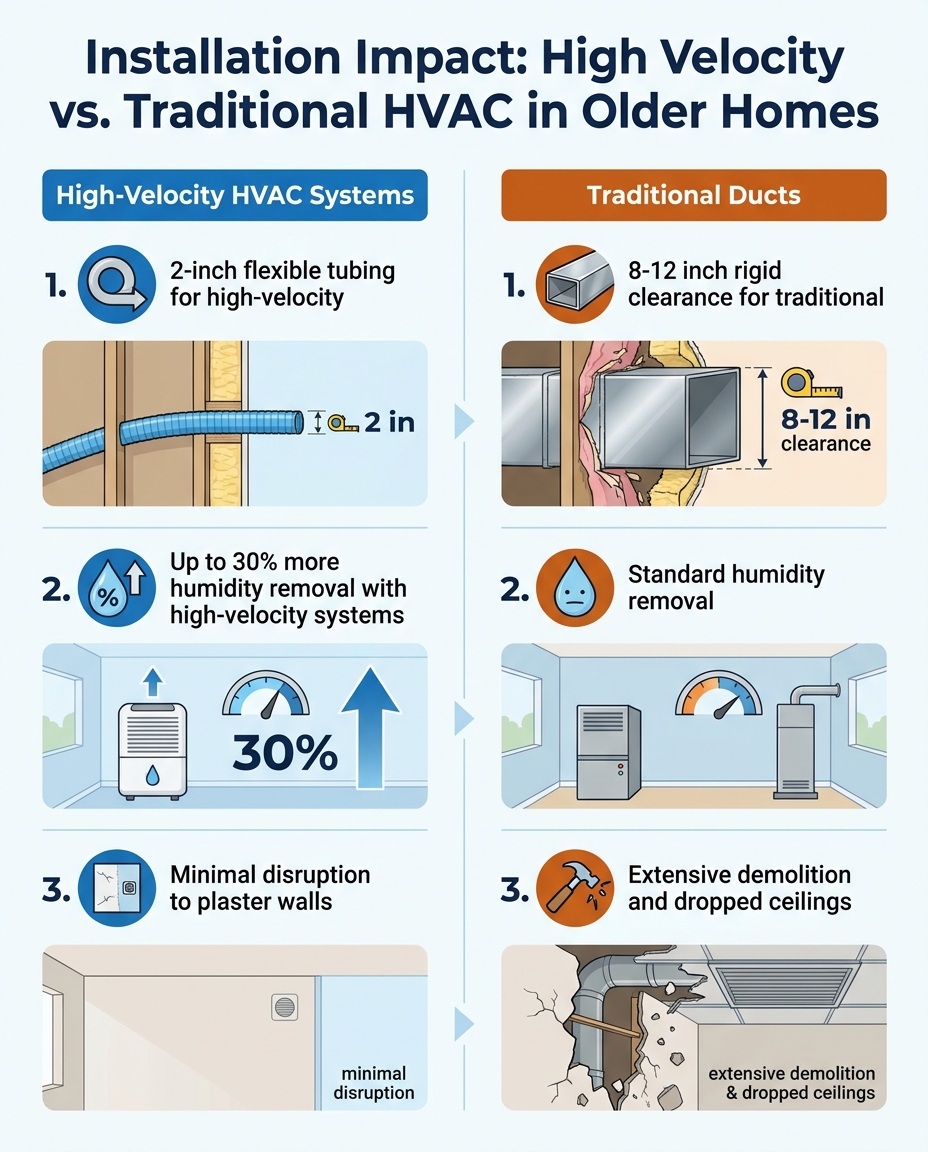
Traditional HVAC systems require significant clearance to operate efficiently. The main trunk lines are often massive, and even the branch ducts require 8 to 12 inches of open space. Because historic homes do not have these wide-open wall cavities, installers have to create space where none exists.
Pros of Traditional Ducts in Older Homes:
• Standardized equipment: Compatible with almost all conventional air handlers and furnaces on the market.
• High airflow volume: Excellent at moving large amounts of treated air quickly.
• Widespread familiarity: Any standard HVAC technician can service and maintain the ductwork.
Cons of Traditional Ducts in Older Homes:
• Extensive demolition: Requires cutting large chases through original plaster walls and sometimes through original hardwood floors.
• Aesthetic compromises: Necessitates building bulky drywall soffits or dropping entire ceilings to hide the large metal trunks, which ruins the proportions of historic rooms.
• Loss of square footage: Often requires sacrificing entire closets to route ductwork between the first and second floors.
• Mess and disruption: Generates weeks of plaster dust, carpentry work, and repainting.
High-Velocity Mini-Ducts: Minimal Disruption for Historic Architecture
For homeowners who refuse to compromise their home's architectural integrity, Small Duct High Velocity (SDHV) systems—such as those pioneered by brands like SpacePak or Unico—offer a superior solution. Instead of bulky rigid metal, these systems use flexible, 2-inch diameter tubing to deliver conditioned air.
How the Mini-Duct Installation Process Works
Our specialized local expertise in retrofitting historic Pennsylvania homes means we understand exactly how to deliver modern comfort with minimal disruption to your original plaster walls. The installation process is specifically designed to work around your home's existing skeleton.
1. Placing the Air Handler: The compact air handler is typically installed in an unconditioned space, such as an attic, basement, or large crawlspace.
2. Routing the Main Plenum: A central trunk line is run through this hidden space, keeping the largest component completely out of your living areas.
3. Snaking the Tubing: The 2-inch flexible mini-ducts are connected to the main plenum and snaked down through existing wall cavities, between floor joists, and around plumbing pipes. Because the tubing is small and flexible, it bypasses the need to tear down walls.
4. Installing the Outlets: Instead of large, intrusive metal registers, the system uses subtle air outlets that are only a few inches wide. These can be seamlessly blended into ceilings, floors, or high up on walls, often finished in wood or painted to match the room.
This approach preserves your valuable closet space and ceiling height while maintaining the home's original footprint. If you are upgrading your entire system, pairing this ductwork with professional heat pump installation can provide both efficient heating and cooling through the same unobtrusive vents.
Moisture Control and Aspiration: Beating the Heat
Beyond the physical installation benefits, high-velocity systems offer specific climate advantages that make them exceptionally well-suited for the region. The heavy humidity is often the true source of discomfort in historic homes, making moisture removal just as important as temperature control.
The Science of Aspiration
Traditional central air systems work by "dumping" cold air into a room and relying on natural convection for that air to slowly mix and settle. This often results in drafty rooms, hot spots near the ceiling, and cold spots near the floor.
High-velocity systems use a scientific principle called aspiration. Because the air is pushed through small 2-inch tubes at a higher velocity, it enters the room as a gentle, continuous jet. This jet creates a localized vacuum effect that pulls the existing room air into the airstream, mixing it instantly. The result is an even, draft-free temperature from floor to ceiling.
Tackling Regional Humidity
Because high-velocity systems operate with lower cooling coil temperatures than conventional HVAC systems, they are capable of removing up to 30% more humidity from the indoor air. This exceptional moisture removal is a critical advantage for maintaining indoor comfort during the heavy, sticky humidity of Western PA summers, allowing you to feel cooler even at a higher thermostat setting.
The noise myth: A common misconception is that "high velocity" means the system will sound like a jet engine in your living room. In reality, modern mini-duct tubing is lined with thick, sound-attenuating acoustic materials. By the time the air reaches the subtle room outlets, the operation is whisper-quiet.
Installation Impact Comparison: High-Velocity vs. Traditional Systems
To help you weigh your options clearly, here is a direct look at how these two approaches impact a historic property during the retrofit process.
• Physical Footprint — High-Velocity Mini-Ducts: 2-inch flexible tubing that easily bends around obstacles. — Traditional Sheet Metal Ducts: 8 to 12-inch rigid metal trunks that require straight, wide paths.
• Demolition Required — High-Velocity Mini-Ducts: Snakes through existing wall cavities; minimal cutting required. — Traditional Sheet Metal Ducts: Requires cutting large chases, removing plaster, and altering framing.
• Aesthetic Impact — High-Velocity Mini-Ducts: Unobtrusive 2-inch circular vents that blend into the architecture. — Traditional Sheet Metal Ducts: Large standard registers; often requires building dropped ceilings or soffits.
• Space Preservation — High-Velocity Mini-Ducts: Maintains original ceiling heights and keeps closets fully intact. — Traditional Sheet Metal Ducts: Frequently steals closet space to route ductwork between floors.
• Timeline and Mess — High-Velocity Mini-Ducts: Streamlined retrofit process with very little dust or structural repair. — Traditional Sheet Metal Ducts: Weeks of plaster dust, carpentry work, drywall finishing, and painting.
Planning Your Retrofit: Factors to Consider for Western PA Properties
Deciding on the right ductwork is only the first step. Properly sizing and planning the retrofit is what guarantees long-term performance and efficiency.
Why Proper Load Calculations Matter More in Historic Homes
Before any equipment is ordered, a strict Manual J load calculation must be performed. Older homes in Greensburg and Latrobe have unique insulation profiles. They often feature balloon framing, drafty original windows, uninsulated brick walls, and varying levels of attic insulation. A standard rule-of-thumb sizing method will almost always result in an improperly sized unit, leading to short-cycling, poor humidity removal, and premature wear.
Working with the Right Contractor
It is highly recommended to work with a contractor who understands the specific structural nuances of pre-1940s homes in the area. Upfront, clear communication regarding the scope of work and potential structural surprises is mandatory when dealing with century-old framing.
While high-velocity systems require specialized equipment and certified installation techniques, the long-term preservation of your home's value and aesthetics makes it a worthwhile investment. Getting honest HVAC pricing and a detailed scope of work upfront ensures you know exactly how the system will be routed before a single tool touches your walls.
Frequently Asked Questions About Retrofitting Older Homes
What is the best HVAC system for an older home?
For homes without existing ductwork, small duct high-velocity systems or ductless mini-splits are generally the best options to avoid major demolition. These systems are specifically designed to provide modern cooling and heating without requiring the massive wall cavities needed for traditional sheet metal ducts.
How invasive is installing high velocity AC?
It is minimally invasive. The 2-inch flexible tubing is designed to snake through existing wall cavities, avoiding the need to tear down walls or build dropped ceilings. Installers can usually route the entire system with only a few small holes for the room outlets.
Does installing central AC ruin plaster walls?
Installing traditional sheet metal ducts often damages plaster walls because the heavy vibrations from cutting break the plaster keys behind the lath. However, opting for a high-velocity system significantly reduces this risk by minimizing the need for cutting and utilizing existing empty spaces.
How much space do high velocity ducts take up?
The tubing is typically only 2 inches in outer diameter, allowing it to fit easily into standard stud spaces and tight attic or crawlspace areas. The main trunk line is larger, but it is kept entirely in unfinished, hidden areas of the home.
Can you put central air in a 100-year-old house with radiators?
Yes, high-velocity systems are specifically designed to add central cooling to homes that rely on boiler and radiator heating. Because they operate independently of your heating system, you can keep your radiant heat while enjoying whole-home air conditioning.
Do high-velocity systems run louder than traditional central air?
No. Modern high-velocity tubing uses sound-attenuating materials, and the principle of aspiration ensures quiet, draft-free operation. The air handler itself is placed in an isolated area, making the system virtually silent in your living spaces.
Preserve Your Home's Character with Expert AC Installation
You do not have to choose between keeping your beautiful original plaster walls and enjoying a cool, comfortable living environment. With the right approach and the right technology, retrofitting an older property can be a smooth, non-destructive process. Relying on our first-hand expertise in protecting the architectural integrity of older properties ensures that your house retains its historic charm while upgrading to modern standards.
If you are ready to see which retrofit option fits your unique floor plan, schedule an assessment today. Our team is ready to provide efficient AC installation that respects your home and keeps you comfortable all summer long.