Permanent Washable Filters vs. Disposable Pleated Filters for Winter Heating
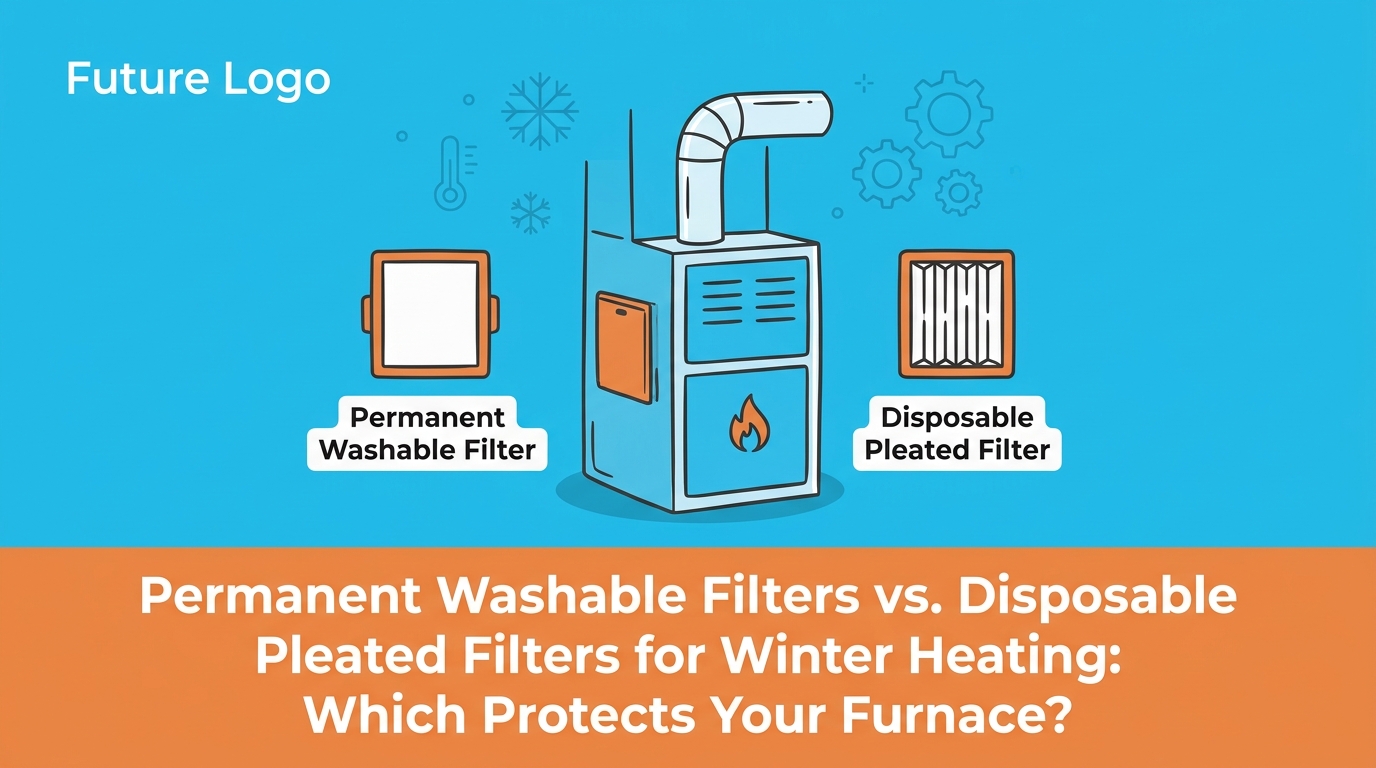
Is It Time to Switch Your Furnace Filter Before the Freeze?
Is your heating system truly prepared for the heavy demands of the upcoming cold season, or are you simply hoping your current filter is enough? When deciding between permanent washable filters vs. disposable pleated filters for winter heating, making the right choice is about much more than just trapping dust. With temperatures dropping, homeowners are prepping their heating systems and questioning if their current filtration setup is actually doing more harm than good.
The core dilemma comes down to deciding whether a permanent washable electrostatic filter is a smart long-term investment compared to continuing with traditional disposable pleated media. Both options have distinct advantages, but the calculus changes dramatically when the weather turns freezing. During a typical Western PA closed-window winter, balancing fine dust capture with proper furnace airflow becomes absolutely critical. The approaching cold season means homes are sealed up tight to keep the chill out, which unfortunately traps indoor air and makes your filter's job significantly harder.
Making the wrong choice right now can lead to restricted airflow, poor indoor air quality, or unnecessary strain on your heating system. If your filter is too restrictive, your furnace suffocates. If it is too porous, dust coats your blower motor and circulates through your living space. Understanding how these two distinct types of filters operate under heavy winter workloads will help you protect your equipment and breathe easier all season long.
The Winter Airflow Challenge: Why Filtration Matters More Now
The problem: Indoor air can be two to five times more polluted than outdoor air, a statistic that becomes especially noticeable when windows stay shut for months on end. The cold, dry climate necessitates tightly sealed homes, making indoor fine particulate capture far more critical than in milder climates. Without fresh air circulating from the outside, everything from pet dander and dry winter skin to cooking smoke and settling dust remains trapped inside your living space.
The cause: Furnaces run continuously during long cold stretches, requiring optimal airflow to prevent premature wear. Homeowners often mistakenly believe that thicker, denser filters are automatically better for capturing this trapped winter debris. However, heavy winter filters can restrict airflow and damage blower motors if they are not properly matched to the system's static pressure capabilities. When a furnace cannot pull enough air through the return ducts, the internal temperature of the system rises, forcing safety limits to trip and motors to work overtime.
The solution: The ideal winter filter must capture dry-air particulates and pet dander without suffocating the furnace. In our years of providing heating service to Jeannette and North Huntingdon homes, the team at Cochran Heating & Cooling frequently sees the direct results of mismatched filtration: systems that short-cycle or fail entirely on the coldest nights of the year. Balancing filtration efficiency with airflow requires understanding exactly how different filter materials interact with your specific blower motor.
How Cold Weather Changes Indoor Air Dynamics
Winter air holds significantly less moisture than summer air. As your furnace heats this already dry air, the relative humidity inside your home drops further. This dry environment causes airborne particles to remain suspended in the air longer rather than settling on surfaces. Consequently, your furnace filter is forced to process a much higher volume of microscopic debris during the winter than it does in the spring or fall. Choosing a filter that can handle this increased load without clogging prematurely is vital for consistent heating performance.
Permanent Washable Filters: Pros, Cons, and Winter Realities
Permanent washable filters appeal to homeowners looking to eliminate the recurring cost and environmental waste of disposable options. These filters typically use an electrostatic charge to attract dust rather than relying on dense, restrictive media. As air passes through the woven fibers, friction generates a static charge that pulls particles out of the airstream like a magnet. The main appeal is clear: a significant reduction in environmental waste and the end of monthly trips to the hardware store.
However, the drawback is that most washable filters max out around a MERV 4 to 8 equivalent. While they are excellent at catching large debris like dog hair and heavy dust bunnies, they often let fine winter dust, microscopic allergens, and dry-skin particulates pass right through. In a Western PA closed-window winter, where fine particulate buildup is the primary indoor air quality complaint, this lower capture rate can leave your home feeling dusty and your air feeling stale.
• Environmental benefit: Eliminates the contribution of synthetic filter media and cardboard frames to local landfills.
• Cost savings: One upfront purchase lasts for several years, eliminating the ongoing expense of premium disposable filters.
• Airflow consistency: When perfectly clean, they offer very low resistance, allowing the blower motor to operate smoothly.
• Particulate limitation: Struggles to capture smoke, fine pollen, and the microscopic dry dust common in winter months.
The Maintenance Burden During Continuous Operation
The true challenge of washable filters emerges when it is time to clean them. They require thorough monthly washing and complete air-drying to function safely. If you reinstall a damp filter, the moisture will be pulled directly into your furnace, creating a high risk of mold growth within your ductwork or freezing on internal components.
Because the filter must be completely dry before reinstallation, your furnace must remain off while the filter dries. This process can take anywhere from a few hours to a full day depending on indoor humidity. Shutting down your primary heat source for hours to dry a filter is highly impractical—and potentially uncomfortable—during freezing temperatures.
Disposable Pleated Filters: Superior Capture for Tightly Sealed Homes
High-Efficiency Capture: Disposable pleated filters are engineered from synthetic media folded into accordion-like pleats. This design easily achieves MERV 8 to 13 ratings, trapping the microscopic particles that washable filters frequently miss. For Jeannette and North Huntingdon homes sealed tight against the winter chill, this higher MERV capability is vital for maintaining healthy indoor air quality.
Increased Surface Area: The pleated design is not just for show; it exponentially increases the surface area of the filter. This expanded surface area allows for better fine particulate capture—like dry skin, pet dander, and winter dust—without imposing severe airflow penalties. A standard 1-inch flat fiberglass filter clogs rapidly, but a pleated filter spreads the dust load across a much larger area, maintaining better static pressure throughout its lifespan.
Unmatched Convenience: The convenience factor cannot be overstated. Swapping a pleated filter takes seconds. You simply slide the old, dirty filter out, drop it in the trash, and slide a fresh one in. There is no need to shut down the heat for hours to wait for a frame to dry, meaning your home stays warm and your system stays active.
Predictable System Performance
Consistent performance is another major advantage of disposable media. A fresh pleated filter guarantees reliable static pressure at the start of its lifespan. With a washable filter, if you fail to rinse out every microscopic speck of dust, the filter begins its next cycle already partially restricted. Disposable filters provide a clean slate every single time, ensuring your blower motor does not have to fight through residual buildup from the previous month.
Side-by-Side Comparison: Washable vs. Pleated for the Heating Season
When evaluating which filter will best serve your home during a long Western PA closed-window winter, it helps to look at the data side-by-side. The decision ultimately hinges on what you value more: eliminating recurring purchases or maximizing indoor air quality and convenience.
Washable filters require a higher upfront investment but cost nothing month-to-month, whereas pleated filters require a steady supply. However, when it comes to the actual job of filtering the air, pleated media consistently outperforms washable electrostatics in capturing the fine, dry dust that accumulates in tightly sealed homes.
• Initial Cost vs. Long-Term Value — Permanent Washable Filters: Costs more upfront but lasts for years. — Disposable Pleated Filters: Requires ongoing monthly or quarterly purchases.
• Particulate Capture (MERV) — Permanent Washable Filters: Typically maxes out at MERV 4-8 equivalent. Misses fine dust. — Disposable Pleated Filters: Easily reaches MERV 8-13. Excellent for fine winter dust and allergens.
• Airflow Resistance — Permanent Washable Filters: Can become highly restrictive if not cleaned perfectly every time. — Disposable Pleated Filters: Offers predictable, safe airflow if changed regularly.
• Winter Convenience — Permanent Washable Filters: Requires washing and hours of drying time with the heat turned off. — Disposable Pleated Filters: A simple 30-second swap with zero furnace downtime.

The Hidden Threat: How Poor Filter Maintenance Causes Winter Breakdowns
The problem: Homeowners often fail to clean washable filters frequently or thoroughly enough, or they leave disposable filters in place long past their expiration date. In our experience servicing Jeannette and North Huntingdon homes, our technicians find that neglected filters are the number one cause of winter heating failures we respond to. A filter that looks only slightly dirty to the naked eye can actually be severely impacted by microscopic dust.
The cause: A clogged filter—whether it is a washable electrostatic model or a pleated disposable one—dramatically increases static pressure within the ductwork. Think of static pressure like trying to breathe through a heavy wool blanket. When the filter is choked with debris, the blower motor is starved for air. This restricted airflow forces the motor to work significantly harder just to push a normal volume of heat through your vents.
The solution: Restricted airflow leads directly to overheating, short-cycling, and eventual breakdown. The heat exchanger inside your furnace relies on a steady stream of cool return air to keep its temperature regulated. Without that airflow, the heat exchanger overheats, tripping the high-limit switch and shutting the system down. Prioritizing system health over minor cost savings is the key to surviving long heating seasons without emergency service calls.
Honest Local Expertise on System Health
At Cochran Heating & Cooling, our goal as your local HVAC professionals is never just to sell you a specific type of filter; it is to ensure your heating system survives the winter without unnecessary wear and tear. We see firsthand how well-intentioned homeowners install heavy-duty washable filters, forget to clean them perfectly, and end up burning out a blower motor by February. Prioritizing system health means choosing a filtration method you will actually maintain. For most busy households, the predictable reliability of a fresh pleated filter is the safest choice for preventing mid-winter breakdowns.
Beyond the 1-Inch Filter: Advanced Solutions for Total Home Comfort
Standard Limitations: It is important to understand that standard 1-inch filters (whether washable or pleated) are primarily designed to protect the HVAC equipment, not to purify the home's air. Their main job is to keep hair, large dust, and debris out of the blower motor and off the heat exchanger. If you are relying on a 1-inch filter to solve severe winter allergies or eliminate odors, you are asking the equipment to do a job it was never engineered to perform.
Advanced Capabilities: Homeowners struggling with winter allergies, stale air, or excessive dust should look beyond standard filters. As dedicated Indoor Air Quality specialists at Cochran Heating & Cooling handling Aprilaire and REME HALO products, our team knows firsthand that advanced IAQ systems provide superior purification. These systems actively neutralize airborne contaminants, viruses, and odors without relying solely on the passive airflow of the furnace blower.
Whole-Home Integration: These advanced systems integrate directly into your existing ductwork for whole-home coverage. Instead of trying to force a highly restrictive 1-inch filter into a standard slot, upgrading to a dedicated IAQ solution allows you to achieve hospital-grade air purification while maintaining the low static pressure your furnace needs to operate safely and efficiently.
Integrating Whole-Home Purification
Systems like Aprilaire media cabinets utilize thick, 4-to-5-inch pleated media. Because the filter is so deep, it offers massive surface area, allowing it to capture MERV 11 to MERV 16 particulates without choking off the furnace's airflow. These media cabinets only need to be changed once or twice a year.
Alternatively, active purifiers like the REME HALO unit operate differently. Installed directly in the supply plenum, they send ionized hydro-peroxides out into the living space to actively break down pollutants, mold spores, and odors in the air and on surfaces. These solutions beautifully resolve the tension between wanting high MERV filtration and needing healthy, unrestricted furnace airflow.
Make the Right Filtration Choice for Your Furnace's Health
While permanent washable filters certainly reduce environmental waste and eliminate ongoing hardware store runs, disposable pleated media generally offers the superior fine dust capture and airflow reliability needed during long heating seasons. The ultimate goal is protecting the furnace blower motor from overheating while keeping your indoor air clean and breathable.
As the trusted Indoor Air Quality specialists at Cochran Heating & Cooling handling Aprilaire and REME HALO installations, our crew understands that every home's airflow dynamics are unique. If standard 1-inch filters aren't cutting it, or if you are constantly battling winter dust, a professional evaluation of your home's static pressure and IAQ needs is the smart next step.
Local experts can help weigh the options and recommend the safest, most efficient setup for your specific system. Taking action now ensures your heating equipment runs efficiently, your indoor air stays fresh, and your family remains comfortable no matter how cold it gets outside.
Frequently Asked Questions
Are washable furnace filters worth it?
Washable filters can be worth the initial investment if your primary goal is reducing environmental waste and avoiding monthly filter purchases. However, they typically max out at a lower MERV rating, meaning they are less effective at catching fine winter dust. If you have pets or allergies, the lower capture rate may not be worth the cost savings.
Do washable furnace filters restrict airflow?
Yes, they can severely restrict airflow if they are not cleaned perfectly every single month. Because they rely on static electricity and woven fibers, any residual dust left behind after washing creates immediate resistance. To maintain proper airflow, they must be meticulously washed and completely air-dried before reinstallation.
Which furnace filter is best for winter?
For most tightly sealed homes, a high-quality disposable pleated filter (MERV 8 to 11) is the best choice for winter. Pleated filters offer a massive surface area that captures dry-air particulates and pet dander without choking the blower motor. They also allow for a fast, 30-second swap without forcing you to turn off your heat to wait for a filter to dry.
How long do permanent furnace filters last?
A high-quality permanent washable filter can last anywhere from five to ten years if maintained correctly. To reach this lifespan, the aluminum or plastic frame must remain unbent, and the electrostatic fibers must be washed gently to avoid tearing. Over time, however, the static charge can diminish, reducing the filter's overall effectiveness.
Can a washable filter damage my furnace blower motor?
It certainly can if it is neglected or reinstalled while still damp. A clogged washable filter forces the blower motor to work against high static pressure, leading to overheating and potential motor failure. Reinstalling a wet filter can also introduce moisture into the system, causing internal rust or freezing on critical components.
Why do tightly sealed homes need higher MERV ratings during winter?
During the winter, doors and windows remain closed, trapping indoor pollutants, cooking odors, dry skin, and pet dander inside the house. A higher MERV rating ensures that these microscopic, recirculated particles are trapped by the filter rather than continuously blown back into your living space. Without a high-efficiency filter, indoor air quality drops rapidly during the colder months.