Do I Really Need an AC Air Purifier Attached to My HVAC System?
The Core Dilemma: Standalone Units vs. Integrated HVAC Air Purifiers
Are you asking yourself, "Do I Really Need an AC Air Purifier Attached to My HVAC System?" as the weather begins to shift? You are not alone in trying to figure out the best way to breathe easier at home. Here at Cochran Heating & Cooling, as we help our Jeannette PA customers prepare for the September early fall transition, we frequently encounter this dilemma. Many homeowners ask our technicians whether to invest in an integrated whole-house air purifier before the heavy heating season begins, or to simply rely on a few standalone room purifiers scattered around the house.
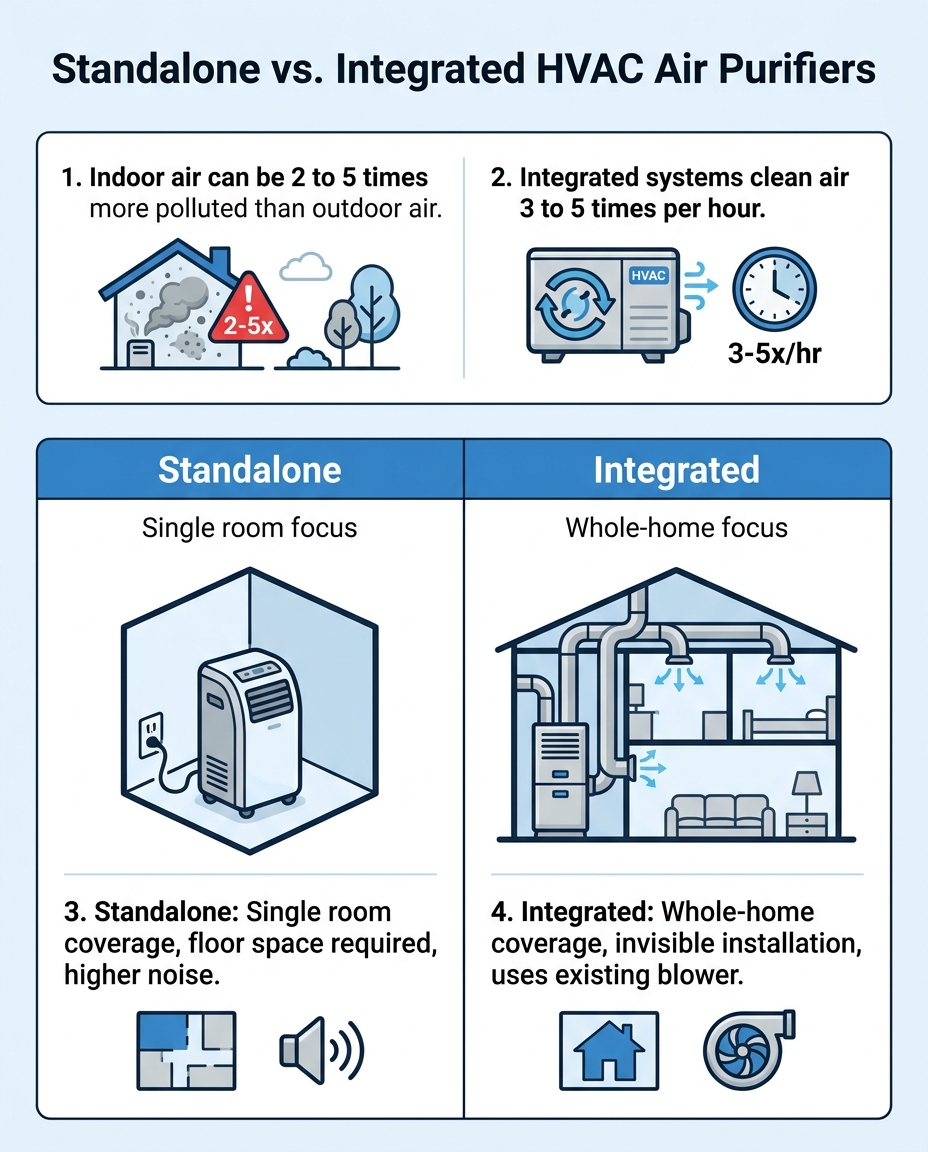
Here is the thing our indoor air quality experts always emphasize: indoor air can actually be two to five times more polluted than outdoor air. That is not a scare tactic; it is a well-documented fact by environmental agencies. Dust, pet dander, cooking odors, and seasonal pollen all get trapped inside your living spaces. When you are trying to improve your indoor air quality, you need a strategy that actually addresses the entire volume of air in your home.
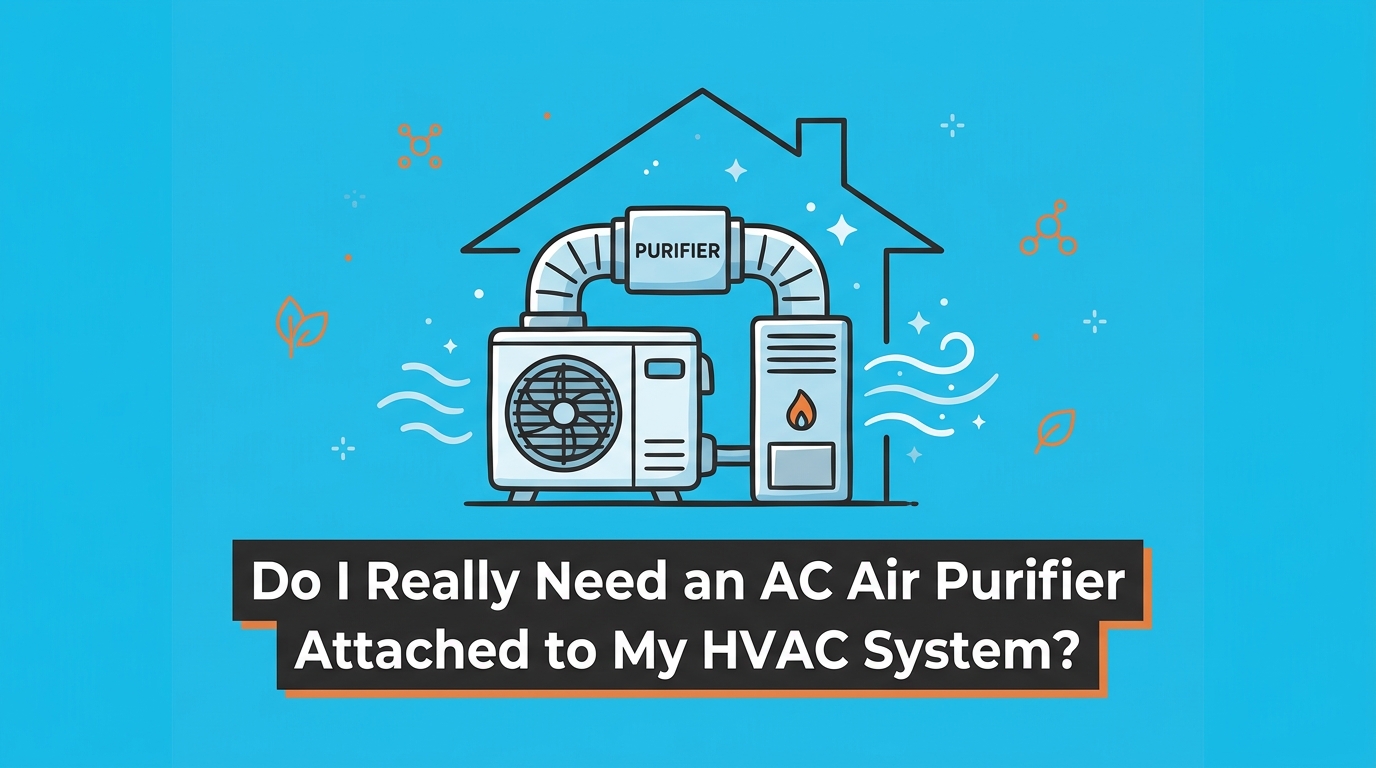
An integrated whole-house air purifier is a specialized filtration and purification unit installed directly into your existing ductwork. Instead of trying to clean one corner of a bedroom, it treats every single cubic foot of air that passes through your heating and cooling system. However, deciding if this upgrade is truly necessary requires an objective look at how these systems operate compared to portable units. Let's break down the facts we share with our local customers so you can self-diagnose your actual needs without the sales pressure.
How an AC Air Purifier HVAC Integration Actually Works
Understanding the mechanics of an integrated system helps clarify why it performs differently than a portable unit you plug into a wall outlet. When our installation team looks at an ac air purifier hvac setup, we are looking at a system that leverages the powerful blower motor already operating inside your furnace or air handler.
The Power of Continuous Circulation
Your central HVAC system is designed to move massive amounts of air. When an integrated purifier is installed, it takes advantage of this existing airflow. Every time your system kicks on to heat or cool your home, the blower fan pulls air from your rooms, pushes it through the return ducts, and forces it through the purification unit. A properly sized integrated system can clean the air in a typical home in the Jeannette PA area three to five times per hour. A standalone unit simply lacks the fan power to turn over that much air across multiple rooms.
Standard HVAC Filters vs. Dedicated Air Purifiers
A pattern we see often in the field is that most homeowners do not realize the standard one-inch filter in their return vent is not there to protect their lungs. That basic filter exists solely to protect the internal components of your HVAC equipment from large debris, hair, and heavy dust that could damage the blower motor or clog the coils.
Dedicated indoor air products, on the other hand, are designed to protect the people living in the home. These integrated units often use thick media cabinets, HEPA-grade materials, or active purification technologies to capture microscopic particles, allergens, and even neutralize biological contaminants that standard filters let pass right through.
Treating the Whole Home Invisibly
Because the purifier sits inside the ductwork (usually right next to the air handler), the purification process happens behind the scenes. There are no bulky plastic towers in your living room, no extra fan noise interrupting your television, and no extension cords to trip over. The air is cleaned centrally and then distributed evenly to every room that has a supply vent.
When Standalone Room Purifiers Fall Short
To be completely transparent: our team at Cochran Heating & Cooling will be the first to tell you that not every single home requires a whole-house system. If you live in a tiny apartment, a college dorm, or if you only need to manage a little extra dust in one specific home office, a standalone portable unit is genuinely fine. We believe in honest recommendations, and sometimes a small room purifier is all you need for localized relief.
However, when you are trying to protect a multi-room house, especially as we move into September early fall, we typically see portable units quickly reveal their limitations. They are designed for localized relief, meaning they only filter the air immediately surrounding them. If you place a unit in the master bedroom, it does absolutely nothing for the air in the kitchen, the living room, or the kids' bedrooms.
• Coverage Area — Standalone Room Purifier: Limited to a single room or small open area. — Integrated HVAC Air Purifier: Comprehensive coverage for every room with a vent.
• Airflow Power — Standalone Room Purifier: Weak internal fans; cannot pull air from hallways. — Integrated HVAC Air Purifier: Uses the main HVAC blower to turn over whole-house air.
• Aesthetics & Space — Standalone Room Purifier: Takes up floor space, requires an electrical outlet. — Integrated HVAC Air Purifier: Installed out of sight inside the ductwork.
• Noise Level — Standalone Room Purifier: Can be loud and disruptive on higher fan settings. — Integrated HVAC Air Purifier: Virtually silent; operates with normal HVAC airflow.
• Ductwork Contaminants — Standalone Room Purifier: Cannot capture allergens circulating in the ducts. — Integrated HVAC Air Purifier: Treats all air before it enters the ductwork system.
The ductwork dilemma: One of the biggest areas where portable units fall short is their inability to address the air circulating through your home's infrastructure. If pollen, dust mites, or pet dander are being pulled into your return vents, your HVAC system will blow those contaminants into every room. A standalone unit in the corner of the room simply cannot intercept these allergens before you breathe them in. An integrated system catches them at the source.

The Impact of the "Closed-Window Season" on Indoor Pollutants
The timing of your indoor air quality strategy matters immensely. Western Pennsylvania experiences a very specific climate shift during early fall. As the crisp air rolls in, dropping temperatures force homeowners to shut their windows and turn off the fresh air cross-breezes they enjoyed all summer. Our technicians call this the "closed-window season," a pattern we see every fall when responding to indoor air quality calls.
The trapped air phenomenon: When you seal your home to keep the cold out and the heat in, you also seal in all the airborne pollutants. Without open windows to provide natural ventilation, your home relies entirely on your HVAC system to circulate the air. If that system is not equipped with a dedicated purifier, it simply recycles the same stale, contaminated air over and over again.
The ragweed collision: This closed-window effect happens to collide perfectly with one of the most aggressive allergy triggers in the Jeannette PA area: ragweed. Ragweed pollen peaks just as temperatures drop. Because the pollen is microscopic, it easily tracks into your home on your shoes, your clothes, and your pets. Once inside a sealed home, it becomes trapped.
If you only have a standalone unit in the bedroom, that ragweed pollen will continue to circulate through the living room, kitchen, and hallways every time the furnace kicks on. We recommend an integrated whole-house system over portable units because it acts as a central checkpoint, capturing these seasonal allergens before they can be redistributed throughout your sealed home. This comprehensive air turnover is what makes the difference between suffering through allergy season and breathing comfortably indoors.
Upkeep and Efficiency: Managing Your AC Air Purification System
A common concern we hear from homeowners is whether adding an integrated system will create a massive maintenance burden. The short answer is no. In fact, our maintenance crews find that managing one central system is often far less tedious than maintaining multiple portable units scattered across different rooms.
When you transition into September early fall, getting your system prepped for the heavy heating season is critical. Here is what typical upkeep looks like for an integrated system when our professionals service it:
1. Media Filter Replacement: Unlike standard one-inch filters that need replacing every 30 to 90 days, the thick media filters used in whole-house purifiers typically last 6 to 12 months. You only have to remember to change one central filter, rather than buying different sized replacement filters for various portable units.
2. UV Bulb Inspection: If your integrated system includes ultraviolet (UV) light purification to neutralize bacteria and mold, the bulbs generally need to be replaced once a year. One of our technicians can easily handle this during a routine seasonal check-up.
3. Blower Motor Check: Because the purifier relies on your HVAC blower, ensuring the motor is clean and running at optimal speed is essential for maintaining the 3 to 5 times per hour air turnover rate.
The efficiency bonus: Keeping your air purifier properly maintained actually helps your primary heating and cooling equipment run more efficiently. By capturing heavy dust and debris before it reaches your furnace's heat exchanger or your AC's evaporator coil, the purifier prevents buildup that forces your system to work harder. Keeping the internal components clean extends the lifespan of your equipment and prevents unexpected breakdowns. This is why having your purification system checked as part of a comprehensive HVAC maintenance plan is a smart move before the winter weather sets in.
Honest Checklist: Do You Truly Need a Whole-Home Upgrade?
At Cochran Heating & Cooling, we believe in providing the facts so you can make the right decision for your household. If you are still on the fence about whether to invest in an integrated system for your home in the Jeannette PA area, run through this honest self-diagnosis checklist based on what our team sees in the field. If you answer "yes" to multiple points, a whole-home upgrade is likely justified.
• Do you suffer from severe seasonal allergies or asthma? If fall ragweed, spring pollen, or year-round dust mites trigger respiratory issues, a localized portable unit will not provide enough relief. You need the comprehensive, whole-house capture rate of an integrated system to keep triggers out of your ductwork.
• Do you have multiple pets shedding dander throughout the house? Pet dander is incredibly light and stays airborne for hours. It travels easily through return vents. An integrated system captures dander from every room, keeping your air and your furniture cleaner.
• Are you tired of managing and listening to multiple noisy portable fans? If you find yourself turning off your portable purifier because the fan noise is interrupting your phone calls, watching TV, or sleeping, you are losing the benefits of filtration. Integrated systems operate silently in the background.
• Do you want invisible, continuous protection without sacrificing floor space? Portable units take up valuable real estate in your living areas and require constant cord management. An integrated system is tucked away in your utility room or basement.
• Are you concerned about the air quality in every room, not just one? If you want the peace of mind that the air in the nursery is just as clean as the air in the living room, only an integrated setup can deliver that consistency.
If these points resonate with your daily experience, it might be time to look into the best whole-home air purifiers designed to integrate seamlessly with your existing equipment.
Frequently Asked Questions About HVAC Air Purifiers
Homeowners usually have specific, practical questions when weighing their indoor air quality options. Here are direct answers to the most common inquiries our technicians receive during the September early fall transition.
Are whole house air purifiers worth it?
Yes, if you need comprehensive coverage for severe allergies, have multiple pets, or want to protect every room in your home simultaneously. They provide a level of continuous air turnover that portable units cannot match. No, if you only need to manage a minor dust issue in a single, small room like a home office or a dorm.
Can you add an air purifier to an existing HVAC system?
Yes, most modern HVAC systems can easily accommodate an integrated air purifier. The unit is typically installed in the return ductwork just before the air handler or furnace. However, a professional must evaluate your specific ductwork layout and your blower motor's capacity to ensure the system is fully compatible and will not restrict airflow.
Do HVAC UV lights really work?
Yes, UV lights are highly effective at neutralizing biological contaminants like mold spores, bacteria, and certain viruses that circulate through your ductwork. While they do not capture physical dust or pollen, they are often used in conjunction with thick media filters to provide complete, two-tiered protection for your home's air.
What is the difference between a standalone and HVAC air purifier?
Standalone units treat only single rooms, take up valuable floor space, and often generate noticeable fan noise in your living areas. HVAC purifiers are installed directly into your ductwork, treating all the air circulating through the entire home invisibly and silently using your central blower motor.
How often do integrated HVAC purifiers need filter replacements?
Depending on the specific model and your household conditions (like the number of pets), integrated media filters typically need to be replaced every 6 to 12 months. This extended lifespan is often much more convenient than replacing multiple standalone filters every few months.
Does an AC air purifier help with fall ragweed allergies?
Yes, high-efficiency integrated systems can capture the microscopic pollen particles that trigger seasonal symptoms. They are especially critical during the fall when windows are closed and HVAC systems are continuously circulating trapped air, preventing those allergens from settling in your living spaces.
Making the Right Choice for Your Home's Air Quality
A clear, objective comparison shows that while standalone units have their place in small, isolated spaces, integrated systems offer unmatched whole-house coverage. Managing seasonal allergens, pet dander, and everyday dust is significantly easier when your home's air is treated comprehensively at the source.
As we settle into the colder months in the Jeannette PA area, the quality of the air trapped inside your home becomes increasingly important. You do not have to guess whether your current setup is adequate. We encourage you to let the professionals at Cochran Heating & Cooling perform an assessment of your ductwork and blower system to see if an upgrade makes sense for your specific layout. Reach out to our local indoor air quality experts to discuss your concerns and find the right solution for your family's comfort and health.