The Physics of Carbon Monoxide Leaks in Aging Westmoreland County Furnaces
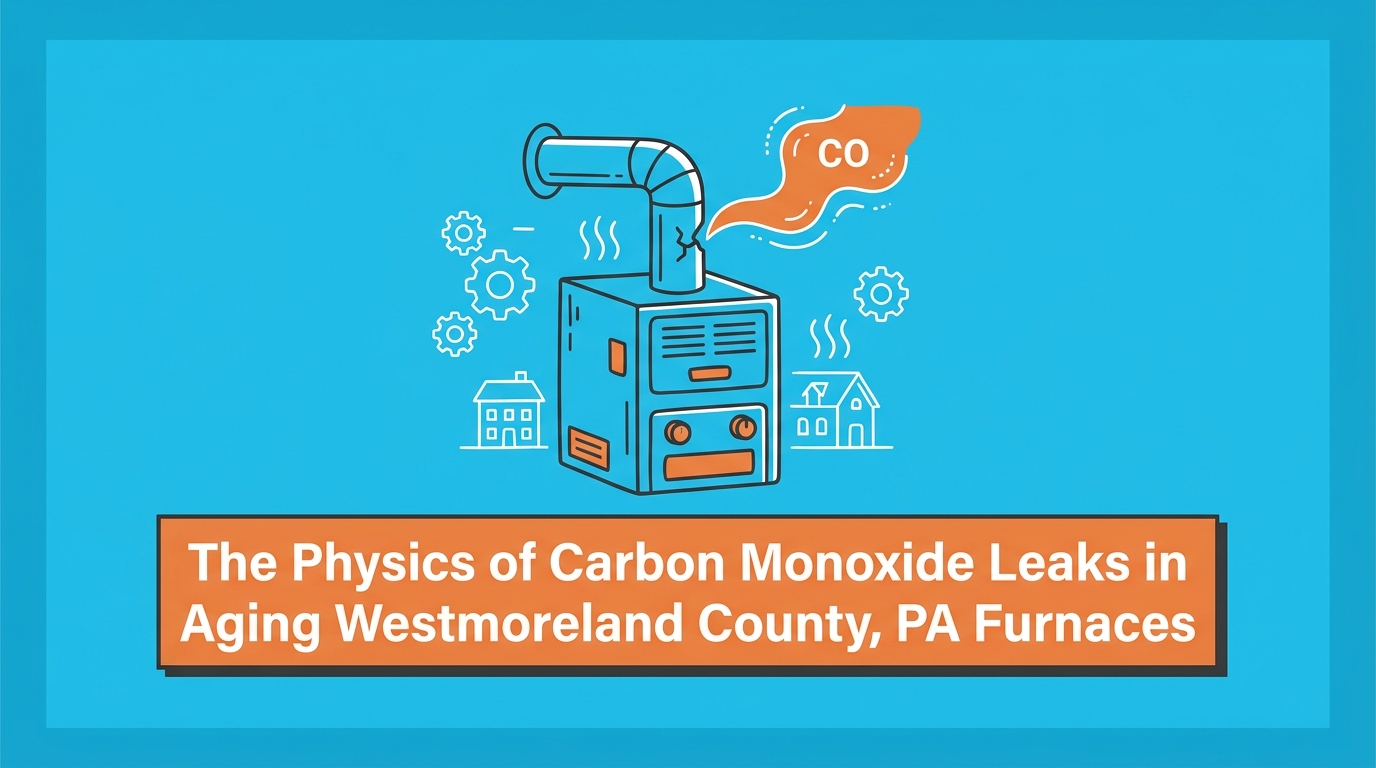
The Hidden Mechanical Threat Inside Aging Heating Systems
When you flip your thermostat to "heat" on the first chilly morning of fall, expecting a comforting rush of warm air to fill the room, you might unknowingly be activating a hidden structural danger. Based on what our technicians at Cochran Heating & Cooling see every autumn, the physics of carbon monoxide leaks in aging Westmoreland County furnaces reveals that turning on an older unit isn't just about blowing hot air—it is a massive, violent mechanical event. If you rely on gas furnaces to keep your home warm, understanding this hidden wear and tear is critical before the deep cold sets in.
Most homeowners view their heating equipment much like a light switch: it is either on and working, or off and broken. However, the reality of how these systems operate is far more physical. Inside that quiet metal cabinet, extreme temperature swings create immense physical stress on the core components. Every time the burners ignite, the internal metals are subjected to a rapid influx of intense heat, followed by a sudden cooling period when the cycle ends. Over time, this constant fluctuation takes a severe toll on the structural integrity of the metal.
Beyond Basic Function: The Structural Reality of Heating
The mechanical reality: Heating equipment is built to withstand high temperatures, but no metal is completely immune to the laws of physics. The internal components endure massive physical stress over time, stretching and shrinking with every single cycle. In newer units, the metal is resilient enough to handle this movement. In older units, that resilience begins to fade, leaving the system vulnerable to microscopic structural failures.
The October heating-startup: The transition from summer to fall is a particularly vulnerable time for aging equipment. During the October heating-startup, your system wakes up from months of dormancy. The internal components haven't experienced high heat since the previous spring. When the burners ignite for the very first time in autumn, the sudden introduction of extreme heat causes the cold, stiff metal to react rapidly. This initial startup carries hidden structural risks, as weakened points in the metal are suddenly forced to perform under pressure.
The critical deadline: The upcoming heating season serves as a strict deadline for identifying microscopic wear and tear. Once the deep winter cold arrives, your system will be forced into continuous operation. True safety requires looking beyond whether the system simply turns on, and instead understanding the physics of the equipment to ensure the internal structures are still sound.
Understanding Thermal Stress in Metal Heat Exchangers
To truly grasp the danger of carbon monoxide leaks, you have to understand the role of the most important component inside your unit: the heat exchanger. The heat exchanger is the critical metal barrier that stands between the toxic combustion gases created by the burners and the clean, breathable indoor air that gets pushed through your vents. As long as this metal barrier is completely solid, the toxic gases are safely routed out of your home through the exhaust flue.
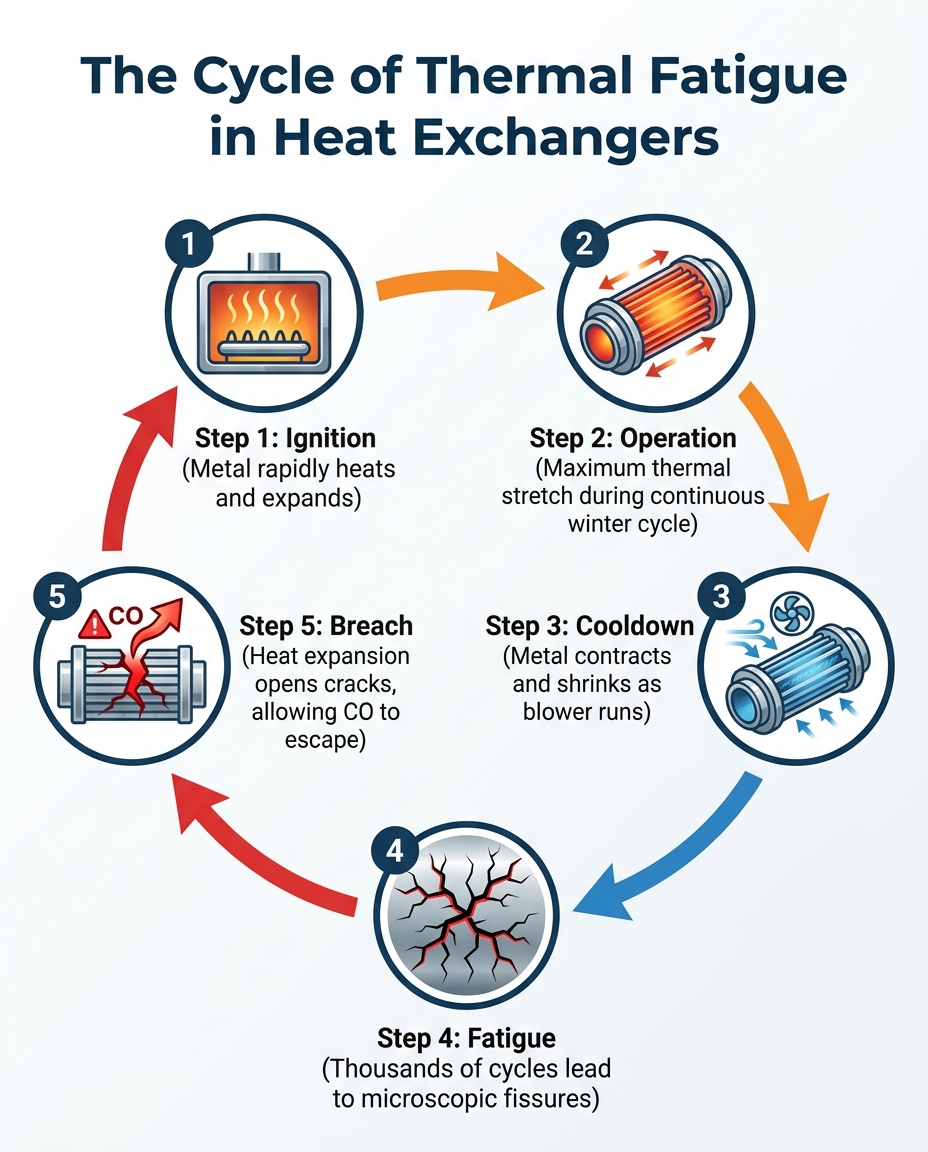
However, this barrier operates under extreme physical conditions. The physics of thermal expansion dictates that when metal molecules are exposed to high heat, they rapidly heat up, expand, and stretch. During a standard heating cycle, the burners blast the heat exchanger with intense flames. The metal walls of the exchanger absorb this heat and physically expand outward. This is a normal, designed function of the system, but it requires the metal to be highly flexible.
Once the thermostat registers that the room has reached the desired temperature, the burners shut off. The contraction phase then begins. The blower motor continues to run for a short time to extract the remaining warmth from the metal and push it into your home. As the blower cools the metal, the material shrinks back to its original, resting state. This constant, repetitive stretching and shrinking creates structural fatigue over thousands of cycles. Just like bending a paperclip back and forth repeatedly will eventually cause the metal to weaken and snap, the thermal stress on a heat exchanger eventually breaks down the molecular bonds of the metal.
Because this wear and tear happens at a microscopic level, standard visual checks often miss the early warning signs. In our experience, this is exactly why specialized furnace repair and inspection services are necessary to evaluate the true condition of the metal.
• Resting State (Off) — Metal Behavior: Cold and fully contracted. — Structural Impact: Maximum stiffness; hidden cracks remain pinched tightly shut.
• Active Heating Cycle — Metal Behavior: Rapid absorption of intense heat. — Structural Impact: Metal molecules expand, stretching the structural walls outward.
• Cooldown Phase — Metal Behavior: Blower forces cooler air over the metal. — Structural Impact: Rapid shrinking and contraction back to the resting state.

How Sub-Freezing Temperatures Accelerate Metal Fatigue
The localized problem: Heating systems do not age at the same rate across the country. The lifespan and structural integrity of a unit are directly tied to the climate it operates in. In our years of servicing Westmoreland County and Jeannette PA, our team has seen firsthand how regional winter extremes force heating systems into heavy, continuous operation. When the temperature drops below freezing and stays there for days or weeks at a time, your system is forced to work exponentially harder just to maintain a baseline indoor temperature.
The mechanical cause: To understand why this accelerates wear and tear, contrast mild climates with harsh northern winters. In a southern state, a unit might cycle on for ten minutes, quickly warm the house, and then rest for an hour. The metal experiences thermal expansion, but it does so infrequently. In Pennsylvania, furnaces run almost 24/7 during a cold snap. This continuous extreme temperature fluctuation maximizes the physical stress on the heat exchanger. The metal is repeatedly stretched to its limit and snapped back into place without adequate rest periods to stabilize.
The structural solution: Acknowledging this localized environmental demand is the first step in preventing a safety hazard. Because the prolonged freezing temperatures force longer, more intense heating cycles, the timeline for structural metal fatigue is dramatically shortened compared to milder climates. Homeowners must adjust their maintenance expectations accordingly.
• Continuous stretching: Long running cycles keep the metal in a state of maximum expansion for extended periods, stressing the welded seams.
• Rapid cooling: When the system finally satisfies the thermostat, the sudden drop in temperature causes a harsh, rapid contraction.
• Cumulative strain: The sheer number of cycles required to survive a northern winter accelerates the breakdown of the metal's molecular bonds.
The Phenomenon of Temperature-Dependent Microscopic Cracks
One of the most dangerous misconceptions about heat exchanger failure is that a crack will be obvious. Homeowners often assume that if a piece of metal is broken, you can simply shine a flashlight on it and see the hole. However, metal fatigue creates microscopic fissures that are not always static. They are highly dynamic, changing shape and size based on the temperature of the metal.
The Illusion of a Safe Resting State
When the system is turned off and the metal is cold, it is fully contracted. During this resting state, the contracted metal can pinch these microscopic cracks tightly shut. To the naked eye—and even to a poorly trained technician doing a rushed visual check—the heat exchanger might look perfectly solid and intact. Our technicians frequently encounter this illusion during fall inspections; the metal walls appear smooth, and there are no obvious gaps.
The danger reveals itself only when the system is activated. As the heat of active combustion hits the metal during the October heating-startup, the material is forced to expand. This expansion physically pulls the hidden cracks wide open. What was an invisible hairline fracture just moments before suddenly becomes a gaping breach in the metal barrier. This dynamic shifting is deeply tied to the overall airflow and temperature balance of your home, which is also why your heating vents might blow cold air if the system's internal sequences are compromised by structural failures.
Because these fissures only open under extreme heat, a visual glance at a cold furnace is entirely insufficient for diagnosing structural integrity. Specialized combustion analysis tools and high-resolution inspection cameras are required to detect these temperature-dependent flaws before they cause a chemical emergency in the home.
Carbon Monoxide: The Chemical Consequence of Structural Failure
When the mechanical structure of the heat exchanger fails, the consequences immediately become chemical. Carbon monoxide (CO) is a colorless, odorless, and tasteless gas that is produced as a natural byproduct of incomplete combustion. As long as the heat exchanger is completely sealed, this toxic gas is safely contained within the combustion chamber and vented directly outside your roof.
However, when those temperature-dependent microscopic cracks pull open during a heating cycle, the sealed combustion chamber is breached. The path of the gas shifts from a safe exhaust route to a highly dangerous internal leak. Because carbon monoxide has no smell or color, this chemical consequence is completely undetectable to human senses.
Here is the exact sequence of how the physical breach compromises your home's air:
1. Combustion occurs: The burners ignite, creating heat and toxic exhaust gases inside the sealed chamber.
2. Fissures expand: The metal heats up and stretches, physically pulling hidden cracks open.
3. Gas escapes: Carbon monoxide slips through the newly opened fissures, escaping the sealed chamber.
4. Distribution begins: The powerful blower motor catches this escaping gas and actively distributes it through the home's ductwork alongside the warm air.
This physical breach is the primary mechanism for sudden indoor air quality emergencies in older Westmoreland County homes. Addressing the structural integrity of your heating equipment is the absolute foundational step for any comprehensive indoor air quality solutions. Without a solid heat exchanger, no amount of filtering or purifying can keep your indoor air safe from combustion byproducts.
Why the 10-Year Mark Alters Your Furnace's Risk Profile
Age is the single most critical factor when evaluating the risk of metal fatigue. Metal fatigue is cumulative; it is the result of repeated stress over a long period. Therefore, it rarely affects brand-new systems. A unit that is only a few years old still has highly flexible, resilient metal that can easily handle the expansion and contraction of the heating cycles.
The Mathematics of Thermal Cycles
To understand why the 10-year mark is so significant, you have to calculate the sheer volume of thermal cycles a heating system undergoes. In a harsh Pennsylvania winter, a system might cycle on and off four to six times an hour. Over a 24-hour period, that is over 100 cycles. Over a five-month heating season, the heat exchanger expands and contracts more than 15,000 times. By the time a unit reaches its tenth birthday, the metal has been stretched and shrunk well over 150,000 times.
In our daily fieldwork across Jeannette, we consistently see that the 10-to-15-year window is when structural degradation mathematically begins to outpace material durability. The molecular bonds in the metal simply cannot withstand that much repetitive motion indefinitely. Passing the decade mark shifts the priority from simple operational checks—like changing filters and checking thermostats—to deep structural evaluations.
This is why transitioning to a routine furnace maintenance plan is so vital as the equipment ages. The older the unit gets, the higher the mathematical probability of metal fatigue becomes. Proactive, specialized inspections are the only way to stay ahead of this cumulative wear and tear before a microscopic crack turns into a dangerous leak.
Frequently Asked Questions About Furnace Heat Exchangers and CO Leaks
What causes a furnace heat exchanger to crack?
Continuous thermal expansion and contraction over thousands of heating cycles leads to cumulative metal fatigue. Every time the burners ignite, the metal heats up and stretches, and when the cycle ends, it cools and shrinks. Over years of operation, this repetitive physical stress eventually breaks down the molecular structure of the metal, causing microscopic cracks to form.
Can a cracked heat exchanger cause carbon monoxide poisoning?
Yes, breaches in the metal barrier allow toxic combustion gases to enter the breathable air circulation. The heat exchanger is the only thing separating the toxic exhaust from the air blowing out of your vents. When it cracks, carbon monoxide escapes the combustion chamber, gets caught by the blower motor, and is pushed directly into your living spaces.
How do you know if your furnace is leaking carbon monoxide?
Rely on functional CO detectors, watch for yellow burner flames or soot, but prioritize professional diagnostic tools. Because carbon monoxide is completely invisible and odorless, you cannot rely on your senses to detect it. While physical signs like excess moisture on windows or a yellow pilot flame can indicate poor combustion, a professional inspection using specialized combustion analyzers is the only definitive way to confirm a leak.
How long do furnace heat exchangers last?
They typically last 15 to 20 years, though heavy usage in freezing climates can accelerate structural wear. In regions with harsh winters, the system runs more frequently and for longer durations, maximizing the thermal stress on the metal. Once a system passes the 10-year mark in a cold climate, the risk of metal fatigue increases significantly.
Can a heat exchanger crack be repaired?
Due to the extreme thermal stress, patching is unsafe; the component or the entire furnace must be replaced. Welding or sealing a crack is not a viable solution because the patch cannot expand and contract at the exact same rate as the surrounding metal. The intense heat of the next cycle will simply break the patch, meaning replacement is the only safe option.
Securing Peace of Mind Before the Winter Freeze
Understanding the actual physics of metal fatigue proves exactly why assumptions about heating safety are so dangerous. A unit that turns on and blows warm air is not necessarily a safe unit. The dynamic nature of temperature-dependent microscopic cracks means that hidden dangers can easily slip past a quick visual check, especially if the metal is cold and contracted.
Because these fissures only pull open under extreme heat, professional, specialized tools are required to detect them. Combustion analyzers and high-definition inspection cameras allow our technicians to see what the naked eye cannot. As a trusted family-owned provider in the Jeannette area, our team at Cochran Heating & Cooling prioritizes meticulous heat exchanger inspections over quick fixes to ensure your family's safety. We've spent years diagnosing these systems, and we know firsthand that in Westmoreland County, a thorough evaluation is a physical necessity for older units.
Before the October heating-startup window closes and the continuous freezing temperatures arrive, take the time to schedule a thorough structural evaluation. Ensuring your home's metal barrier against combustion gases remains completely intact is the only way to secure true peace of mind for the long winter ahead.