The Impact of Freezing Rain on Your Outdoor Heat Pump Clearances
Winter Storms and Your Heat Pump's Vulnerability
Before the first major winter storm arrives, our team has found that understanding the impact of freezing rain on your outdoor heat pump clearances is the single most effective way to prevent unexpected cold-weather breakdowns. Modern heating technology is incredibly resilient, but it relies on a delicate balance of airflow and temperature exchange to keep your home comfortable. When mid-winter freezing rain storms roll through the local area, that balance is immediately threatened by severe operational challenges during mixed-precipitation events.
Unlike traditional gas furnaces that generate heat internally, your outdoor unit must constantly pull thermal energy from the outside air. To do this successfully, the system needs unobstructed space to breathe. The most concrete problem homeowners face during severe winter weather is ice bridging—a phenomenon where a solid barrier of ice forms between the outdoor fins and the surrounding accumulated snowpack. This solid barrier completely chokes off the necessary airflow, starving the system of the ambient heat it needs to warm your home.
As winter weather intensifies, you will inevitably face a critical decision point: knowing when it is safe to manually clear snow away from the unit versus knowing when to step back and call a professional because the equipment is encased in solid ice. Attempting the wrong kind of maintenance can cause irreversible damage to the delicate components inside the cabinet. Prompt attention and the right approach to winter clearances will prevent emergency lockouts during severe cold snaps, keeping your family safe and warm when the temperature drops.
The Mechanics of Ice Bridging: When Freezing Rain Meets Snowpack
To protect your system, it helps to understand exactly what happens when severe weather strikes. "Ice bridging" occurs when a solid sheet of ice seals the gap between the heat pump's delicate aluminum fins and the existing snow on the ground. This does not happen during a standard dry snowfall; it requires a specific sequence of weather events that rapidly alter the environment around your equipment.
How Your System Breathes in Winter
Heat pumps require unrestricted airflow to extract ambient heat from the outside air. Even when the temperature drops below freezing, there is still thermal energy present in the atmosphere. The outdoor unit's fan pulls massive volumes of this cold air across a series of refrigerant-filled coils. The refrigerant absorbs the available heat, compresses it to a higher temperature, and transfers it inside your home. Because the system is moving so much air, any physical blockage acts like a chokehold on the equipment. Blocking the fins drastically reduces heating capacity, forces the compressor to work overtime, and plummets the overall system efficiency.
The Compounding Danger of Mixed Precipitation
The real danger emerges during mixed precipitation—specifically, when a heavy snowfall is followed rapidly by freezing rain. Dry snow can often be blown away by the unit's exhaust fan or gently brushed off. However, when freezing rain coats that snowpack, it acts as a binding agent. The supercooled rain hits the cold metal of the heat pump cabinet and the surrounding snow, instantly freezing into a solid, impenetrable shell.
With Western Pennsylvania's specific climate, featuring frequent freeze-thaw cycles and mixed precipitation, solid ice bridging is a much more severe local threat than in regions that only experience dry, powdery snow. In our team's years of experience servicing heat pumps in Jeannette and Greensburg, a pattern we see often is units where the freezing rain has created a literal bridge of ice connecting the ground snowpack directly to the coil guard. Once this bridge forms, the outdoor unit is entirely sealed off from the fresh air it desperately needs, initiating a rapid decline in heating performance.
Normal Defrost Cycles vs. Solid Ice Encasement
Homeowners are often alarmed the first time they see frost on their outdoor unit, but a certain amount of freezing is a normal part of the heating process. As the outdoor coil absorbs heat, it drops below the dew point of the surrounding air, causing condensation. In winter, this condensation freezes into frost. Manufacturers anticipate this, which is why your system is equipped with an automatic defrost cycle.
How the Automatic Defrost Cycle Works
A standard automatic defrost cycle typically runs for 10 to 15 minutes to melt normal frost accumulation. When the system's sensors detect restricted airflow or a drop in coil temperature, the unit temporarily reverses its operation. The outdoor fan shuts off, and the system diverts hot, compressed refrigerant back into the outdoor coil. Essentially, the unit briefly acts as an air conditioner, using your home's heat to melt the frost off the outdoor fins. Once the coil is clear, the system shifts back into standard heating mode.
These built-in manufacturer cycles are highly effective for everyday winter operation, but they are not designed to melt thick, solid ice encasement caused by freezing rain. When our technicians respond to winter no-heat calls, we frequently find that the defrost cycle failed to clear a heavy ice bridge, causing the system to suffer emergency lockouts or severe compressor damage. Taking steps toward protecting your heat pump compressor from early frost accumulation can mitigate some risks before deep winter hits, but severe storms require active monitoring.
Comparing Frost to Ice Bridging
• Normal Frost — Appearance: Light, white, powdery coating on the side coils. — System Impact: Minor, temporary reduction in airflow. — Defrost Cycle Effectiveness: Highly effective; melts frost in 10-15 minutes. — Required Action: None. Let the system run its automatic cycle.
• Snow Buildup — Appearance: Loose snow piled against the base or top of the unit. — System Impact: Restricts airflow if it covers the intake or exhaust. — Defrost Cycle Effectiveness: Ineffective against deep snowbanks. — Required Action: Gently brush away loose snow to restore clearance.
• Solid Ice Encasement (Ice Bridging) — Appearance: Thick, clear or milky hard ice shell sealing the unit to the ground. — System Impact: Severe airflow blockage; potential compressor lockout. — Defrost Cycle Effectiveness: Fails to melt the hard ice; system runs constantly without producing heat. — Required Action: Do not chip ice. Call a professional for emergency diagnostic.
We see this limitation frequently when our crews are servicing Trane, Comfortmaker, and Daikin heat pumps after severe weather events. While these are incredibly robust systems, our team can confirm that no residential defrost board is engineered to melt an inch-thick shell of solid ice. Forcing the system to try will only result in skyrocketing energy bills and a premature breakdown.
Why Maintaining 12 to 24 Inches of Clearance Matters
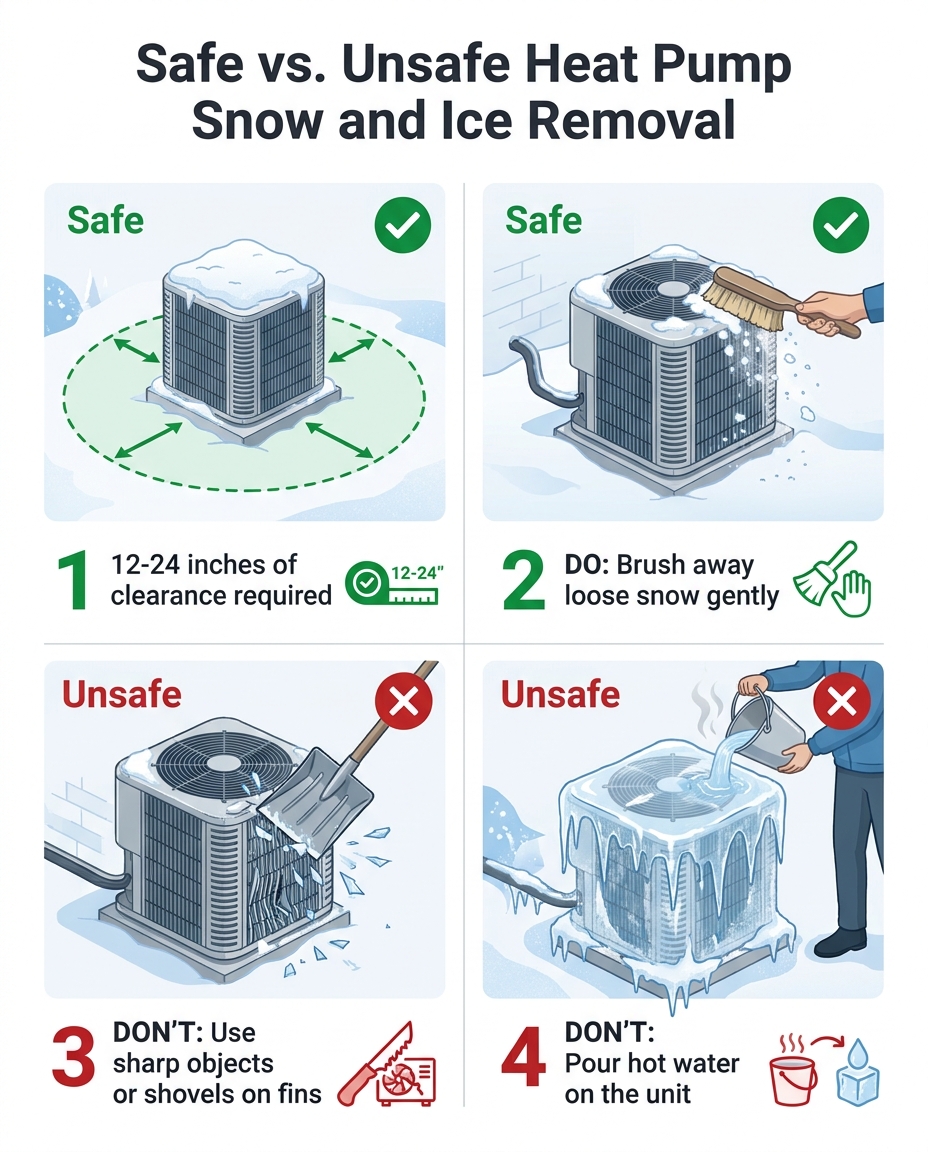
To give your system the best chance of surviving a mixed-precipitation event, you must maintain a strict physical boundary around the equipment. The universal rule for outdoor HVAC units is that heat pumps require a minimum clearance distance of 12 to 24 inches on all sides. This is not just a suggestion for easier service access; it is a fundamental requirement for the thermodynamics of the system.
The Science of the Exhaust Zone
1. Air Intake Needs: The system must pull in massive volumes of ambient air through the side coils. If snowpack creeps into the 12 to 24-inch clearance zone, it creates a physical wall that chokes off this intake.
2. Exhausting Colder Air: After the heat pump extracts thermal energy from the air, the air it exhausts out the top of the unit is significantly colder than the ambient temperature.
3. Preventing Recirculation: If there is snow piled high around the unit, or if an ice bridge has formed a canopy, that freezing exhaust air hits the blockage and bounces right back down into the intake coils. The system ends up recycling its own freezing air, plummeting the efficiency to zero.
4. Accelerated Freezing: When snowpack creeps into the clearance zone, the moisture from the melting and refreezing process accelerates the formation of ice bridges directly on the fins.
The Importance of the Snow Line
When your system was originally installed, our technicians—or the original installers—likely placed it on "snow legs" or a raised plastic pad. Elevating the outdoor unit above the anticipated local snow line is critical. If the unit sits flat on the ground, even a light dusting of snow can block the bottom rows of the coil. By elevating the equipment, the system has a buffer zone where snow can accumulate without immediately threatening the intake fins. However, during heavy storms, blowing snow can still breach this buffer, making active clearance maintenance essential.
Safe Snow Clearing Practices for Homeowners
When a winter storm breaks and it is safe to go outside, checking your outdoor equipment should be on your immediate to-do list. However, there are strict boundaries for what a homeowner can do to maintain clearances without damaging the equipment. The aluminum fins on your outdoor coil are as thin as paper and easily crushed, and the refrigerant lines under the ice are highly pressurized.
• Brush away loose snow: Gently brush away loose, dry snow from the top and sides of the unit using a soft broom or a car snow brush. Always brush parallel to the fins (usually up and down) rather than across them to prevent bending the metal.
• Clear a perimeter path: Shovel a clear path around the unit to maintain the required 12 to 24-inch airflow zone. Move the shoveled snow far enough away that the exhaust fan will not blow it back against the cabinet.
• Check the top grille: Ensure the top exhaust grille is completely free of heavy, wet snow. If the fan blades are blocked, the motor can burn out trying to spin against the weight.
• STRICT WARNING—No sharp objects: Never use sharp objects, metal shovels, or ice picks to chip ice off the coils or fins. One slip of an ice pick can puncture a refrigerant coil, turning a simple weather issue into a catastrophic, full-system replacement.
• STRICT WARNING—No hot water: Avoid pouring hot water over the unit to melt the ice. While it seems like a quick fix, the hot water will run deep into the internal electrical components and rapidly refreeze as the ambient temperature drops, causing severe internal damage and expanding ice that can crush delicate parts.
Recognizing When to Stop Clearing and Call a Professional
There is a distinct line where safe, DIY property maintenance ends and professional diagnostic intervention is required. If you step outside after a storm and find that the freezing rain has created a solid shell around the equipment, it is time to put the broom down. Removing hard ice from delicate fins requires specialized knowledge, specific thawing tools, and electrical testing protocols that should never be attempted by a homeowner.
You must learn to identify the signs of a failed defrost cycle. If the unit runs constantly but produces no heat inside the house, or if the outdoor cabinet is completely encased in a hard shell of ice that hasn't melted after several hours, the automatic systems have been overwhelmed. You may also hear loud, unusual grinding noises if the fan blades are striking ice buildup inside the top grille.
Solid ice encasement often requires a licensed professional to perform an emergency diagnostic to reset and thaw the system safely. A technician will safely de-ice the unit using approved methods that do not risk thermal shock or mechanical damage. Once the ice is clear, they will test the defrost control board, verify the reversing valve is functioning, and check the refrigerant pressures to ensure the system hasn't sustained internal damage.
What our team typically sees when servicing local units across Westmoreland County after major storms is that waiting too long leads to preventable compressor damage. Homeowners often hope the ice will melt on its own, but as the system struggles against the blockage, the compressor overheats. By bringing in a local diagnostic expert early, you can resolve the lockout, clear the ice bridge safely, and restore your home's heat before the cold snap deepens.
Common Questions About Winter Heat Pump Icing
Is it normal for a heat pump to have ice on it?
Yes, a light layer of frost is completely normal during winter operation. As the outdoor coil extracts heat from the cold air, condensation forms and freezes on the metal fins. The system's automatic defrost cycle is explicitly designed to melt this frost automatically every 30 to 90 minutes. However, a thick, solid block of hard ice is not normal and indicates a problem.
What happens if a heat pump gets covered in ice and snow?
When a unit is buried in snow or encased in ice, the required airflow is severely restricted, dropping efficiency and heating power to near zero. The system can no longer extract ambient heat, forcing it to run continuously without warming your home. If forced to run while encased, the system may trigger a safety lockout or sustain permanent compressor damage due to overheating and extreme stress.
How do I get ice off my outside heat pump?
The safest first step is to allow the automatic defrost cycle to run, which should handle moderate frost. If the ice is solid and the cycle fails, do not chip it, hit it, or use hot water. You can gently brush away loose snow with a soft broom, but hard ice removal requires a professional HVAC technician to safely thaw the unit and diagnose the underlying defrost failure.
Will rain melt ice on a heat pump?
Warm rain can certainly help melt accumulated ice during a mid-winter thaw, but freezing rain will aggressively compound the problem. Freezing rain adds dense, supercooled layers to the existing frost, rapidly creating an ice bridge that seals the fins. If rain is falling when the temperature is hovering around the freezing mark, you should monitor your outdoor unit closely.
How long does a typical defrost cycle take?
Most automatic defrost cycles last between 10 and 15 minutes before the system returns to normal heating mode. During this brief window, you may notice the outdoor fan stop spinning, hear a "whoosh" sound from the reversing valve, and see steam rising from the top of the unit as the frost melts. If the unit stays in this mode for extended periods or fails to melt the ice, professional service is needed.
Stay Ahead of the Next Winter Storm
Understanding exactly how freezing rain creates dangerous ice bridging is the first and most important step in protecting your heating system this season. By maintaining that critical 12 to 24-inch clearance zone and knowing the difference between normal frost and a solid ice encasement, you can ensure your equipment has the airflow it needs to operate efficiently.
There is real peace of mind in knowing how to safely maintain your outdoor clearances and exactly when to let the automatic defrost cycle do its job. If you notice your unit is struggling, encased in solid ice, or failing to produce heat after a heavy mixed-precipitation storm, do not wait for the problem to resolve itself. Reach out to our team for a professional diagnostic to safely clear the system and restore your winter comfort before the next freeze hits.