Winterizing Vacant Investment Properties in Westmoreland County

The High Cost of Freezing Winter Tenant Turnovers
Properly winterizing vacant investment properties in Westmoreland County is the only thing standing between a routine tenant turnover and a catastrophic plumbing emergency. The gap between one tenant moving out and another moving in is stressful enough without adding a flooded basement or a destroyed heating system to the mix. If a property sits empty during a deep freeze, the lack of ambient heat from daily living activities allows the internal temperature of the structure to plummet rapidly.
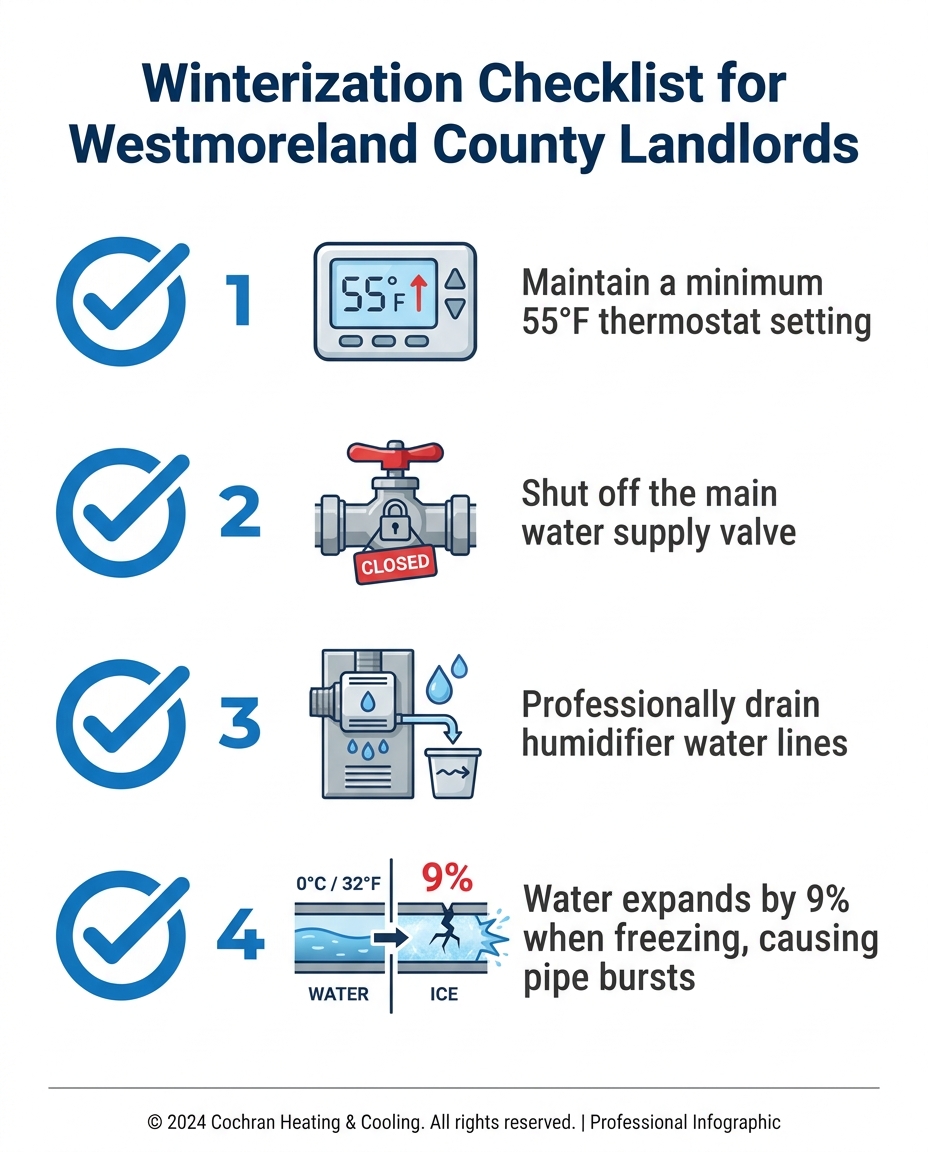
In our experience working with property managers, freezing winter tenant turnover periods present a unique set of hazards. When the water inside your plumbing or heating system freezes, it expands by approximately nine percent. This physical expansion creates immense pressure—often exceeding 2,000 pounds per square inch—which is more than enough to split solid copper pipes, shatter PVC, and crack heavy cast-iron fixtures.
The landlord's dilemma: You want to minimize utility bills while a unit isn't generating rental income, but cutting the heat too far exposes the property to massive risk. Balancing utility savings with the absolute necessity of baseline heating is the most important decision you make during a winter vacancy. A proactive approach to preventative HVAC maintenance ensures that the system can safely run unattended. Without it, you might find yourself paying for emergency heating repair service and extensive water damage restoration before a new renter can even sign the lease.
Why Western Pennsylvania Cold Snaps Threaten Vacant Homes
Western Pennsylvania is known for its volatile winter weather. We frequently experience rapid freeze-thaw cycles followed by prolonged, severe cold snaps where temperatures stay well below freezing for days at a time. These harsh environmental conditions aggressively attack empty structures. Without a family inside cooking, showering, and running electronics, a vacant home generates zero secondary heat, leaving the mechanical systems completely vulnerable to the creeping cold.
One common misconception is that simply shutting off the main water valve at the street or the meter eliminates the risk of freeze damage. While turning off the main supply is an excellent first step, it does not remove the residual water sitting in horizontal pipe runs, low-hanging elbows, or delicate HVAC accessories. Freeze damage can happen overnight if a property is left unheated the very day a tenant moves out, turning residual trapped water into expanding ice blocks.
The Vulnerability of Older Housing Stock
The architectural history of our region adds another layer of complexity to winter property management. Older investment properties often lack modern insulation in basements, crawlspaces, and exterior wall cavities.
Drafty areas accelerate the freezing process for exposed plumbing and HVAC components. When sub-freezing wind penetrates a poorly insulated rim joist, it blows directly onto the pipes running along the basement ceiling.
• Occupied Home — Thermal Retention: High (ambient heat from daily living) — Freeze Risk Level: Low (unless heating system fails completely)
• Vacant, Modern Build — Thermal Retention: Moderate (tight thermal envelope) — Freeze Risk Level: Medium (requires consistent baseline heating)
• Vacant, Older Stock — Thermal Retention: Low (drafty, poor insulation) — Freeze Risk Level: High (rapid heat loss through walls and unsealed basements)
Because these older structures lose heat so rapidly, relying on the building's natural thermal mass to survive a weekend vacancy is a gamble you will eventually lose.
Establishing Safe Baseline Thermostat Temperature Settings
The problem: Every winter, landlords face the temptation to turn the thermostat down to 40 degrees—or off completely—to save on gas and electricity bills while a unit sits empty.
The cause: This strategy ignores the reality of thermal dynamics. The thermostat only reads the temperature in the interior hallway where it is mounted. If the hallway is 40 degrees, the uninsulated exterior wall cavities and the drafty basement where the actual pipes live are likely hovering well below freezing.
The solution: You must maintain safe baseline thermostat temperature settings (e.g., 55°F) at all times during a vacancy. Keeping the ambient interior temperature at a minimum of 55 degrees provides a necessary thermal buffer. It ensures that enough heat penetrates the floors and walls to keep the hidden plumbing lines above the freezing mark, even during a severe overnight freeze.
To enforce this, we highly recommend installing digital thermostats with built-in limits or using physical lockboxes. It is remarkably common for departing tenants, cleaning crews, or contractors to accidentally turn the heat off when they lock the door behind them. Restricting the thermostat guarantees your 55-degree baseline remains intact.
Monitoring Temperatures Remotely
Modern property management benefits greatly from smart thermostat technology. Installing Wi-Fi-enabled thermostats allows you to monitor the indoor climate of your empty units from your phone.
• Instant alerts: Smart thermostats can send a push notification directly to your phone if the indoor temperature drops dangerously low, signaling a furnace failure.
• Reduced site visits: Remote monitoring provides incredible security without requiring you to drive across town for daily physical property checks.
• Contractor oversight: If a painter or carpet cleaner bumps the thermostat down while working, you can correct it remotely the moment they leave.
The Hidden Freeze Risk: Securing Humidifier Water Lines
While most property managers remember to shut off the main water supply and open the kitchen faucets to drain the primary pipes, there is a hidden vulnerability that generic checklists almost always miss. The small, quarter-inch water lines feeding your furnace's indoor air quality systems are highly susceptible to rapid freezing.
Whole-home humidifiers are common in our region to combat dry winter air. These units rely on a thin plastic or copper supply line that taps into the home's plumbing. Because these lines are so narrow and typically located in the coldest part of the basement near the return air drop, they are often the very first thing to freeze if the ambient temperature dips.
When that tiny line freezes and splits, it might go unnoticed until the main water is turned back on for the new tenant. At that moment, water will spray directly onto the furnace components and flood the basement floor. Having these delicate accessory lines properly drained and secured during tenant turnovers is a critical step. Securing delicate HVAC accessories requires professional care to avoid damaging the solenoid valves or the equipment housing itself.
Other Commonly Missed Vulnerabilities
Beyond the humidifier, vacant homes hide water in several other obscure locations that require attention before a deep freeze sets in.
• P-traps and toilets: The curved pipes under sinks and the bowls of toilets hold standing water by design to block sewer gases.
• Appliance supply lines: Refrigerator ice makers and washing machine hoses retain water even after the main valve is shut off.
• The difference in treatment: Adding RV antifreeze to drains and toilet bowls is a standard, safe practice for plumbing fixtures, but HVAC water lines and internal comfort equipment require specialized, professional attention to winterize safely.
Protecting Boilers and Water Heaters During Vacancies
Homes equipped with boiler systems present a unique challenge during winter vacancies. Unlike a forced-air gas furnace that simply heats air, a boiler relies entirely on water to heat the home. This creates a difficult balancing act: you cannot completely drain the plumbing system if the boiler needs that water to maintain your 55-degree baseline temperature.
Winterizing a house with an active boiler requires a deep understanding of hydronic heating. The system must remain pressurized and functional, which means the water inside the baseboards or radiators is constantly at risk if the boiler burner fails. Furthermore, tankless and traditional water heaters face their own risks. A tankless unit has a very small internal heat exchanger that can crack easily if left active in a freezing, unheated space without proper flow.
We strongly advise against attempting to drain boilers or water heaters yourself. Improper procedures can permanently ruin the units, introduce air locks into hydronic lines, or instantly void manufacturer warranties. If a water heater is damaged by freezing, you will need professional water heater repair or a full replacement before a tenant can occupy the space. A licensed technician must perform the winterization to ensure long-term equipment lifespan. For more detailed guidance on hydronic systems, we recommend reading our resource on securing your basement boiler against freezing temperatures.
Navigating Boiler Systems in Empty Homes
Because boilers cannot simply be drained if they are required to maintain the baseline heat, they require a different strategy altogether.
A professional assessment is needed to ensure the boiler's antifreeze levels (propylene glycol) are adequate for safe winter operation. Over time, boiler antifreeze can degrade or become diluted, losing its protective qualities. A technician can test the concentration and adjust it, ensuring the water inside the heating loops won't freeze even if the power goes out for a few hours during a winter storm.
Why Greensburg and Latrobe Landlords Need Proactive HVAC Partnerships
Managing multiple older investment properties requires a systematic approach to winter maintenance. You cannot rely on a generic, one-size-fits-all checklist when dealing with the unique architectural quirks of Western Pennsylvania real estate. A reactive approach—waiting until a pipe bursts to call for help—results in massive property damage, delayed move-in dates, and lost rental revenue.
One pattern we see often with Greensburg and Latrobe apartment complexes and investment properties is the logistical bottleneck of tenant turnovers. When a tenant hands over the keys in January, the clock immediately starts ticking. A professional HVAC partner can execute rapid winterization protocols the very day a property becomes vacant, securing the vulnerable systems before the overnight temperatures drop.
Working with Cochran Heating & Cooling means you have a trusted local provider offering reliable preventative maintenance tailored specifically to local landlords. We understand the liability and timeline risks you face if a heating system fails and delays a new tenant move-in. By establishing a relationship for your residential HVAC services, you ensure that your properties receive priority attention, proper documentation, and expert care that protects your bottom line.
Frequently Asked Questions About Vacant Property Winterization
What temperature should I leave an empty house in winter?
Set the thermostat to a minimum of 55 degrees Fahrenheit to prevent interior pipes from freezing. This safe baseline thermostat temperature setting creates enough ambient heat to penetrate walls and floors, keeping the hidden plumbing lines in uninsulated spaces safely above the freezing mark. Attempting to save money by setting it lower significantly increases the risk of catastrophic pipe bursts.
Should I turn off the water in a vacant house in winter?
Yes, shutting off the main water supply is highly recommended, but residual water in pipes and HVAC accessories must still be managed. Turning off the main valve stops thousands of gallons of water from flooding the home if a break occurs, but the water already sitting inside the lines can still freeze, expand, and split the pipes. You must still maintain baseline heating and open faucets to relieve pressure.
How do you winterize a vacant house with the heat on?
Maintain the 55-degree baseline, shut off the main water, drain accessible lines, and have professionals secure humidifier and boiler lines. Keeping the heat on protects the structure, but you should still pour RV antifreeze into P-traps and toilets to prevent those standing water pools from freezing and cracking the porcelain or PVC.
Can I drain my rental property's boiler myself?
No. Draining or winterizing a boiler requires a licensed professional to prevent severe equipment damage and ensure safe baseline heating. Boilers are complex, pressurized systems; draining them improperly can introduce air locks, cause the system to dry-fire, and instantly void the manufacturer's warranty. Always rely on a certified technician for hydronic heating systems.
How quickly can pipes freeze in an unheated house?
During severe cold snaps, poorly insulated pipes can freeze and burst overnight if the heating system fails or is turned off. In older properties with drafty basements and uninsulated crawlspaces, wind chill can rapidly drop the temperature of exposed copper lines, causing them to freeze solid in a matter of hours.
Secure Your Rental Properties Before the Next Freeze
Leaving an investment property vacant during a Western Pennsylvania winter requires more than just locking the door and hoping for the best. By maintaining a strict 55-degree baseline temperature and ensuring that delicate HVAC accessories like humidifier lines are properly secured, you can prevent catastrophic water damage. Don't leave your property's safety to chance or generic checklists. Schedule a professional inspection and establish a proactive maintenance plan before your next tenant turnover, giving you clear, actionable guidelines that protect your investments all winter long.