The Role of Flame Sensors in Preventing Winter Furnace Gas Buildups
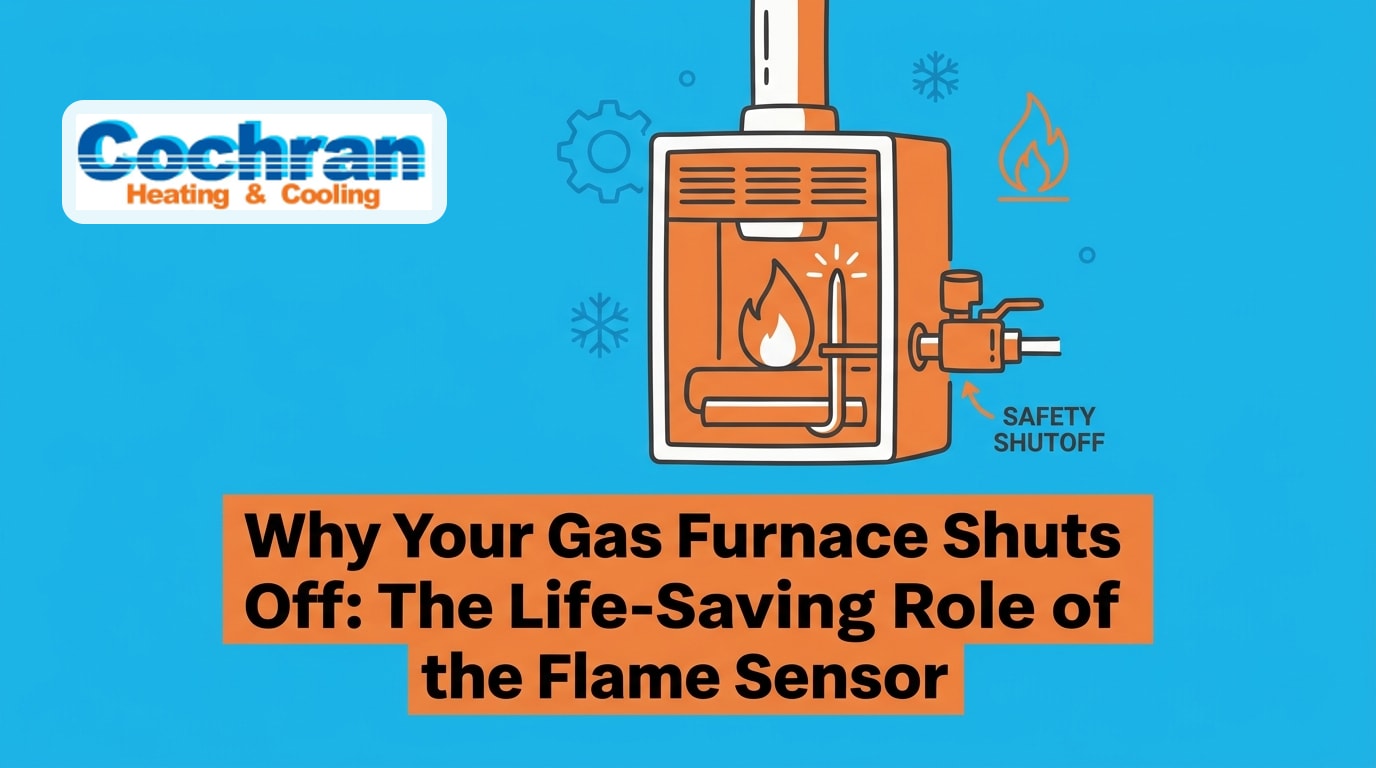
When a Freezing November Night Brings a Sudden Furnace Shutdown
Before the first major freeze arrives, understanding the role of flame sensors in preventing winter furnace gas buildups can save you from a night of panic when your system abruptly halts. The scenario is incredibly stressful: the temperature drops rapidly outside, your thermostat calls for heat, and you hear the familiar sequence begin. The draft inducer motor hums, the igniter glows, and the burners light with a reassuring whoosh. But then, after just three seconds, the flames vanish and the entire system shuts down completely. On a freezing November pre-winter freeze, this sudden silence feels like a catastrophic failure.
To restore your home's warmth and ensure your system is operating safely, explore our heating services and our comprehensive solutions for gas furnace systems.
The immediate reaction for most homeowners is to assume the furnace is broken beyond repair. However, this specific three-second shutdown is actually a deliberate, highly engineered decision made by your system's control board. Rather than panicking about a total system failure on a cold night, it helps to recognize this sequence as a critical protective measure. Your furnace is actively preventing a highly dangerous situation, and the component responsible for this sudden halt is a tiny, unsung hero known as the flame sensor.
With the sudden temperature plummets we experience in late fall throughout Western Pennsylvania, a reliable heating system is an absolute necessity. A sudden loss of heat amplifies the stress of a cold night, but understanding that your system is protecting your home changes the perspective entirely. The flame sensor intentionally halts operation to keep you safe. Addressing this specific sensor issue is not a massive overhaul; it is a routine, expected part of maintaining safe heating equipment and ensuring your home stays secure all winter long.
The Mechanics of the Flame Sensor: How It Detects Fire
To understand why your heating system shuts down, we first need to look at the fascinating technology behind how a furnace actually knows a fire is burning. The flame sensor is a remarkably simple-looking component. It is a thin, metallic rod with a ceramic porcelain base, mounted on the burner assembly so that the metal tip sits directly in the path of the flames.
Despite its simple appearance, the physics of how it operates are quite advanced. The sensor relies on a scientific principle called flame rectification. Here is how this process works in practical terms:
• The alternating current: The furnace control board sends a continuous, low-voltage alternating current (AC) to the metal rod.
• The conductive plasma: Fire is actually a form of plasma, which means it can conduct electricity. When the gas burners ignite, the flame envelops the sensor rod.
• The rectification process: As the AC voltage passes through the flame to the grounded metal of the burner assembly, the flame acts like a diode. It "rectifies" or converts the alternating current into a direct current (DC).
• The microamp measurement: The control board measures this returning DC signal. A healthy system typically registers a tiny microamp current, usually between 1 and 10 DC microamps, depending on the specific equipment manufacturer.
A Monitor, Not an Igniter
A common misconception is that the flame sensor creates the fire. It does not. The sensor acts purely as a monitor to verify that combustion is actively happening. The hot surface igniter or spark igniter is responsible for lighting the gas; the flame sensor simply stands in the fire to confirm the igniter did its job.
In our experience servicing gas furnaces, this tiny component is responsible for the vast majority of early-season short-cycling issues. Because the electrical current it measures is so incredibly small—measured in millionths of an amp—even the slightest interference can disrupt the signal, causing the control board to believe there is no fire at all.
The Danger Averted: Why the Lockout Sequence is Necessary
When the furnace control board fails to receive that tiny microamp signal, it reacts instantly. To understand why this reaction is so aggressive, we must look at the sequence of operations and the extreme danger of raw gas accumulation. The lockout is not a glitch; it is a life-saving safety feature.
The Sequence of Operations
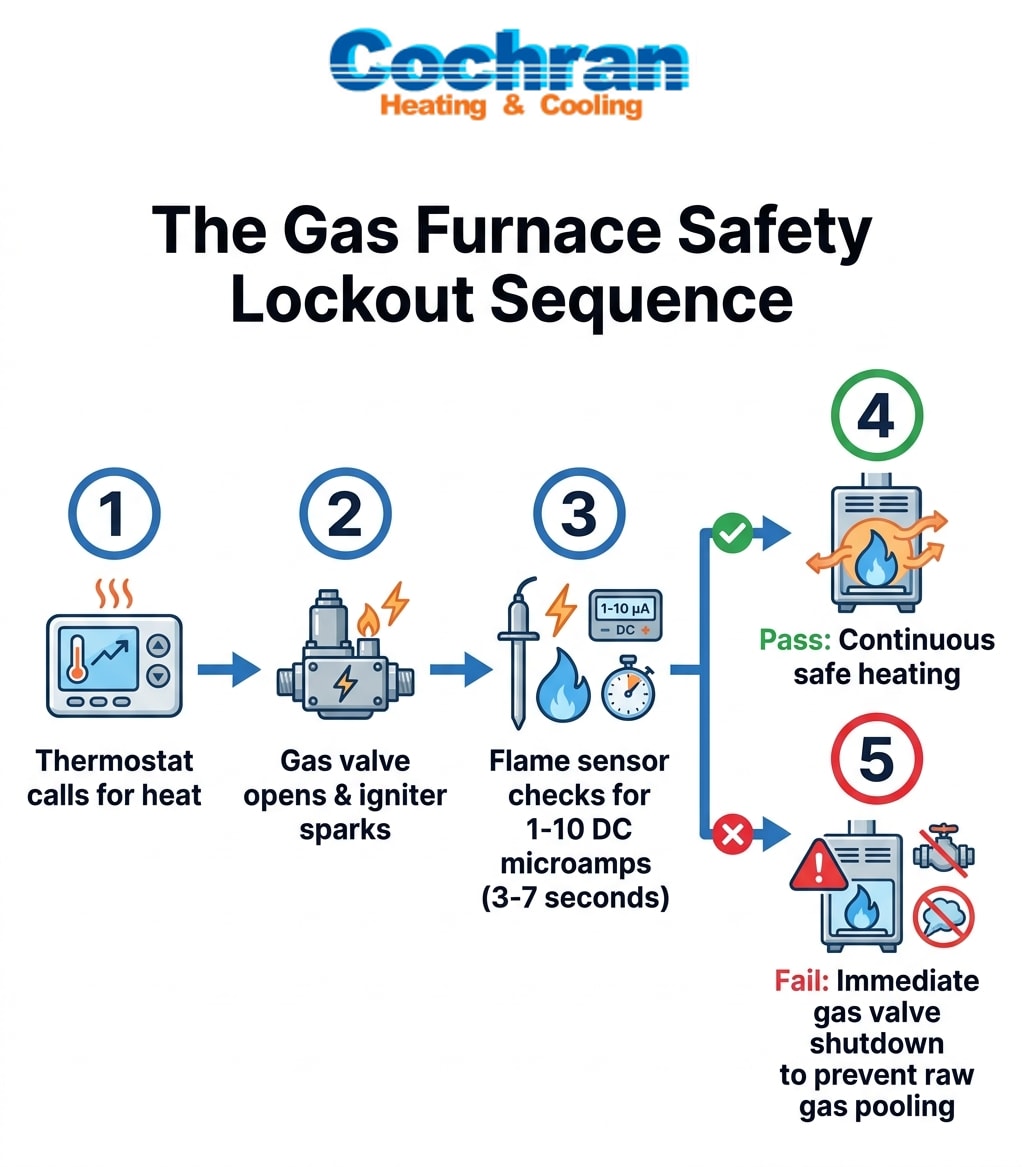
Every time your thermostat calls for heat, the furnace follows a strict, non-negotiable checklist. First, the inducer motor clears the heat exchanger of any lingering gases. Next, the pressure switch verifies there is proper airflow for safe venting. Then, the igniter warms up or begins sparking. Finally, the gas valve opens, releasing highly combustible fuel into the burner assembly.
Once the gas valve opens, a strict timer begins. The control board gives the flame sensor roughly three to seven seconds to detect a flame. If the sensor registers the DC microamp current within that window, the heating cycle continues normally. If it does not, the system aborts the mission.
The Catastrophic Alternative
What would happen if the flame sensor did not exist, or if it failed to trigger a shutdown? If the igniter failed to light the burners, or if the burners blew out, the gas valve would remain open, continuously pouring raw, unburned fuel into the combustion chamber. This gas would rapidly pool inside the heat exchanger. Eventually, it would spill out of the burner compartment, seep into your ductwork, and leak directly into your home's living spaces.
The accumulation of raw gas creates an immense risk of explosion or severe carbon monoxide-like poisoning. By shutting down the gas valve the instant the flame signal drops, the sensor prevents this catastrophic alternative from ever occurring.
The Safety Lockout
If the sensor fails to read the microamps, the control board closes the gas valve and runs the blower fan to clear out any unburned fuel. It will typically try this ignition sequence two or three more times. If it fails consecutively, the board initiates a "hard lockout." This shuts down the entire system for a set period—usually an hour—or until the homeowner resets the power. While a lockout is undoubtedly inconvenient on a freezing night, it is the ultimate proof that your safety protocols are working exactly as designed.
The Culprit: How Carbon and Silica Buildup Blind the Sensor
If the burners are clearly lighting, but the system still shuts down after three seconds, the flame sensor is almost certainly "blinded." The sensor rod sits directly in the path of a roaring fire for hundreds of hours every winter. Over months of combustion, the rod becomes coated in microscopic layers of byproducts.
The Insulating Layer of Buildup
Natural gas burns very cleanly, but it is not perfectly pure. Trace amounts of carbon and soot naturally accumulate on the rod. Furthermore, the furnace pulls in combustion air from around your home. This air carries airborne silica (dust), laundry chemicals, pet dander, and volatile organic compounds (VOCs). When these particles hit the intense heat of the burner flame, they bake onto the metal sensor rod.
This baked-on layer of carbon and silica acts as a powerful electrical insulator. Because the microamp current relies on absolute precision, this thin layer of soot blocks the electrical signal from passing through the flame and back to the control board. The fire is burning, but the control board cannot "see" it.
The Dangers of DIY Cleaning
When homeowners learn that a dirty sensor is causing their heating issues, they often attempt to clean it themselves. This is highly discouraged and can lead to permanent equipment damage. Using improper materials, such as harsh sandpaper, emery cloth, or steel wool, creates microscopic grooves in the soft metal of the rod.
These scratches dramatically increase the surface area of the rod, giving future carbon and silica much more space to cling to. A sensor that was scratched with sandpaper will foul up significantly faster, turning a component that should last for years into one that fails every few months. Additionally, improper handling can crack the delicate porcelain base, which instantly grounds out the electrical signal and permanently ruins the sensor.
Connecting Buildup to Combustion Health
It is also important to note that excessive soot buildup is often a symptom of a broader combustion issue. Improper fuel-to-air mixtures, a lack of adequate combustion air, or a failing gas valve can cause the burners to produce excess carbon. If you notice your flames are not burning a crisp blue, this is a clear warning sign. You can learn more about these specific warning signs by decoding a yellow flame on your gas furnace.
• Clean & Calibrated — Microamp Reading: 2.0 to 10.0 DC — Furnace Behavior: Continuous, reliable heating cycle
• Moderate Carbon Buildup — Microamp Reading: 1.0 to 1.5 DC — Furnace Behavior: Occasional short-cycling, unreliable heat
• Heavy Silica/Soot Coating — Microamp Reading: Below 0.5 DC — Furnace Behavior: Immediate shutdown after 3 seconds (Lockout)
• Cracked Porcelain Base — Microamp Reading: 0.0 DC (Grounded) — Furnace Behavior: Total failure to recognize flame
Beyond Wiping it Down: Why Professional Microamp Testing Matters
Resolving a furnace lockout requires significantly more than just wiping soot off a metal rod. True safety and reliability require verifying the electrical integrity of the entire flame rectification circuit. This is where professional diagnostics separate a temporary fix from a guaranteed solution. At Cochran Heating & Cooling, our commitment to safety means we don't just wipe the sensor and leave; we verify the exact microamp readings against the manufacturer's strict safety specifications to guarantee safe, reliable operation.
When a licensed technician arrives to address a short-cycling furnace, they follow a rigorous testing protocol:
1. Visual Inspection and Safe Removal: The technician safely isolates the power and carefully extracts the sensor without damaging the fragile porcelain insulator or the surrounding burner assembly.
2. Specialized Cleaning: Using industry-approved, non-abrasive materials, the technician removes the baked-on carbon and silica without scoring the metal rod.
3. In-Series Multimeter Testing: This is the most critical step. The technician connects a specialized digital multimeter in series with the sensor wire. This means the electrical current must flow entirely through the meter before reaching the control board, allowing the technician to read the exact DC microamp draw while the furnace is firing.
4. Verification Against Specifications: The technician compares the live reading to the data plate specifications. If the reading falls below the manufacturer's safety threshold (often below 1.5 microamps), it indicates that the sensor's internal metallurgy is breaking down, or the control board itself is failing to process the signal, requiring component replacement.
This level of diagnostic precision is a standard, non-negotiable part of professional furnace repair. Guessing whether a sensor is clean enough based on visual appearance alone leaves your home vulnerable to another sudden shutdown the very next night.
Catching Sensor Issues Before the Winter Freeze Hits
The most effective way to handle a furnace lockout is to prevent it from happening in the first place. Transitioning from reactive emergency repairs to proactive care is the key to maintaining uninterrupted comfort. In Jeannette and the one-hour service envelope, scheduling maintenance in autumn ensures your system is ready long before the rapid temperature drops hit our local communities.
The Role of Fall Tune-Ups
Flame sensor cleaning, calibration, and microamp testing are core components of annual fall tune-ups. During this comprehensive visit, a technician addresses the microscopic carbon buildup that accumulated at the end of the previous winter. By clearing this insulation away before the heavy heating season begins, the sensor is restored to peak sensitivity.
This proactive care provides immense assurance. Knowing that your safety mechanisms have been rigorously tested and verified before the extreme cold arrives allows you to trust your heating system when you need it most.
Protecting the Control Board
Beyond preventing a cold night, proactive sensor care extends the overall lifespan of your entire furnace. When a dirty sensor causes the system to ignite, shut down, and restart repeatedly, it places tremendous strain on the inducer motor, the hot surface igniter, and the electrical relays on the main control board. This rapid cycling generates excess heat and wear and tear on expensive components.
Investing in routine preventative maintenance is the most cost-effective way to protect the heart of your heating system. It stops the cascading failures that begin with a simple layer of soot, ensuring your equipment operates smoothly and efficiently throughout the entire season.
Frequently Asked Questions About Furnace Safety Mechanisms
Why does my gas furnace ignite and then shut off immediately?
This is typically a flame sensor lockout. When the furnace ignites, the sensor has roughly three to seven seconds to detect the fire. If it fails to detect the flame due to carbon buildup or a mechanical fault, it prompts the main control board to shut down the gas flow immediately for your safety.
What happens if a flame sensor goes bad?
The furnace will consistently short-cycle, igniting for just a few seconds before turning off completely. Eventually, after several failed attempts to verify the flame, the control board will initiate a hard lockout. This requires a complete system reset and professional diagnosis to restore functionality.
Can a dirty flame sensor cause a gas leak?
No, a dirty flame sensor actually prevents a gas leak from occurring. By shutting down the system when it cannot verify a flame, it actively stops raw, unburned gas from flowing into the combustion chamber and leaking into your home.
Is it dangerous if my furnace keeps shutting off?
The shut-off itself is a protective measure keeping you safe from gas accumulation. However, ignoring the underlying issue and continually resetting the furnace at the breaker can strain electrical components, wear out the igniter, and eventually lead to a total loss of heat during freezing weather.
How often should a furnace flame sensor be cleaned?
It should be inspected, cleaned, and electrically tested annually by a licensed professional. This procedure is typically performed during standard pre-winter preventative maintenance to ensure the system is prepared for the heavy demands of the upcoming heating season.
Ensure Your Furnace is Ready to Protect Your Home
A functioning flame sensor is the ultimate safeguard against dangerous gas buildups in your home. While a sudden shutdown can be jarring, recognizing it as a critical safety feature allows you to address the root cause calmly and effectively. As the winter weather approaches, prioritize the safety and reliability of your heating equipment. We invite you to explore professional maintenance options to ensure your safety protocols are fully calibrated, keeping your home warm, secure, and protected all season long.