What Happens to Your AC Air Purification System When the Fan Stops Running
The Hidden Cause of Stuffy Fall Air
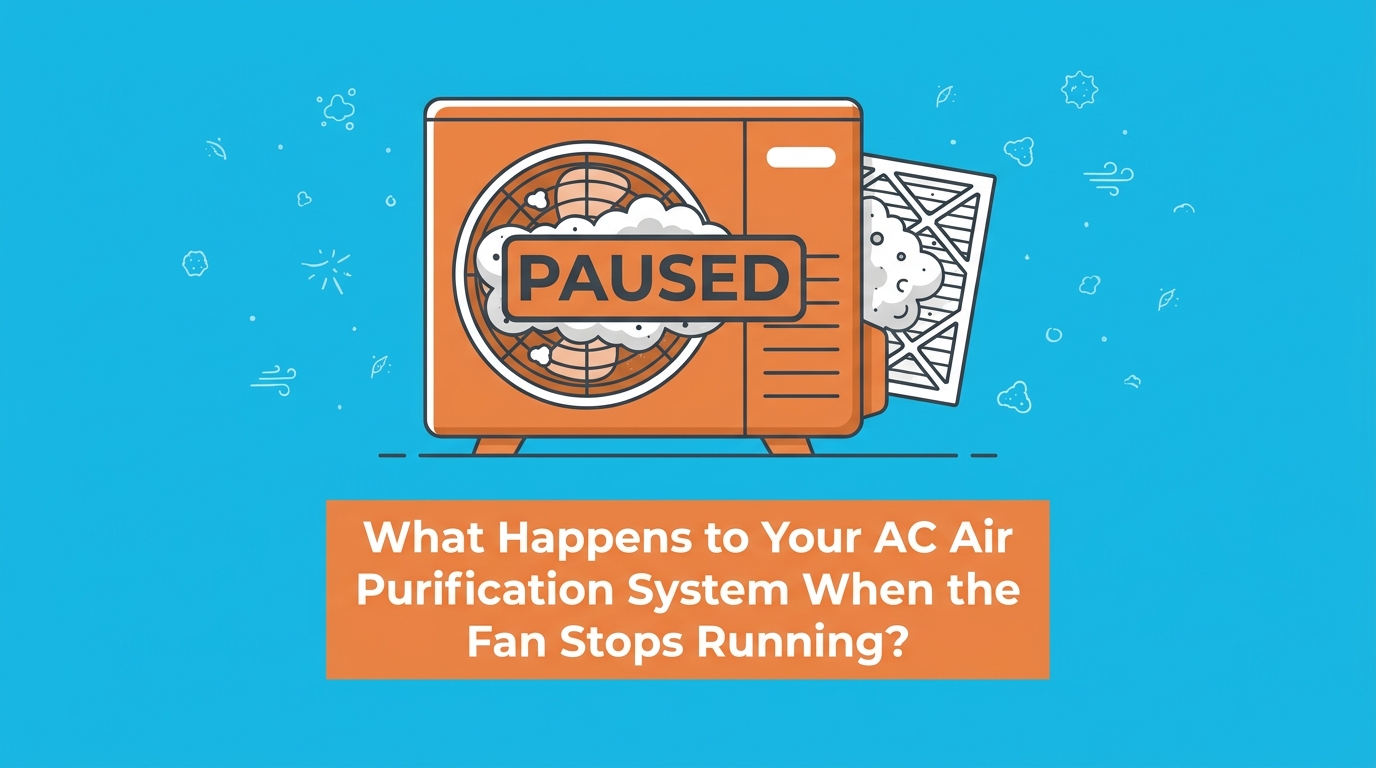
You wake up with a scratchy throat, notice lingering cooking odors from the night before, and see a fresh layer of dust settling on your furniture. If you have ever wondered exactly what happens to your AC air purification system when the fan stops running, the short answer is that the purification process halts completely. Here at Cochran Heating & Cooling, our team frequently hears from Jeannette homeowners who experience a sudden, frustrating drop in their indoor air quality when the early fall weather arrives, often assuming their expensive filtration equipment has broken. In reality, the equipment is likely functioning perfectly, but it is being starved of the one resource it needs to operate: active airflow.
To fully optimize your home's indoor air quality, understanding the mechanical relationship between your blower motor and your filtration equipment is the necessary first step.
A common misconception is that air purifiers work passively, hovering in the background to snatch pollutants out of the air. In truth, in-duct air cleaners rely entirely on the HVAC system's blower motor to physically pull air through the filtration media. When the system isn't actively heating or cooling, the air inside your living spaces stagnates. This stagnation leaves the purifier without the necessary airflow to capture microscopic particles, dust, and allergens. During the mild September and early fall weather in Pennsylvania, a pattern we see often is this mechanical dependency becoming glaringly obvious.
If you suspect your system is suffering from seasonal stagnation, there are a few distinct signs to watch for inside your living spaces:
• Lingering household odors: Smells from cooking, pets, or cleaning products take significantly longer to dissipate when the air is not being actively turned over.
• Rapid dust accumulation: Without the blower fan pulling airborne particulate into the filter, dust settles quickly onto hard surfaces and electronics.
• Spikes in allergy symptoms: Pet dander, pollen, and mold spores remain suspended in the breathing zone rather than being trapped by your in-duct media.
• Uneven room temperatures: Stagnant air often leads to noticeable warm or cool spots, particularly in multi-story homes where air naturally stratifies.
The Mechanics of In-Duct Air Cleaning
Whole-home purifiers are integrated directly into your existing ductwork, strategically positioned between the return air ducts and the central air handler. Unlike portable, standalone units that you plug into a wall outlet, these sophisticated systems do not possess their own internal fans. They are entirely parasitic, meaning they depend 100% on the main HVAC blower motor to function. Whether you have a thick media cabinet, a high-efficiency electronic air cleaner, or an ultraviolet (UV) germicidal lamp, the underlying mechanical reality remains exactly the same.
Active mechanical circulation is strictly required to achieve the stated MERV (Minimum Efficiency Reporting Value) or CADR (Clean Air Delivery Rate) efficiency ratings of any in-duct filter. Manufacturers calculate these performance metrics based on a specific volume of air moving across the filter at a specific velocity. If the blower motor stops, the purification process immediately halts because no new air is being introduced to the cleaning zone. This is why having your thermostat fan set to AUTO vs ON makes such a massive difference in how clean your breathing air actually is.
Understanding this dependency allows you to maximize the effectiveness of your existing equipment. In our experience serving Westmoreland County, a pattern we see often is homeowners investing in premium indoor air products and purifiers, only to leave them idle for weeks at a time, defeating their purpose. The hardware is only as effective as the airflow management strategy driving it.
How Airflow Powers Purification
To grasp why your ac air purification system requires continuous mechanical support, it helps to break down the physical journey of the air traveling through your home. The process is continuous and sequential, and breaking the chain at any point stops the purification cycle.
1. The Return Phase: The blower motor creates negative pressure, pulling stale, contaminated air from your rooms into the return grilles and down through the ductwork.
2. The Filtration Phase: The moving air is forced through the purification system. Here, dense media fibers trap particulate matter, electronic grids capture charged particles, or UV lights neutralize biological contaminants.
3. The Conditioning Phase: The freshly cleaned air passes over the evaporator coil or heat exchanger to be cooled or warmed to your desired temperature.
4. The Supply Phase: The blower motor pushes this clean, conditioned air back into your living spaces through the supply vents, displacing the older air and starting the cycle over again.
Passive air quality simply does not exist with in-duct models. If the fan is off, the air in your living room stays in your living room, completely bypassing the expensive filtration technology sitting in your basement or utility closet.
The 'Shoulder Season' Effect on Indoor Air Quality
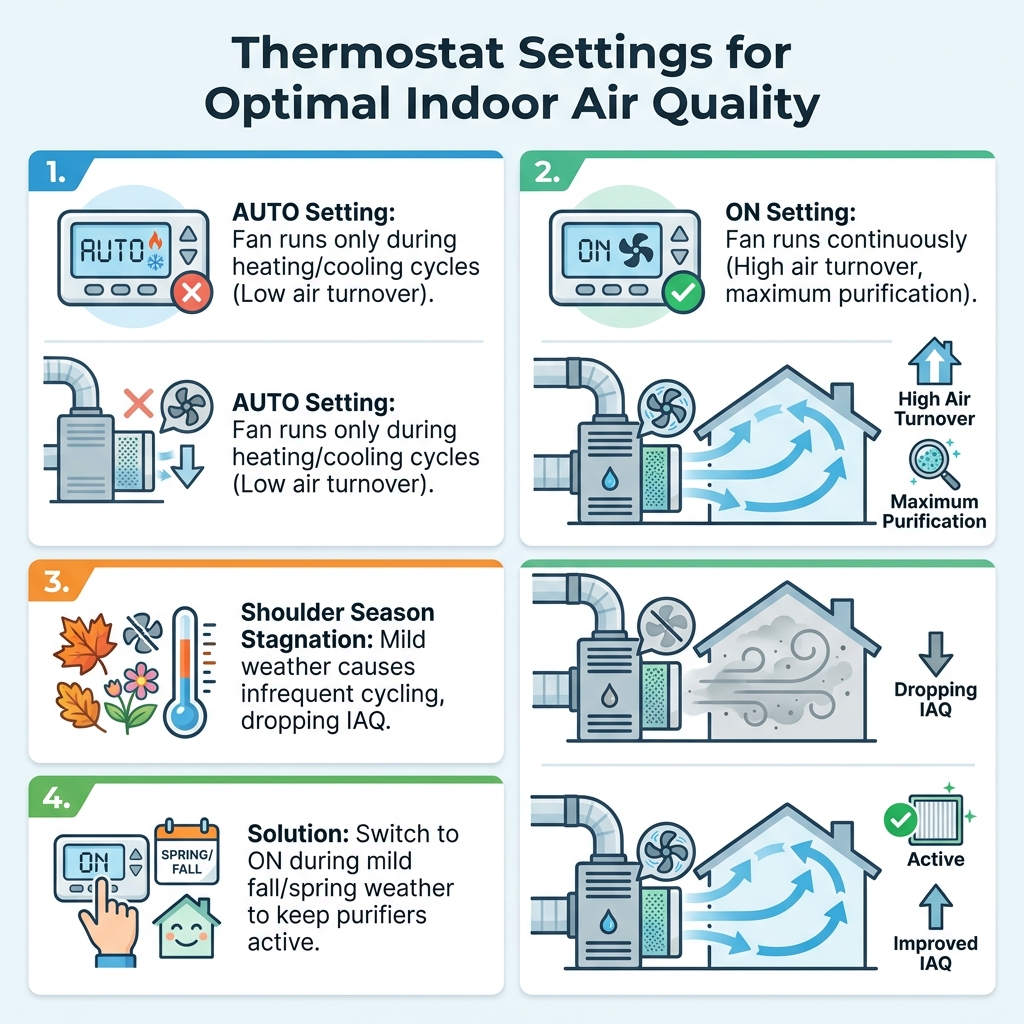
Connecting the mechanical reality of your system to the seasonal conditions outside explains why indoor air quality issues often feel sudden and unpredictable. During transition seasons—often referred to as the "shoulder seasons"—the temperature indoors frequently matches the thermostat setting. Because the house is naturally comfortable, the air conditioner or furnace rarely receives a signal to kick on.
This infrequency leads to severe shoulder season stagnation, sharply reducing the natural air turnover rate inside the home. Without active air turnover, indoor pollutants, volatile organic compounds (VOCs), dust mites, and seasonal allergens remain trapped in the living space. They never make it to the purifier. Our technicians typically see this phenomenon peak during the mild September and early fall weather in Pennsylvania, when homeowners often open windows during the day and close them at night, introducing outdoor allergens that then have nowhere to go.
The Impact of Modern Home Construction:
We've noticed that homes built or renovated in Jeannette, PA are tightly sealed with advanced insulation and weatherstripping to protect against both freezing winters and humid summers. While this tight thermal envelope is fantastic for energy efficiency, it severely limits natural ventilation. A drafty older home might passively exchange indoor and outdoor air through gaps in the windows, but a modern, energy-efficient home acts like a sealed plastic bag. When natural ventilation is practically zero, active mechanical circulation becomes absolutely essential to keep the indoor environment healthy and breathable.
Thermostat Settings: The AUTO vs. ON Debate
The most actionable solution to shoulder season stagnation is already mounted on your living room wall. Your thermostat dictates exactly how your blower motor behaves, and understanding the difference between the two primary fan settings is the key to managing your indoor air quality. The debate regarding whether to keep your thermostat fan set to AUTO vs ON usually comes down to balancing energy efficiency with respiratory health.
The 'AUTO' setting means the fan only runs during an active heating or cooling cycle. Once the target temperature is reached, the fan shuts off. This is highly energy-efficient but detrimental to air quality during mild weather when cycles are few and far between. Conversely, the 'ON' setting forces the blower fan to run continuously, regardless of whether the system is heating or cooling. This simple, no-cost adjustment ensures that air is constantly pulled through the purification setup, instantly resolving shoulder season air quality drops. When you schedule pre-heating-season tune-ups or routine air conditioning services with us, our technicians will always check these settings to ensure your system is configured correctly for the upcoming fall transition.
• Airflow Turnover — AUTO Setting: Intermittent (only during cycles) — ON Setting: Continuous (24/7 circulation)
• Filtration Impact — AUTO Setting: Low to Moderate — ON Setting: Maximum Purification
• Energy Usage — AUTO Setting: Lowest — ON Setting: Slightly Higher
• Best Season to Use — AUTO Setting: Peak Summer / Peak Winter — ON Setting: Mild Spring / Early Fall
When to Use AUTO
The AUTO setting is highly effective during the peak of summer or the dead of winter. During extreme temperatures, our team recommends this setting because your HVAC system cycles frequently enough to maintain optimal air quality naturally. Furthermore, keeping the fan on AUTO during hot, humid summer months is necessary for proper dehumidification. If you run the fan continuously while the AC compressor cycles off, the moving air can actually re-evaporate moisture from the indoor coil and blow it back into your home, increasing indoor humidity.
When to Use ON
Switching your fan to the ON position is ideal for mild weather when the system rarely cycles for temperature control. This setting is crucial for households with high allergy sensitivities, asthma sufferers, or active in-duct purifiers. By forcing the air to circulate, you ensure that your premium filtration media is constantly capturing airborne contaminants, keeping the indoor environment fresh and clean even when the heating and cooling functions are dormant.

Does Continuous Fan Operation Harm Your HVAC System?
A frequent concern we hear from our customers is the potential for mechanical damage or skyrocketing utility bills. Many worry that running the fan continuously will burn out the motor prematurely or cause unnecessary wear and tear. While keeping the thermostat fan set to AUTO vs ON does change how the equipment operates, modern HVAC technology is specifically designed to handle continuous circulation.
Modern variable-speed ECM (Electronically Commutated Motor) blower motors are engineered for continuous, low-speed operation. Unlike older, single-stage PSC (Permanent Split Capacitor) motors that consume a significant amount of electricity and run at full blast every time they turn on, an ECM motor can throttle down to a highly efficient trickle. Running an ECM motor continuously uses a fraction of the electricity of older models, making 24/7 air circulation a highly viable and affordable strategy for maintaining indoor air quality.
Beyond air purification, continuous circulation provides several secondary mechanical benefits. It helps balance temperatures between different floors of the home, eliminating hot and cold spots. It also reduces the initial strain on the system when a heating or cooling cycle does begin, as the air is already in motion. If you ever experience sudden mechanical failures, knowing who to call for emergency AC repair in Westmoreland County is important, but simply running your fan continuously will not be the cause of a breakdown.
If you choose to run your fan continuously, you must adapt your maintenance habits accordingly:
1. Accelerated Filter Loading: Because the system is capturing debris 24/7, your air filters will fill up significantly faster. A filter rated for 90 days may need replacement every 45 to 60 days when the fan runs constantly.
2. Monitor Indoor Humidity: Keep an eye on your home's humidity levels. If you notice the air feeling clammy or damp, switch back to AUTO temporarily to allow the system to drain condensation properly.
3. Listen for Unusual Noises: While continuous operation is safe, any grinding, squealing, or rattling sounds from the blower compartment should be evaluated by a professional immediately.
Evaluating Your Current Air Purification Setup
When poor indoor air quality strikes during mild weather, the immediate reaction is often to assume the air purifier has failed. However, poor indoor air quality during transition seasons is usually an airflow management issue, not a broken purifier. Before assuming your equipment needs to be replaced or upgraded, it is highly recommended to verify that your fan settings are optimized and your filters are clean.
At Cochran Heating & Cooling, our family-owned team prioritizes transparent expertise over aggressive sales tactics. We prefer to educate you on free thermostat adjustments to solve your IAQ problems rather than defaulting to an expensive upsell. If you are struggling with poor air quality during the mild September and early fall weather in Pennsylvania, having our professionals perform a thorough evaluation of your existing setup is the most logical next step.
Routine inspections ensure the blower motor is operating at the correct CFM (cubic feet per minute) to support the purifier. If the blower is underperforming due to a dirty squirrel cage, restricted ductwork, or a failing capacitor, the air purifier will never reach its full potential. Enrolling in a comprehensive HVAC maintenance plan guarantees that these vital airflow metrics are measured and calibrated seasonally.
What a professional evaluation entails:
• Static Pressure Testing: Measuring the resistance inside the ductwork to ensure the blower motor is moving enough air to satisfy the purifier's CADR rating.
• Filter Media Inspection: Checking for bypass air (air slipping around the edges of the filter) and ensuring the correct MERV rating is being used for your specific blower motor.
• Thermostat Calibration: Verifying that the thermostat is sending the correct signals to the air handler for both continuous fan and active conditioning cycles.
• Motor Health Assessment: Checking the amperage and voltage of the blower motor to confirm it can safely handle continuous operation without overheating.
Take Control of Your Home's Airflow This Season
Your air purification system is a powerful tool for maintaining a healthy home, but it is only as effective as the air moving through it. By understanding the mechanical relationship between your blower fan and your in-duct purifier, you can maintain clean, breathable air year-round, regardless of the temperature outside.
Adjusting your thermostat settings during mild transition weather is a simple, effective way to breathe easier and maximize the return on your indoor air quality investments. Whether you decide to keep your thermostat fan set to AUTO vs ON depends entirely on your home's specific needs, but having the knowledge to make that choice puts you in control. Local experts are always available to help you evaluate your equipment, measure your airflow, and optimize your system for maximum comfort, health, and efficiency.
Frequently Asked Questions
Does my air purifier work if the AC is off?
No, an in-duct air purifier does not work if the HVAC system's blower fan is off. Whole-home purifiers rely entirely on the main blower motor to pull air through the filtration media or UV lights. If the air is not actively circulating through the ductwork, the purifier cannot capture or neutralize airborne contaminants in your living spaces.
Should I set my thermostat to ON for better air quality?
Yes, setting your thermostat to ON forces the blower fan to run continuously, which significantly improves indoor air quality. This constant circulation ensures that air is continually pulled through your filtration system, capturing dust and allergens 24/7. This setting is especially beneficial during mild weather when the heating or cooling cycles are infrequent.
Do whole house air purifiers run constantly?
Whole house air purifiers only run constantly if you configure your thermostat fan setting to the ON position. If your thermostat is set to AUTO, the purifier will only clean the air during active heating or cooling cycles. To achieve continuous purification, you must command the blower motor to operate continuously.
How do I circulate air in my house without AC?
You can circulate air throughout your home without running the air conditioning by switching your thermostat fan setting from AUTO to ON. This activates the blower motor to move air through the ductwork without engaging the outdoor AC compressor. It is a highly effective way to filter the air and balance room temperatures during mild weather.
Will running the HVAC fan constantly increase my energy bills?
Running the fan constantly will cause a slight increase in electricity usage, but the exact impact depends on the type of blower motor you have. Modern variable-speed ECM motors are highly efficient and use very little power when running continuously on low speeds. Older single-stage PSC motors consume more electricity, so the cost difference will be more noticeable with older equipment.
Why does my home feel stuffy during mild fall weather?
Your home feels stuffy during mild fall weather because the indoor temperature is comfortable, meaning your HVAC system rarely turns on to heat or cool the space. This lack of cycling leads to stagnant air, allowing dust, odors, and allergens to build up in the living areas. Switching your fan to the ON position restores airflow and eliminates the stuffiness.