Why Your AC Isn't Blowing Cold Air
Why Your AC Isn't Blowing Cold Air
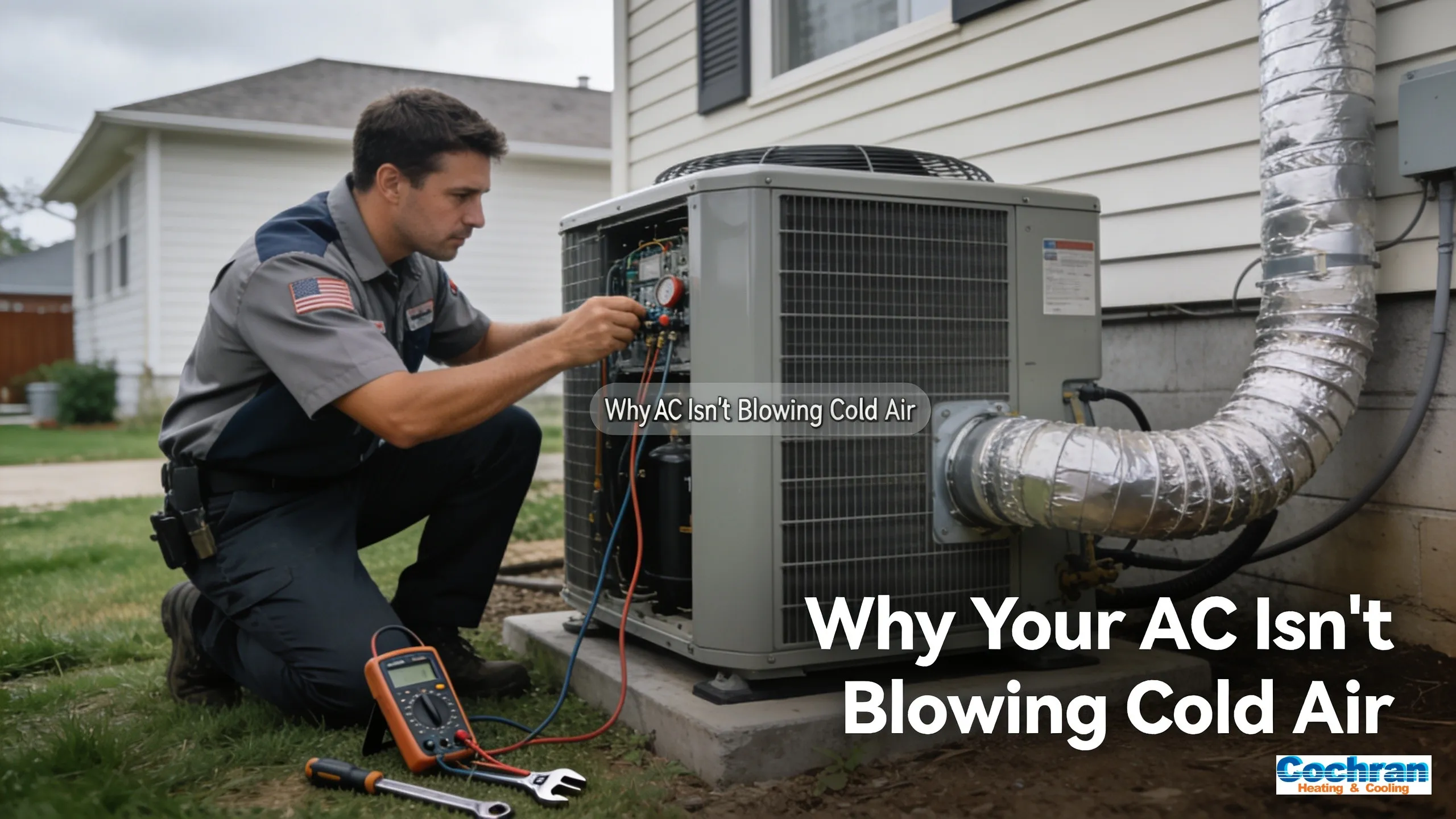
When your home stops feeling cool, the problem almost always comes down to one of four culprits: a dirty air filter, low refrigerant, a frozen evaporator coil, or a faulty compressor. At Cochran Heating and Cooling, we have spent over 35 years helping homeowners in Jeannette, PA pinpoint exactly which of these issues is responsible — and restoring their comfort as quickly as possible. Whether the fix is as simple as swapping a filter or as involved as locating a refrigerant leak, our team diagnoses root causes rather than masking symptoms. Military members and seniors aged 65 and older receive a discount on parts during service calls, and every repair we complete is backed by clear documentation and warranty-covered workmanship.
Key Takeaways
- A dirty air filter restricts airflow and is one of the most common reasons an AC blows warm air instead of cold. Replacing a clogged filter costs very little and is the single fastest fix a homeowner can perform before reaching out to our team.
- Refrigerant leaks quietly reduce cooling capacity over days or weeks before the drop becomes obvious indoors. A certified HVAC technician must locate and seal the leak before recharging the system — recharging without finding the source only delays the same problem from returning.
- Cochran Heating and Cooling has been diagnosing and repairing AC systems in Jeannette, PA for over 35 years, and our experience means we identify underlying causes rather than surface symptoms on every visit. Homeowners who describe their symptoms accurately help us arrive prepared with the right parts and resolve the problem on the first call.
- An AC that hums but won't cool, ice forming on refrigerant lines, or a system that short-cycles are all signs that professional service is needed rather than further DIY troubleshooting. Continuing to run the system under those conditions accelerates wear on the compressor and drives up the cost of the eventual repair.
What Do You Need Before Starting?
Effective air conditioner troubleshooting begins with understanding two foundational realities: an AC system is a network of interdependent parts, and Jeannette, PA's hot, humid summers make a failed system a genuine health and comfort risk. Skipping preparation wastes time and leaves the root cause unresolved. Cochran Heating and Cooling has served homeowners in Jeannette, PA for over 35 years, and that experience confirms one consistent pattern: homeowners who gather the right information before starting resolve problems faster and avoid repeat failures.
Why Does an AC System Fail in More Than One Place?
An air conditioning system contains many components that operate as a single unit. When one part fails, the failure cascades — a blocked filter strains the blower, overworks the compressor, and produces warm air from AC vents. Addressing only the visible symptom without understanding the system leaves the underlying cause intact.
What Information Should Homeowners Gather First?
Before beginning any diagnostic steps, collect the following:
- Note the symptom precisely — record whether the system runs but produces AC not cold air, or whether airflow has stopped entirely. The more precisely you can describe the symptom to our team, the faster we can pinpoint the cause.
- Locate the thermostat settings — confirm the system is set to "cool" and the temperature is set below the current room temperature. An incorrect mode setting is one of the most common and easily resolved causes of warm air from AC vents.
- Identify the unit's age and service history — recent maintenance records reveal patterns that point toward likely failure points. If your system has not been serviced recently, that gap in maintenance may itself be contributing to the problem.
- Check circuit breakers — confirm power reaches both the indoor air handler and the outdoor condenser unit. A tripped breaker is a quick check that resolves a surprising number of service calls before any hands-on inspection begins.
Cochran Heating and Cooling recommends completing all four steps before proceeding to component-level inspection. Reaching out to our AC repair team with this information in hand lets us begin diagnosis immediately on arrival.
Is Your Thermostat Set Correctly?
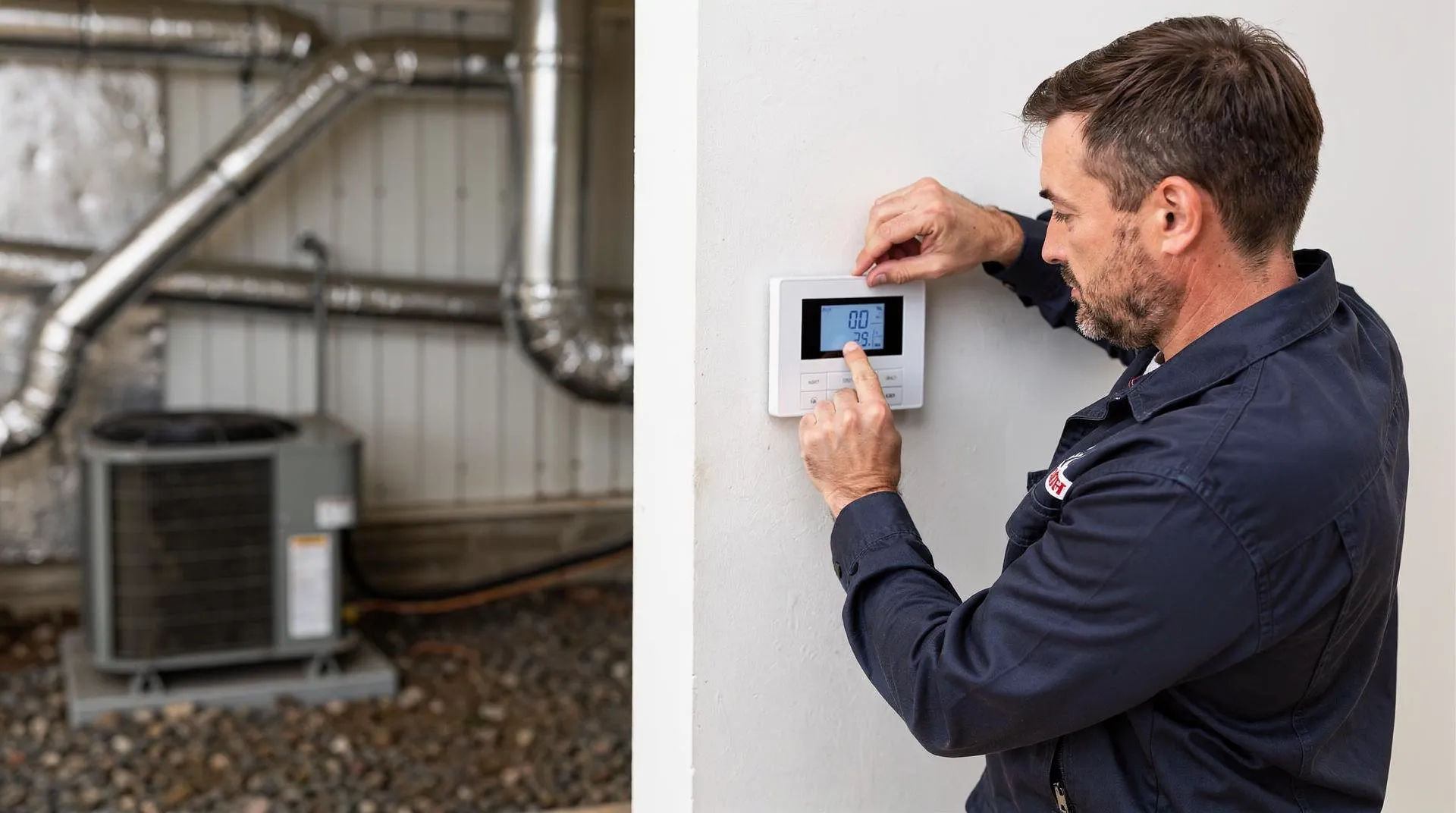
Air conditioner troubleshooting begins with the thermostat — the simplest and most overlooked starting point when an AC system stops delivering cold air. A misconfigured thermostat setting produces warm air from AC vents even when the system appears to be running normally, wasting energy and leaving your home uncomfortable. Skipping the thermostat check means missing the most straightforward fix available before any deeper diagnosis is needed, and our team at Cochran Heating and Cooling always starts here before moving on to more involved components.
What thermostat setting causes warm air to blow from AC vents?
A thermostat set to "fan only" rather than "cool" circulates unconditioned air throughout the home. The fan runs and airflow is present, but no cooling occurs — the result is AC not cold air reaching your living spaces. Switching the mode from "fan" to "cool" resolves this issue immediately.
How do we check and correct the thermostat setting?
Before beginning, confirm the thermostat display is powered on and responsive.
- Locate the thermostat mode selector on the display or control panel. If the display is unresponsive, check that the unit has power and that batteries are not depleted.
- Confirm the mode is set to "Cool", not "Fan" or "Heat". A mode set to "Fan" is the single most common thermostat-related cause of warm air blowing from AC vents.
- Set the target temperature at least a few degrees below the current room temperature. The system will not engage the cooling cycle if the set point is already at or above the room reading.
- Listen for the outdoor condenser unit to engage within a few minutes. If the condenser does not start, the problem lies beyond the thermostat setting.
- Hold your hand near a supply vent to confirm cold air is now flowing. If cold air still does not return after completing these steps, contact Cochran Heating and Cooling — the system requires professional diagnostic evaluation by our team.
How Do You Inspect the Air Filter?
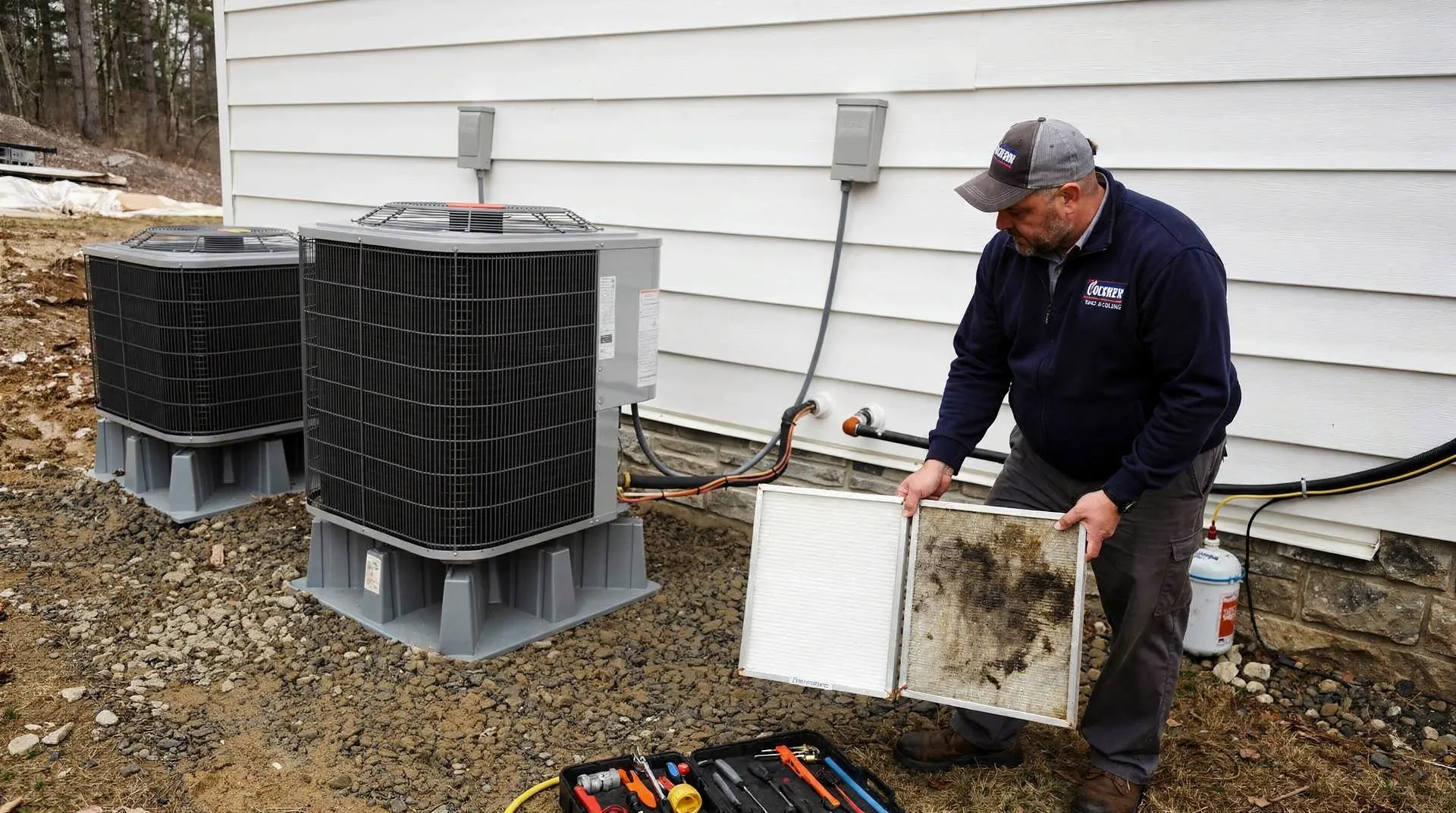
Air conditioner troubleshooting begins with the air filter — the single most accessible component in any residential HVAC system. A blocked filter restricts airflow through the entire system and is a leading cause of warm air from AC vents even when the unit is running. Cochran Heating and Cooling handles airflow problems as part of our comprehensive AC repair services, covering everything from refrigerant and electrical issues to compressor and airflow restrictions. Skipping a filter inspection means leaving the most common culprit unchecked, and an AC not cold situation only worsens the longer a clogged filter stays in place. Prerequisites: Locate your system's air handler or furnace cabinet before beginning. Turn the system off at the thermostat.
- Turn off the HVAC system at the thermostat to prevent unfiltered air from circulating during the inspection. Never skip this step — running the system without a filter in place can pull debris directly into the evaporator coil.
- Locate the filter slot, typically found on the return-air side of the air handler or inside the furnace cabinet. If you are unsure where the filter is located, our team at Cochran Heating and Cooling can walk you through it when you get in touch.
- Slide the filter out carefully, keeping the dirty face away from clean surfaces. A heavily loaded filter may shed debris, so handle it over a trash bag when possible.
- Hold the filter up to a light source. If light does not pass through the filter media, the filter is clogged and restricts airflow. A clogged filter forces the system to work harder than designed, accelerating wear on every connected component.
- Replace a clogged filter with a new one of the same size and MERV rating before restarting the system. Using the correct MERV rating ensures proper filtration without over-restricting airflow in systems not designed for high-density media.
Why Does a Dirty Filter Cause Warm Air From the AC?
A clogged filter blocks the volume of air moving across the evaporator coil. Without adequate airflow, the coil cannot transfer heat efficiently, and the system delivers inadequately cooled air to living spaces.
When Should Homeowners Call a Professional for Filter-Related Airflow Issues?
If replacing the filter does not restore normal cooling, additional airflow problems may exist deeper in the system. Cochran Heating and Cooling provides preventative maintenance services to homeowners in Jeannette, PA, diagnosing root causes that a filter swap alone cannot resolve.
How Do You Check the Outdoor Condenser Unit?
Checking the outdoor condenser unit requires a systematic inspection of multiple components. AC not cold conditions often trace back to a single failed part within a complex system, and skipping a thorough condenser inspection leaves the root cause unresolved — repeat breakdowns follow. Cochran Heating and Cooling approaches every air conditioner troubleshooting call by diagnosing root causes, not just surface symptoms. An AC system is comprised of numerous components, and one failed part is all it takes to produce warm air from AC vents throughout your home. Prerequisites: Shut off power to the outdoor unit at the disconnect box before beginning any hands-on inspection.
Steps to Inspect the Outdoor Condenser Unit
- Clear the area around the unit. Remove any debris, vegetation, or obstructions within at least two feet of the condenser on all sides. Restricted airflow around the condenser prevents proper heat dissipation, which forces the entire system to work harder and reduces cooling efficiency.
- Inspect the condenser coils. Look for visible dirt buildup, bent fins, or physical damage that restricts airflow and heat transfer. Severely bent or clogged fins significantly reduce the condenser's ability to release heat, and professional cleaning or fin straightening may be required.
- Check the condenser fan. Confirm the fan blade spins freely and shows no cracks or warping. A fan blade that wobbles or does not spin freely indicates a bearing or motor issue that requires professional attention.
- Examine electrical connections. Look for burnt wiring, corrosion, or loose terminals at the disconnect box and unit panel. Electrical damage at the condenser is a safety hazard and should never be handled without proper equipment and training.
- Listen for abnormal sounds. Restore power briefly and note any grinding, rattling, or clicking that signals a mechanical failure. Unusual sounds during operation are among the clearest indicators that a component has reached the end of its service life.
- Document every finding. Record each observed issue before contacting Cochran Heating and Cooling for professional repair. Thorough documentation helps our team arrive prepared with the right parts and tools, making the first visit as efficient as possible.
Why Does the Condenser Unit Cause Warm Air From AC Vents?
The condenser unit releases heat absorbed from inside the home. When condenser components fail, the system cannot complete the heat-exchange cycle, and cooled air never reaches interior vents.
When Should a Professional Inspect the Condenser?
Cochran Heating and Cooling recommends professional inspection whenever a visual check reveals electrical damage, refrigerant oil stains, or persistent operational noise. Our comprehensive HVAC solutions restore energy-efficient, comfortable operation throughout Jeannette, PA homes year-round.
How Do You Identify a Refrigerant Problem?
AC not cold despite the system running is one of the clearest signs of a refrigerant issue. Ignoring warm air from AC vents means the underlying leak continues to worsen, leaving your home without reliable cooling when temperatures peak. Refrigerant is the substance that absorbs heat from indoor air and transfers it outside. When the sealed, pressurized system develops a leak, refrigerant levels drop and the air passing through the system never gets properly cooled. At Cochran Heating and Cooling, air conditioner troubleshooting for refrigerant problems is a standard part of our AC repair services in Jeannette, PA — we handle refrigerant issues alongside electrical faults, compressor failures, and airflow restrictions.
What Are the Warning Signs of Low Refrigerant?
Watch for these indicators before the problem escalates:
- Warm or lukewarm air blowing from supply vents despite the system running at full speed. This symptom often appears gradually, as a slow leak steadily reduces refrigerant levels over days or weeks before the drop becomes noticeable indoors.
- Ice buildup on the refrigerant lines or evaporator coil, which may look like a light frost or a heavy accumulation depending on how long the leak has been active. Ice formation on these components is a direct result of the pressure drop caused by low refrigerant levels inside the system.
- Longer-than-normal cooling cycles with no improvement in indoor temperature, even after the system has been running for an extended period. When the system runs continuously without reaching the set temperature, it is compensating for reduced refrigerant capacity and working far harder than it should.
- A hissing or bubbling sound near the indoor or outdoor unit that was not present before. These sounds indicate refrigerant escaping from a breach in the sealed system and should prompt an immediate call to Cochran Heating and Cooling before the system is run further.
Any one of these symptoms warrants a professional inspection. A system running with low refrigerant works harder to compensate, accelerating wear on the compressor and driving up energy consumption.
Does Recharging Refrigerant Fix the Problem Permanently?
Recharging refrigerant restores proper levels, but recharging alone does not resolve the issue permanently. The underlying leak must be located and repaired — otherwise, refrigerant levels drop again and the same symptoms return. Our process at Cochran Heating and Cooling addresses both the recharge and the source of the leak, ensuring the repair holds. Prerequisite before proceeding: Confirm the system is powered off and the thermostat is set to "off" before any inspection near refrigerant lines.
- Check supply vents for warm air output while the system is actively running. If the air at the vent feels noticeably warmer than usual, document the temperature and note how long the system has been running.
- Inspect visible refrigerant lines for ice accumulation or oily residue, which indicates a leak point. Oily staining near line connections or the coil housing is a reliable visual signal that refrigerant has been escaping.
- Listen near the indoor unit for hissing sounds that signal escaping refrigerant. Even a faint hissing sound in this area warrants professional evaluation before the system is run further.
- Contact Cochran Heating and Cooling for a professional diagnosis — we provide upfront estimates and work backed by warranties on all refrigerant-related repairs.
How Do You Diagnose Electrical and Compressor Issues?
Diagnosing electrical and compressor problems requires a structured approach that separates homeowner-level checks from work that demands professional intervention. Skipping proper diagnosis when AC not cold conditions appear risks compounding damage, and a failed compressor left unaddressed can take an entire cooling system offline at the worst possible moment. Cochran Heating and Cooling handles the full spectrum of AC repair, from refrigerant and electrical faults to compressor and airflow failures. Knowing which steps fall within a homeowner's reach — and which do not — saves both time and money while protecting the system from further harm.
What Are the Prerequisites Before Starting Diagnosis?
Before beginning any air conditioner troubleshooting procedure, confirm the thermostat is set to "cool" and the temperature is set below the current indoor reading. Verify the circuit breaker serving the AC unit has not tripped. These two checks resolve a surprising number of service calls before any hands-on inspection begins.
What Steps Do We Follow to Isolate the Problem?
- Inspect the circuit breaker panel. Locate the breaker labeled for the AC or air handler and confirm it is fully in the "on" position. A tripped breaker is a clear electrical signal — reset it once, but if it trips again, contact Cochran Heating and Cooling rather than resetting it a second time.
- Check the disconnect box near the outdoor condenser unit for blown fuses or loose connections. Loose or corroded connections at the disconnect box are a common electrical fault that disrupts the condenser's ability to start.
- Listen at the outdoor unit. A compressor that hums but does not start points to a capacitor or electrical relay fault — not a mechanical compressor failure. This distinction matters because a capacitor replacement is far less costly than a full compressor replacement.
- Observe airflow at the vents. Warm air from AC vents combined with a running compressor often indicates a refrigerant or electrical issue rather than a mechanical one. Document what you observe before our team arrives so we can begin diagnosis immediately.
- Document all symptoms. Note sounds, smells, and the sequence of events before contacting our team. The more detail you can provide, the more efficiently we can diagnose and resolve the problem on the first visit.
Cochran Heating and Cooling provides clear documentation for every repair completed, covering parts, labor, and warranty terms, so homeowners in Jeannette, PA always understand exactly what was done and why.
When Should You Call a Professional Technician?
Air conditioner troubleshooting steps homeowners can handle — checking filters, resetting breakers, clearing debris — have clear limits. When an AC system produces warm air from AC vents despite those basic checks, or stops operating entirely, delaying professional service causes compressor damage, refrigerant loss, and indoor air quality failures that compound repair complexity. Cochran Heating and Cooling provides prompt, professional air conditioner repair services when an AC not cold situation persists or a system breaks down completely. Our trained HVAC technicians diagnose root causes rather than masking symptoms, restoring safe and efficient operation as quickly as possible.
What signs mean the problem is beyond a DIY fix?
Certain failure patterns signal that professional diagnosis is the only responsible path forward:
- Warm air from AC vents that continues after filter replacement and thermostat verification. When basic homeowner checks fail to restore cooling, the cause is almost certainly a refrigerant, electrical, or mechanical fault that requires trained intervention.
- Unusual grinding, banging, or hissing sounds during operation that were not present before. These sounds indicate internal mechanical stress or escaping refrigerant — both conditions that worsen the longer the system continues to run.
- Ice buildup on refrigerant lines or the outdoor unit, regardless of how minor it may appear at first. Ice on these components signals a pressure imbalance inside the system that a homeowner cannot safely address without specialized tools.
- Frequent short-cycling — the system turns on and off in rapid succession without completing a full cooling cycle. Short-cycling accelerates wear on the compressor and electrical components, dramatically shortening the system's overall service life if left unresolved.
- Complete loss of cooling with no obvious electrical cause after breaker and thermostat checks come back normal. When the system provides no cooling at all under those conditions, a compressor or refrigerant failure is the likely culprit that requires professional diagnosis.
Attempting to address refrigerant leaks, electrical faults, or compressor failures without proper equipment risks personal injury and further system damage.
Does Cochran Heating and Cooling respond to after-hours emergencies?
Cochran Heating and Cooling maintains 24/7 availability for emergency heating and cooling situations throughout Jeannette, PA. A system failure at midnight carries the same urgency as one at noon, and our team responds accordingly. When you reach out to Cochran Heating and Cooling for service, mention our name at the time of booking to receive a discount on your service call. Military members and seniors aged 65 and older qualify for an additional discount on parts — a straightforward way to reduce the overall cost of restoring your home's comfort.
How Do You Prevent Future AC Cooling Problems?
Preventing AC not cold situations starts with consistent, scheduled maintenance before problems develop. Skipping routine service leaves systems vulnerable to the failures that cause warm air from AC, and those failures rarely wait for a convenient moment. Cochran Heating and Cooling provides practical guidance to help homeowners in Jeannette, PA prevent future breakdowns and keep AC systems running efficiently all season long. Preventative maintenance is a core part of what we do, covering everything from air conditioning and heating to indoor air quality improvements and energy-efficient upgrades.
What Preventative Steps Reduce the Risk of Cooling Failures?
Follow these steps to protect your AC system before problems arise:
- Schedule annual preventative maintenance with a qualified HVAC service provider before the cooling season begins. Annual service allows our technicians to identify developing faults before they become full failures that leave you without cooling on the hottest days of the year.
- Replace air filters regularly — a clogged filter restricts airflow and forces the system to work harder than designed. Checking and replacing the filter every one to three months is one of the simplest and most cost-effective steps you can take to extend the life of your AC system.
- Clear debris from the outdoor unit to maintain proper airflow around the condenser. Leaves, grass clippings, and other organic material accumulate quickly around the base of the unit and can restrict airflow enough to reduce cooling efficiency noticeably.
- Keep indoor vents unobstructed by furniture, rugs, or curtains that block conditioned air distribution. Blocked vents create pressure imbalances that force the system to run longer cycles and consume more energy to reach the set temperature.
- Monitor system performance throughout the season and note any changes in cooling output or unusual sounds. Early reporting of new symptoms allows Cochran Heating and Cooling to address small problems during a scheduled visit rather than an emergency call.
Why Does Understanding Common AC Problems Matter?
Thorough air conditioner troubleshooting knowledge helps homeowners communicate more effectively with an HVAC professional. Describing symptoms accurately — such as when warm air from vents started, whether the system cycles on and off, and whether airflow feels reduced — helps restore comfort sooner. Cochran Heating and Cooling pairs that homeowner awareness with professional service visits that leave your property neat and clean, regardless of weather conditions outside. Combining informed homeowner observation with scheduled professional maintenance is the most reliable strategy for avoiding repeat cooling failures — and that standard of clear communication and thorough service is what Cochran Heating and Cooling brings to every home in Jeannette, PA.
FAQ
Why is my AC not blowing cold air?
Common causes include low refrigerant, a dirty air filter, a frozen evaporator coil, or a faulty compressor — each requiring prompt attention to restore cooling. Cochran Heating and Cooling recommends starting with the filter and thermostat before moving to more complex diagnostics.
How do I fix an AC that runs but produces warm air?
Start by confirming the thermostat is set to "cool" and below room temperature, then check circuit breakers to ensure power reaches both the indoor air handler and outdoor condenser unit. If those checks do not restore cooling, contact Cochran Heating and Cooling for a professional diagnosis in Jeannette, PA.
How do I save on an AC repair service call with Cochran Heating and Cooling?
Mention Cochran Heating and Cooling when booking your service call to receive a discount. Military members and seniors aged 65 and older also qualify for an additional discount on parts — ask about both offers when you schedule.
Get Your AC Blowing Cold Again — Schedule Service With Cochran Heating and Cooling
When your AC stops delivering cold air and basic troubleshooting has not resolved the problem, Cochran Heating and Cooling is ready to help. Our team has been diagnosing and repairing AC systems for homeowners in Jeannette, PA for over 35 years, and we back every repair with clear documentation, upfront estimates, and warranty-covered workmanship. Schedule your service today and let Cochran Heating and Cooling restore the cool, comfortable home you deserve.