Dealing with Drafty Windows and HVAC Overwork in Jeannette's Century-Old Homes
The Hidden Cost of Fall Heating in Historic Jeannette
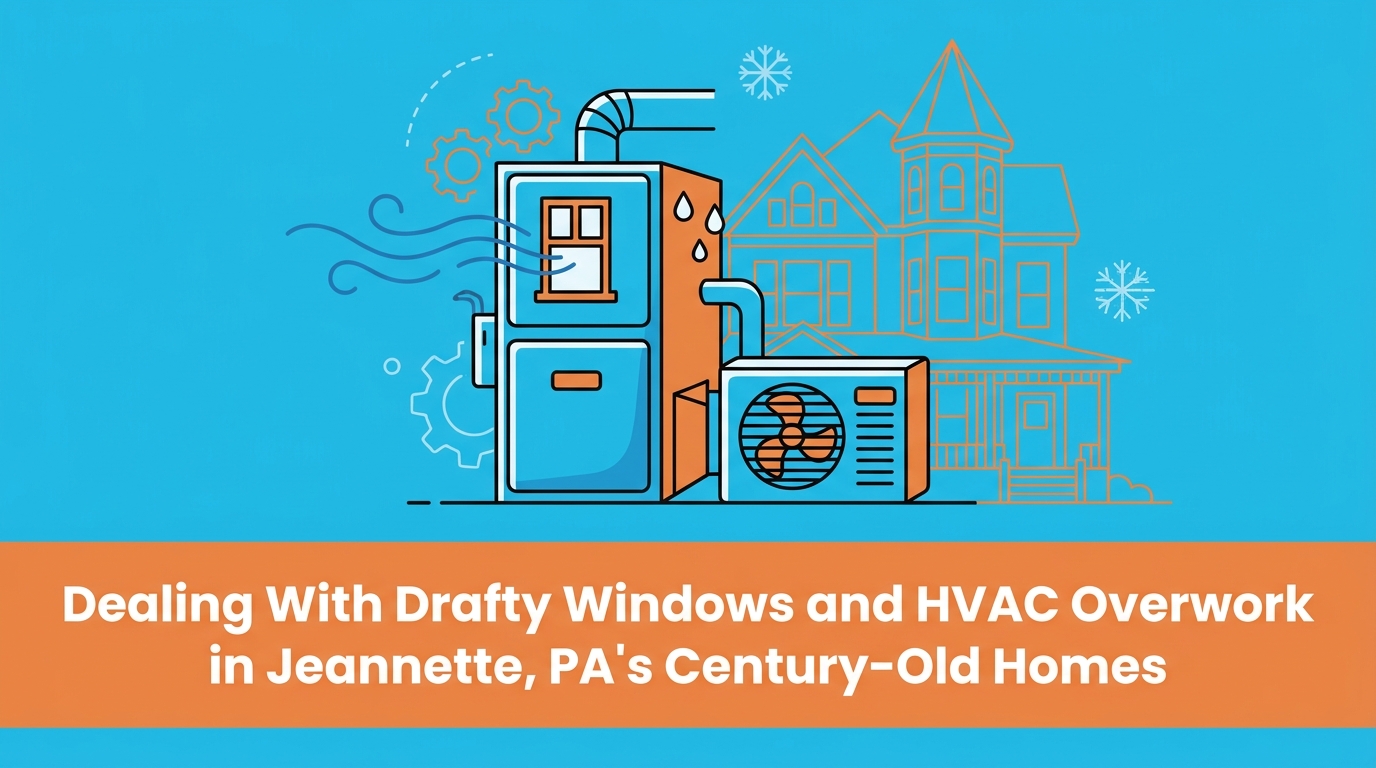
That familiar chill has returned to the air, and you have finally switched your thermostat from cooling to heating. But instead of a cozy, evenly warmed house, you notice the furnace blower running almost constantly. If you are dealing with drafty windows and HVAC overwork in Jeannette's century-old homes, you already know the frustration of a heating system that never seems to take a break. In our years of serving Jeannette, our team has found that the drastic overnight temperature drops that accompany the mid-fall October heating startup often reveal severe flaws in how older properties retain warm air.
When reliable heating solutions are installed in historic properties, homeowners often discover a frustrating reality: a brand-new furnace cannot outwork a poorly sealed house. Rather than simply cranking the thermostat higher and ignoring the cold spots, the most effective approach is to treat the home's architecture and the mechanical heating equipment as a single, connected ecosystem. Upgrading your comfort requires addressing the building envelope right alongside an essential HVAC inspection.
Many homeowners assume their aging furnace is entirely to blame for high utility bills and uneven temperatures. While mechanical wear and tear certainly plays a role, the structural realities of early 1900s architecture often force even well-maintained systems to work twice as hard. Understanding how your home was built is the first step toward achieving true winter comfort without exhausting your mechanical equipment.
Understanding Balloon-Frame Construction in Century-Old Homes
The architectural charm of Western Pennsylvania is undeniable, but the building techniques used a hundred years ago were not designed with modern energy efficiency in mind. We routinely see that a significant portion of the century-old (early 1900s) housing stock in this region utilizes a specific structural method known as balloon-frame construction. To understand why your house struggles to hold heat, you have to look behind the plaster walls.
The Problem: In balloon framing, builders used long, continuous wooden studs that ran uninterrupted from the foundation sill straight up to the roofline. Unlike modern platform framing, where each floor acts as a structural break, balloon framing creates long, unsealed vertical cavities inside the walls. These hollow spaces are rarely insulated with original materials, leaving virtually nothing to stop the flow of air.
The Cause: During the era when these homes were constructed, this framing method was highly cost-effective and structurally sound. Timber was plentiful, and long studs allowed houses to be erected quickly. Energy efficiency was not a primary concern because homes were typically heated by massive, continuously burning coal or wood furnaces that simply overpowered the drafts. Today, we rely on thermostatically controlled forced-air systems that cycle on and off, making these unsealed wall cavities a massive liability for heat retention.
The Solution: Modernizing a balloon-framed home requires a strategic approach to air sealing. By blocking the open cavities at the basement sill and the attic top plates, you can effectively cap the hollow spaces, preventing the rapid loss of conditioned air.
The Architectural Reality of the Early 1900s
Before modern building codes and standardized insulation practices, homes were designed to breathe. While this prevented moisture buildup, it also meant that thermal regulation was nearly impossible by today's standards. Comparing historic framing to modern techniques highlights the exact structural challenges older homes face.
• Wall Cavities — Historic Balloon Framing (Early 1900s): Continuous from foundation to roofline — Modern Platform Framing: Separated at each floor level by plates
• Airflow Restriction — Historic Balloon Framing (Early 1900s): None; acts as a vertical wind tunnel — Modern Platform Framing: Blocked at every floor, limiting vertical drafts
• Original Insulation — Historic Balloon Framing (Early 1900s): Typically hollow or filled with settled debris — Modern Platform Framing: Filled with high R-value fiberglass or foam
• HVAC Impact — Historic Balloon Framing (Early 1900s): Forces constant operation to replace lost heat — Modern Platform Framing: Allows systems to cycle normally and rest
The Chimney Effect: Why Your Historic Home Loses Heat So Fast
The continuous wall cavities of balloon-frame construction do more than just lack insulation—they actively pull heat out of your living spaces through a phenomenon known as the chimney effect. We constantly see this on service calls: when you turn on your heat, the warm air naturally rises. In historic Jeannette properties, this heated air easily escapes into the attic through the unsealed tops of the wall cavities.
As that warm air exits the top of the house, it creates a negative pressure zone in the lower levels. This vacuum pulls freezing, unconditioned air up from the basement and crawl spaces into the living areas. Freezing, unpredictable PA winters exploit these unsealed balloon-frame cavities relentlessly, making the heat loss rapid and severe during deep freezes. Your heating system is essentially trying to warm a house that is constantly inhaling cold outside air.
This continuous heat drain directly leads to higher energy consumption and drastically uneven room temperatures. You might notice that the second floor feels stiflingly hot while the first floor remains uncomfortably chilly. This is the chimney effect in action, constantly moving your expensive heated air up and out of the building envelope.
How Vertical Drafts Defeat Modern Thermostats
Your modern thermostat expects the house to hold its temperature for a reasonable amount of time after a heating cycle ends. However, because of the chimney effect, the thermostat registers a drop in indoor temperature almost immediately after the blower shuts off. This forces the system right back on, creating a grueling cycle of overcompensation that strains the furnace blower motor and heat exchanger to their limits.


The Role of Original Single-Pane Windows in HVAC Overwork
While the walls of a century-old (early 1900s) home hide significant thermal flaws, the windows present an entirely visible challenge. Original single-pane windows are a staple of historic architecture, offering character and charm that modern vinyl replacements often lack. However, a single sheet of glass provides virtually no thermal resistance against the biting cold of late fall and winter.
According to U.S. Department of Energy data, a significant percentage of a home's heating energy is lost directly through inefficient windows. When the cold glass comes into contact with the warm indoor air, it rapidly cools that air. The chilled air becomes denser and sinks to the floor, creating a continuous loop of moving air known as a convection current. This movement feels exactly like a draft, even if the window sash is shut tight and fully weatherstripped.
This specific type of heat loss is a pattern we see often, and it can easily confuse homeowners. You might sit near a window, feel a cold breeze, and wonder why your heating vents might be blowing cold air or failing to warm the space. In reality, the vents are likely blowing hot air, but the massive thermal drain of the single-pane glass is instantly neutralizing the heat. The HVAC system continues to run, trying to satisfy a thermostat that is constantly fighting against the cold glass.
The Thermal Resistance Gap
To put this into perspective, a standard single-pane window has an R-value (a measure of thermal resistance) of roughly R-1. A modern insulated wall typically has an R-value of R-13 to R-21. This massive disparity means your historic windows are essentially thermal holes in your building envelope, forcing your heating equipment to operate at maximum capacity just to maintain a baseline level of comfort.
Signs Your Heating System is Overworking This Fall
When your home leaks heat faster than the furnace can produce it, the mechanical equipment bears the brunt of the damage. Recognizing the symptoms of an overtaxed system early in the season can save you from a catastrophic breakdown in the middle of January. As your local HVAC experts, we always advise homeowners to pay close attention to how their equipment behaves during the mid-fall October heating startup.
The most common symptom of an overworked system in a drafty home is short-cycling. This occurs when the furnace turns on, runs for a very brief period, shuts off, and then almost immediately turns back on. Because the heat escapes the house so rapidly, the thermostat is constantly triggering the unit to fire up again.
Short-Cycling vs. Normal Operation
A healthy furnace in a well-sealed home typically runs for 10 to 15 minutes per cycle, allowing the heat exchanger to reach optimal temperatures and distribute air evenly. If your system is turning on and off every three to five minutes, it is a massive red flag for system health. This rapid cycling causes severe wear and tear on the ignition components, blower motor, and heat exchanger.
Watch for these specific signs that your historic home's drafts are pushing your HVAC system too hard:
• Constant running: The blower motor runs continuously but the house never quite reaches the set temperature on the thermostat.
• Frequent on/off cycling: The system fires up and shuts down in rapid succession, never completing a full, efficient heating cycle.
• Unusual noises: Grinding, squealing, or rattling sounds indicating that the blower motor bearings are failing from excessive use.
• Lukewarm airflow: The system cycles so quickly that the burners do not have time to fully heat the air before it is pushed through the vents.
• Excessive dryness: A furnace running non-stop will strip the remaining humidity out of the indoor air, making the home feel uncomfortably dry.
If you notice any of these symptoms during the first few weeks of cooler weather, we highly recommend seeking professional HVAC repair services before the constant strain causes a permanent failure.
Treating Your Home and HVAC as a Connected Ecosystem
The most common mistake homeowners make when dealing with a cold historic home is assuming they just need a bigger furnace. The Problem: Installing a massive, oversized heating unit in a drafty house is incredibly inefficient. An oversized furnace will blast the home with heat, satisfy the thermostat quickly, and shut off—only for the heat to escape through the walls and windows moments later, triggering another cycle.
The Cause: This approach ignores the root cause of the discomfort. The mechanical equipment and the building envelope are not separate entities; they are a connected ecosystem. If the envelope fails, the mechanical equipment will fail trying to compensate for it.
The Solution: True comfort requires addressing both sides of the equation. Mitigating heat loss through original single-pane windows can often be achieved by installing high-quality storm windows and thoroughly weatherstripping the sashes. Air-sealing the balloon-frame gaps—such as adding blocking at the sill plates in the basement and the top plates in the attic—stops the chimney effect in its tracks. Once the envelope is stabilized, a properly sized, high-efficiency heating system can maintain the temperature effortlessly.
Preserving Historical Integrity While Upgrading Efficiency
Balancing the desire to keep original architectural details with the need for modern comfort is a delicate process. You do not have to gut your plaster walls or replace your beautiful original windows with vinyl to stay warm. Working with a contractor who understands historic Jeannette homes is critical. Our team at Cochran Heating & Cooling offers deep local expertise in servicing Western PA's historic homes, and we understand exactly how to retrofit modern HVAC solutions without damaging historical integrity or original woodwork.
Targeted Heating Solutions for Older Homes Without Ductwork
Even after addressing the drafts and sealing the building envelope, many century-old (early 1900s) homes face a significant mechanical hurdle: a lack of existing ductwork. Homes originally heated by radiators, boilers, or central fireplaces often have solid plaster walls and limited crawl spaces, making the installation of traditional sheet metal ducts incredibly invasive, destructive, and expensive.
When we assess these challenging layouts, we frequently recommend ductless mini-split systems as an exceptional retrofit solution. Rather than relying on a massive central air handler pushing air through a leaky network of hidden ducts, mini-splits deliver conditioned air directly into the specific rooms where they are installed. This allows for precise, zone-specific heating in hard-to-heat rooms, bypassing the structural limitations of historic architecture entirely.
Modern heat pump technology, which powers these ductless systems, has advanced significantly in recent years. They provide highly efficient, consistent heating even when the outdoor temperatures drop well below freezing. Because they operate continuously at variable speeds, they provide a gentle, even heat that perfectly counteracts the natural drafts of an older home without the harsh on-and-off cycling of a traditional furnace.
Navigating Modern Efficiency Incentives
Upgrading the heating technology in a historic home is an investment in both your comfort and the longevity of the property. When planning these upgrades, it is worth noting that generic, widely available federal tax credits may apply to qualifying heat pump installations. Homeowners are always advised to verify current programs with a tax professional or their local utility provider, as these incentives can make transitioning to high-efficiency, ductless technology much more accessible.
Protect Your Historic Home's Comfort Before Winter Hits
Living in a piece of local history should not mean enduring freezing drafts and listening to your heating system run constantly. By understanding the unique architectural challenges of balloon framing and single-pane windows, you can take proactive steps during the mid-fall October heating startup. Treating your home's envelope and your mechanical equipment as a unified system is the only way to achieve lasting, efficient comfort.
Do not wait until the deep winter freezes arrive to find out if your system can handle the strain. For a professional assessment and furnace replacement and repair options tailored to the specific needs of historic properties, scheduling a consultation with our team now ensures your home remains a warm, welcoming sanctuary all season long.
Frequently Asked Questions
Why is my furnace short cycling in cold weather?
Short cycling usually happens when heat escapes your home so rapidly that the thermostat registers a temperature drop almost immediately after the furnace shuts off. In older homes, this is often caused by poor insulation and drafty windows forcing the system to turn on and off every few minutes. Our technicians typically recommend addressing air leaks and having a professional check the system's sizing to resolve the issue.
Can drafty windows cause high heating bills?
Yes, drafty original windows are one of the primary culprits behind exorbitant winter utility costs. Single-pane glass provides very little thermal resistance, allowing indoor heat to transfer outside and forcing your heating system to run constantly to make up the difference. Adding storm windows or heavy weatherstripping can significantly reduce this energy waste.
What is the best heating system for a 100 year old house?
The ideal system depends on the home's existing infrastructure, but ductless mini-split heat pumps are highly recommended for historic properties without existing ductwork. They provide efficient, zoned heating without requiring destructive modifications to original plaster walls or historic woodwork. For homes with existing ducts, a properly sized, high-efficiency modulating furnace paired with thorough air sealing is excellent.
How do you fix drafty windows in an old house without replacing them?
You can preserve historic single-pane windows while improving efficiency by installing tightly fitted exterior or interior storm windows. Additionally, replacing worn weatherstripping around the sashes, reglazing loose glass panes, and using heavy, thermally lined curtains can drastically reduce convection currents and drafts without altering the home's character.
Why does my furnace run constantly in winter?
A furnace that never shuts off is typically struggling against a severe heat loss issue within the building envelope, such as unsealed balloon-frame walls or a lack of attic insulation. It can also indicate mechanical problems like a clogged air filter, failing blower motor, or a system that is undersized for the home's square footage. A professional inspection is necessary to pinpoint the exact cause.
How does balloon framing affect home insulation?
Balloon framing utilizes continuous wooden wall studs that run from the foundation to the roof, creating empty vertical cavities that act like chimneys. Without proper air sealing at the top and bottom plates, these cavities allow warm air to escape into the attic while pulling freezing air up from the basement. This makes traditional insulation efforts difficult and requires targeted air-sealing strategies to stop the drafts.