Is It Normal for My Furnace to Run Constantly on the First 40-Degree Night?
Why Your Furnace Won't Shut Off on the First Chilly Night
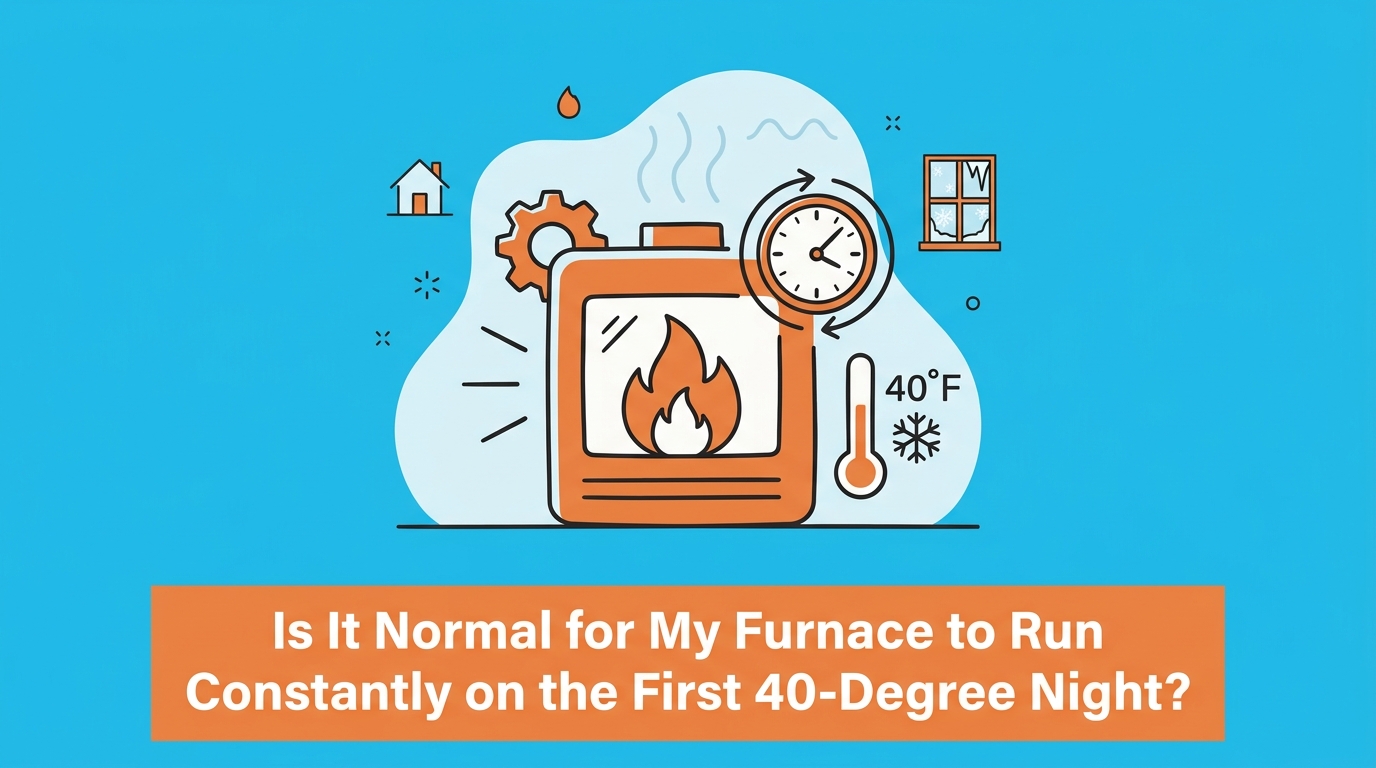
Are you wondering, "Is it normal for my furnace to run constantly on the first 40-degree night?" Yes, it is often completely normal for your system to run continuously during the first real cold snap of the season. Modern multi-stage furnaces are designed to run constantly at a lower capacity to maximize energy efficiency and maintain even temperatures throughout your home. However, if your system is turning on and off rapidly—a process known as short-cycling—or if it is blowing cold air from the registers, it requires professional attention.
Lying awake at two in the morning listening to your heating system hum can be incredibly stressful. During that October first 40-degree cold snap, many homeowners worry that an extended heating cycle means impending equipment breakdowns or massively wasted energy. You might find yourself staring at the ceiling, wondering if you should get up and turn the thermostat off just to give the machinery a break. The anxiety of a potential midnight failure is completely understandable.
The key to peace of mind is understanding the fundamental difference between normal low-stage operation and actual airflow or mechanical problems. When you know how modern furnace heating systems are engineered to behave, you can easily distinguish between a system that is operating at peak efficiency and one that is crying out for help.
The Science Behind the First Major Temperature Drop
To understand why your system seems to be working overtime, you have to look at the physics of your house. In mid-fall in Jeannette, PA, we experience sharp day-to-night temperature swings. Mild October days rapidly plunge into the 40s at night. When that 40-degree outside temperature drop hits, your heating equipment isn't just warming the air circulating inside your rooms—it has to heat the entire physical structure of your home.
This concept is known as thermal mass. Thermal mass refers to all the solid materials that make up your living space: the drywall, the hardwood floors, the heavy living room furniture, the kitchen cabinetry, and the interior framing. Throughout the late summer and early fall, these materials absorbed ambient heat, staying relatively warm. When the first sudden chill arrives and the outdoor temperature plummets, all that structural material loses its stored heat and becomes noticeably cold to the touch.
When your thermostat finally calls for heat on that first chilly evening, the furnace has to replace the thermal energy lost by all these solid objects. The warm air blowing out of your vents is immediately cooled down as it transfers its heat into your freezing walls and furniture. This requires a massive amount of initial energy output. Your system will run for an extended period because it is fighting a continuous battle to overcome this rapid temperature delta.
Once the home's thermal mass is fully stabilized and warmed through, your cycle times will begin to regulate and shorten naturally. The system will no longer have to work so hard just to maintain the baseline temperature. If you ever need help ensuring your system is prepared for this heavy initial workload, securing professional heating repair services can verify your equipment is operating safely before the deepest winter freezes arrive.
Multi-Stage Efficiency vs. Single-Stage Blasting
Homeowners in Jeannette PA and surrounding Western PA areas are often used to the way older, traditional heating systems worked. If you grew up in a house with an older unit, you likely remember a very distinct operational pattern. Older furnaces were typically single-stage units. When the thermostat called for heat, they blasted at 100% capacity, rapidly forced hot air into the house, and shut off with a loud clunk a few minutes later.
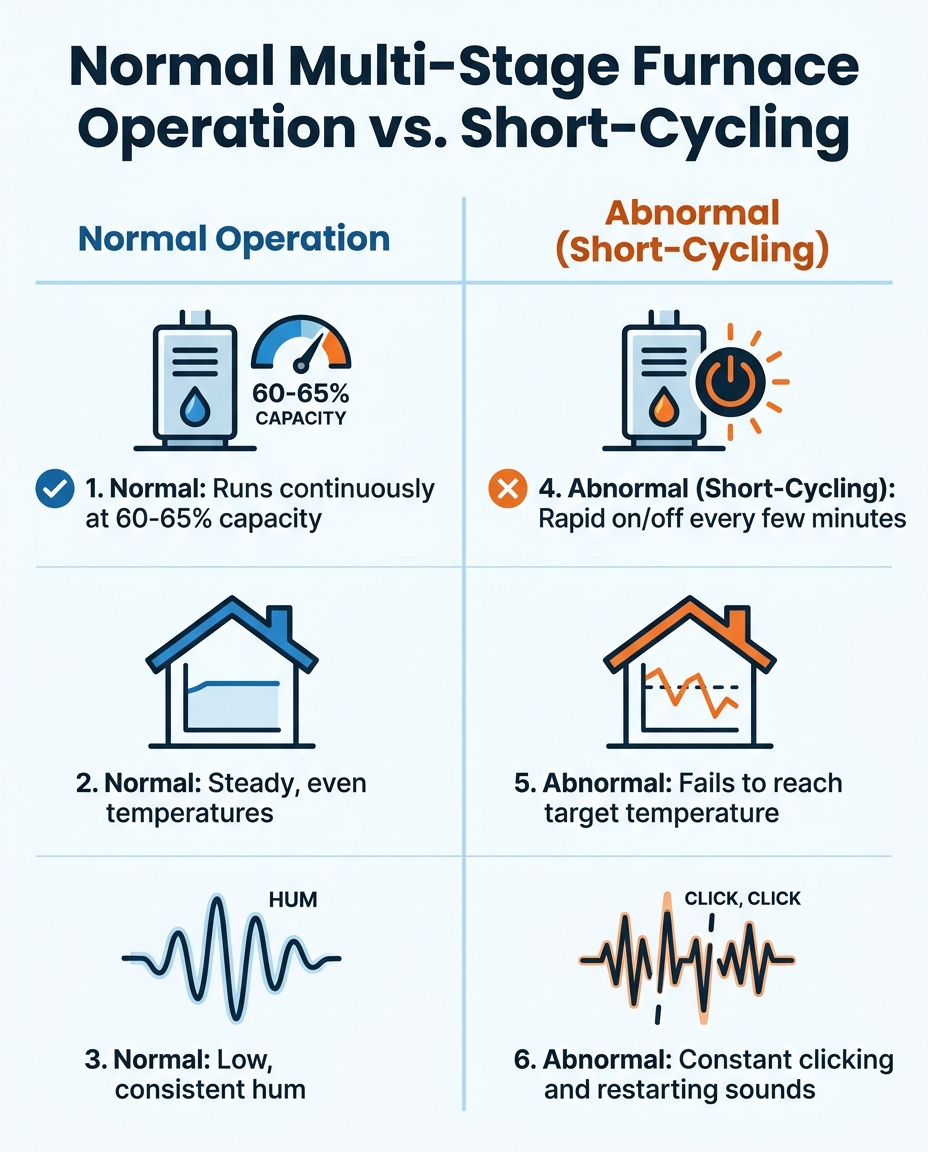
While that constant on-and-off cycle might feel familiar, it is actually highly inefficient. It creates massive temperature swings in the home, leaving you sweating one minute and shivering ten minutes later. Modern multi-stage and variable-speed furnaces operate on a completely different philosophy. Instead of blasting at full power, they are designed to run continuously at 60% to 65% capacity.
This low-and-slow approach provides significantly more even temperatures, drastically better air filtration, and reduced energy consumption over the course of the winter. Because the blower motor is running at a lower speed for a longer duration, it uses less electricity and extracts more heat from the fuel being burned. Reassure yourself that this continuous, quiet operation does not mean the system is failing—it means it is working exactly as the engineers intended.
• Operational Capacity — Older Single-Stage Furnaces: Runs strictly at 100% power or 0% (off). — Modern Multi-Stage Furnaces: Adjusts between 60% and 100% based on exact need.
• Cycle Length — Older Single-Stage Furnaces: Short, loud bursts lasting 5 to 10 minutes. — Modern Multi-Stage Furnaces: Long, quiet cycles lasting 45 minutes or running continuously.
• Temperature Consistency — Older Single-Stage Furnaces: Noticeable hot and cold spots throughout the house. — Modern Multi-Stage Furnaces: Even, consistent warmth with minimal temperature swings.
• Energy Efficiency — Older Single-Stage Furnaces: Wastes energy through constant starting and stopping. — Modern Multi-Stage Furnaces: Highly efficient; uses less fuel by maintaining a steady low burn.
• Air Quality Impact — Older Single-Stage Furnaces: Minimal filtration due to short run times. — Modern Multi-Stage Furnaces: Excellent filtration because air is constantly moving through the filter.
Normal Continuous Operation vs. Furnace Short-Cycling
While a long, steady run cycle during the October first 40-degree cold snap is completely normal, rapid on-and-off behavior is a serious red flag. This malfunction is known as short-cycling. Short-cycling occurs when the heating equipment turns on, runs for just a few minutes, and shuts down abruptly before ever reaching the target temperature set on your thermostat. It will then wait a few minutes and try to start the entire process over again.
Understanding the difference between an efficient long cycle and a damaging short cycle comes down to observing auditory and visual cues.
• Auditory cues: Normal operation sounds like a steady, low hum of air moving smoothly through the ductwork. Short-cycling sounds like a constant series of mechanical clicks, the distinct roar of the burners igniting, running for one to three minutes, and then shutting down completely. If you hear your system struggling to ignite repeatedly, it is not operating normally.
• Visual cues: Check your thermostat screen. If the system has been running for an hour but the indoor temperature is steadily rising or holding perfectly at your set point, the equipment is doing its job. If the system keeps turning off but the indoor temperature is dropping, the system is stuck in a failure loop.
Short-cycling is incredibly dangerous for your equipment. The constant starting and stopping places severe wear and tear on the blower motor, the igniter, and the heat exchanger. It can quickly lead to the system overheating and shutting down completely on a safety limit switch. If your system keeps shutting down prematurely, you may also want to investigate why your heating vents might blow cold air, as a failing burner will leave the blower pushing unheated air through your home.

Common Airflow Issues That Extend Heating Cycles
Sometimes, a furnace runs too long not because of thermal mass or high-efficiency staging, but because it is quite literally struggling to breathe. When a 40-degree outside temperature drop forces your system to work harder, any restriction in airflow will extend the heating cycle unnecessarily. The harder it is for the blower motor to push conditioned air through the house, the longer the burners have to stay lit to satisfy the thermostat.
Before assuming your system is broken, there are several safe, observational checks you can perform as a homeowner. These do not require any tools, and you should never attempt to open the furnace cabinet or perform DIY mechanical repairs.
• Check for dirty air filters: A clogged filter acts like a solid wall inside your ductwork. It restricts the return air coming into the system, forcing the blower motor to work twice as hard. This not only extends the run time but can also cause the heat exchanger to overheat and trip a safety switch.
• Inspect your return vents: Walk through your home and look at the large return grilles on the walls or floors. It is very common for homeowners to accidentally move rugs, bookshelves, or heavy sofas over these vents during summer rearranging. If the system cannot pull air in, it cannot push warm air out.
• Evaluate drafty windows and poor insulation: Heat loss directly counteracts the furnace's efforts. If you have older, single-pane windows or gaps under your exterior doors, the warm air your system produces is escaping outside almost as fast as it is generated. The thermostat will keep calling for heat because the room simply won't hold the temperature.
• Verify thermostat settings: Ensure your thermostat fan setting is switched to "AUTO" rather than "ON." If it is set to "ON," the blower fan will run 24/7 regardless of whether the burners are actually firing, making it seem like the heating cycle never ends.
If you have addressed these basic observational checks and the system still seems to be struggling, it is time to bring in professional help. Enrolling in a preventative HVAC maintenance plan ensures that a trained technician evaluates your airflow, static pressure, and filter condition before the heavy winter weather arrives.
When to Call for a Heating Diagnostics Check
At some point, continuous operation crosses the line from normal high-efficiency behavior to a genuine mechanical issue. For homeowners in Jeannette PA and surrounding Western PA areas, knowing exactly when to pick up the phone saves money and prevents complete system failures in the middle of a freezing night.
As a family-owned provider, our core focus is always on honest diagnostics. We believe in helping homeowners understand their system's normal behavior first, rather than using a long run cycle as an excuse to push for unnecessary emergency repairs. If your system is just dealing with thermal mass on a chilly night, we want you to rest easy. However, there are definitive signs that indicate a professional evaluation is absolutely necessary.
You should immediately call for a professional diagnostics check if you observe any of the following:
• The house remains cold: If the system has been running continuously for several hours but the indoor temperature is still well below your set point and not rising, the equipment is failing to produce adequate heat.
• Clear signs of short-cycling: If the burners ignite, run for two minutes, shut off, and repeat this cycle endlessly, shut the system down at the thermostat to prevent further damage and call a technician.
• Strange, persistent smells: A faint burning dust smell is normal for the first 30 minutes of the season. However, if the smell persists for hours, smells like melting plastic, or smells like electrical burning, turn the unit off immediately.
• Loud, alarming noises: Banging, rattling, or loud scraping sounds indicate a serious mechanical failure, such as a loose blower wheel or a failing inducer motor.
• Blowing cold air: If the blower is running continuously but the air coming out of the vents is completely cold, the ignition sequence has failed entirely.
If you experience any of these symptoms, do not wait for the system to break down completely. Reaching out and utilizing the Cochran Comfort Contract can provide you with priority service, ensuring your home stays safe and warm when the real winter weather sets in.
Frequently Asked Questions About Fall Furnace Startup
How long should a furnace run in cold weather?
In mild cold, cycles may last 10 to 15 minutes at a time. However, during extreme drops or the first cold snap, modern multi-stage systems may run for hours at a low capacity. As long as the indoor temperature is maintaining your set point or steadily rising, extended run times are a completely normal function of high-efficiency equipment.
Is it bad if my high-efficiency furnace runs continuously?
No, it is designed to do exactly this. Continuous low-stage operation actually uses significantly less energy than stopping and starting repeatedly at full blast. It also provides much better indoor air quality by constantly pulling your home's air through the filtration system, removing dust and allergens.
Why does my furnace keep running after it reaches temperature?
The blower motor often runs for a few minutes after the burners shut off to distribute the remaining warm air out of the heat exchanger and into your rooms. Additionally, if the fan switch on your thermostat is set to 'ON' instead of 'AUTO', the blower will run 24/7. If the burners run endlessly and the house is actively overheating past your set point, it requires a professional diagnostic check.
What does furnace short cycling actually sound like?
Short-cycling has a very distinct auditory pattern: a loud 'click' followed by the roar of the burners, running for 1 to 3 minutes, and then shutting off completely. The system will repeat this cycle constantly without the house ever getting warm. It is often accompanied by the sound of the system clicking multiple times as it struggles to achieve ignition.
Is it normal to smell a burning odor during the first fall heating cycle?
Yes, a faint burning dust smell is completely normal for the first 30 to 60 minutes of the season. Over the summer, dust settles on the cold heat exchanger, and it simply burns off when the burners are first ignited. If the smell persists for hours, smells like electrical burning, or triggers your smoke alarms, shut the system down immediately and call a professional.
Get Expert Answers for Your Heating System Concerns
Navigating the transition into the colder months doesn't have to be a source of stress. While continuous running during that October first 40-degree cold snap is often completely normal for modern, efficient equipment, your peace of mind is invaluable. We are committed to providing honest diagnostics and thorough homeowner education so you never have to guess whether your system is safe.
If you suspect your equipment is short-cycling, struggling with airflow, or failing to keep your home comfortable, don't wait for a midnight breakdown. Schedule a comprehensive inspection today to ensure your heating system is prepared to deliver safe, reliable warmth all winter long.