
Preparing Your Outdoor AC Unit for Fall Debris in Western PA
Navigating the September Transition: Leaves, Moisture, and Your AC
September is just around the corner, and the shift toward cooler weather means it is time to start preparing your outdoor AC unit for fall debris in Western PA. As the leaves begin to turn and drop, your air conditioning system faces a whole new set of environmental challenges. At Cochran Heating & Cooling, we often see homeowners who know they need to protect their expensive outdoor equipment from the elements, but the methods they choose can sometimes cause far more harm than good. Trapping moisture under improper covers is actually a much bigger threat to your system than the leaves themselves.
If you are looking to protect your air conditioning systems before winter sets in, scheduling a preventative HVAC maintenance plan with our team is the most reliable first step.
The Autumn Dilemma for Homeowners
During the transition from late summer to early fall, you are likely still running your air conditioner on unseasonably warm afternoons. At the same time, trees are beginning to shed their foliage. This creates a challenging overlap where your system needs maximum airflow to function, but is constantly bombarded by falling debris. The wet, heavy autumn leaf drop in September/October poses an immediate threat to the delicate components of your outdoor condenser unit.
The core problem: Many homeowners see the leaves piling up and decide to wrap their entire unit tightly in plastic or heavy canvas. While this keeps the leaves out, it creates a sealed environment that prevents the unit from breathing. Your outdoor air conditioner is designed to get wet from rain and snow, but it is also designed to dry out in the breeze. When you take away its ability to dry, you introduce a host of new problems that can shorten the lifespan of the equipment.
Setting the Stage for Proper Care
Proper fall HVAC care is about finding the right balance. You want to deflect the heaviest debris while allowing the system to ventilate naturally. Throughout Jeannette PA and surrounding Western PA communities, the combination of heavy foliage and frequent autumn rain requires a specific, thoughtful approach to yard cleanup and system protection. By understanding how debris interacts with your equipment, you can make informed decisions that keep your system running efficiently for years to come.
How Wet Leaves Actively Damage Condenser Fins
The Problem: Not All Leaves Are Created Equal
When our technicians are out on fall maintenance calls, we constantly see the difference between dry, blowing leaves and the heavy, saturated foliage typical of early fall storms. A few dry leaves blowing against the side of your unit will usually fall away on their own. However, the damp, rainy conditions of early fall exacerbate the matting effect on the fins. When leaves get wet, they become heavy and sticky, clinging stubbornly to the metal grates of your air conditioner.
The Cause: Mechanical and Chemical Stress
Wet leaves cause two distinct types of damage to your condenser unit: mechanical and chemical.
• Mechanical airflow restriction: The exterior of your AC unit is lined with hundreds of thin aluminum fins. These fins are designed to pull warm air out of your home and release it into the atmosphere. When wet, heavy autumn leaf drop in September/October plasters these fins, it acts like a thick blanket. If you run the system on a warm fall day while the fins are blocked, the compressor has to work twice as hard to release heat. This strains the motor, increases your energy bills, and can lead to overheating.
• Chemical corrosion: Decaying organic matter is surprisingly acidic. As wet leaves sit against the aluminum fins and begin to break down, they release tannins and other mild acids. Over weeks and months, this acidic environment eats away at the delicate metal, accelerating corrosion and weakening the fins.
The Solution: Proactive Clearing
The only way to stop this cycle of mechanical and chemical damage is to remove the wet leaves promptly. Allowing them to sit and rot against the unit guarantees accelerated wear and tear. If you have already noticed significant bending or corrosion on the exterior of your unit, you may need to look into resolving AC condenser fin damage before the winter freeze sets in.
The 'Full Tarp' Myth: Why Tight Plastic Covers Are Dangerous
Year after year, our team at Cochran Heating & Cooling encounters one of the most common and damaging myths in home maintenance: the full tarp. It is completely logical to think that a heavy, waterproof tarp is the best way to protect your outdoor unit from rain, snow, and ice. However, our firsthand experience shows this causes catastrophic damage.
The Engineering Reality
First, it is important to understand that outdoor AC units are manufactured to withstand harsh weather. The electrical components are sealed, the fan blades are resilient, and the casing is built to endure precipitation by design. They do not need to be hidden from the rain or snow to survive the winter.
The Greenhouse Effect
When you wrap a unit tightly in a plastic tarp, you create a dangerous greenhouse effect. Even in cold weather, the ground beneath the unit constantly releases moisture. In Jeannette PA and surrounding Western PA communities, the region's high humidity and dropping temperatures create the perfect storm for trapped condensation. The moisture rises, hits the impermeable plastic cover, condenses into water droplets, and rains back down inside the unit. Because the unit cannot breathe, this moisture sits on the compressor, electrical contacts, and copper wiring all winter long, leading to rapid and severe rust.
The Pest Problem
Beyond moisture, a fully tarped AC unit creates an incredibly inviting environment for pests. As temperatures drop in October and November, rodents like mice and chipmunks actively seek out dry, wind-protected spaces to build their winter nests. A tightly covered AC unit is the perfect shelter. Once inside, these rodents frequently chew through electrical wiring and insulation, leading to catastrophic system failures when you try to turn the AC back on in the spring.
Comparing Your Protection Options
• Full Plastic Tarp — Moisture Control: Traps moisture inside (High Rust Risk) — Debris Blocking: Blocks all debris — Rodent Risk: High (Creates a warm, dry shelter) — Overall Recommendation: Never Use
• No Cover At All — Moisture Control: Allows full evaporation (No Rust Risk) — Debris Blocking: Allows leaves and ice inside — Rodent Risk: Low (Too exposed for nests) — Overall Recommendation: Okay, but requires cleaning
• Top-Only Cover — Moisture Control: Allows full evaporation from sides — Debris Blocking: Blocks falling leaves and ice — Rodent Risk: Low (Remains drafty and exposed) — Overall Recommendation: Best Practice
Safe Fall Debris Management: The 2-Foot Rule
In our experience servicing systems across Western PA, managing the wet, heavy autumn leaf drop in September/October doesn't have to be complicated, but it does need to be done safely. To ensure your unit operates efficiently and safely, follow these structured steps for clearing debris.
1. Turn off the power: Always prioritize safety. Before doing any yard work near the unit, locate the outdoor disconnect box near the AC and pull the plug or flip the switch to turn off the power. You can also turn off the dedicated breaker inside your home's electrical panel.
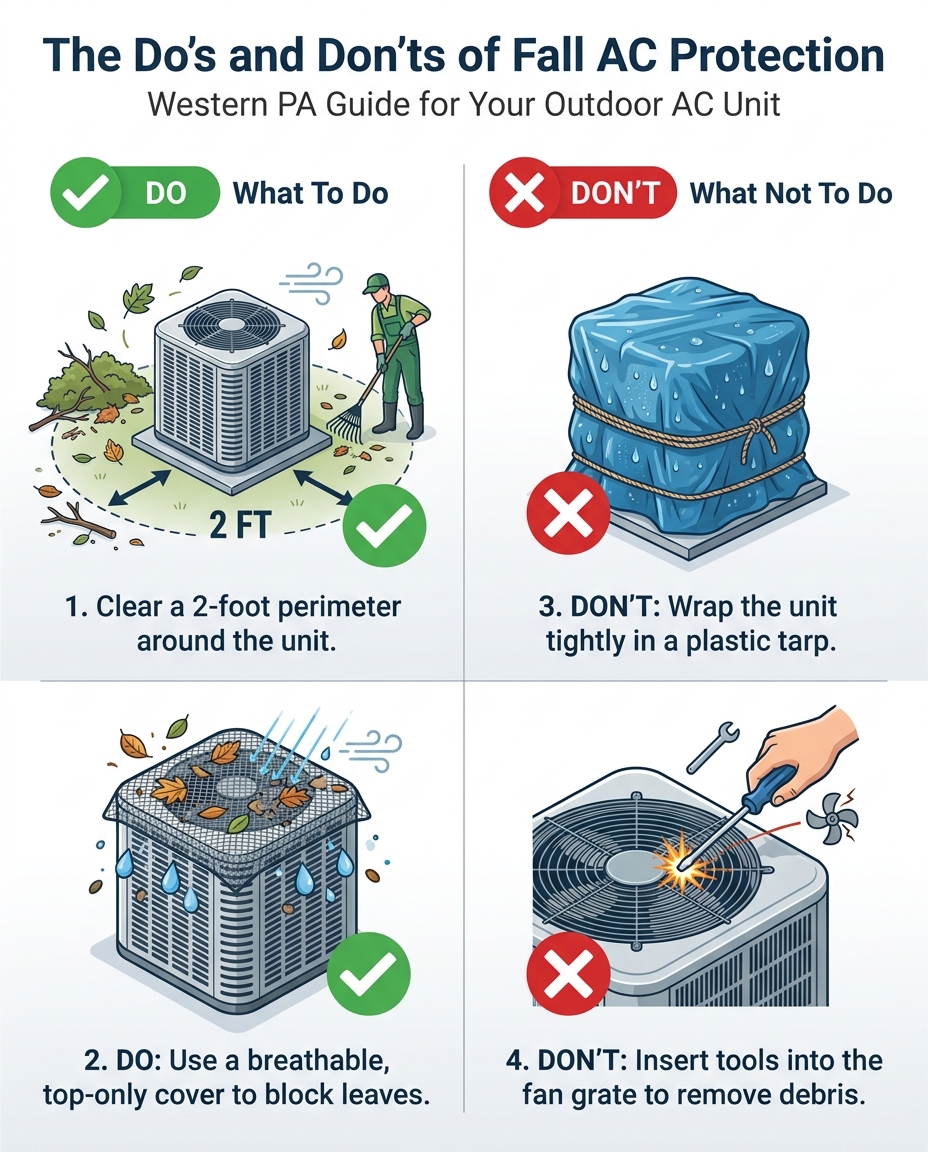
2. Establish the 2-foot perimeter: Your air conditioner needs a minimum of two feet of clear space on all sides to pull in enough air. Trim back any overgrown bushes, tall grass, or low-hanging branches that have encroached on this space over the summer.
3. Remove loose debris gently: Use a soft-bristled brush or a regular broom to gently sweep matted leaves off the exterior fins. You can also use your hands (wearing heavy work gloves) to pull away larger clumps of wet foliage at the base of the unit. Always brush vertically (up and down) in the same direction as the fins to avoid bending them.
4. Never use a pressure washer: It can be tempting to blast the dirt and stuck leaves away with a pressure washer, but this is a critical mistake. The aluminum fins are incredibly thin and malleable. A pressure washer will instantly flatten the fins against the coil, permanently restricting airflow and ruining the unit.
5. Keep tools out of the fan grate: If leaves or twigs have fallen inside the top grate of the unit, do not stick screwdrivers, sticks, or rakes through the top to fish them out. You risk damaging the fan blades or the internal motor.
Choosing the Right Protection: Breathable and Top-Only Covers
If full tarps are dangerous, how should you protect your unit from falling debris? The answer lies in specialized, breathable covers that prioritize airflow over waterproofing.
The Top-Only Strategy
Top-only covers are the ideal compromise for homeowners in Jeannette PA and surrounding Western PA communities. These covers are designed to sit squarely over the top fan grate, extending down only a few inches on the sides. They effectively block falling leaves, twigs, and heavy ice accumulations from dropping into the interior of the machine, while leaving the entire side perimeter completely open. This allows the wind to blow through the fins, evaporating any ground moisture and keeping the internal components dry.
Material Matters: Heavy-Duty Mesh and Canvas
If you prefer a cover that extends further down the sides, you must ensure the material is highly breathable. Heavy-duty mesh covers act like a net, catching leaves while allowing air and moisture to pass through freely. Breathable canvas is another option, provided it does not have a waterproof plastic or rubber backing. The goal is always deflecting solid debris, not creating a waterproof seal.
Securing Your Cover Safely
Autumn storms can bring high winds, so any cover you use must be securely fastened. Most top-only and mesh covers come with built-in bungee cords or heavy-duty nylon straps. Secure these straps to the base of the unit, ensuring they are tight enough that the cover won't flap in the wind, but not so tight that they bend the exterior casing.

Addressing Existing Wear Before the Freeze
Once you have cleared away the wet, heavy autumn leaf drop in September/October, you may notice that the summer season has already taken a toll on your equipment. It is critical to bridge the gap between DIY debris management and knowing when to call for professional help.
Inspect the Unit Carefully
Take a close look at the exterior fins. Are large sections flattened or bent? Are there unusual stains that might indicate a refrigerant leak? When you turn the unit on for a warm afternoon, do you hear strange grinding or rattling noises? Have you noticed droppings or nesting materials near the base of the unit? These are all signs that your system needs professional attention.
Why Specialized Tools Are Required
While clearing loose leaves is a great DIY task, repairing internal damage is not. Straightening bent fins requires a specialized tool called a fin comb, and using it incorrectly can puncture the delicate copper coils underneath, releasing refrigerant into the atmosphere. Similarly, cleaning the internal coils requires taking the casing apart and applying specialized, foaming chemical cleaners that are safe for the metal components.
Act Now, Not in the Spring
The most important thing is to address any minor AC issues right now. Letting a struggling, dirty, or damaged unit sit dormant all winter allows minor corrosion to become major rust. By scheduling professional AC repairs in the fall, you guarantee that your system will be ready to perform flawlessly when the first heat wave hits next spring.
Transitioning Your Full HVAC System for Autumn
Properly managing the debris around your outdoor AC unit is just one part of the broader seasonal transition. As your air conditioner goes dormant for the winter, your furnace or heat pump is about to take on the heavy lifting for the next six months.
The Shift to Heating Season
The transition from cooling to heating is the most demanding time of year for your home's climate control system. While you are outside clearing leaves and securing a top-only cover, it is the perfect time to think about the equipment inside your home. Seasonal maintenance plans are designed specifically for this transition, covering both the proper shutdown and inspection of your cooling equipment and the critical safety startup of your heating systems.
The Value of Local Expertise
Relying on a family-owned local team like Cochran Heating & Cooling ensures your system is prepped specifically for the unique demands of local seasonal transitions. We understand exactly what the winters in Jeannette PA and surrounding Western PA communities demand of a heating system. Having a professional verify that your system is clean, safe, and efficient before the first frost provides unparalleled peace of mind.
If you are ready to ensure your entire home is prepared for the dropping temperatures, explore our comprehensive heating services to keep your family comfortable all winter long.
Frequently Asked Questions
Should I cover my AC unit in the fall?
You should only use a breathable or top-only cover, rather than a full wrap. Covering the top prevents falling leaves, twigs, and heavy ice from dropping into the fan grate. However, fully wrapping the unit traps moisture and invites rodents, which causes significant damage.
How do I protect my outside AC unit from falling leaves?
The best protection is a combination of regular yard maintenance and a mesh or top-only cover. Maintain a clear 2-foot perimeter around the unit by trimming bushes and raking regularly. When the leaves are falling heavily, a breathable top cover will deflect the debris without suffocating the machine.
Is it bad if leaves get inside my air conditioner?
Yes, leaves inside the unit can cause serious problems. Wet leaves hold moisture against the metal components, accelerating rust and corrosion. Furthermore, large accumulations of leaves can block the drainage holes at the bottom of the unit or interfere with the fan blades.
What is the best way to cover an AC unit for winter?
The best way to cover an AC unit is to use a sturdy piece of plywood or a commercially made top-only cover secured over the fan grate. This blocks heavy snow and falling ice from damaging the fan blades while leaving the sides completely open so the unit can breathe and dry out.
Can wet leaves cause my AC to rust?
Yes, wet leaves are a major contributor to rust and corrosion. As leaves decay, they release mild acids that slowly eat away at the aluminum fins. Additionally, the constant moisture trapped by matted leaves prevents the metal from drying, accelerating the oxidation process.
Do I need to remove my breathable AC cover before turning the unit on?
Yes, you must remove any cover—even breathable mesh ones—before operating the air conditioner. Running the unit with a cover in place restricts the necessary airflow, forcing the compressor to overwork. This can cause the system to overheat and potentially suffer permanent mechanical failure.