Why Your Thermostat Screen Goes Blank When Switching from Cooling to Heating
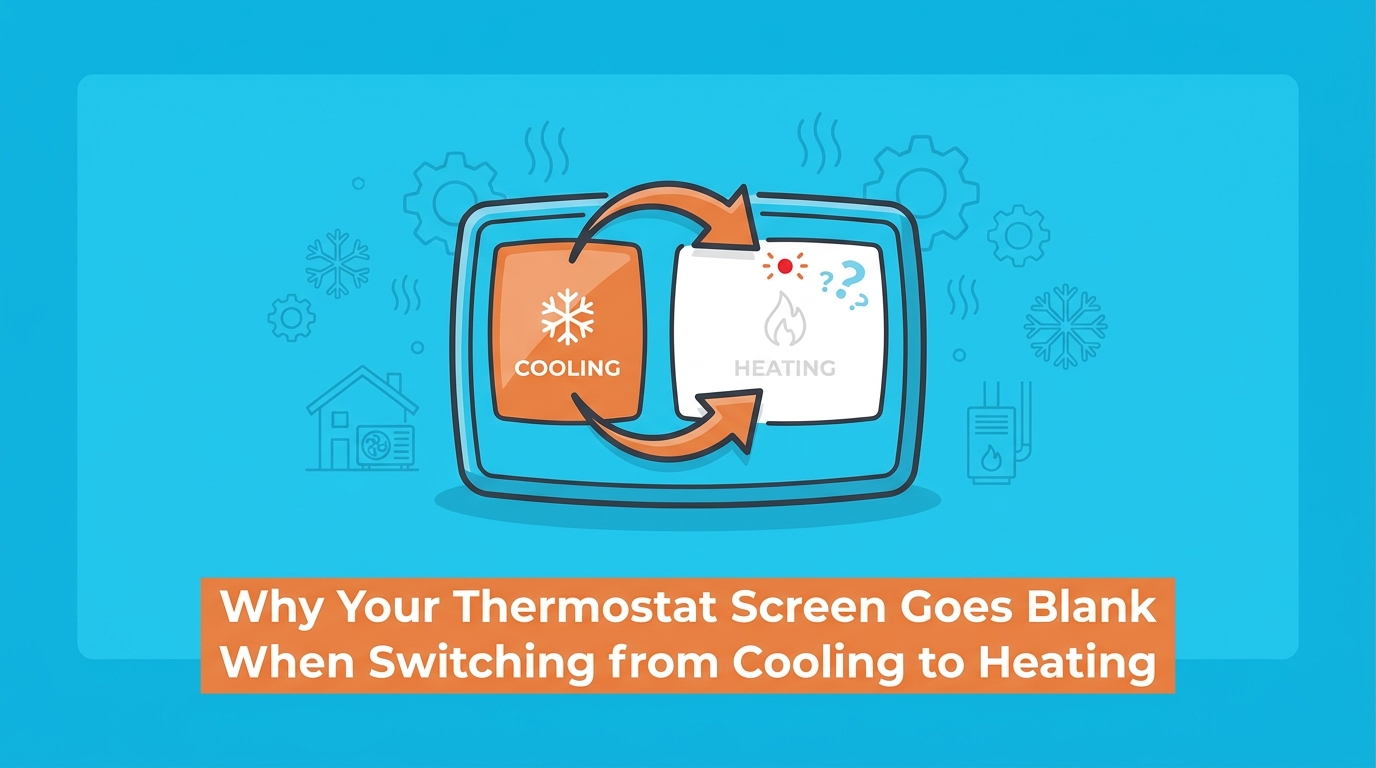
The September Chill: Why Your Thermostat Suddenly Lost Power
If you are trying to figure out exactly why your thermostat screen goes blank when switching from cooling to heating, you are experiencing a very common issue during the September early-fall transition that our team at Cochran Heating & Cooling responds to every year. In Western Pennsylvania, the weather patterns are famously unpredictable. Temperatures can easily hover in a comfortable, sunny 70-degree range during the afternoon, only to plummet rapidly into the chilly 40s overnight. When that first real cold snap hits, you naturally walk over to your wall unit, flip the system switch from "Cool" to "Heat," and expect to hear the familiar rumble of your furnace kicking on. Instead, the screen goes completely dark.
Panic often sets in immediately. Most homeowners assume the wall unit itself has suffered a catastrophic failure or just completely broke down. However, our technicians frequently find that a sudden, complete loss of display power at the exact moment you change the system mode is usually a symptom of a broader power interruption, not a broken screen. This specific behavior is almost always tied to your heating equipment's internal low-voltage electrical setup.
When the screen dies exactly at the mode switch, it is a protective measure. The system has detected an electrical fault and shut down communication to prevent damage or a potential fire hazard. Understanding why this happens requires a look at how your equipment communicates, and it almost always requires professional diagnosis for your heating systems to get everything running safely again.
Understanding the 24-Volt Connection to Your System
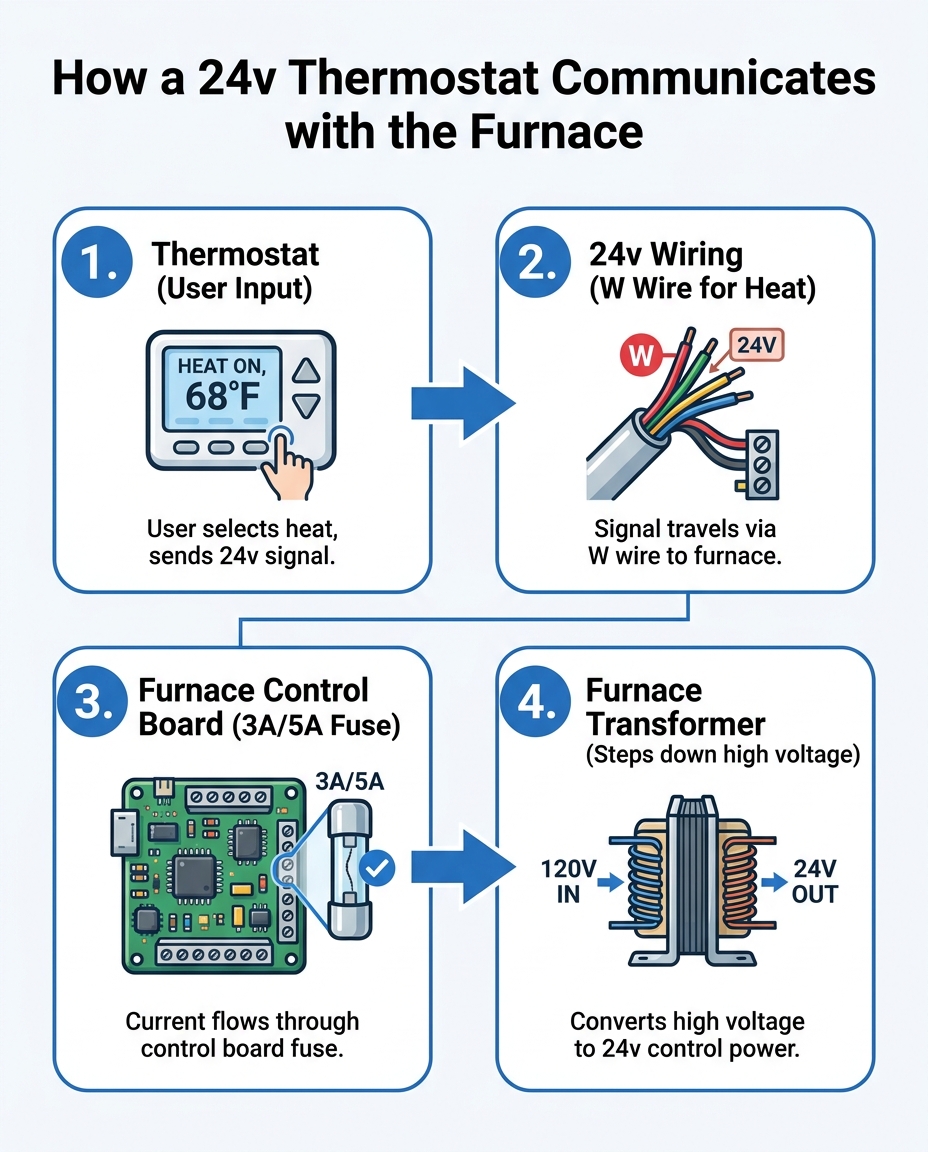
To understand why your screen suddenly died, you first need to understand how modern temperature controls get their power in Jeannette PA and Westmoreland County homes. Many people assume that because a thermostat is mounted on the wall, it either plugs into the house's main power or runs entirely on standard batteries. While older mechanical models were simple switches, our installation team notes that most modern, hardwired digital and smart thermostats rely on a constant 24-volt (24v) electrical current supplied directly by your furnace or air handler.
Your home's main electrical panel supplies high-voltage electricity—usually 120 volts—to run the heavy blower motors and burners inside your furnace. Sending that much raw power to a plastic wall switch that you touch every day would be incredibly dangerous. To solve this, your heating equipment contains a specialized component called a transformer. The transformer's sole job is to step down that high 120-volt power to a safe, manageable 24 volts.
This low-voltage power then travels through the furnace control board, which acts as the central brain of your entire HVAC setup. Sitting right on that control board is a small, automotive-style blade fuse—typically a 3-amp or 5-amp fuse, very similar to what you would find in your car's fuse box. This tiny piece of plastic and metal protects the sensitive electronics on the board. If your screen is suddenly blank, it almost always means this 24v connection has been severed because that specific fuse blew, cutting off power to protect the system. If you want to learn more about basic diagnostics, reviewing guides on troubleshooting thermostat problems can help you understand these connections better.
The Role of the W Wire
Your thermostat communicates with the furnace control board through a bundle of thin, colored wires hidden behind your wall. Each wire has a specific job. The R wire brings the constant 24-volt power up from the furnace, and the C wire (common wire) completes the electrical circuit to keep the screen lit.
The W wire, which is usually white, is specifically responsible for communicating the call for heat. All summer long, this W wire sits completely dormant while your air conditioning runs. When you walk up to the wall and switch the mode to "Heat," a relay closes inside the unit. For the first time since last winter, 24-volt power is sent traveling down this specific W wire to tell the furnace control board to ignite the burners. This sudden introduction of electricity to a wire that has been dormant for months is exactly what triggers the failure.

The Culprit: Blown Low-Voltage Fuses During the Mode Switch
What exactly happens during that September early-fall transition when you push the heat button and everything goes dark? In our experience, the failure is happening down in the basement or utility closet at the furnace control board, not at the wall unit itself.
When you switch to heating mode and send 24 volts down the W wire, that electricity expects a clear, unbroken path to the control board. However, if there is a hidden electrical short anywhere along that heating wire, the current spikes dramatically. An electrical short occurs when the protective insulation around a wire is damaged, allowing the raw copper to touch another wire or the bare metal cabinet of the furnace. Electricity always seeks the path of least resistance to the ground. When it finds this unintended path, it draws a massive amount of electrical current—far more than the system is designed to handle.
The moment that massive power surge hits the furnace control board, the 3-amp or 5-amp low-voltage fuse reacts instantly. The tiny metal filament inside the fuse melts and breaks the circuit. It intentionally sacrifices itself to prevent an electrical fire, melted wires, or the complete destruction of the expensive control board. When this fuse pops, the 24-volt power source is entirely cut off from the rest of the house. The result? Your wall unit loses its power feed instantly, leaving you staring at a blank screen.
• Switch mode to "Heat" — What Happens Electrically: 24v power is sent down the dormant W wire for the first time in months. — The Immediate Result: Electricity encounters a hidden short circuit in the damaged wiring.
• Current spikes rapidly — What Happens Electrically: The electrical draw exceeds the 3-amp or 5-amp limit of the safety fuse. — The Immediate Result: The fuse filament melts instantly, breaking the electrical connection.
• Power is severed — What Happens Electrically: The furnace stops sending 24v power up to the wall unit. — The Immediate Result: The thermostat screen goes completely blank and unresponsive.
Ruling Out the Basics: Is It Just Dead Batteries?
Before assuming the worst about your system in Jeannette PA and Westmoreland County, our team recommends you perform a few safe, basic checks. While hardwired systems use continuous 24v power from the furnace, many modern models still utilize batteries as a backup. This battery backup is designed to save your programming schedule and keep the clock running during a neighborhood power outage. Sometimes, by pure coincidence, the batteries die right around the time you switch modes.
You can safely rule out a simple battery failure by following a quick checklist:
• Remove the faceplate: Gently grasp the outer edges of the thermostat and pull it straight back toward you. Most modern faceplates snap off easily, though some may have a small latch or hidden screw at the bottom.
• Check the battery compartment: Look at the back of the faceplate for AA, AAA, or coin-style lithium batteries.
• Install fresh batteries: Replace the old batteries with brand-new, high-quality alkaline batteries. Snap the faceplate back onto the wall mount.
• Check the main electrical panel: Walk to your home's main breaker box and look for the breaker labeled for the furnace or HVAC system. If it is tripped (sitting slightly out of line with the others), push it firmly to the "Off" position, then snap it back to "On."
If you put in new batteries and the digital display lights up again, but the heat still refuses to kick on when you adjust the temperature, you have confirmed the diagnosis. The batteries are simply powering the screen locally, but the 24v communication lines to the furnace are completely dead. The fuse is blown, and the power is interrupted.
Why a Blown Fuse is a Symptom, Not the Root Problem
In our years of providing HVAC service throughout Westmoreland County, we've learned that fuses do not blow for no reason. They are deliberate safety devices designed to fail when something goes wrong in the electrical circuit. A blown fuse is merely a symptom of an underlying electrical short, not the root problem itself.
Over the long summer months, while your heating system sat idle, several things could have compromised the low-voltage wiring. Common culprits we see include:
• Rodent damage: Mice and squirrels frequently seek shelter in basements or attics and love to chew on the soft plastic insulation surrounding low-voltage HVAC wires, exposing the bare copper.
• Landscaping accidents: The low-voltage wiring bundle often runs outside to your air conditioning condenser. A stray weed whacker string hitting this wire bundle during summer yard work can slice the insulation. Because the AC and furnace share the same control board, a short outside will blow the fuse inside.
• Vibration friction: Years of the furnace running and vibrating can cause wires to rub against the sharp metal edges of the equipment cabinet, eventually wearing the insulation completely bare.
At Cochran Heating & Cooling, we want you to know that a reliable technician will track down the exact location of the short rather than just pushing a quick fuse replacement. If someone simply replaces the blown fuse without locating the damaged wire, that new fuse will blow instantly the very next time you call for heat. A comprehensive system inspection for your furnace repair and maintenance is critical before the heavy winter weather arrives to ensure the system is actually safe to operate.
The Danger of DIY Furnace Fuse Replacement
Once homeowners in Jeannette PA and Westmoreland County learn that a simple 3-amp automotive fuse is the cause of their blank screen, they are often tempted to head to the auto parts store, buy a replacement, and open the furnace panel themselves. We strongly advise against this.
The furnace control board houses highly dangerous high-voltage (120v) components right alongside the low-voltage 24v system. Opening the furnace blower compartment to access the control board requires a licensed professional who understands how to safely discharge capacitors and isolate power. The risks of DIY intervention are significant.
Our repair team has seen firsthand how misdiagnosing the electrical short or accidentally installing a fuse with the wrong amperage rating can be disastrous. For example, if you replace a blown 3-amp fuse with a 10-amp fuse because it was all you had in the garage, you have effectively removed the safety barrier. The next time the W wire shorts out, the massive power surge will bypass the oversized fuse and completely melt the delicate electrical traces on the control board. This turns a minor wiring repair into a major, highly expensive control board replacement. The safest action is always to leave the system turned off at the wall and call for professional diagnostic help.
Frequently Asked Questions About Blank Thermostat Screens
Dealing with unexpected HVAC issues during the September early-fall transition can be frustrating. Here are the most common questions homeowners ask when their display suddenly goes dark.
Why did my thermostat go blank when I turned on the heat?
Turning on the heat sends 24-volt power down a specific communication wire (the W wire) for the first time since last winter. If that wire is shorted out from rodent damage or friction, it causes an immediate electrical power surge. This surge blows a safety fuse inside the furnace, which cuts all power to the thermostat, leaving the screen completely blank.
Is there a fuse in a thermostat?
Most modern thermostats do not have an internal fuse inside the plastic wall housing. The fuse protecting the thermostat and its wiring is actually located down on the main furnace control board in your basement or utility closet. When this furnace fuse blows, the wall unit loses its power source.
How do I fix a blank thermostat screen?
First, check for dead backup batteries in the wall unit or a tripped circuit breaker in your home's main electrical panel. If those basic checks do not restore operation, you need a professional to locate and repair the hidden electrical short in your wiring before they replace the blown furnace fuse.
What causes a 24v transformer to blow?
A 24v transformer or its protective control board fuse blows when there is an electrical short in the low-voltage wiring. This is often caused by bare copper wires touching metal, landscaping tools slicing outdoor wire bundles over the summer, or an internal component failure within the HVAC equipment itself.
Can a clogged furnace filter cause a blank thermostat?
While a severely clogged air filter can cause a furnace to overheat and shut down on a high-limit safety switch, it typically does not cut the 24v power to the thermostat screen entirely. A completely blank screen usually points directly to a blown low-voltage fuse or a tripped main breaker.
Restoring Your Heat Safely This Fall
In summary, a blank screen at the exact moment of the seasonal mode switch is almost always a protective measure against an electrical short. Your system recognized a dangerous power surge on the heating wire and blew a low-voltage fuse to protect the expensive control board from catching fire or melting.
While replacing batteries or checking your main household breaker are safe and easy steps to try on your own, digging into the high-voltage furnace panel to swap a fuse is not. Simply replacing the fuse without finding the damaged wire will only result in another blown fuse the second you try to turn the heat back on.
Do not let a hidden wiring issue leave your family freezing during the unpredictable September early-fall transition. Get the short properly diagnosed by a local expert who will track down the root cause, repair the damaged insulation, and ensure your equipment is genuinely safe to operate. Schedule a diagnostic visit with a professional HVAC repair service to ensure you have safe, reliable heat ready to go all winter long. Additionally, if your system is older and requires frequent repairs, upgrading now may qualify you for generic utility incentives or federal tax credits for high-efficiency heat pumps and furnaces—be sure to verify current programs with your utility provider or tax professional.