Will a Mini Split Heat My Jeannette Sunroom Through a Pennsylvania Winter?
Can a Ductless System Really Handle a Pennsylvania Winter in Your Sunroom?
Will a mini split heat my Jeannette sunroom through a Pennsylvania winter, or will you be left shivering next to a glowing space heater by November? It is a question almost every homeowner asks when trying to convert a three-season room into a true year-round living space. You invest in a beautiful sunroom to enjoy the natural light and the view of your backyard, but as soon as the rapid temperature drops typical of Western Pennsylvania autumns arrive, that same room quickly turns into an unusable icebox.
The common fear is that converting these glass-heavy spaces for winter use is impossible without relying on dangerous, energy-draining portable heaters. Many homeowners worry that a heat pump simply cannot keep up when the snow starts falling. The short answer is: yes, a modern ductless system can absolutely handle the cold, provided you choose the right technology.
By prioritizing your early fall pre-heating prep, you reach a crucial decision point. Upgrading your HVAC system now ensures the room is comfortable, welcoming, and fully usable long before the harsh winter weather arrives. Today's low-ambient heating technology is vastly superior to the standard heat pumps of the past, offering reliable heating solutions that do not quit when the thermometer drops. Before you board up your sunroom for the season, it helps to understand exactly why these spaces are so difficult to heat, and how modern ductless technology completely changes the equation.
The Architectural Reality of Sunroom Heat Loss
Sunrooms present unique heating challenges compared to the rest of your house. When you look at the typical architecture of Jeannette PA sunroom additions, you quickly realize that these spaces were designed to let the outside in—which unfortunately includes the cold air.
To understand why your sunroom feels so much colder than your living room, you have to look at the structural differences that allow heat to escape rapidly. Tying a sunroom into your home's primary central air system usually fails to maintain a comfortable temperature because your central furnace was never sized to handle this specific room's massive heat loss.
Here are the primary architectural hurdles that make sunrooms so difficult to keep warm:
1. Expansive Glass Walls: Standard walls are packed with fiberglass or foam insulation, providing a strong thermal barrier. Glass, even double-paned or argon-filled windows, offers very little resistance to heat transfer. The sheer volume of glass creates significant thermal bypass, allowing the heat you pump into the room to radiate right out into the winter night.
2. Vaulted Ceilings: Many sunrooms feature high, vaulted ceilings to make the space feel open and airy. Because heat naturally rises, all the warm air gathers at the peak of the ceiling, leaving the living area near the floor cold and drafty.
3. Uninsulated Floors: A large number of local sunroom retrofits are built over existing concrete patios or unconditioned crawl spaces. Without proper floor insulation, the cold from the ground transfers directly through the flooring, acting like a giant ice pack under your feet.
4. Lack of Traditional Ductwork: Sunrooms are typically added after the main house is built, meaning they rarely have access to the home's existing ductwork. Extending rigid metal ducts into a room with mostly glass walls is often structurally impossible and aesthetically unappealing.
These architectural quirks require a dedicated, high-efficiency solution rather than a makeshift fix. A professional ductless mini split installation bypasses the need for ductwork entirely, delivering targeted warmth directly into the room exactly where you need it most.
How Low-Ambient Technology Conquers Extreme Cold
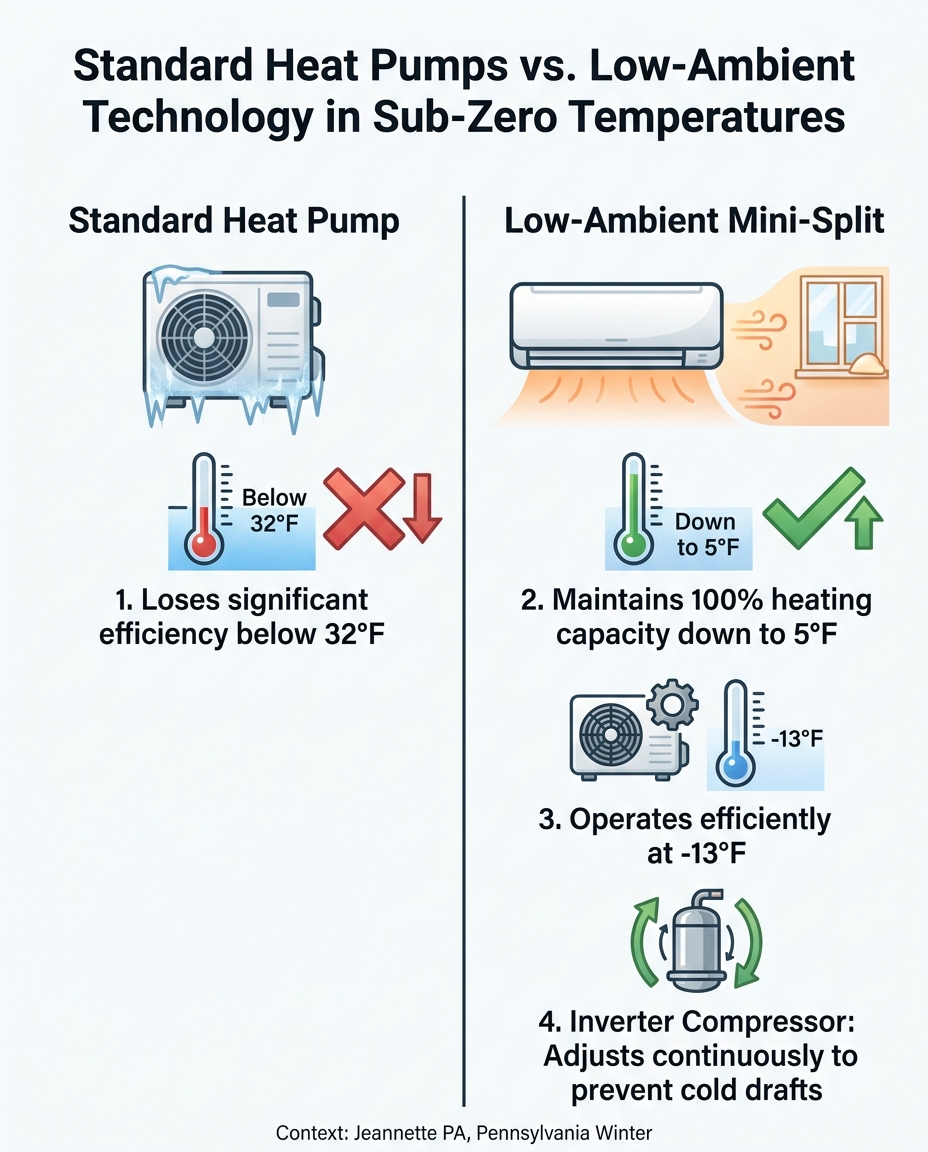
If you have heard stories about heat pumps blowing cold air during a blizzard, you are likely thinking of older, traditional models. Standard heat pumps historically lost their heating capacity as temperatures approached freezing. However, modern ductless systems utilize low-ambient (hyper-heating) technology, completely rewriting the rules of winter comfort.
To understand how a mini-split can heat your sunroom during Western Pennsylvania's deep winter snaps and wind chills, you have to understand how heat transfer works. Even when the air outside feels freezing to the human skin, there is still thermal energy present. Absolute zero (the point where all heat energy stops) is roughly -460°F. At 0°F, there is still plenty of heat energy in the outside air for a specialized system to harvest.
Low-ambient technology uses advanced refrigerants and variable-speed compressors to extract this ambient heat from freezing outdoor air, compress it to a higher temperature, and transfer it inside to warm your sunroom. According to Department of Energy data, today's cold-climate heat pumps can operate efficiently down to -13°F and sometimes even lower.
When you invest in high-efficiency heat pumps designed specifically for northern climates, you are getting a system built to withstand sub-zero deep freezes. These units feature enhanced coil designs, specialized software algorithms, and basepan heaters that prevent the outdoor unit from freezing solid. You can rest assured that a properly specified low-ambient system will not freeze up or leave you stranded during a January blizzard.

Proper BTUs and Load Calculations for Glass-Heavy Spaces
One of the biggest mistakes homeowners make when trying to heat a sunroom is assuming that generic sizing rules apply. You cannot simply measure the square footage of the room and buy an off-the-shelf heater based on a basic chart. Because sunrooms lose heat so rapidly, they require precise, professional sizing.
The Problem: Unique Thermal Dynamics
A standard 200-square-foot bedroom with insulated drywall might only need a small amount of heating capacity. That exact same square footage in a sunroom requires significantly more BTUs (British Thermal Units) because of the glass walls and uninsulated floors. If you use standard bedroom calculations for Jeannette PA sunroom additions, your system will fail to keep the room warm when the temperature drops.
The Cause: Undersizing vs. Oversizing
Guessing the required BTUs leads to two distinct problems. Undersizing means the unit lacks the capacity to overcome the heat loss. The system will run constantly, driving up your energy bills, but the room will still feel cold. Oversizing is just as problematic. An oversized unit will blast the room with heat, satisfy the thermostat too quickly, and shut off. This leads to "short cycling," which causes uneven temperatures, poor humidity control, and premature wear on the compressor components.
The Solution: Professional Load Calculations
To determine the exact system size needed, a professional HVAC technician performs a rigorous load calculation. This process involves assessing the room's specific insulation levels, the exact square footage and type of glass, the direction the room faces (sun exposure), and the total cubic volume of the vaulted ceilings.
As a local team that understands the specific architectural quirks of Jeannette homes, Cochran Heating & Cooling knows exactly how to account for these variables. Proper cold-weather load calculations require professional expertise and specialized software. This is not a DIY project; getting the math wrong guarantees a cold room and a wasted investment.
Inverter-Driven Compressors vs. Inefficient Space Heaters
When faced with a freezing sunroom, the default reaction for many homeowners is to plug in an electric space heater. While this might seem like a cheap, temporary fix, it is actually the most expensive and uncomfortable way to heat a space during sub-zero deep freezes.
Modern mini-splits utilize inverter-driven compressors. Think of a standard space heater or an old furnace like a light switch—it is either 100% on or 100% off. This creates a rollercoaster of temperatures: the room gets too hot, the heater shuts off, the room gets freezing cold, and the heater kicks back on.
An inverter-driven compressor operates more like the gas pedal in your car. It adjusts its speed continuously, ramping up slightly when the room needs a little more warmth and slowing down when the target temperature is reached. This eliminates cold drafts and maintains a precise, consistent temperature all day long.
• Temperature Control — Inverter-Driven Mini-Split: Continuous, precise adjustments; no cold drafts. — Electric Space Heater: On/off cycling; uneven heating and frequent temperature swings.
• Energy Efficiency — Inverter-Driven Mini-Split: Transfers heat from outside; highly efficient operation. — Electric Space Heater: Generates heat via electrical resistance; extremely high energy consumption.
• Safety — Inverter-Driven Mini-Split: Wall-mounted or ceiling-mounted; no exposed heating elements. — Electric Space Heater: High risk of fire; dangerous tip-over hazards and hot surfaces.
• Coverage — Inverter-Driven Mini-Split: Circulates warm air evenly throughout the entire vaulted room. — Electric Space Heater: Only heats the immediate few feet surrounding the unit.
Because heat pumps transfer heat rather than generating it from scratch, they offer incredible long-term energy efficiency. While there are upfront costs associated with installing a permanent ductless system, many homeowners find that generic energy efficiency rebates, tax credits, and flexible HVAC financing options make the upgrade highly accessible. By ditching the space heater, you lower your monthly electric bills and drastically improve the safety of your home.
Why September is the Critical Window for Sunroom Upgrades
If you want to use your sunroom this winter, timing is everything. Waiting until the snow is already falling to explore your heating options is a recipe for frustration. September provides the critical window for sunroom upgrades, and proactive planning always beats reactive scrambling.
Here is why you should prioritize your early fall pre-heating prep:
1. Contractor Availability Plummets: HVAC contractors book up incredibly fast once the first freeze hits. When the temperature drops, companies are flooded with emergency furnace repair calls. If you wait until November to schedule a sunroom installation, you may find yourself waiting weeks for an available appointment.
2. Holiday Readiness: A sunroom is the perfect place to host family gatherings, set up a large dining table, or simply relax with a cup of coffee while watching the snow fall. Scheduling an installation in early fall ensures the space is fully tested, comfortable, and ready for Thanksgiving and winter holiday gatherings.
3. Ideal Installation Conditions: Mild autumn weather provides the perfect conditions for a smooth, uninterrupted installation process. Technicians can complete the outdoor portion of the installation without battling ice, snow accumulation, or freezing rain.
By taking action now, you secure your spot on the schedule. Working with a trusted family-owned HVAC team in Jeannette ensures you get personalized attention before the frantic winter rush begins.
Frequently Asked Questions About Heating Sunrooms in Western PA
Can a mini split heat a sunroom in winter?
Yes, provided it is a low-ambient or hyper-heating model specifically designed for cold climates. Standard models may struggle to keep up with the heat loss through the glass, but cold-climate heat pumps excel in sunrooms, keeping the space comfortable all winter long.
At what temperature do mini splits stop heating?
Traditional heat pumps lose efficiency around freezing, but modern cold-climate models provide reliable heat down to -13°F or lower. They continue to extract heat energy from the outside air even during sub-zero deep freezes, ensuring your sunroom never turns into an icebox.
Are heat pumps effective in Pennsylvania winters?
Absolutely. Western Pennsylvania winters demand robust heating, and inverter-driven heat pumps are fully capable of handling the region's deep freezes. Proper sizing, professional load calculations, and expert installation are the keys to success when combating local weather patterns.
How do you heat a 4-season room in a cold climate?
The most efficient method is installing a ductless mini-split system. It bypasses the need for extending traditional ductwork, provides zoned temperature control exclusively for that room, and operates much more safely and efficiently than relying on portable electric space heaters.
Will the outdoor unit freeze solid in the snow?
Cold-climate units feature built-in defrost cycles and basepan heaters designed specifically to prevent ice buildup. Furthermore, professionals install the outdoor condensers on specialized snow stands or wall brackets to keep them elevated above typical winter snowfall levels.
Reclaim Your Sunroom Before the First Winter Freeze
You do not have to abandon your sunroom just because the calendar turns to November. A modern ductless system definitively solves the sunroom heating problem, proving that you can enjoy your glass-heavy spaces without shivering or running up massive electric bills with space heaters.
By tackling your early fall pre-heating prep now, you secure the peace of mind that comes from having a professionally sized, low-ambient system tailored exactly to your home's architecture. Stop letting the weather dictate how much of your house you are allowed to use. Reach out to a local expert today to discuss your specific sunroom layout, verify your load calculation requirements, and reclaim your favorite room before the first harsh freeze arrives.