Can I Delay My 24-Hour Furnace Repair If I Have Space Heaters?
Why a Weekend Furnace Breakdown Demands Immediate Attention
Late fall cold snaps heading into winter are notorious for catching homeowners off guard, dropping temperatures well below freezing overnight. At Cochran Heating & Cooling, this sudden chill often leads people to ask our team: can I delay my 24-hour furnace repair if I have space heaters? When a heating system suddenly fails on a Friday evening, a pattern we see often is the immediate temptation to plug in a few portable heaters, huddle in the living room, and wait until regular business hours to avoid an after-hours service call. While this might seem like a practical workaround, it fundamentally misunderstands the role a central HVAC system plays in protecting the structural integrity of your home.
If you are dealing with a sudden heating failure, securing professional heating services immediately is the safest course of action. While space heaters can certainly warm a single room and keep you comfortable in the short term, delaying a necessary repair during freezing temperatures leaves your home's plumbing highly vulnerable. Without warm air actively circulating through the ductwork and reaching the outer edges of the house, pipes hidden in exterior walls, basements, and crawlspaces can rapidly freeze and burst. True residential heating is about far more than personal comfort; it is a critical defense system designed to protect the entire home's infrastructure from catastrophic winter damage.
The False Security of a Warm Living Room
When localized heat sources are running, the immediate vicinity feels perfectly fine. A thermostat located in the same room as a portable heater might even register a comfortable 70 degrees. However, this localized warmth creates a false sense of security. The thermostat is no longer reading the actual temperature of the entire house. As the central core of the home remains warm, the perimeter is steadily losing heat to the freezing outdoor air. By the time you realize the outer walls have plunged below freezing, the damage to the plumbing infrastructure is often already underway.
Space Heaters vs. Central Heating: The Circulation Problem
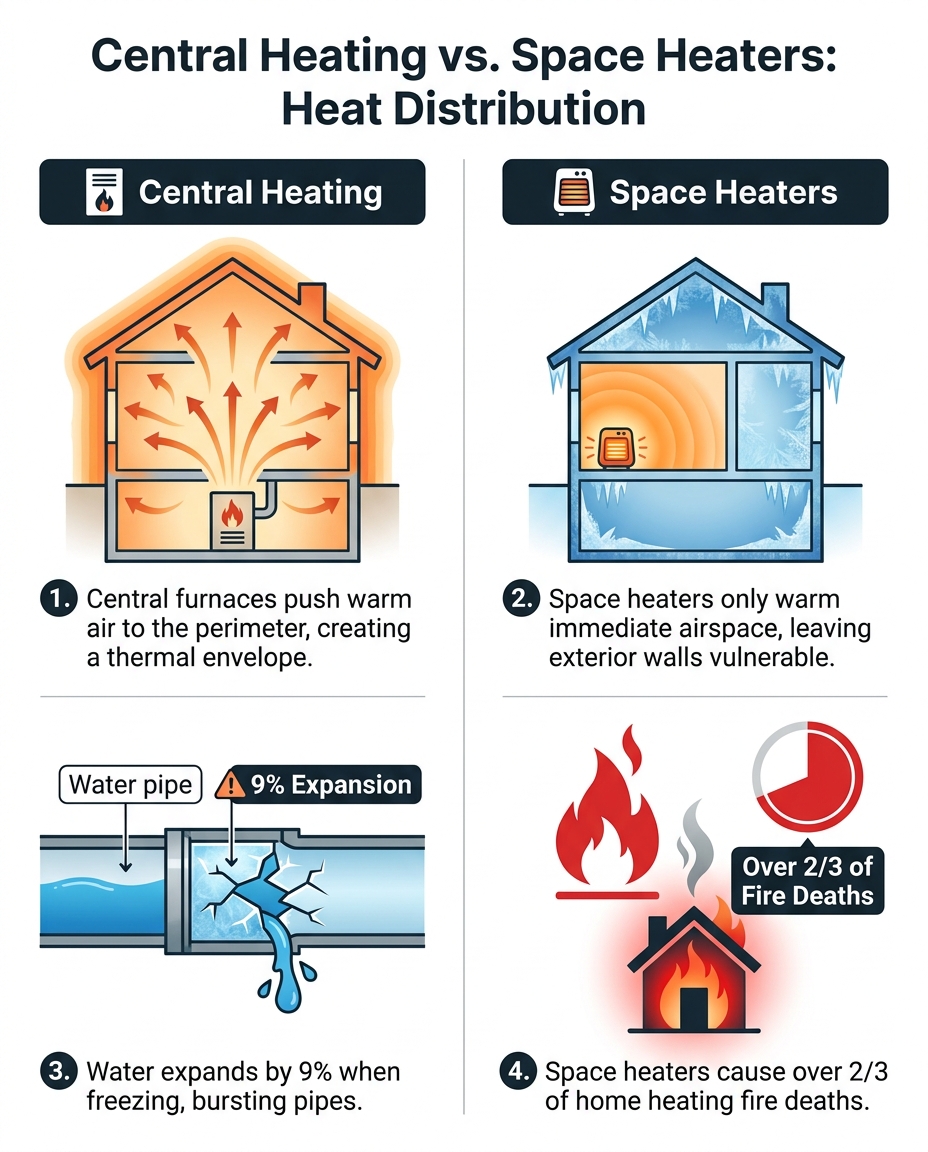
To understand why portable units are inadequate substitutes for a central system, it is essential to look at the physics of home heating. A central furnace does not just generate heat; it creates a dynamic thermal envelope by actively pushing warm air to the perimeter of the home. When forced-air circulation stops, that protective envelope collapses. This is why scheduling a prompt furnace repair is so critical when the system goes offline.
In our years of servicing Jeannette PA and Western PA regional homes, our technicians have seen firsthand that central heating systems are specifically designed to combat the local climate by distributing heat to the areas that lose it fastest—usually the exterior walls and windows. Space heaters, by contrast, only warm the immediate interior airspace through radiant or localized convection heat. They lack the mechanical force required to push warm air down hallways, into enclosed wall cavities, or through unheated basements.
Breaking Down the Heating Differences
The differences between whole-house circulation and localized heating become stark when you compare their operational mechanics during a freeze.
• Air Distribution — Central Furnace System: Actively forces warm air into every connected room via ductwork. — Portable Space Heaters: Relies on passive convection; heat remains trapped in a single room.
• Perimeter Protection — Central Furnace System: Creates a thermal barrier against exterior walls and windows. — Portable Space Heaters: Leaves exterior walls and distant rooms exposed to outdoor temperatures.
• Plumbing Defense — Central Furnace System: Warms internal wall cavities, basements, and crawlspaces where pipes run. — Portable Space Heaters: Provides zero heat to enclosed spaces, leaving pipes highly vulnerable.
• Operational Safety — Central Furnace System: Safely exhausts combustion gases outdoors; designed for continuous operation. — Portable Space Heaters: Poses significant electrical and fire hazards if left unattended.
The thermal boundary failure: When you rely on a localized source, the core of the house might feel perfectly warm, while the edges are steadily plunging toward freezing. Without the blower motor forcing heated air into the distant corners of the floor plan, the natural cold from outside easily penetrates the exterior walls. This lack of circulation is the primary reason why a functioning furnace acts as the main defense system for a home's structural integrity.

The Hidden Risk of Frozen Pipes in Unheated Walls
The most severe consequence of relying on localized heat during a breakdown is the catastrophic risk to your plumbing. The science of freezing water is uncompromising: when water turns to ice, it expands by approximately 9%. This expansion creates immense hydraulic pressure inside enclosed plumbing lines—pressure that can easily exceed thousands of pounds per square inch. This force is more than enough to burst both rigid metal pipes and flexible plastic lines.
Our emergency dispatch team frequently responds to flooded basements in many Jeannette PA and Western PA regional homes because older plumbing systems are particularly susceptible to rapid temperature drops. These homes often feature water lines routed through areas that rely entirely on ambient heat from the central HVAC system to stay above freezing.
Identifying High-Risk Plumbing Zones
When the central blower stops circulating air, certain areas of the house lose their heat much faster than others. The spaces most vulnerable to rapid freezing include:
• Exterior wall cavities: Pipes running along the outer shell of the house are insulated from the outside, but they rely on heat penetrating the drywall from the inside to stay warm.
• Unheated basements: Without the radiant heat loss from ductwork or the direct output of the furnace, basement temperatures can plummet rapidly.
• Crawlspaces: These areas are heavily exposed to ground temperatures and outdoor air drafts, making them the first places pipes will freeze during a failure.
• Under-sink cabinets: Kitchens and bathrooms located on exterior walls often trap cold air inside the cabinets, isolating the pipes from whatever minimal heat is in the room.
The cascading damage of a burst pipe: When a frozen pipe finally thaws and bursts, the resulting water damage far exceeds the inconvenience of an initial heating breakdown. A single ruptured line can release hundreds of gallons of water into walls, ceilings, and flooring in a matter of hours. The extensive water extraction, drywall replacement, and mold remediation required after a burst pipe make the cost and effort of an immediate after-hours HVAC repair look negligible by comparison.
Fire Hazards and Electrical Limitations of Space Heaters
Beyond the structural risks to the home's plumbing, relying on portable units as a primary heat source introduces severe safety hazards. While modern portable heaters are equipped with tip-over switches and overheat sensors, they are fundamentally designed for supplemental, supervised use—not as a whole-house replacement system during late fall cold snaps heading into winter.
National Fire Protection Association (NFPA) data consistently shows that space heaters account for a vast majority of home heating fire deaths. When homeowners attempt to heat multiple rooms to avoid an emergency repair call, they often push their residential electrical systems far beyond their safe operating limits.
Critical Safety Limitations of Portable Heating
1. Overloaded Electrical Circuits: A standard portable heater draws approximately 1,500 watts of power. Running two of these on the same electrical circuit will almost certainly overload the wiring, leading to tripped breakers or, worse, overheating wires hidden inside the walls.
2. The Danger of Extension Cords: Because wall outlets are not always conveniently located, homeowners often use extension cords to position heaters. Standard extension cords cannot handle the continuous high-amperage draw of a heating element, causing the cord to melt and potentially ignite surrounding materials.
3. Unattended Overnight Operation: Fire safety experts strongly advise against leaving portable heaters unattended. Running them while sleeping removes the human supervision necessary to react if a unit malfunctions, tips over onto a soft surface, or begins to overheat nearby curtains or bedding.
4. Clearance Zone Violations: Portable units require a strict three-foot clearance from anything combustible. In cramped bedrooms or cluttered living spaces, maintaining this safe zone continuously over a weekend is highly difficult, increasing the risk of accidental ignition.
The electrical strain reality: Residential electrical panels are not engineered to support continuous, high-wattage heating loads across multiple rooms simultaneously. Attempting to heat a house this way is not just inefficient; it is a significant fire hazard that puts the occupants at immediate risk.
The True Cost of Delaying Necessary Heating Repairs
Homeowners often hesitate to call for after-hours service because they are trying to avoid emergency dispatch fees. However, addressing a weekend breakdown is not just about restoring comfort; it is a vital home protection measure. The false economy of waiting out a cold weekend becomes painfully clear when you analyze the compounding risks and secondary expenses.
If you choose to wait out late fall cold snaps heading into winter, you are effectively trading a standard emergency repair fee for the potential of catastrophic water damage restoration. The hidden costs of delaying a 24-hour HVAC repair go far beyond the repair invoice itself.
The Domino Effect of a Weekend Heating Delay
Scheduling bottlenecks: During sudden cold snaps, HVAC service schedules fill up incredibly fast. If you wait until Monday morning to call, you will find yourself competing with every other homeowner who also waited. This often means waiting even longer in a queue, extending the time your home is exposed to freezing temperatures.
Excessive utility consumption: Portable electric heaters are notoriously inefficient when used to heat large spaces. Running multiple 1,500-watt units continuously for 48 to 72 hours will cause a massive spike in your electricity usage. The resulting utility bill can easily wipe out whatever savings you thought you were achieving by delaying the professional repair.
System deterioration: A pattern our repair team sees often is that a furnace initially shuts down due to a safety switch tripping or a minor component failing. Leaving the system in a compromised state, or repeatedly trying to reset a failing unit, can cause secondary damage to the control board or blower motor. What might have been a straightforward component replacement on Friday night can escalate into a major system overhaul by Monday.
Frequently Asked Questions About Emergency Furnace Failures
Will pipes freeze if I only use space heaters?
Yes, pipes located in exterior walls, unheated basements, and crawlspaces are highly likely to freeze even if you are using localized heaters. Portable units do not circulate warm air to the perimeter of the home. Because the heat remains trapped in a single room, the distant areas where plumbing is routed remain fully exposed to freezing outdoor temperatures.
How long can you go without heat before pipes freeze?
Depending on the outside temperature and the quality of your home's insulation, pipes can begin to freeze within 24 to 48 hours of a central heating failure. In Jeannette PA and Western PA regional homes with older plumbing or poor insulation, this timeline can be significantly shorter during a severe overnight freeze.
Is a broken furnace considered an emergency?
Yes, a broken furnace is absolutely considered an emergency if outside temperatures are below freezing. A total loss of central heat poses immediate risks to both occupant safety and the home's plumbing infrastructure, making prompt professional intervention necessary to prevent structural damage.
Is it safe to leave a space heater on overnight?
No, fire safety experts and the NFPA strongly advise against leaving portable heaters unattended or running while sleeping. The high risk of electrical fires, overloaded circuits, or accidental ignition of nearby combustible materials makes overnight operation incredibly dangerous.
Can I use my oven to heat my house while waiting for repairs?
Never use a gas or electric oven for home heating under any circumstances. Using an oven for space heating is a severe fire hazard, and running a gas oven open for extended periods poses a lethal risk of carbon monoxide poisoning to everyone inside the home.
Protect Your Home With Prompt Professional Heating Restoration
When temperatures drop and your system fails, the answer to the question "can I delay my 24-hour furnace repair if I have space heaters?" is a definitive no. Protecting your home's infrastructure requires reliable, whole-house air circulation that localized units simply cannot provide. Relying on portable heat during late fall cold snaps heading into winter is a gamble that risks your safety, strains your electrical system, and leaves your plumbing dangerously exposed to freezing.
Do not risk catastrophic water damage or fire hazards by waiting until Monday. Our team at Cochran Heating & Cooling has spent years protecting Westmoreland County homes from severe winter damage, offering reliable emergency HVAC repairs when you need them most. If your system has failed during a cold snap, take immediate action to restore your home's thermal envelope and secure your peace of mind.