Hard Water Impact on Boiler Systems in Westmoreland County
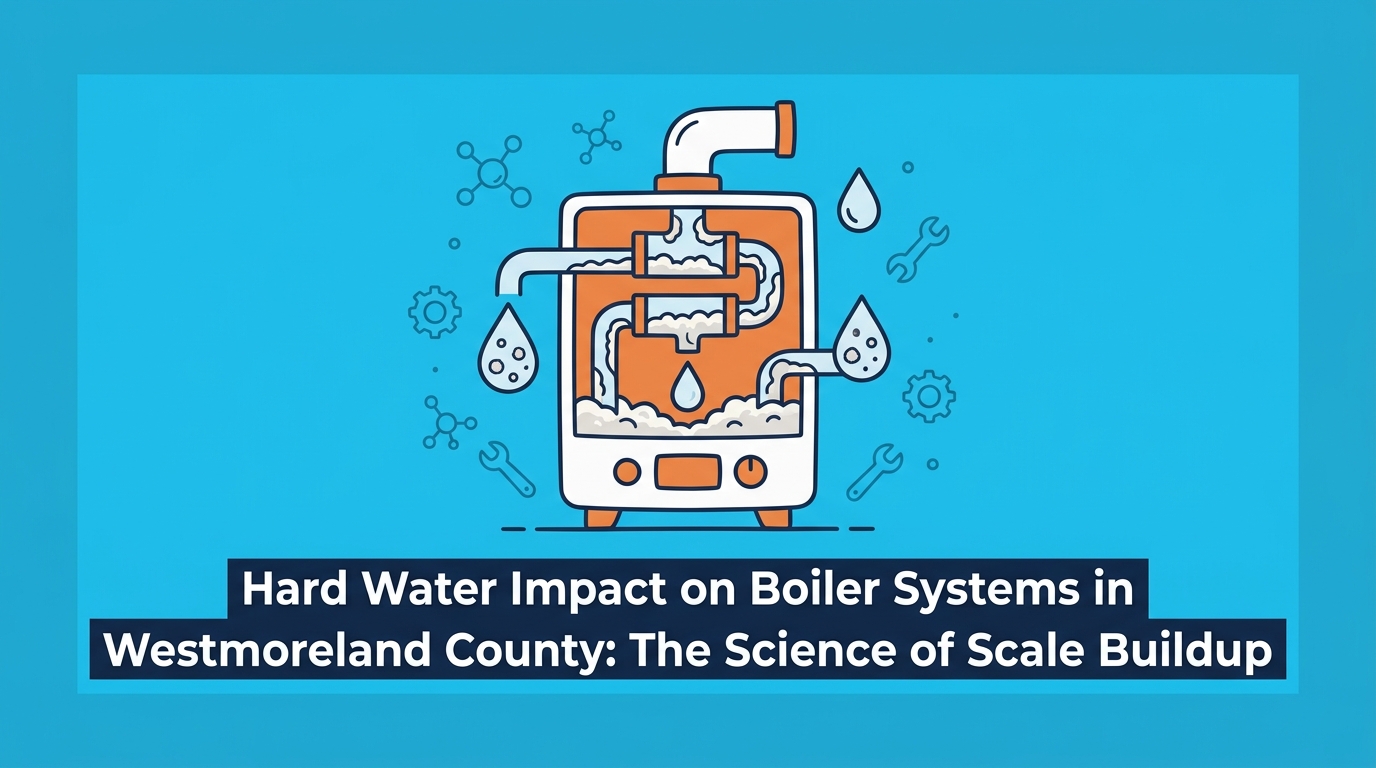
The 15 Percent Efficiency Penalty of Local Municipal Water
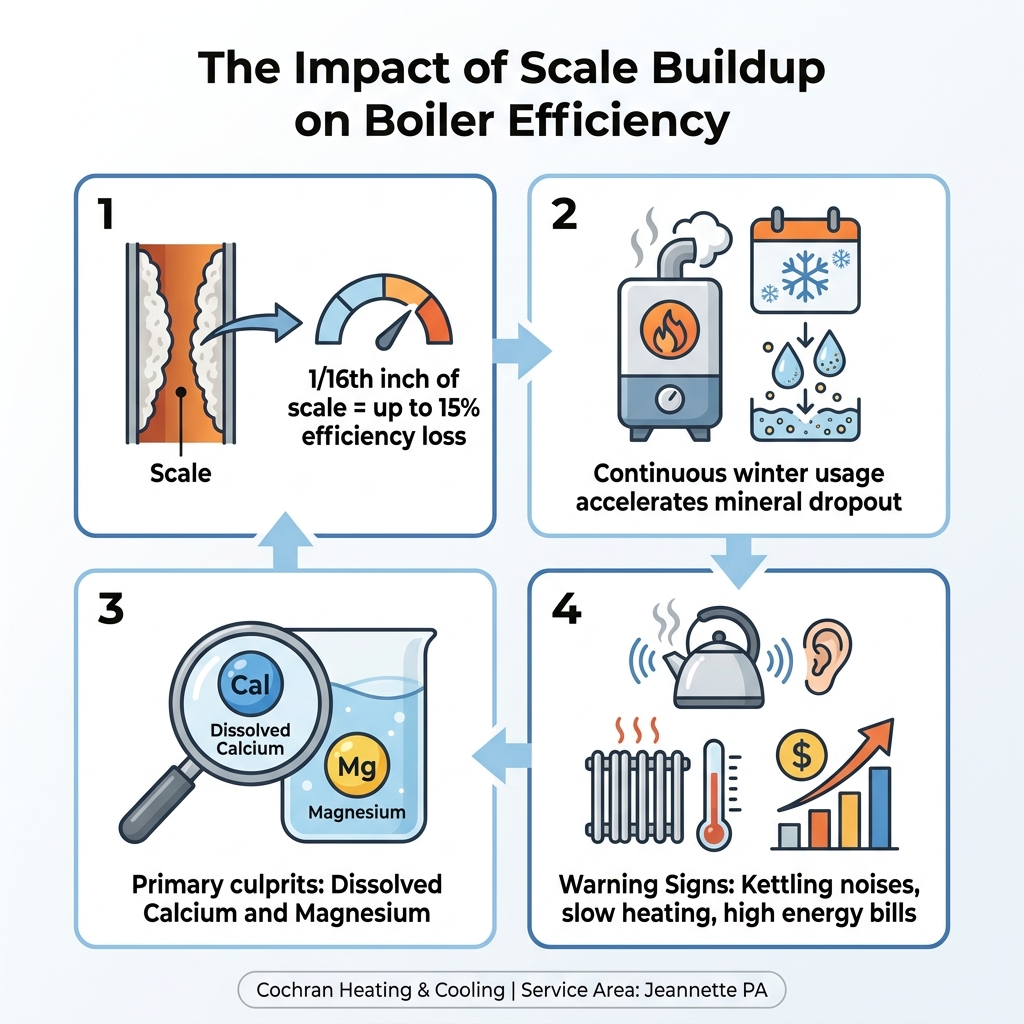
According to Department of Energy guidelines, a mere 1/16th of an inch of scale buildup can slash your equipment's heating efficiency by up to 15 percent. If you are researching the Hard Water Impact on Boiler Systems in Westmoreland County, that statistic is the exact reality your equipment faces as temperatures begin to drop. When you rely on home heating systems to keep your family safe through the winter, understanding this silent degradation is the critical first step in determining when it is time to schedule professional boiler services.
At Cochran Heating & Cooling, our team frequently sees how local municipal water chemistry presents a unique and aggressive challenge for residential heating systems as winter approaches. Across Westmoreland County municipalities like Jeannette and Greensburg, the water supply carries a specific concentration of dissolved minerals. When this water enters your heating equipment, those minerals do not simply pass through. They actively bond to the hottest internal surfaces of your equipment.
Rather than generic wear and tear, homeowners in our region must actively defend against this mineral deposition to avoid catastrophic mid-winter breakdowns. A heating system that our technicians tune up in early October can easily suffocate under a layer of rock-hard scale by January if left unmonitored. This is not a matter of simply replacing a dirty filter; it is a chemical process that physically alters the internal geometry of your heat exchanger, forcing your equipment to work significantly harder just to maintain basic indoor comfort.
How Calcium and Magnesium Attack Heat Exchangers
We can skip the basic boiler introductions: when our crews perform pre-winter inspections, we find that the real issue is the dissolved calcium and magnesium inherent in local water supplies, and how these specific elements react to extreme heat. When you operate non-steam residential boilers, the system relies on rapid, efficient thermal transfer. The burner ignites, the primary heat exchanger absorbs that thermal energy, and the metal transfers that heat directly into the water circulating through your baseboards or radiators.
The problem of precipitation: When mineral-heavy water is heated, the calcium and magnesium carbonates precipitate out of solution. They transform from dissolved microscopic particles into solid crystalline structures that cling directly to the interior walls of the heat exchanger. This forms a hard, chalky layer of scale that acts as a powerful thermal insulator.
The efficiency barrier: This scale acts as a physical barrier between the flame and the water. Because the heat cannot transfer efficiently through the mineral crust, your system is forced to burn significantly more fuel to transfer the same amount of heat into the home. The table below illustrates how rapidly this insulating effect degrades performance:
• 1/64 inch — Estimated Efficiency Loss: ~4% — System Impact: Slight increase in fuel consumption; longer heating cycles.
• 1/32 inch — Estimated Efficiency Loss: ~7% — System Impact: Noticeable spike in energy bills; slower recovery times.
• 1/16 inch — Estimated Efficiency Loss: ~15% — System Impact: Severe thermal barrier; high risk of localized overheating.
• 1/8 inch — Estimated Efficiency Loss: ~25%+ — System Impact: Critical failure risk; metal fatigue and potential heat exchanger cracking.
The solution to metal fatigue: Over time, the localized overheating caused by this insulation effect can cause the metal of the heat exchanger to fatigue, warp, and ultimately crack. To prevent this, our technicians strongly recommend proactive chemical neutralization before the scale reaches a critical thickness.
The Chemistry of Mineral Precipitation
The rate of mineral dropout is not linear; it accelerates exponentially as temperatures rise. The hotter the heat exchanger gets, the faster the calcium and magnesium bake onto the metal. Many homeowners assume that because their heating equipment uses a closed-loop design, scale is not a threat after the initial fill. However, we consistently find this to be a dangerous misconception.
Even closed-loop systems are highly vulnerable if they require frequent makeup water due to minor leaks, weeping valves, or micro-fissures in the piping. Every time the automatic fill valve introduces fresh municipal water to replace lost volume, it introduces a brand new batch of dissolved calcium and magnesium, feeding the scale buildup continuously throughout the winter.

The Silent Degradation of Pressure Relief Valves
Beyond the severe efficiency losses, hard water scale poses a direct, physical threat to the safety mechanisms of your heating equipment. The most critical safety component on your system is the pressure relief valve. This valve is designed to open automatically and vent excess pressure if the internal forces ever exceed safe operating limits. If this valve fails, the results can be catastrophic.
Pressure relief valves are highly susceptible to mineral encrustation. As microscopic amounts of water naturally weep or evaporate near the valve seat over years of operation, the dissolved minerals are left behind. These deposits crystallize, slowly fusing the internal brass and rubber components together. When a pressure relief valve becomes encrusted with this hard water scale, it may be physically prevented from opening at the correct pressure threshold.
Alternatively, scale can prevent a valve from seating properly once it has successfully opened. A tiny flake of calcium trapped in the valve seat will cause a continuous, dripping leak. This introduces our previous problem: the automatic fill valve will constantly feed fresh, mineral-heavy water into the system to replace the leaking water, rapidly accelerating the scale buildup across the entire system.
This specific vulnerability is exactly why the Cochran Heating & Cooling methodology for inspecting equipment across our Westmoreland County service areas always includes a rigorous, hands-on check of these valves. Working extensively with Westmoreland County municipalities like Jeannette and Greensburg means our technicians possess deep local expertise regarding the specific municipal water mineral content in our region. This local knowledge dictates our strict valve inspection protocols, ensuring that safety mechanisms are completely free of mineral crystallization before the heavy heating season begins.
Diagnosing 'Kettling' and Other Symptoms of Scale Buildup
Because the interior of a heat exchanger is completely hidden from view, our team always advises homeowners to rely on auditory and operational symptoms to identify advanced scale buildup. Recognizing these signs early in non-steam residential boilers prevents irreversible damage to the primary heat exchanger and surrounding components.
Here is what you should be monitoring as your system cycles on during those first chilly fall mornings:
• The "Kettling" sound: A distinct rumbling, popping, or banging noise that sounds exactly like a boiling tea kettle on a stovetop.
• Extended recovery times: The system takes noticeably longer to raise the indoor temperature compared to previous winters.
• Uneven zone heating: Certain baseboards or radiators remain lukewarm while others get blazing hot, indicating flow restrictions.
• Unexplained energy spikes: Your monthly gas or oil consumption rises sharply despite keeping the thermostat at the same setting.
• Frequent short-cycling: The burner shuts off prematurely because the localized heat cannot escape the scaled-up heat exchanger, tripping the internal high-limit safety switch.
Auditory Warning Signs
When our dispatch phone rings in mid-fall with complaints of a banging boiler, our first suspect is always kettling. Differentiating between normal expansion noises and destructive kettling is crucial. Normal expansion sounds like a slow ticking or light tapping as metal pipes heat up and rub against wooden floor joists. Kettling is a deep, aggressive rumbling from the boiler itself.
This noise occurs when a layer of scale becomes so thick that water becomes trapped underneath it, directly against the superheated metal. This trapped water flashes into steam instantly, expanding violently and creating a localized micro-explosion. These popping sounds are the physical shockwaves of steam collapsing back into water. If you hear this, it requires immediate professional diagnostics from a qualified technician, as the shockwaves are actively fatiguing the metal of your heat exchanger.
Performance Drop-Offs
Tracking slower heat-up times is another critical diagnostic tool. As the insulating scale layer thickens, you will notice your thermostat struggling to maintain its set points, especially during deep freezes. The burner will run continuously, yet the ambient room temperature will barely climb. This performance drop-off is a direct mathematical result of the 15 percent efficiency penalty taking its toll on your daily comfort.
Why Continuous Winter Usage Accelerates Mineral Deposition
The freezing temperatures of a Pennsylvania winter demand continuous, heavy operational cycles from your heating equipment. This relentless demand is the primary catalyst for rapid scale accumulation. When the outdoor temperature hovers in the teens or single digits for days on end, your system rarely gets a chance to cool down.
This continuous heating cycle exponentially accelerates the rate at which calcium and magnesium precipitate out of the water. The thermodynamics of hard water dictate that mineral dropout increases aggressively as the water temperature rises and remains elevated. What begins as a minor, almost microscopic mineral coating during the mild days of October can rapidly compound into a severe, flow-restricting blockage by the time January arrives.
Because freezing PA winters require such continuous heavy usage, efficiency losses and unexpected valve failures become highly disruptive and dangerous. A system that is already struggling to push heat through a layer of scale will likely fail completely when pushed to its absolute limit during a polar vortex.
As experienced, family-owned HVAC professionals, the Cochran Heating & Cooling team understands that these specific regional usage patterns make accurate system calibration crucial. In Westmoreland County municipalities like Jeannette and Greensburg, we see firsthand how the combination of our local water chemistry and our harsh winter climate creates the perfect storm for heat exchanger failure if proactive measures are ignored.
The Necessity of Professional Descaling Over DIY Fixes
When our crews identify scale in non-steam residential boilers during fall maintenance visits, professional flushing and descaling becomes a required procedure. Treating hard water scale requires specific, professionally calibrated chemical flushes that dissolve the minerals without eating away at the heat exchanger's delicate metal.
We strongly warn against attempting DIY descaling with over-the-counter acids or internet "hacks," as it is incredibly dangerous to your equipment. Generic acids can destroy internal rubber seals, degrade copper piping, void manufacturer warranties instantly, and cause catastrophic pressure valve failures. The chemistry inside a modern heating system is highly sensitive, and introducing the wrong pH balance will initiate galvanic corrosion, destroying the system from the inside out.
A proper, professional preventative maintenance plan includes testing the water's pH and mineral content first, allowing our technicians to apply the exact correct neutralizing agents for your specific system metallurgy. Professional flushing removes the insulating layer safely, restoring factory-rated efficiency just in time for the cold season, and ensuring the system's longevity.
The Dangers of Improper Chemical Flushing
Understanding how incorrect acid ratios degrade internal copper and cast iron components is vital. If a chemical flush is too aggressive, it strips the protective passivation layer off the internal metals, leading to rapid rusting the moment fresh water is reintroduced.
Furthermore, improper flushing techniques run the risk of dislodging large, solid chunks of scale rather than dissolving them completely. These heavy chunks will travel through the piping until they reach a narrow system waterway, a circulator pump impeller, or a zone valve, creating a complete blockage that stops all heat transfer to that area of the home. Only professional-grade neutralizing pumps and calibrated solutions can ensure the scale is fully dissolved into a liquid state before it is safely flushed out of the system.
Common Questions About Hard Water and Heating Systems
What are the signs of scale buildup in a boiler?
The most obvious signs are auditory, specifically a deep rumbling or popping noise known as "kettling." You will also likely notice uneven heating across different rooms, a gradual increase in your monthly energy bills, and a system that runs constantly but struggles to reach the temperature set on the thermostat. In our experience servicing Westmoreland County municipalities like Jeannette and Greensburg, these symptoms usually point directly to mineral accumulation on the heat exchanger.
How does hard water affect boiler efficiency?
Hard water contains dissolved calcium and magnesium that bake onto internal heating surfaces, creating a chalky, insulating layer of scale. This scale acts as a barrier between the burner's flame and the water, forcing the system to consume significantly more fuel to achieve the same amount of heat transfer. According to energy guidelines, even a tiny fraction of an inch of this buildup can reduce heating efficiency by up to 15 percent.
How do you treat hard water in a heating system?
Treating hard water inside a heating system requires a professionally calibrated chemical flush that dissolves the mineral bonds without damaging the internal metals. Our technicians always test the system's water chemistry first to ensure the correct neutralizing agents are used. Once the existing scale is safely flushed out, specialized water treatments and corrosion inhibitors are added to the closed-loop system to prevent future minerals from precipitating out of solution.
Why does my boiler sound like a boiling kettle?
That rumbling or popping noise occurs when a thick layer of mineral scale forms on the heat exchanger, trapping small pockets of water directly against the superheated metal. This trapped water flashes into steam instantly, expanding violently and creating shockwaves that sound like a boiling kettle. This is a serious condition that physically stresses the metal and requires immediate professional diagnostics to prevent a cracked heat exchanger.
Can hard water cause my boiler's pressure relief valve to leak?
Yes, hard water is a primary cause of pressure relief valve failure. As tiny amounts of water evaporate near the valve seat, they leave behind hard mineral deposits that crystallize and prevent the rubber seal from closing completely. This results in a continuous, dripping leak that forces the system to constantly pull in fresh, mineral-heavy makeup water, which only accelerates further scale buildup throughout the equipment.
Secure Your Comfort Before the Freeze
Do not wait for a pressure valve to fail or for aggressive kettling noises to keep you awake on a freezing January night. The mid-fall pre-winter heating startup period is the absolute most critical time to evaluate your equipment's internal health. Addressing local municipal water scale now ensures your system runs at peak efficiency all winter long, protecting both your monthly energy budget and the physical lifespan of your heat exchanger. Talk to the experts at Cochran Heating & Cooling about scheduling a comprehensive flush and inspection today, and secure your family's comfort before the heavy winter weather arrives.