How the Shift in Fall Humidity Impacts Your HVAC Blower Motor
Noticing a Change in Your HVAC Airflow This Fall?
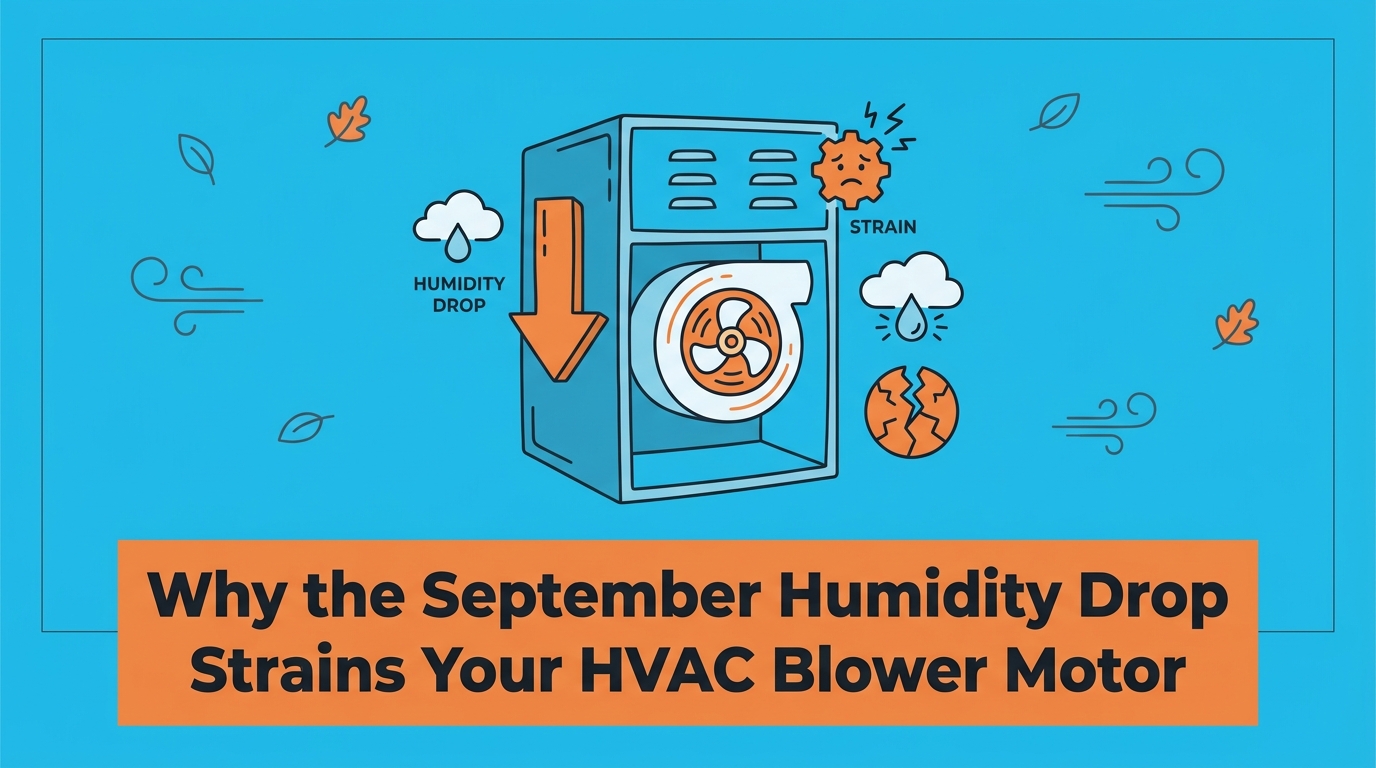
You turn on your system, and the airflow sounds noticeably louder, almost as if it is struggling to push air through the vents. Understanding exactly how the shift in fall humidity impacts your HVAC blower motor is the key to knowing whether this is a harmless seasonal adjustment or an early warning sign of equipment failure. It happens every year during the September fall transition. The heavy, oppressive heat of August finally breaks, but suddenly your ductwork seems noisier. The air coming out of the registers feels different, and the furnace motor itself might sound like it is working overtime.
This creates a common decision point for homeowners: do you ignore the new sounds and assume it is just the weather, or do you call a technician before the real cold sets in? The answer lies in the invisible physics happening inside your home. If you are concerned about your system's performance, our comprehensive Heating Services can help you evaluate your equipment and prepare for the cold season ahead.
The Counterintuitive Physics of Autumn Air Density
Most people assume that humid summer air is "heavy." We routinely describe late August afternoons as feeling thick, stagnant, or oppressive. But from a purely scientific standpoint, humid air is actually much lighter and less dense than dry air. Understanding this counterintuitive fact is crucial for understanding how your heating and cooling system operates throughout the year.
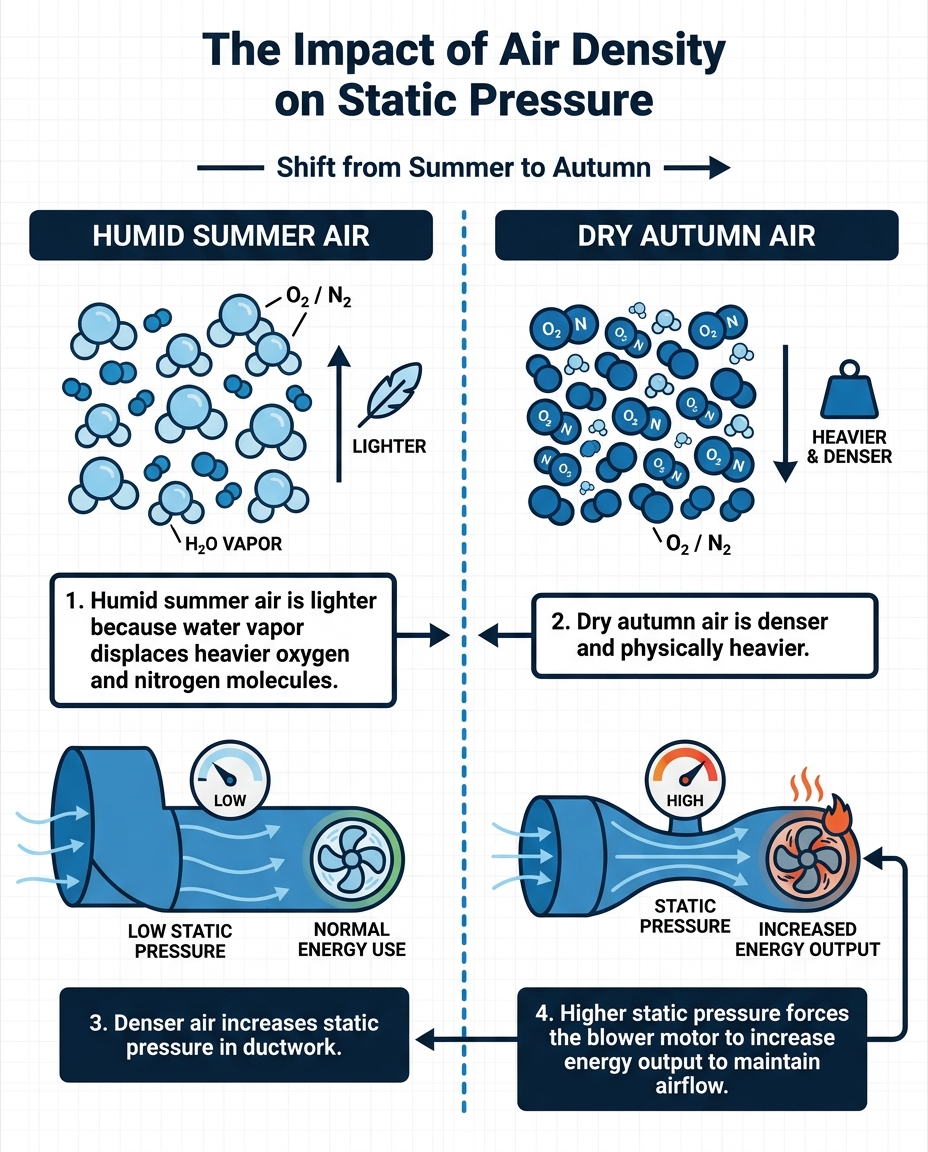
The science comes down to molecular weight. Water vapor molecules (H2O) are significantly lighter than the diatomic oxygen (O2) and nitrogen (N2) molecules that make up the vast majority of our atmosphere. When moisture evaporates and water vapor enters the air, it displaces those heavier gas molecules. Therefore, a cubic foot of humid summer air physically weighs less than a cubic foot of dry winter air.
Here in Jeannette PA and Western Pennsylvania, we experience a very sharp, abrupt transition from the muggy, humid days of late summer to the crisp, dry days of autumn. When that humidity plummets, the air inside your home suddenly becomes packed with heavier oxygen and nitrogen molecules. The air is literally denser and physically heavier. At Cochran Heating & Cooling, we believe in empowering our customers by explaining the "why" behind your equipment's behavior. We do not just want to tell you a part is broken; we want you to understand how the changing seasons interact with your home's mechanics so you can make informed decisions.
Why Denser Air Matters for Ductwork
To understand how this affects your system, you have to understand static pressure. Static pressure is the resistance to airflow within your duct system. You can think of it like blood pressure for your HVAC system. The blower motor has to generate enough force to overcome this resistance and push conditioned air into every room.
When the air becomes denser in the fall, it takes significantly more energy to push that heavier air through the exact same sized ducts. The sudden increase in air density causes the static pressure dynamics inside the ductwork to spike. This increased resistance is why professional Furnace Maintenance and Repair becomes so critical right as the weather changes. If your system is already borderline, this sudden physical shift in the air will expose the weakness.

How Increased Static Pressure Impacts Your Blower Motor
The blower motor is the beating heart of your home's air distribution system. Usually located inside the indoor air handler or furnace cabinet, its sole job is to overcome the static pressure in your ducts and push conditioned air into your living spaces. When the September fall transition hits and air density spikes, the motor is suddenly forced to do a lot more work to achieve the same results.
How the motor reacts depends heavily on the type of technology installed in your system. Older HVAC systems typically use a Permanent Split Capacitor (PSC) motor. These motors operate at a fixed speed. When static pressure increases due to dense, dry air, a PSC motor simply cannot push as much volume. It will spin at the same rate, but because the air is heavier, less air actually makes it out of your vents. You might notice that the airflow feels weak or that rooms at the far end of the house are taking longer to warm up.
Modern systems, however, usually feature an Electronically Commutated Motor (ECM). An ECM is a "smart" motor programmed to maintain a specific volume of airflow regardless of the resistance. When an ECM senses the increased static pressure of dense fall air, it automatically ramps up its RPMs. It spins faster and draws significantly more electricity to force that heavy air through the ducts. This is why your system might suddenly sound much louder in the fall—the motor is literally working harder to compensate for the weather.
This sudden seasonal stress test often reveals underlying wear and tear that simply was not apparent during the easy, low-density days of summer. Bearings that are starting to fail will suddenly whine or grind under the heavier load. Electrical components that are nearing the end of their lifespan can overheat when forced to draw more amperage. Aging motors are particularly vulnerable to this shift in workload, turning a routine seasonal change into a potential breakdown point.
Normal Seasonal Shifts vs. Warning Signs of Motor Wear
Because the air is physically changing, some difference in how your system sounds and operates is completely expected. However, it is vital to distinguish between harmless operational changes and the symptoms of a failing blower motor. How do you know when a noise is just the weather, and when it is a cry for help?
• System Noise — Normal Seasonal Shift: A slight increase in rushing air sounds at the vents. — Warning Sign of Motor Wear: Grinding, squealing, whining, or metal-on-metal noises from the unit.
• Ductwork Sounds — Normal Seasonal Shift: Minor popping or ticking as metal ducts expand and contract. — Warning Sign of Motor Wear: Loud banging or rattling that persists while the system runs.
• Cycle Length — Normal Seasonal Shift: Slightly longer cycles as the system adjusts to colder temperatures. — Warning Sign of Motor Wear: The motor runs constantly without satisfying the thermostat setting.
• Airflow Quality — Normal Seasonal Shift: Air feels slightly cooler initially before the furnace fully engages. — Warning Sign of Motor Wear: Extremely weak airflow or burning electrical smells coming from vents.
When to Call a Professional
While a slight increase in operational noise can be normal, struggling to push air is a definitive red flag. You cannot accurately diagnose motor failure by ear alone. Diagnosing the exact health of a blower motor requires professional tools. Technicians use manometers to measure the static pressure inside the ductwork (measured in inches of water column) and multimeters to measure the precise electrical draw of the motor.
If you notice persistent mechanical noises in Jeannette PA and Western Pennsylvania this time of year, do not ignore them and hope they go away. Catching a struggling motor early prevents full system breakdowns during the much colder months ahead, saving you from an emergency loss of heat when you need it most.
Managing Indoor Air Quality as the Humidity Plummets
The blower motor does not just push air; it also circulates everything suspended in that air. When the humidity drops during the September fall transition, the overall indoor environment changes dramatically. Dust, pet dander, pollen, and other microscopic particulates behave very differently in dry air than they do in humid air.
In the humid summer months, moisture in the air binds to dust particles, making them heavy. They tend to settle on surfaces relatively quickly. But in the dry autumn air, these particles remain lighter and more easily airborne. Every time your blower motor kicks on, it kicks up a cloud of invisible debris, pulling it into the return vents and forcing it through your filter.
This creates a compounding problem for your HVAC system. Because the air is dry, more dust is suspended in it. Because more dust is suspended, your air filter catches more debris and clogs faster. A clogged filter severely restricts airflow, which adds even more static pressure to a duct system that is already fighting against dense, heavy air. The strain on the blower motor multiplies rapidly.
Maintaining proper indoor humidity (ideally between 30% and 50%) can actually help balance air density and improve overall comfort. Introducing a whole-home humidifier can weigh down airborne dust, ease respiratory irritation, and slightly reduce the density of the air your motor has to push. A well-maintained motor paired with proper filtration supports a much healthier home environment. If you are noticing more dust or dry air discomfort, exploring professional Indoor Air Quality Solutions can bridge the gap between mechanical health and household comfort.
Proactive Steps Before the Deep Freeze Hits
While you cannot change the physics of the weather in Jeannette PA and Western Pennsylvania, you can take specific steps to prepare your system for the dense winter air. Understanding airflow dynamics helps homeowners make better decisions about their system's upkeep. Here is how you can protect your blower motor as the seasons change:
1. Change Your Air Filter Religiously: As mentioned, a dirty filter combined with dense fall air creates critically high static pressure. During the seasonal transition, check your filter every 30 days. If it looks gray and dust-coated, replace it immediately to relieve the pressure on the motor.
2. Keep All Vents and Registers Open: A common misconception is that closing vents in unused rooms saves energy. In reality, your blower motor produces the same amount of air regardless. Closing vents just forces that air into a smaller space, drastically increasing static pressure and forcing the motor to work harder against the dense air.
3. Clear the Area Around Your Vents: Ensure that rugs, furniture, and curtains are not blocking your supply or return registers. The system needs to breathe freely to handle the heavier air volume efficiently.
4. Schedule a Comprehensive Tune-Up: The most important step is professional evaluation. A technician will measure the motor's amperage, test the capacitor, and check the static pressure to ensure the system is operating safely. Enrolling in a routine maintenance program like the Cochran Comfort Contract ensures that these seasonal stress points are caught before they cause a failure.
By taking these proactive steps, you reduce the unnecessary resistance in your ductwork, giving your blower motor the best possible chance to operate smoothly through the winter.
Frequently Asked Questions About Fall HVAC Performance
Before diving into our most common questions regarding the September fall transition, if you are dealing with a different temperature issue entirely, you can read our guide on why your heating vents might blow cold air. Below are the answers to the most frequent questions we receive about static pressure and seasonal blower motor strain.
Why does my HVAC sound louder in the fall?
Your HVAC sounds louder in the fall because the air is cooler, drier, and physically denser than summer air. This denser air increases the static pressure inside your ductwork, forcing your blower motor to work harder to push the heavier air through the vents. If you have a modern ECM motor, it will automatically spin faster to overcome this resistance, resulting in more noticeable rushing air sounds. While a slight increase in volume is normal, any grinding or screeching should be checked by a professional.
How does humidity affect HVAC static pressure?
Humidity actually lowers static pressure because water vapor is lighter than the oxygen and nitrogen it displaces in the atmosphere. When humidity drops significantly in the fall, the air becomes denser and heavier. This heavier air creates more resistance—or static pressure—inside your duct system. The higher the static pressure, the more energy your blower motor must use to maintain proper airflow throughout your home.
Is my blower motor failing or is it just the weather?
A slight increase in airflow noise is usually just the weather, but mechanical noises indicate a failing motor. If you hear grinding, squealing, or whining sounds, or if the motor runs constantly without satisfying the thermostat, those are signs of underlying wear. The dense fall air acts as a stress test, often exposing worn bearings or failing electrical components that were able to slide by during the easier summer months.
What are the signs of a bad furnace blower motor?
The most common signs of a bad furnace blower motor include weak airflow at the vents, strange burning smells, and loud screeching or banging noises. Additionally, if your energy bills spike unexpectedly or the motor feels excessively hot to the touch, it is likely drawing too much amperage. A motor that frequently trips your circuit breaker is also showing a clear sign of electrical failure and needs immediate professional evaluation.
Does cold weather make an HVAC blower motor work harder?
Yes, cold weather makes an HVAC blower motor work harder because cold, dry air is much denser than warm, humid air. The increased density means the motor has to exert more mechanical energy to move the exact same volume of air through your home's ductwork. This added workload can accelerate wear and tear on aging components, making pre-season maintenance crucial for older systems.
Can a sudden drop in humidity damage my ductwork?
A sudden drop in humidity will not directly damage your ductwork, but the resulting increase in static pressure can exacerbate existing issues. If your ducts are undersized, poorly sealed, or aging, the higher pressure from pushing dense air can cause minor air leaks to worsen. You may also notice the metal ductwork popping and banging more loudly due to the combination of thermal expansion and increased internal pressure.
Protect Your Equipment Before the Cold Sets In
The physics of the changing seasons in Jeannette PA and Western Pennsylvania are unavoidable. The air will get drier, it will get denser, and your system will inevitably have to work harder to keep your home comfortable. However, while you cannot stop how the shift in fall humidity impacts your HVAC blower motor, a complete motor failure is entirely preventable.
By scheduling a professional inspection now, you can ensure your system is fully prepared to handle the dense winter air without breaking down when you need it most. We are here to provide a clear, non-technical explanation of your system's health, measure your static pressure, and give you the peace of mind that your home will stay reliably warm all season long.