The Pre-Winter Chimney and Flue Inspection: Why Your Boiler Needs It Now
Before the First Freeze: Confronting Silent Threats in Your Boiler Exhaust Pathway
As the brisk autumn air settles in and the October pre-winter startup window begins, the timeline to safely prepare your home for freezing temperatures is rapidly closing. If you are researching the pre-winter chimney and flue inspection: why your boiler needs it now, our team at Cochran Heating & Cooling can tell you from years of experience that skipping this critical step puts your entire household at risk. Most homeowners focus heavily on the mechanical components of the boiler itself—checking the pilot light, listening to the pumps, and bleeding the radiators. However, we often find that the most dangerous failure point lies hidden in the exhaust pathway right above the unit. Ensuring the safe operation of your heating systems requires a complete evaluation of where the combustion gases actually go once they leave the heat exchanger.
During the idle summer months, your chimney and flue essentially become an open invitation for debris, while long-term moisture takes a silent toll on the structural integrity of the masonry. These dual threats—summer blockages and masonry deterioration—create a perfect storm just as you demand continuous, heavy output from your heating equipment. Before you initiate that first major heating cycle of the season, scheduling an assessment as part of your professional boiler services is the only way to verify that your exhaust pathway is clear, intact, and ready to safely vent dangerous gases outside your living space.
The Hidden Mechanics of Boiler Venting
To understand why the October pre-winter startup is so vital, you have to look at how a gas boiler actually breathes. Combustion requires air, and it produces hazardous byproducts—most notably carbon monoxide and water vapor. The flue pipe and the chimney act as the exhaust pipe for your home's heating engine. If that exhaust pipe is restricted by even a small percentage, the toxic gases have nowhere to go but backward into your basement or utility room.
A visual check of the boiler's exterior tells you nothing about the condition of the metal flue pipe stretching into the chimney, or the state of the brickwork all the way up to the roofline. That is why our technicians consider an intensive, dedicated look at the venting system to be non-negotiable before winter sets in.
The Vulnerability of Historic Masonry Chimneys to Gas Exhaust
When our crew works in the many Jeannette PA older masonry homes, we frequently encounter architectural details that were built long before modern HVAC safety codes required stainless steel chimney liners. These historic chimneys were originally designed to vent wood or coal fires, which produce very hot, dry exhaust. Modern gas boilers operate differently, and that difference creates a specific, devastating chemical reaction inside unlined brick chimneys.
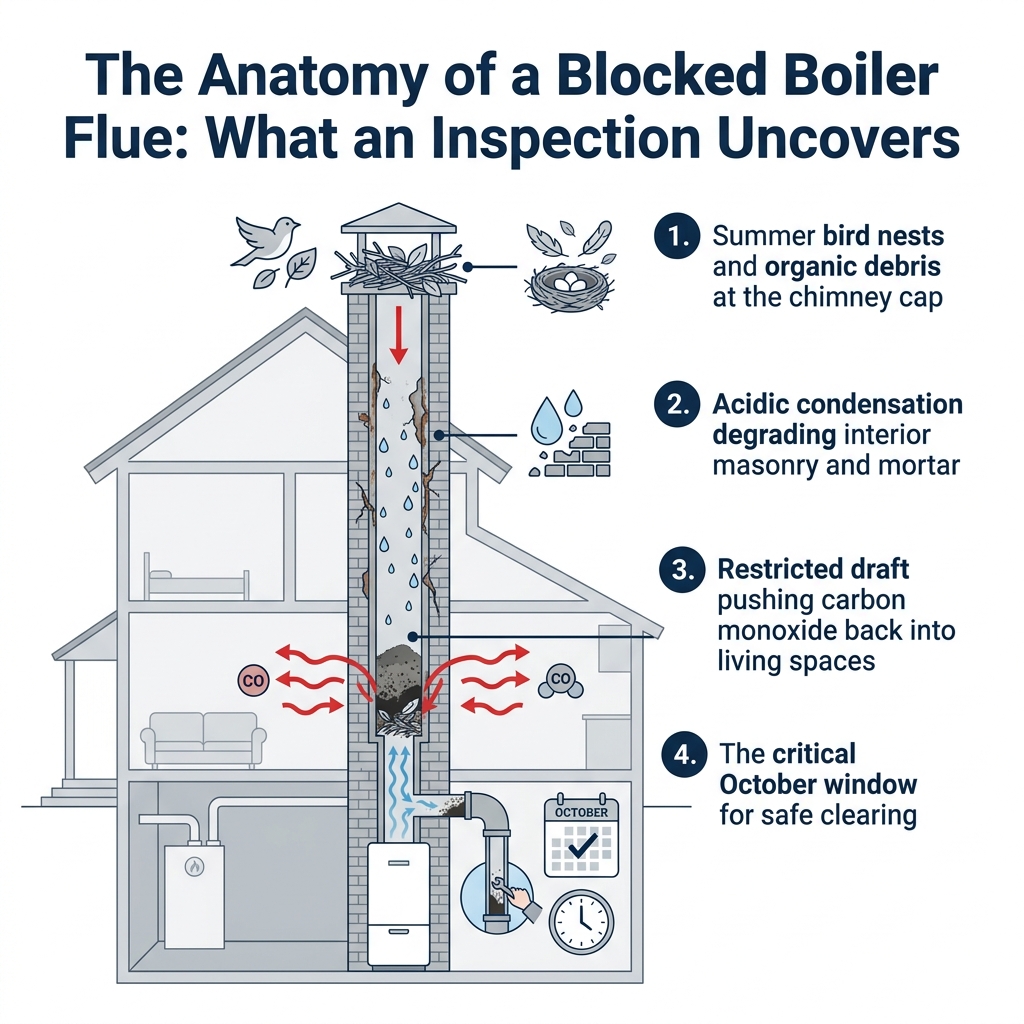
Natural gas combustion produces a significant amount of water vapor. When this warm, moisture-laden exhaust travels up the chimney, it eventually hits the cold masonry near the roofline. Freezing sub-zero winter temperatures exacerbate this condensation effect dramatically. The vapor turns back into a liquid, clinging to the inside of the unlined brick. This is not just pure water; the combustion process creates trace amounts of acidic compounds that mix with the condensation. Over time, these corrosive acids slowly eat away at traditional mortar and porous brick.
The Structural Toll of Acidic Condensation
We've seen firsthand how this slow-motion deterioration happening inside Jeannette PA older masonry homes often goes completely unnoticed from the outside. The exterior of the chimney might look perfectly solid, while the interior is actively crumbling. As the mortar turns to sand and the brick faces flake off (a process known as spalling), debris rains down into the base of the chimney. Eventually, this accumulation of fallen masonry can completely block the flue opening where the boiler connects to the chimney.
• Historic Unlined Masonry — Venting Characteristics: Large interior volume, very cold upper sections. — Vulnerability to Gas Exhaust: High risk. Acidic condensation rapidly degrades traditional mortar, leading to internal collapse.
• Clay Tile Lined Masonry — Venting Characteristics: Better draft than unlined, but joints remain exposed. — Vulnerability to Gas Exhaust: Moderate risk. Temperature swings can crack tiles, allowing moisture to penetrate the outer brickwork.
• Modern Stainless Steel Lined — Venting Characteristics: Sized perfectly to the boiler, warms up quickly to maintain draft. — Vulnerability to Gas Exhaust: Low risk. Impervious to acidic condensation and completely seals the exhaust pathway.
Without an inspection, you might turn on your boiler assuming the exhaust path is clear, only to force toxic gases against a solid wall of collapsed brick and mortar. Identifying this specific degradation is a primary reason why we stress that assessing the exhaust pathway is just as important as servicing the burner assembly.
Summer Intruders: How Bird Nests and Debris Block Boiler Flues
While masonry degradation happens over years, physical blockages can appear in a matter of weeks. An idle chimney during the warm months becomes prime real estate for local wildlife. Every fall, our technicians pull out dozens of nests built by birds, squirrels, and other pests that sought out the sheltered, secure environment of a chimney, completely unaware that they were blocking a critical exhaust vent. By the time the October pre-winter startup window arrives, a once-clear flue can be packed tight with highly combustible, restrictive materials.
Nesting materials are incredibly dense. A bird nest is not just a few loose twigs; it is a tightly woven plug of mud, leaves, grass, and branches designed to withstand wind and rain. When this plug sits inside your boiler's flue pipe or at the chimney cap, it creates a total physical blockage.
The Immediate Danger of Firing Up a Blocked System
If you initiate your heating system when these blockages are present, the results are immediate and dangerous. The boiler will fire up, producing carbon monoxide and other combustion gases. Because the exhaust cannot push past the dense nesting material, the draft reverses. The toxic gases spill out of the draft hood or the burner compartment directly into your home.
• Twigs and branches: Form the structural base of the blockage, wedging tightly against the flue walls.
• Leaves and grass: Create an airtight seal that prevents any upward draft from escaping.
• Animal byproducts: Introduce moisture, odors, and corrosive waste into the metal venting components.
• Fallen leaves from overhanging trees: Can accumulate naturally over the summer, capping the chimney even without animal activity.
The narrow window in mid-fall is your only opportunity to clear these obstructions safely. Waiting until November or December means you are either running the boiler with a dangerous restriction or risking a frozen house while you wait for an emergency clearing service. Catching these summer intruders during the October pre-winter startup prevents a catastrophic safety hazard.

Top Reasons Your Gas Boiler Requires an Immediate Flue Inspection
Understanding the specific threats hiding in your exhaust pathway highlights exactly why proactive scheduling is necessary. For those living in Jeannette PA older masonry homes, the risks are amplified by the age and architecture of the venting systems. Here is a definitive look at why our team believes a comprehensive assessment of your chimney and flue cannot wait.
1. Prevent carbon monoxide backup into living spaces: The most critical reason for an inspection is confirming that toxic, invisible gases have a completely unobstructed path to the outdoors. Any restriction forces CO directly into your home.
2. Clear summer animal nests and organic debris: Identifying and removing dense plugs of twigs, leaves, and mud guarantees that the physical exhaust pathway is wide open before the burner fires continuously.
3. Identify masonry deterioration and mortar flaking: Catching the early signs of acidic condensation damage allows you to address crumbling interior brickwork before it causes a complete internal chimney collapse.
4. Ensure proper draft to maximize boiler efficiency: A boiler requires a specific upward draft pressure to burn fuel cleanly. An inspected, clear flue ensures the system isn't suffocating, which keeps combustion efficient and safe.
5. Verify unlined chimneys remain structurally sound: For historic properties, confirming that the bare brick and mortar can withstand another season of heavy, moisture-laden exhaust is vital for long-term safety.
Addressing these points during the fall ensures that when the deep freeze arrives, your heating equipment operates exactly as the manufacturer intended, without hidden dangers lurking behind the walls.
Carbon Monoxide and Draft Issues: The Risk of Tightly Sealed Winter Homes
The mechanics of venting a gas boiler rely heavily on the concept of draft—the natural upward pull of warm air rising through a vertical space. Proper drafting requires an unobstructed flue to pull dangerous exhaust gases upward and out of the house. However, draft is not just about the chimney; it is heavily influenced by the air pressure inside your home. During the October pre-winter startup, evaluating this balance is one of our primary safety concerns.
Local freezing winters necessitate tightly sealed homes. We install heavy weatherstripping, upgrade to double-pane windows, and caulk every conceivable gap to keep the cold air out and the warm air in. While this is fantastic for energy efficiency, we've found that it inadvertently increases the danger of carbon monoxide buildup if the flue is compromised. A tightly sealed house can easily develop negative air pressure. If the boiler is competing for air with bathroom exhaust fans, kitchen hoods, or a clothes dryer, and the chimney is even partially blocked, the house will literally suck the exhaust gases backward down the flue.
The Silent Threat of Spillage
When exhaust gases reverse direction, it is known as spillage. Because carbon monoxide is completely invisible, tasteless, and odorless, spillage is a silent threat. You will not see smoke or smell fumes when a gas boiler backdrafts. The CO levels will simply spike when the heating system is turned on for the first time.
This is why our professional assessment of the draft mechanics is just as critical as inspecting the boiler's heat exchanger or scheduling heating repairs. Our technicians don't just look for physical blockages; they measure the draft pressure to ensure that even in a tightly sealed winter home, the exhaust has enough upward momentum to overcome any negative pressure inside the living space.
Securing Your System with Comprehensive HVAC Maintenance
Given the complex interaction between acidic condensation, masonry degradation, and draft mechanics, evaluating a boiler's exhaust pathway is never a DIY project. Shining a flashlight up the flue pipe from the basement provides only a fraction of the necessary information. Securing your system requires licensed expertise and specialized diagnostic tools.
There is a massive difference between a homeowner's standard visual check and our comprehensive professional flue assessment. Our licensed technicians possess the digital manometers required to measure precise draft pressure, and the combustion analyzers needed to detect invisible carbon monoxide leaks at the draft hood. If we discover deteriorating brickwork in Jeannette PA older masonry homes, we know exactly how to evaluate the structural risk and recommend the appropriate stainless steel lining solutions.
The Value of Proactive Professional Care
As a trusted, family-owned HVAC provider in Westmoreland County, our team at Cochran Heating & Cooling prioritizes family safety against these silent threats. We know that clearing complex blockages or addressing crumbling historic chimneys requires rigorous training and an understanding of local architectural challenges. Relying on family-owned HVAC experts in Jeannette means you get technicians who treat your home's safety with the same gravity they would their own.
The ultimate defense against mid-winter heating failures and severe safety hazards is ongoing, proactive care. Enrolling in an HVAC maintenance plan guarantees that these critical exhaust pathways are evaluated every single fall. By making the inspection an automatic part of your seasonal routine, you eliminate the guesswork and ensure your boiler is always venting safely before the freezing temperatures arrive.
Frequently Asked Questions
What happens if a boiler flue is blocked?
If a boiler flue is completely or partially blocked, the combustion exhaust gases cannot escape the home. The system will backdraft, forcing dangerous byproducts—including lethal carbon monoxide—directly into your basement or utility room. This creates an immediate, life-threatening safety hazard for anyone inside the house.
Do gas boilers need chimney inspections?
Yes, gas boilers absolutely require dedicated chimney and flue inspections. While gas burns cleaner than wood or coal, it produces significant water vapor that can condense and form corrosive acids. These acids eat away at traditional masonry, leading to internal chimney collapses that block the exhaust path.
How do I know if my boiler vent is clogged?
The most definitive way to know if a vent is clogged is through a professional draft and combustion test, as carbon monoxide is invisible and odorless. However, warning signs include rust or white powdery residue on the metal vent pipe, soot buildup around the boiler, or an unexplainable draft of cold air coming down the chimney.
Can a bird in the chimney affect my boiler?
A bird nesting in the chimney can completely disable your boiler's ability to vent safely. Bird nests are dense plugs of mud and twigs that create airtight blockages, preventing toxic exhaust gases from escaping and forcing them back into your living space when the boiler fires.
Why does acidic condensation form in older masonry chimneys?
Acidic condensation forms because the exhaust from a gas boiler contains moisture and trace combustion chemicals. When this warm vapor travels up an unlined, older brick chimney, it hits the freezing cold masonry near the roof, condenses into a liquid, and creates a corrosive acid that destroys the mortar.
Take Action Before the Freeze: As the October pre-winter startup window closes, ensuring your exhaust pathways are clear is the most important step you can take for your household's safety. Don't leave your family vulnerable to silent, invisible threats. Schedule your professional boiler services with Cochran Heating & Cooling today to guarantee your system is venting properly, giving you the confidence that your home will stay reliably warm and completely safe all winter long.